

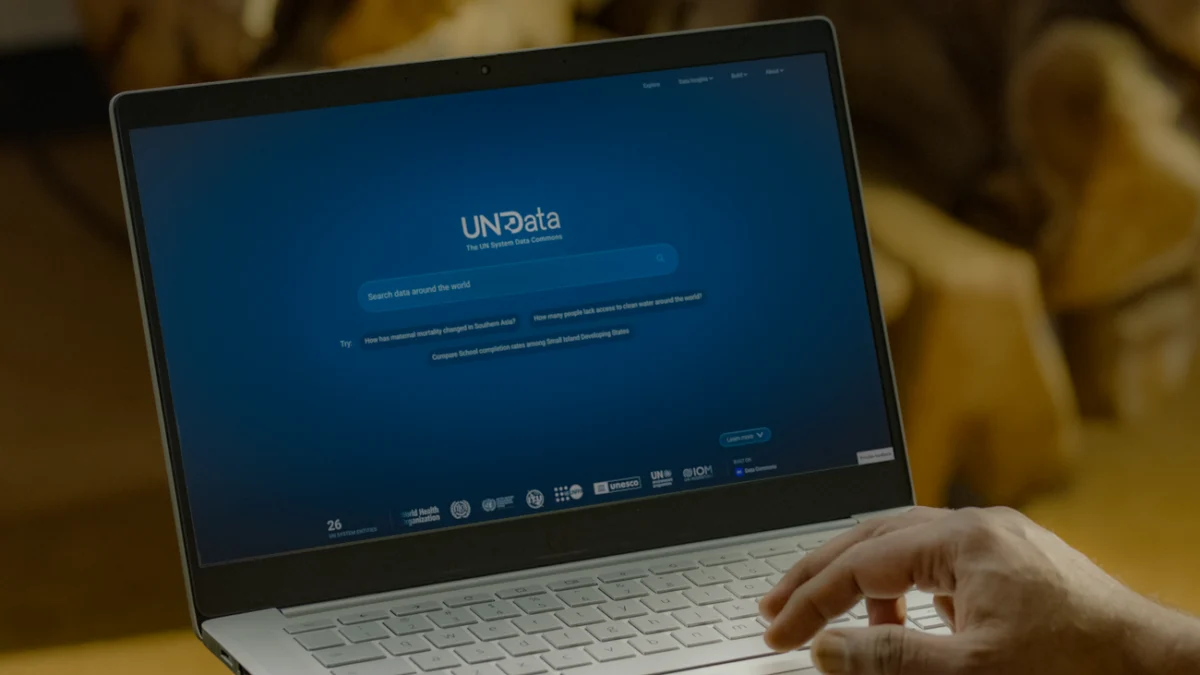
The United Nations system has officially launched the UN System Data Commons, a pioneering open-source platform designed to integrate disparate global statistics into a single, AI-ready knowledge graph. Developed in collaboration with Google and supported by the UN Foundation and Google.org, the initiative represents a significant shift in how international organizations manage and disseminate critical data. By consolidating information from dozens of UN agencies into a unified searchable resource, the platform aims to eliminate the technical barriers that have historically hindered cross-disciplinary research into global challenges such as climate change, public health, and economic inequality.
The launch addresses a long-standing structural inefficiency within the international community. For decades, entities across the UN system—ranging from the World Health Organization (WHO) to the International Labour Organization (ILO)—have independently compiled high-integrity data. However, these datasets often resided in isolated silos, utilized incompatible formats, and adhered to different geographic or temporal standards. For data analysts and policymakers, "connecting the dots" between, for instance, childhood malnutrition rates and agricultural output required months of manual data cleaning and reconciliation. The UN System Data Commons seeks to reduce this preparation time from months to seconds, allowing for real-time analysis of the world’s most pressing issues.
The Evolution of Global Data Management
The development of the UN System Data Commons is the culmination of a multi-year effort to modernize the UN’s digital architecture. The project is built upon the foundational technology of Google’s "Data Commons," an initiative started in 2018 to map publicly available data into a cohesive knowledge graph. Recognizing the potential for this technology to advance the Sustainable Development Goals (SDGs), the UN Foundation partnered with Google.org to provide the necessary resources and technical expertise to adapt this framework for the specific needs of the UN system.
Historically, the UN’s data landscape was characterized by a "federated" model. Each agency maintained its own repository, such as the FAO’s FAOSTAT or the World Bank’s Open Data portal. While these resources were valuable individually, they lacked a common language. The new Data Commons platform introduces a semantic layer that maps these various datasets to a shared set of entities and concepts. This means that a "country" or a "year" is recognized identically across all integrated datasets, enabling seamless cross-referencing without manual intervention.
Technical Architecture: The AI-Ready Knowledge Graph
At the core of the UN System Data Commons is the concept of a "knowledge graph." Unlike a traditional relational database, which stores data in tables, a knowledge graph stores information as a network of interconnected entities and relationships. This structure is inherently "AI-ready" because it provides the context necessary for large language models (LLMs) to interpret data accurately.
The platform utilizes the Model Context Protocol (MCP), an open standard that allows AI agents to autonomously fetch authoritative figures directly from the UN’s verified sources. This technological leap enables the transition from passive data storage to "agentic research." Users are no longer required to browse through thousands of spreadsheets; instead, they can deploy AI assistants to perform complex queries. For example, a researcher could ask an AI agent to "correlate the rise in sea levels with changes in coastal urban populations over the last decade," and the system will pull relevant data from the UN Environment Programme (UNEP) and the UN Department of Economic and Social Affairs (DESA) to generate a consolidated report.
To ensure accuracy, the platform maintains a rigorous verification process. Every dataset integrated into the Commons is validated by UN system statisticians and technical experts. This "grounding" of AI in trusted, official facts is a critical safeguard against the "hallucinations" often associated with generative AI models.
Supporting Data and the Scale of Integration
The scale of the UN System Data Commons is unprecedented. At launch, the platform already incorporates thousands of metrics covering a wide array of human activity and environmental indicators. These include:
- Public Health: Integration of WHO data on disease prevalence, vaccination rates, and healthcare infrastructure.
- Education: UNESCO statistics regarding literacy rates, school enrollment, and gender parity in education.
- Economic Indicators: World Bank and IMF data on GDP growth, poverty headcounts, and inflation.
- Environmental Metrics: Data on carbon emissions, biodiversity loss, and renewable energy adoption.
The UN has set an ambitious timeline for the expansion of the platform. The current goal is to include 80% of all UN system statistical datasets by the year 2027. This roadmap includes the integration of more granular, sub-national data, which is essential for localizing the Sustainable Development Goals. By providing data at the city or regional level, the platform will enable local governments to benchmark their progress against global standards.
Democratizing Access Through Natural Language Search
One of the most transformative features of the UN System Data Commons is its focus on accessibility. Traditionally, advanced data analysis was the exclusive domain of those with specialized technical skills in SQL, Python, or advanced Excel. The integration of natural language search democratizes this access, allowing non-technical users—such as journalists, NGO program managers, and students—to query the database using plain English.
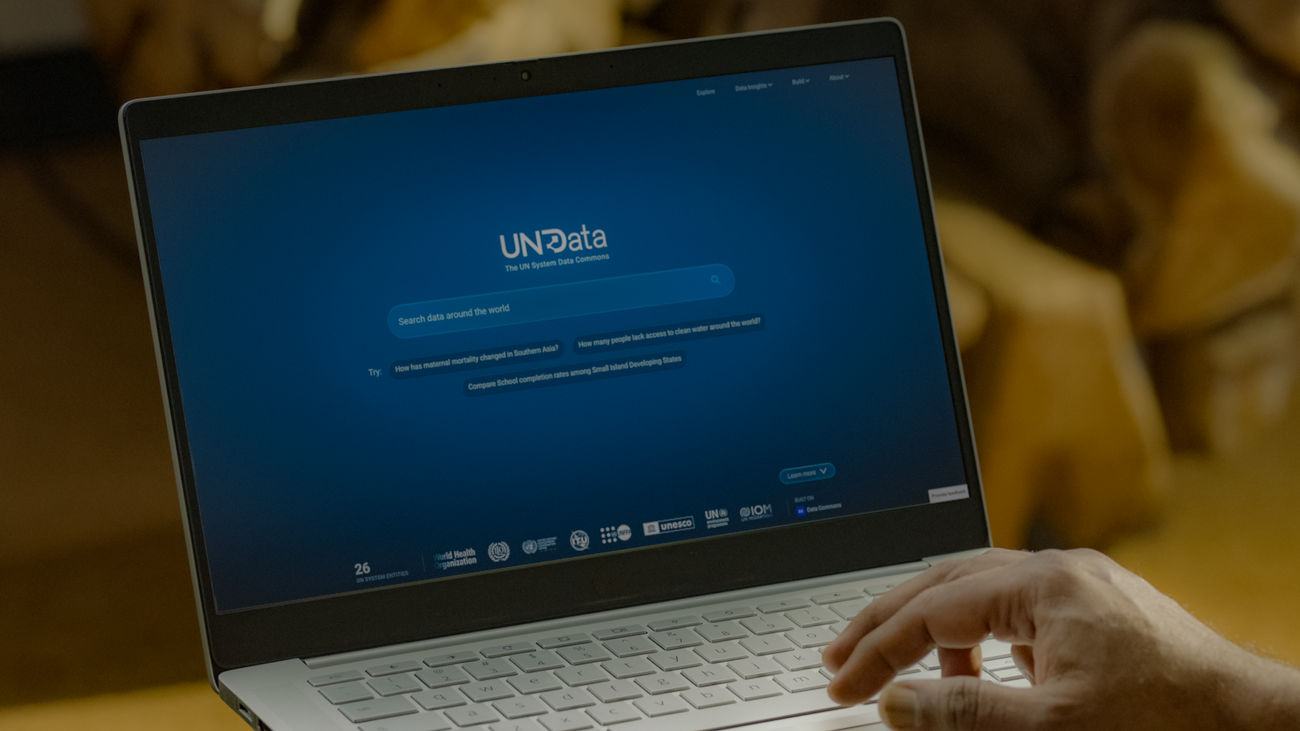
The "Explore" tab on the platform allows users to filter data by location or theme, while the "Blog" section provides ready-to-read reports that interpret complex trends. A recent featured report used UNICEF data to explore global strategies for reducing child poverty, illustrating how the platform can be used to highlight "what works" in international development. By making data intuitive and visual, the UN hopes to foster a more informed public discourse on global policy.
Official Responses and Strategic Vision
Prem Ramaswami, Head of Data Commons at Google, emphasized the collaborative nature of the project, noting that the platform was designed to handle the "painstaking manual work" that previously stalled progress. By automating the integration of metrics, timelines, and geographic boundaries, the platform allows analysts to focus on "designing evidence-based solutions" rather than formatting spreadsheets.
The UN Foundation has framed the project as a critical component of the UN Secretary-General’s "Our Common Agenda," which calls for a "UN 2.0" characterized by enhanced digital capabilities and data-driven decision-making. Representatives from various UN agencies have signaled their support, noting that the Data Commons does not replace agency-specific portals but rather amplifies their impact by making their data discoverable in a broader context.
Philanthropic support from Google.org has been instrumental in bridging the funding gap for this digital public infrastructure. By providing both financial grants and pro bono technical assistance, the partnership demonstrates a model for how the private sector and multilateral organizations can collaborate on global public goods.
Broader Impact and Policy Implications
The implications of the UN System Data Commons extend far beyond the technical realm. In an era of increasing misinformation, the existence of a single, authoritative, and easily accessible source of global facts is a vital tool for accountability. Governments can be held to their commitments under the Paris Agreement or the 2030 Agenda for Sustainable Development using data that is transparent and verifiable.
Furthermore, the platform facilitates "intersectional" policymaking. In the past, a health ministry and an environmental ministry might work in silos, unaware of how their respective data overlapped. The Data Commons makes these overlaps visible. For instance, the correlation between air quality data and respiratory health outcomes can be mapped instantly, providing a powerful argument for integrated environmental and health policies.
For the scientific community, the platform serves as a massive, standardized dataset for training new models and conducting meta-analyses. The use of open standards like the Model Context Protocol ensures that the UN System Data Commons remains interoperable with other emerging digital tools, contributing to a global "digital public infrastructure" that is accessible to all nations, regardless of their domestic technological capacity.
Timeline and Future Milestones
The journey toward a unified UN data ecosystem is ongoing. The following milestones outline the projected path for the platform:
- 2018–2022: Google develops the initial Data Commons framework and begins mapping public datasets.
- 2023: The UN Foundation and Google.org formalize a partnership to create a UN-specific version of the platform.
- Late 2024: Official launch of the UN System Data Commons with initial datasets from core UN agencies.
- 2025–2026: Phased integration of specialized agencies (e.g., IMO, ICAO, ITU) and expansion of sub-national data.
- 2027: Target date for 80% integration of all UN system statistical datasets, achieving a comprehensive digital twin of global progress.
As the 2030 deadline for the Sustainable Development Goals approaches, the UN System Data Commons arrives at a critical juncture. The "data gap" has often been cited as a primary reason for the slow progress in achieving the SDGs. By providing a clearer, faster, and more accurate picture of the world, this platform equips the international community with the insights needed to navigate the complexities of the 21st century.
Researchers, policymakers, and the general public can now access this resource at data.un.org, marking the beginning of a new era in transparent, AI-enhanced global governance.
