

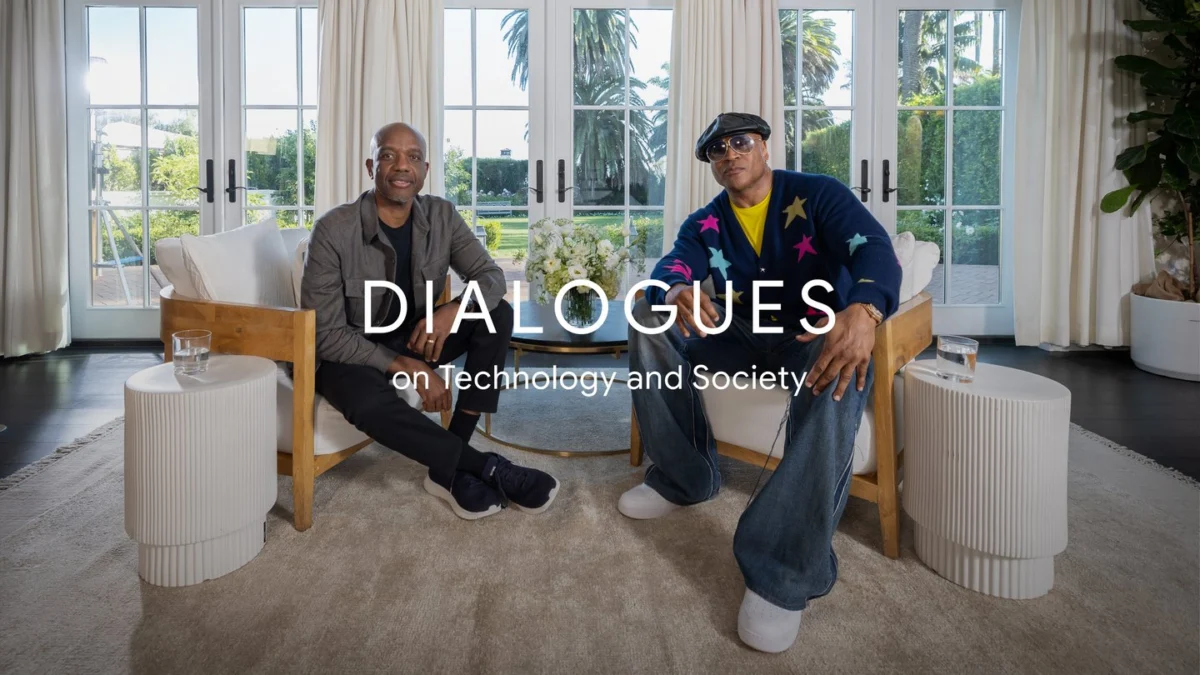
The intersection of legacy artistic expression and cutting-edge technological innovation took center stage in the latest installment of Google’s Dialogues on Technology and Society series. The episode featured a comprehensive discussion between James Manyika, Google’s Senior Vice President of Research, Labs, Technology & Society, and LL COOL J, the pioneering hip-hop artist, actor, and entrepreneur. The conversation centered on the historical evolution of music technology and the burgeoning role of generative artificial intelligence (AI) in the creative process. As the music industry grapples with the rapid integration of machine learning tools, the dialogue provided a unique perspective on how veteran artists view the shift from traditional production methods to algorithmic assistance.
LL COOL J, born James Todd Smith, reflected on a career spanning four decades, offering a longitudinal view of how technology has served as a catalyst for cultural shifts. From his early days as a flagship artist for Def Jam Recordings in the mid-1980s to his current role as a global cultural ambassador, Smith has navigated multiple technological revolutions. The discussion highlighted a core theme: while the tools of creation have changed fundamentally, the necessity of the "divine spark"—the uniquely human element of intent and emotion—remains the primary driver of artistic value.
The Evolution of Hip-Hop Production and Technological Adaptation
The dialogue began with a retrospective look at the technological landscape of the 1980s. LL COOL J noted that his entry into the music industry coincided with the rise of the first programmable drum machines, such as the Roland TR-808 and the Oberheim DMX. At the time, these devices were viewed with skepticism by traditional percussionists, yet they became the foundational heartbeat of hip-hop and electronic music. This historical context served as a framework for understanding current anxieties surrounding AI; LL COOL J suggested that the fear of new technology often precedes a period of unprecedented creative expansion.
Throughout the 1990s and early 2000s, the transition from analog tape to digital audio workstations (DAWs) like Pro Tools and Logic Pro further decentralized music production. Smith observed that each of these shifts lowered the barrier to entry, allowing artists with limited resources to compete with major studio productions. He characterized generative AI as the logical next step in this progression. Rather than viewing AI as a replacement for the artist, he framed it as a sophisticated collaborator capable of handling the technical "heavy lifting," thereby allowing the creator to focus on conceptualization and storytelling.
James Manyika provided the technical counterpoint, explaining Google’s approach to developing these tools. Manyika emphasized that Google’s research initiatives are increasingly focused on "Human-Centered AI," where the objective is to augment human capability rather than automate it entirely. He noted that the Dialogues on Technology and Society series aims to bring together thinkers from disparate fields to ensure that the development of AI remains grounded in societal needs and ethical considerations.
Democratization of Creative Tools and Global Access
One of the most significant points raised during the conversation was the potential for AI to democratize creativity. LL COOL J argued that generative AI could serve as an equalizer for aspiring artists in underserved communities or developing nations who may lack access to expensive instruments, recording studios, or formal musical training. By using natural language prompts to generate melodies, harmonies, or rhythmic patterns, a new generation of creators can bypass the financial hurdles that historically gatekept the music industry.
This democratization, however, comes with a shift in the definition of "craft." The dialogue touched upon how the value of an artist may move away from technical proficiency in operating equipment toward the ability to curate, direct, and imbue AI-generated content with authentic human experience. LL COOL J emphasized that while an AI can mimic the structure of a hit song, it cannot replicate the lived experience or the "soul" that a human artist brings to a performance. He referred to this as the "divine spark," an intangible quality that resonates with audiences on an emotional level.
Supporting data suggests that this democratization is already underway. According to a 2023 report by Goldman Sachs, the creator economy is estimated to be worth approximately $250 billion and is expected to grow to $480 billion by 2027. The integration of AI tools is cited as a primary driver of this growth, as it reduces the time and cost associated with content production. Furthermore, a survey conducted by the International Federation of the Phonographic Industry (IFPI) found that while 70% of music fans believe AI should not be used to mimic human artists without permission, a growing segment of younger listeners is open to AI-assisted compositions if they are transparently labeled.
Protecting the Divine Spark: Ethics and Intellectual Property
The conversation inevitably turned to the ethical implications of AI in the arts, specifically regarding copyright and the protection of an artist’s likeness and voice. LL COOL J was vocal about the importance of maintaining the integrity of the human element. He argued that as AI becomes more proficient at replicating specific styles or vocal timbres, legal and technical frameworks must be established to protect the intellectual property of human creators.
This concern mirrors recent legislative efforts in the United States. In early 2024, the state of Tennessee passed the ELVIS Act (Ensuring Likeness Voice and Image Security), which was the first of its kind to explicitly protect artists from unauthorized AI-generated deepfakes. Additionally, the federal "NO FAKES Act" has seen bipartisan support in Congress, aiming to provide a standardized intellectual property right over one’s voice and likeness.
Manyika addressed these concerns from a corporate and research perspective. He noted that Google is actively working on watermarking and labeling technologies, such as SynthID, which can identify AI-generated content. He stressed that responsible AI development involves ongoing collaboration with the creative community to ensure that artists are compensated and credited for their contributions to the data sets that train these models.
Chronology of Google’s AI Music Initiatives
To understand the context of Manyika’s remarks, it is helpful to look at the timeline of Google’s involvement in generative music:
- 2016: Google Brain launches "Project Magenta," a research project exploring the role of machine learning as a tool in the creative process.
- 2023 (January): Google researchers publish a paper on MusicLM, a model capable of generating high-fidelity music from text descriptions (e.g., "a calming violin melody backed by a distorted guitar riff").
- 2023 (May): MusicLM is released to the public through the AI Test Kitchen, allowing users to experiment with text-to-music generation.
- 2023 (November): Google DeepMind introduces Lyria, its most advanced music generation model to date, and partners with YouTube to launch "Dream Track," an experiment allowing creators to generate short soundtracks using the AI-authorized voices of participating artists like John Legend and Charli XCX.
- 2024 (Present): The Dialogues on Technology and Society series continues to facilitate high-level discussions between tech leaders and cultural icons to refine the ethical boundaries of these technologies.
Broader Impact and Industry Implications
The dialogue between LL COOL J and James Manyika arrives at a pivotal moment for the entertainment industry. The rapid adoption of generative AI has led to a bifurcated response among professionals. While some view it as an existential threat to employment—a primary concern during the 2023 SAG-AFTRA and WGA strikes—others, like LL COOL J, see it as an inevitable evolution of the toolkit.
Industry analysts suggest that the impact of AI will be felt most acutely in the "middle class" of the music industry—composers for library music, advertising jingles, and background scores. However, for "star-level" talent, AI offers new avenues for brand extension. For instance, AI could allow an artist to "perform" in multiple languages simultaneously or create personalized musical experiences for fans at scale.
The consensus reached during the Google dialogue suggests that the future of creativity is not a zero-sum game between humans and machines. Instead, it is a hybrid model where AI handles the iterative and technical aspects of production, while the human artist provides the vision, emotional resonance, and cultural context. LL COOL J’s insistence on the "divine spark" serves as a reminder that technology, no matter how advanced, remains a reflection of its creator.
Conclusion and Future Outlook
As Google continues its Dialogues on Technology and Society, the insights provided by LL COOL J offer a roadmap for how legacy artists can embrace innovation without sacrificing authenticity. The discussion underscored that the evolution from drum machines to generative AI is a matter of degree, not of kind. Both represent the human desire to expand the boundaries of what is possible in art.
For the tech industry, the takeaway from Manyika’s perspective is the necessity of transparency and partnership. As AI models become more integrated into the creative workflow, the success of these tools will depend on their ability to respect the rights and the "divine spark" of the individuals they are designed to assist. The full dialogue, available on Google’s official channels, stands as a significant contribution to the ongoing global conversation regarding the role of technology in shaping the future of human culture.
