

The landscape of pediatric speech and language therapy is continuously evolving, with a growing emphasis on incorporating engaging, multi-sensory tools to facilitate communication development. Among the innovative resources gaining traction, magnetic tiles have emerged as a remarkably versatile and effective medium for addressing a wide array of speech and language goals in young children. These colorful, geometric shapes, designed primarily for creative construction, offer a dynamic platform for therapeutic intervention, transforming routine exercises into interactive play experiences that enhance engagement and learning outcomes.
Speech-language pathologists (SLPs) are increasingly integrating play-based strategies into their sessions, recognizing that children learn most effectively when actively involved and motivated. Magnetic tiles, often found in educational settings and homes, provide a hands-on, manipulative approach that caters to diverse learning styles and developmental stages, from early childhood through elementary years. Their inherent appeal lies in their simplicity, tactile nature, and endless possibilities for creation, making them an ideal candidate for fostering speech and language acquisition.
The Foundational Role of Play in Language Development
Play is not merely recreational; it is a critical mechanism through which children explore their world, develop cognitive abilities, and refine social and communication skills. Research in child development consistently highlights play as a cornerstone for language acquisition, providing natural contexts for practicing new vocabulary, understanding grammatical structures, and engaging in reciprocal communication. When children are deeply engrossed in play, their cognitive load for linguistic tasks can be reduced, allowing for more spontaneous and effective learning. This principle underpins the strategic use of tools like magnetic tiles in therapy.
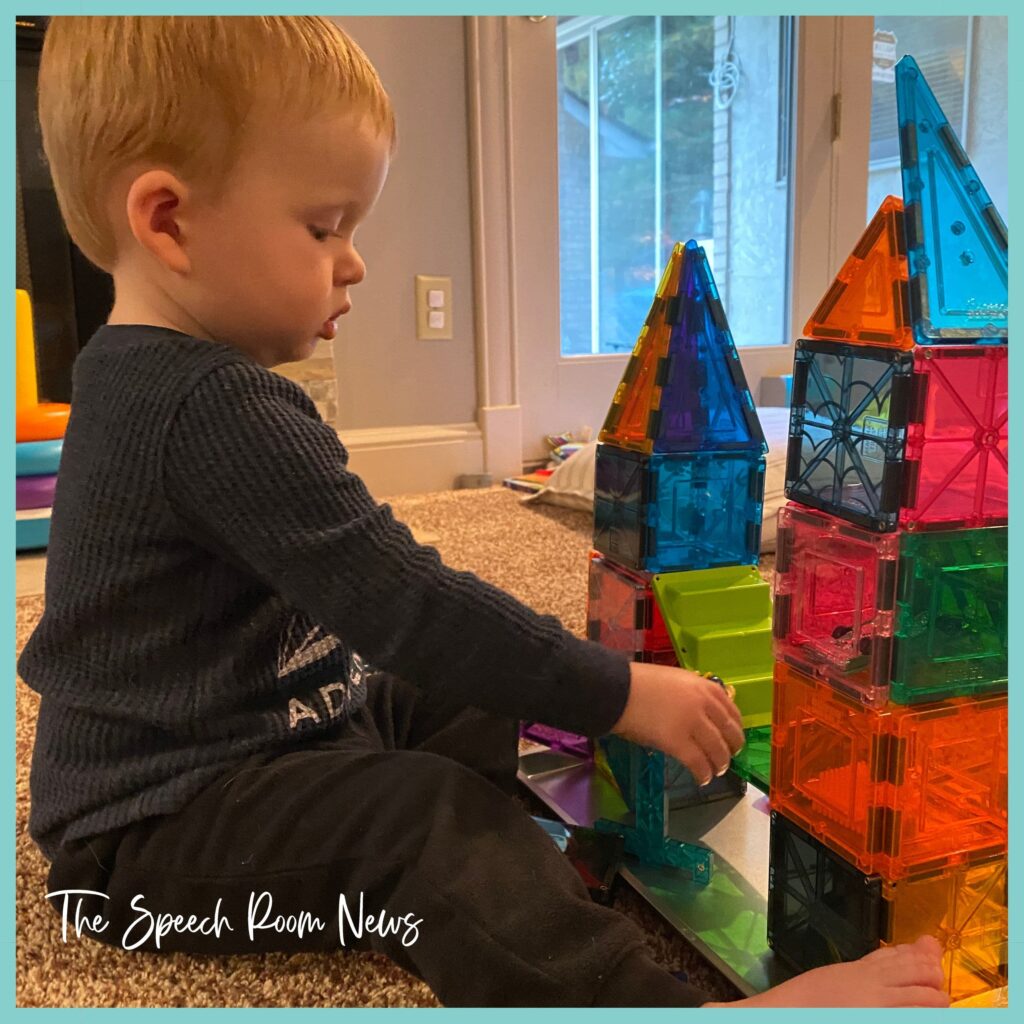
Magnetic tiles, typically composed of strong magnets encased in durable plastic, connect effortlessly to form two-dimensional patterns or elaborate three-dimensional structures. This hands-on interaction naturally stimulates fine motor skills, spatial reasoning, and problem-solving abilities, all of which indirectly support speech and language development by enhancing overall cognitive function. Their visual and tactile properties make abstract linguistic concepts more concrete and understandable for young learners, particularly those with developmental delays or communication challenges.
Strategic Applications of Magnetic Tiles in Speech Therapy
The adaptability of magnetic tiles allows SLPs to target specific speech and language objectives within a playful framework. Here are ten strategic ways these construction toys are being utilized to maximize therapeutic impact:
-
Fostering Social Cooperative Communication:
Magnetic tiles serve as an exceptional catalyst for cultivating essential social interaction skills. In group therapy settings or paired sessions, children are naturally prompted into collaborative efforts, such as building a shared structure or designing a complex maze. This collaborative play necessitates back-and-forth communication, encouraging students to express ideas, negotiate roles, take turns, and offer constructive feedback. SLPs can guide these interactions by prompting questions like, "What should we build next?" or "Whose turn is it to add a piece?" thereby nurturing vital social skills alongside speech development, including active listening, problem-solving, and conflict resolution within a structured yet engaging environment. This real-time application of social language is far more effective than rote drills. -
Mastering Prepositional Concepts:
Abstract concepts like spatial prepositions ("on," "under," "beside," "between," "above," "below") often pose challenges for young learners. Magnetic tiles provide a concrete, interactive medium for demystifying these terms. By physically manipulating the tiles—placing one on another, sliding a figure under an arch, or positioning a small tile between two larger ones—students gain a tactile understanding of spatial relationships. SLPs can issue directives such as, "Put the red square under the blue triangle," or "Place the small car beside the tall tower." This hands-on reinforcement makes the abstract concrete, improving both comprehension and expressive use of prepositions. -
Developing Categorization and Cognitive Skills:
Sorting activities are fundamental for developing cognitive skills, including categorization, attribute identification, and early mathematical concepts. Magnetic tiles, available in various shapes (squares, triangles, pentagons) and colors, are ideal for this purpose. Therapists can instruct students to sort tiles by color, shape, or size. Beyond simple sorting, children can build "sorting bins" using the tiles themselves, adding another layer of engagement. As they categorize, they are encouraged to verbally describe their actions ("I am putting all the red squares here," or "These are the big triangles"), thereby enhancing descriptive language, vocabulary, and the ability to articulate similarities and differences. -
Enhancing Articulation Practice:
Integrating specific speech sounds into magnetic tile play transforms articulation drills from repetitive tasks into dynamic, context-rich activities. For instance, an SLP targeting the /k/ sound might encourage a child to build a "castle," a "cage," or a "car" garage. Each time a tile is added, the child might be prompted to say a /k/ word related to their construction, such as "connect," "corner," "pick," or "block." This method allows for high-frequency repetition of target sounds within a meaningful and motivating context, reducing fatigue and improving carryover of learned sounds into spontaneous speech.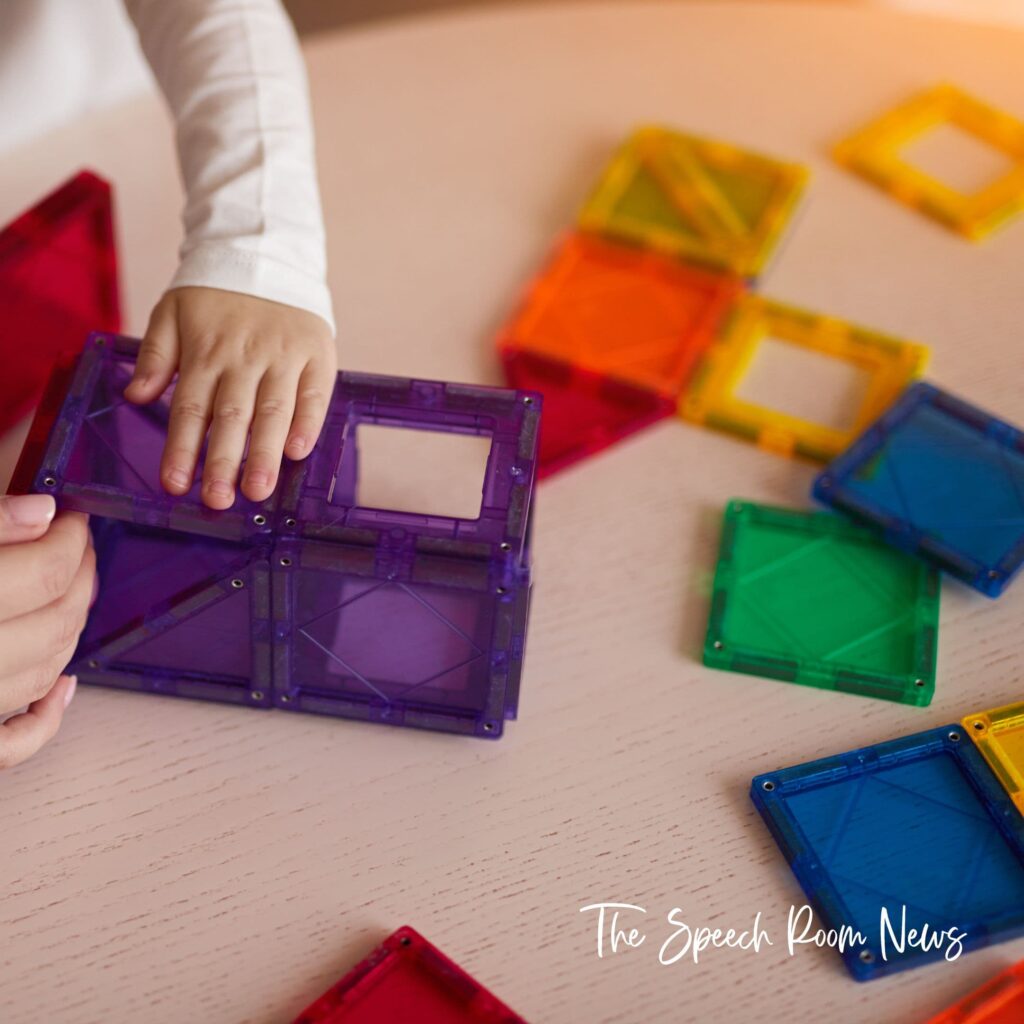
-
Navigating Irregular Verbs Through Narrative:
Irregular verbs (e.g., "build" -> "built," "fall" -> "fell," "hit" -> "hit") are notoriously difficult for children to master due to their unpredictable conjugations. Magnetic tiles provide an excellent framework for creating mini-narratives or sequences of events that naturally incorporate these verbs. Children can build a structure, then describe what "happened" to it ("The tower fell down," "I built a house," "The ball hit the wall"). This storytelling approach allows for repeated, contextualized practice of irregular verb forms, making their acquisition more intuitive and less reliant on memorization. -
Cultivating Executive Functioning Abilities:
Executive functioning skills—such as planning, organization, working memory, and self-regulation—are crucial for academic success and daily living. Magnetic tiles offer a natural environment for their development. Therapists can introduce challenges like "Build a tall tower in two minutes," or "Create a house with a roof and four walls." These tasks require students to plan their construction, sequence steps, manage their time, and adapt their strategies if initial attempts fail. Verbalizing their plan and reflecting on their process ("First, I need to find all the squares for the base") further strengthens these cognitive skills while enhancing expressive language. -
Reinforcing Regular Plurals:
Practicing regular plurals (e.g., "one square," "two squares"; "one triangle," "three triangles") becomes engaging when paired with magnetic tile construction. As children build patterns or structures, they can be prompted to count and label the shapes they use. "How many squares did you use?" or "I see two triangles." This activity reinforces the morphological rule for forming plurals, providing immediate visual and tactile feedback for their verbalizations. It also encourages the use of descriptive language related to quantity and attributes. -
Exploring WH Questions for Comprehension and Expression:
WH questions ("who," "what," "where," "when," "why") are fundamental for information gathering and narrative development. Magnetic tile play offers numerous opportunities to practice both asking and answering these questions. SLPs can initiate questions about the construction process ("Where did you put the blue tile?"), the imagined scenario ("Who lives in this house?"), or potential outcomes ("What will happen if we add another layer?"). This fosters critical thinking, improves comprehension of question forms, and enhances expressive language skills as children formulate detailed responses.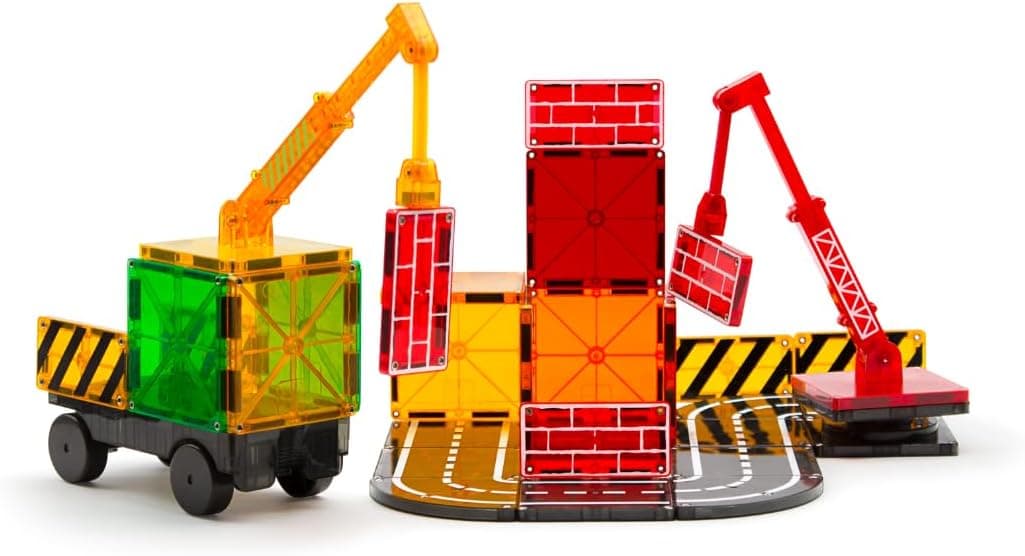
-
Solidifying the Use of the Pronoun "I":
For some children, mastering the correct use of personal pronouns, particularly "I" (indicating self-agency), can be challenging. Magnetic tile activities create natural contexts for self-reference. Therapists can encourage students to describe their own actions: "I am choosing a green tile," "I put it on top," or "I built a tall building." By consistently prompting and modeling the use of "I" in relation to their direct actions during play, children gain confidence and accuracy in employing this essential pronoun in their speech. -
Empowering AAC Users with Core Words:
Augmentative and Alternative Communication (AAC) users rely on core words (high-frequency words like "more," "on," "off," "help," "go," "stop") to express a wide range of meanings. Magnetic tile play provides a highly motivating and functional context for practicing these core words. An SLP can model and prompt the use of "more" (for more tiles), "on" (to place a tile), "up" (to build higher), "down" (if a structure falls), or "help" (if assistance is needed). This integration of AAC into engaging play makes learning and practicing core words feel organic and purposeful, promoting generalization of these critical communication tools.
Expert Perspectives and Therapeutic Efficacy
Speech-language pathologists consistently report that incorporating engaging, hands-on materials like magnetic tiles significantly boosts client motivation and attention span, particularly in younger populations. Dr. Emily R. Jones, a pediatric SLP with over 15 years of experience, notes, "The tactile feedback and visual appeal of magnetic tiles create an immediate entry point for children who might otherwise be hesitant to engage in structured therapy tasks. We see increased spontaneous communication and a deeper understanding of concepts when they can physically manipulate the elements they are learning about." This anecdotal evidence is supported by broader research indicating that multi-sensory learning approaches lead to improved retention and generalization of skills across various developmental domains. The kinesthetic and visual elements inherent in magnetic tile play cater to diverse learning styles, making therapy more inclusive and effective.
Broader Implications and Accessibility
The widespread adoption of magnetic tiles in speech therapy signifies a positive trend towards more naturalistic, child-led therapeutic interventions. Beyond the direct therapeutic benefits, their use encourages carryover of skills into home environments, as many families already own or can acquire these popular toys. This continuity between therapy and home life is crucial for reinforcing learned behaviors and promoting consistent progress. While the initial investment for quality magnetic tile sets can be substantial, their durability and versatility often make them a cost-effective resource in the long run. Clinicians frequently seek grants, utilize professional wish lists, or recommend them as holiday gifts, emphasizing their long-term educational and therapeutic value.
In conclusion, magnetic tiles represent far more than a simple plaything in the context of speech and language therapy. They embody a powerful, multi-sensory tool that facilitates a broad spectrum of communication goals, from foundational articulation and vocabulary to complex social and executive functioning skills. By harnessing the inherent joy and engagement of play, SLPs can transform therapeutic sessions into dynamic learning experiences, empowering children to build not just intricate structures, but also robust communication abilities that will serve them throughout their lives. Their enduring appeal and proven efficacy solidify their position as an invaluable asset in the modern speech therapy toolkit.
