

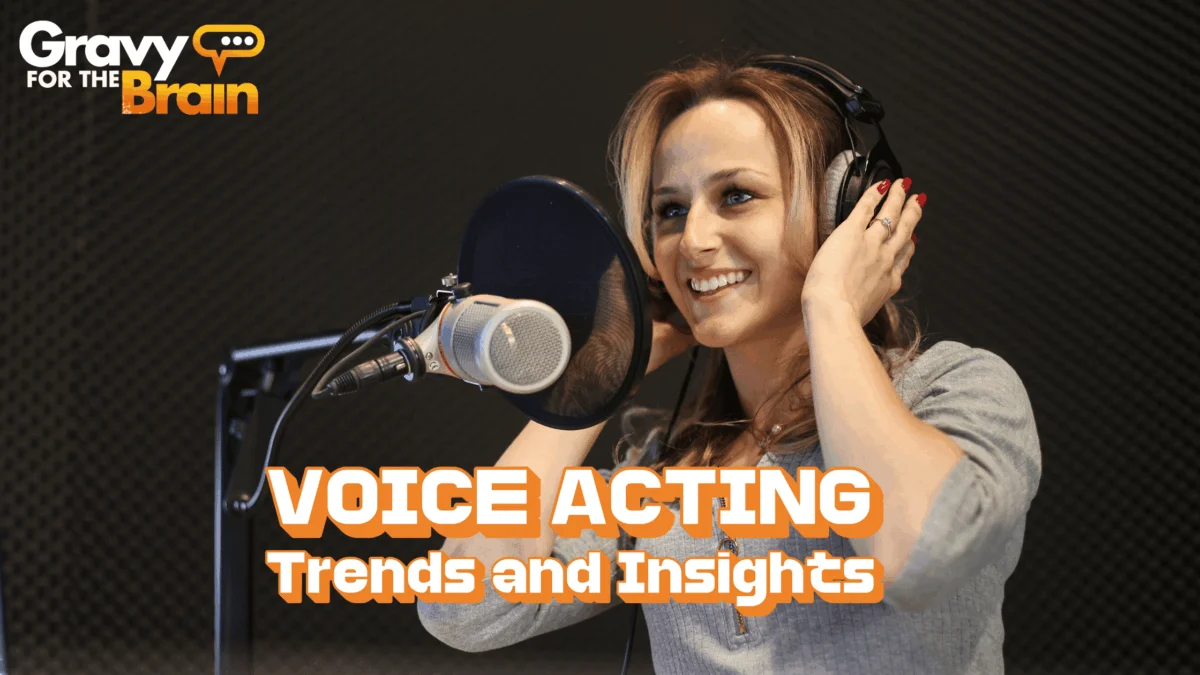
The voice acting industry, a critical yet often unseen component of the creative, marketing, and advertising sectors, has undergone a period of unprecedented transformation over the past year. 2025 marked a pivotal moment where the established norms of voice performance collided with rapid technological advancements and shifting global demands. Remote work transitioned from a temporary adjustment to an entrenched standard, while voice-cloning technologies, once rudimentary, began to produce synthetic speech with an uncanny resemblance to human vocalizations. Amidst these innovations, the fundamental value of authentic human voices has not diminished; in fact, brands and content creators increasingly recognize their indispensable role in forging genuine connections with audiences. This analysis delves into the key developments of 2025, drawing on industry surveys, trend reports, and expert insights to illuminate the present state and future trajectory of voice acting.
The Unwavering Demand for Human Authenticity in 2025
Despite the burgeoning capabilities of artificial intelligence, a significant survey of voice-over buyers conducted throughout 2025 underscored the persistent and essential role of real human voice actors in the global creative economy. The findings revealed that over half of the surveyed companies planned to leverage human talent for brand marketing initiatives in the same year. Furthermore, nearly 45% anticipated a substantial need for human voice actors in the realms of animation, broadcast media, online advertisements, and television productions.
The survey highlighted the dominant influence of digital channels, streaming platforms, social media, and online advertising, with 58% of respondents identifying these as the most effective paid media avenues due to their hyper-targeting capabilities. This strategic advantage amplifies the impact of authentic human voices, reinforcing their status as a cornerstone of effective brand storytelling and audience engagement. In essence, the overwhelming majority of brands, broadcasters, and content creators continue to view the human voice actor as a vital strategic asset, capable of imparting the nuanced emotional resonance that synthetic voices often struggle to replicate.
AI Voices: A Catalyst for Curiosity and Caution
The evolution of generative AI voice technology throughout 2025 presented a complex picture for the industry. Advances in AI speech generation enabled the creation of natural-sounding phrases and even rudimentary interactions with live human responses. However, professional buyers approached the integration of AI voices with a notable degree of caution. When polled on their sentiment regarding AI adoption, respondents were almost evenly divided. Approximately one-third expressed increased openness compared to the previous year, while a similar proportion reported growing hesitancy. The remaining segment indicated no significant shift in their stance.
The actual implementation of AI voices in projects remained relatively limited. Only about a quarter of clients reported experimenting with AI voices, and for the majority, their usage was confined to less than a quarter of their assignments. Some clients even abandoned AI voice applications on specific projects, citing the excessive time required for fine-tuning and achieving satisfactory results.
The primary determinant for clients considering an AI voice was the degree to which its output mimicked a genuine human performance, a benchmark that most AI voices had yet to consistently meet. Factors such as cost and speed of delivery, while secondary, also played a role. These observations suggest that AI is unlikely to precipitate a wholesale replacement of human voice actors in the immediate future. Instead, large language models are more likely to find increased adoption in applications such as interactive voice response (IVR) systems, low-cost explainer videos, and as tools for rapid script prototyping, creating guide tracks, or facilitating content localization. The final, critical recordings for most projects, however, will continue to rely on the expertise of professional human voice actors.
Global Expansion: Broadening Horizons for Voice Talent
A significant trend observed in 2025 was the growing global appetite for content delivered in local languages. In the aforementioned survey, 58% of buyers reported either having engaged with or planning to engage with non-English voice acting talent. Spanish emerged as the most requested language after English, closely followed by French. While nearly half of businesses continued to prioritize English-language content, Spanish and, notably, Chinese were identified as languages with significant growth potential.
Technological advancements are acting as a powerful accelerant for this trend. Speech-to-speech translation technologies, capable of converting spoken words from one language to another while preserving vocal tone and nuance, are making it more feasible to dub videos, audiobooks, and support multilingual customer service operations. As markets such as Latin America and China continue their economic and cultural expansion, the value of multilingual skills and the ability to collaborate effectively with translators is set to increase substantially for voice actors.
Emergence of New Genres and Immersive Voice Experiences
Beyond the established domains of gaming, audiobooks, and e-learning, 2025 witnessed a notable surge in demand for voice acting in short-form and interactive content. Voiceovers for social media clips, podcast intros, and branded explainer videos have seen consistent growth. Furthermore, emerging technologies like virtual reality (VR), augmented reality (AR), and other immersive media platforms are creating entirely new avenues for voice talent. As VR and AR applications become more prevalent in sectors such as training, entertainment, and wellness, voice actors who can deliver compelling and contextually appropriate performances within 360-degree environments are poised to become highly sought after.
Implications for Voice Actors and Producers
Audiences and advertisers alike continue to demonstrate a strong preference for performances that feel human, relatable, and authentic. The era of the generic announcer voice, capable of selling almost any product, has largely passed. Listeners today are more receptive to conversational, peer-to-peer delivery styles that evoke a sense of trust and familiarity, akin to a friend or trusted advisor. In an increasingly AI-driven landscape, human warmth, nuance, and emotional depth are becoming powerful differentiators. Anecdotal evidence suggests that some filmmakers and advertisers are even explicitly marketing their content as "AI-free" to signal authenticity and their commitment to employing real human voice acting talent.
For aspiring and established voice actors, this paradigm shift necessitates a focus on cultivating their unique, authentic vocal signature, whether it leans towards playful and upbeat, or calm and authoritative. Developing the ability to deliver dialogue naturally and empathetically is paramount. Investing in core acting skills, including improvisation, comedic timing, and the expansion of emotional range, will be crucial in maintaining a competitive edge against increasingly sophisticated synthetic voices.
Expanding Skill Sets for Enhanced Marketability

Clients are increasingly seeking voice talent who can offer more than just script delivery. Many producers value voice actors who possess ancillary skills such as audio editing, audio processing, basic sound design, or script consulting. The ability to deliver polished, ready-to-use audio from a home studio has become a baseline expectation in the industry. Additional competencies, such as proficiency with professional digital audio workstations (DAWs) or the logistical coordination of multilingual projects, can significantly elevate a voice actor’s professional profile and marketability.
The importance of personal branding and strategic networking cannot be overstated. Showcasing high-quality demo reels, maintaining an up-to-date online portfolio, and actively engaging with voice acting communities and industry conferences—such as One Voice, for example—are essential for standing out in a competitive market. Developing a specialized niche, whether it be children’s audiobooks, character voices for animation, or corporate instructional videos, can further distinguish a voice actor from generalists and attract specific client interest.
Championing Diversity, Inclusion, and Multilingual Proficiency
Brands are actively seeking voices that reflect a broader spectrum of cultures, dialects, and backgrounds to resonate more effectively with their diverse target audiences. Authenticity in this context extends beyond mere language proficiency; it encompasses the ability to convey lived experiences and cultural nuances. Voice actors who possess multiple language skills or can authentically perform regional accents should prominently highlight these capabilities. For those without such inherent advantages, investing in accent coaching or establishing collaborative relationships with translators can effectively broaden their professional repertoire.
From a producer’s perspective, a commitment to inclusive casting practices and the prioritization of underrepresented voices can lead to more resonant and socially responsible marketing campaigns, fostering deeper connections with a wider demographic.
Navigating Rights and Staying Informed
The ethical and legal ramifications surrounding the use of AI voices have ignited ongoing negotiations within professional unions and guilds worldwide. Organizations such as EQUITY in the UK, SAG-AFTRA, and NAVA in the USA, which represent voice actors, are actively engaged in discussions to ensure fair compensation for performers whose voices are used to train large language model algorithms. It is therefore imperative for voice actors and their representatives to meticulously review contracts, specifically scrutinizing clauses pertaining to AI usage. Staying abreast of industry developments through professional organizations and dedicated voice acting news channels is equally vital.
Looking Ahead: Projections for 2026 and Beyond
The trajectory of voice acting in 2026 and beyond points towards continued global diversification and expansion. The demand for voice content is expected to grow across a multitude of languages, with Spanish, French, German, Chinese, and Hindi remaining key markets for expansion. Advances in speech-to-speech translation will increasingly enable producers to reach international audiences without the prohibitive costs of reshooting or re-voicing entire projects. A growing trend will see producers tailoring content more precisely to specific regional nuances, making voice actors adept at navigating cross-cultural storytelling highly valuable.
The proliferation of VR and AR applications, extending beyond gaming into sectors like education, healthcare, and corporate training, will solidify the integral role of voice acting talent in guiding users through these immersive virtual environments. Interactive narratives that offer multiple branching pathways will necessitate actors capable of delivering varied responses while maintaining character consistency, nuance, and emotional depth. Those comfortable with improvisation and non-linear storytelling will likely lead this evolving landscape.
Ethical considerations, the cultivation of trust, and the pursuit of emotional realism will remain paramount. While technology can generate speech that sounds convincingly human, it continues to grapple with conveying genuine emotional depth and range. Consumers and regulatory bodies are increasingly advocating for transparency regarding AI voice data, emphasizing that synthetic voices should never be used to mislead audiences. Brands that champion ethical sourcing and highlight human involvement in their content creation will foster greater consumer trust. Voice actors will need to be prepared to discuss the potential use of AI in their projects and advocate for the fair and ethical use of their vocal data.
The relentless pace of technological advancement and evolving media consumption patterns demands continuous learning and adaptability from both voice actors and producers. Cultivating a mindset of curiosity and embracing lifelong learning will be essential. Seeking out training in acting techniques, audio engineering, dialect coaching, and emerging technologies is crucial. Active networking with peers and mentors to share strategies and insights will foster resilience and growth. Those who proactively adapt to the industry’s evolving landscape will undoubtedly thrive, while those who resist change risk being left behind.
The events of 2025 have clearly demonstrated that the voice acting industry is neither immune to technological disruption nor at risk of obsolescence. Authentic human voices remain indispensable for effective brand storytelling and emotionally resonant content. The integration of AI tools, the normalization of remote production, and the forces of globalization are collectively expanding opportunities rather than diminishing them.
As the industry transitions into 2026, the focus for voice actors should be on amplifying their unique vocal qualities and refining their craft. Investing in high-quality home studio setups, learning to effectively utilize emerging tools, and engaging with AI ethically are crucial steps. Exploring new genres and languages, and actively advocating for fair compensation and ethical data usage will further solidify their professional standing. By artfully blending traditional performance skills with an informed engagement with emerging technologies, voice actors can navigate a future where human and synthetic voices coexist, contributing to the creation of richer, more inclusive, and profoundly engaging storytelling experiences.
For those aspiring to a career in this dynamic field, resources like Gravy for the Brain (www.gravyforthebrain.com) offer comprehensive training and support. As the world’s largest online voice acting academy, it provides mentorship, courses, webinars, workshops, one-to-one training, rate guidance, technical assistance, studio building advice, and a supportive community designed to help individuals launch and advance their careers, refine their skills, understand new technologies, and discover their unique niche. Gravy for the Brain aims to be a comprehensive resource for all voice actors, regardless of their career stage, ensuring they feel supported and never alone. Downloading their free PDF for deeper insights and considering a discounted membership offer can provide invaluable guidance as individuals embark on their voice acting journey, ensuring that every voice has the opportunity to be heard.
