

The nuanced art of voiceover performance hinges significantly on achieving a natural and engaging "flow" in dialogue delivery. A pervasive obstacle, particularly for emerging talents in the voiceover industry, is a phenomenon known as "blocking." This article delves into the intricacies of voiceover flow and blocking, providing a comprehensive understanding of the issue and actionable strategies for its resolution. Blocking, characterized by unnatural pauses and a disjointed rhythm, can detract from the listener’s experience and comprehension, hindering the effectiveness of even the most well-written scripts.
The Essence of Natural Conversational Flow
To grasp the concept of voiceover flow, one must first consider the rhythm and cadence of everyday human conversation. When individuals engage in dialogue, their speech is rarely a perfectly measured, unbroken stream. Instead, it is punctuated by natural hesitations, breaths, and subtle shifts in pace that contribute to its organic quality. These elements are not impediments to understanding but rather integral components that make communication feel authentic and relatable.
For instance, imagine overhearing a conversation between friends in a public space or, with permission, recording and re-listening to your own discussions. You would likely observe:
- Varied Pacing: Periods of rapid speech interspersed with slower, more deliberate phrasing.
- Strategic Pauses: Brief moments of silence that allow for thought processing, emphasis, or emotional nuance.
- Involuntary Hesitations: Minor stumbles or "ums" and "ahs" that are characteristic of spontaneous speech.
- Breaths: Natural inhalations that punctuate sentences and phrases, providing a sense of real-time delivery.
These observations highlight that human speech is dynamic and responsive, adapting to context and emotion. The goal in voiceover is to emulate this natural variability, creating a performance that resonates with the listener on an intuitive level.
Voiceover Flow: The Cornerstone of Effective Delivery
In the realm of voiceover, achieving a natural flow is paramount, though its specific manifestation can vary considerably across different genres. A character actor delivering dialogue for an animated film will adopt a distinct pacing and rhythm compared to a narrator for an e-learning module or a spokesperson for a corporate video.

Regardless of the specific application, appropriate flow ensures that the delivery sounds authentic, maintaining listener engagement through a judicious balance of pace and space. This often involves incorporating elements of "humanization"—subtle vocal inflections, authentic breaths, and natural pauses—that lend credibility and emotional depth to the performance. As stated in industry discourse, "It’s crucial that we deliver dialogue with a good, human flow to it, so that the listener doesn’t have to work to understand or accept it." This underscores the importance of a delivery that is effortless for the audience to process, fostering immediate connection and comprehension.
Understanding and Identifying "Blocking"
"Blocking" is a term specifically used within the voiceover community to describe an unnatural and detrimental disruption in the flow of spoken dialogue. This term derives from the visual representation of such deliveries in audio editing software, where distinct, often large, gaps appear in the waveform, resembling solid "blocks" of silence.
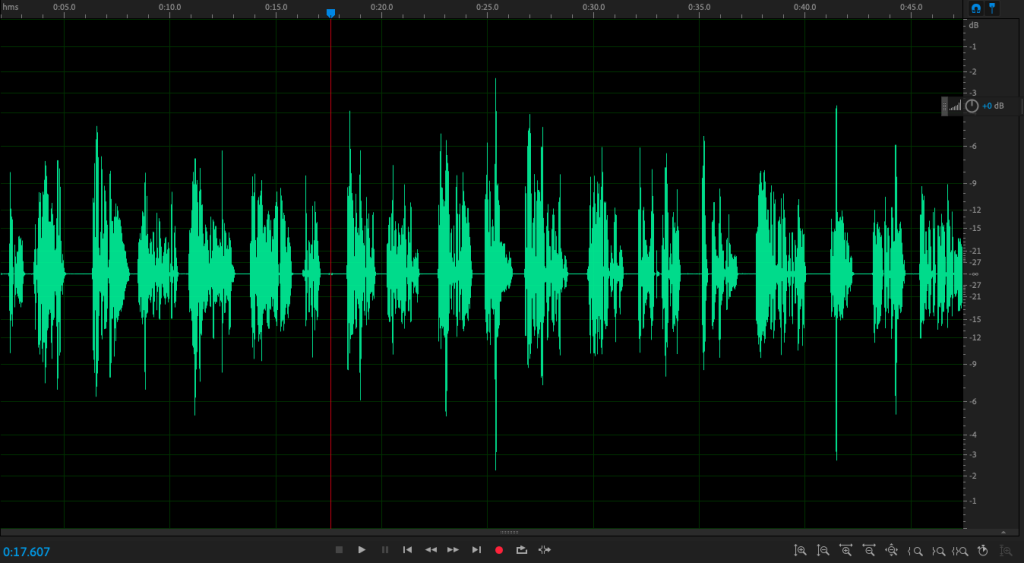
A visual example of blocking is starkly evident when examining audio waveforms. In a typical narrative delivery exhibiting blocking, the waveform will display pronounced, sharp divisions. These are not the organic pauses that facilitate understanding but rather abrupt interruptions that fragment the speech.
Listening to audio characterized by blocking reveals a "staccato" or disjointed quality. It deviates significantly from the fluid, continuous speech patterns listeners are accustomed to. This artificial segmentation forces the listener to actively anticipate the continuation of sentences, creating an effortful and ultimately unenjoyable listening experience. The intended message can become diluted, and the overall impact of the voiceover is diminished.
The Visual Evidence: Blocking vs. Natural Flow
To illustrate the contrast, consider the visual representation of audio.
Audio with Blocking (Illustrative Waveform Description):
A waveform exhibiting blocking would show prominent, rectangular "blocks" of silence interspersed between segments of vocalization. These gaps are significantly larger and more abrupt than natural breathing spaces or intentional pauses for emphasis. The vocal segments themselves might also appear compressed or unnaturally uniform in their duration.

Audio Without Blocking (Illustrative Waveform Description – "Hairy Caterpillars"):
In contrast, audio demonstrating good, natural flow—often referred to colloquially as "hairy caterpillars" due to their textured and continuous appearance—exhibits a much more fluid waveform. While there are still variations in amplitude and some spaces for breaths, the overall impression is one of continuous, interconnected speech. The "hairs" represent the subtle nuances of human vocalization, including breaths and micro-pauses, that contribute to a natural rhythm. This visual representation directly correlates with a delivery that is perceivably smooth, engaging, and easy to follow.
The difference is not merely aesthetic; it directly impacts the listener’s perception and ability to absorb information. A natural flow allows the spoken words to breathe, giving the listener time to process each phrase and sentence without feeling rushed or disconnected.
Root Causes of Voiceover Blocking
Blocking is a common challenge, particularly among individuals new to the voiceover profession, although it is not exclusively limited to novices. Several factors can contribute to its occurrence:
- Lack of Experience with Script Pacing: Newcomers may not have developed an intuitive sense of how to pace dialogue effectively, leading to unnatural pauses.
- Over-Reliance on Written Cues: Focusing too rigidly on punctuation marks (like commas and periods) as strict markers for pauses, rather than interpreting them as guides for natural speech rhythm.
- Anxiety and Self-Consciousness: Performance anxiety can lead to hesitant delivery and unnatural breaks as the performer overthinks their performance.
- Misunderstanding of "Pacing": Confusing a slower pace with a series of isolated, abrupt stops, rather than a sustained, measured delivery.
- Technical Issues or Distractions: External factors during recording, such as poor audio monitoring or background noise, can disrupt a performer’s concentration and lead to fragmented speech.
- Instructional Deficiencies: Inadequate training or feedback regarding natural speech patterns and the subtle art of pacing can leave performers unaware of the issue.
The Counterpoint: The Pitfalls of Over-Editing and Excessive Speed
Conversely, the opposite extreme of blocking is also detrimental to voiceover quality. This involves deliveries that are overly edited, excessively de-breathed, or paced too rapidly. The outcome is a complete absence of necessary space for the listener to digest the information presented.
Consider the common experience of local radio advertisements where an excessive amount of copy is crammed into a limited time slot. By the conclusion of such a commercial, the listener might find themselves exclaiming, "I have no idea what I just heard!" This occurs because the rapid-fire delivery leaves no opportunity for comprehension or retention. The sheer volume of information, delivered without adequate pause or emphasis, becomes overwhelming. This phenomenon, while stemming from a different cause than blocking, is equally damaging to the effectiveness of the voiceover.
When Blocking Becomes a Conscious Artistic Choice
While blocking is generally considered an undesirable artifact of inexperience, there are specific contexts where a deliberate, staccato delivery might be artistically justified. For example:
- Portraying Specific Characters: An actor might intentionally employ a fragmented delivery to represent a character who is mentally unstable, experiencing extreme stress, or speaking in a foreign language with a distinct cadence.
- Creating a Stylized Effect: In certain avant-garde or experimental audio productions, a deliberately disjointed rhythm might be used to evoke a particular mood or atmosphere.
- Emphasizing Specific Words or Phrases: A performer might use short, sharp pauses to highlight key terms or create a sense of urgency, though this requires careful execution to avoid devolving into true blocking.
In these instances, the voiceover artist is making a conscious, informed decision to deviate from natural speech patterns. This is a deliberate artistic choice, employed with a clear understanding of its intended impact on the listener. The critical distinction lies in awareness and intent; the artist chooses this delivery, rather than being inadvertently constrained by it.
Strategies for Eliminating and Preventing Blocking
Fortunately, rectifying and preventing blocking is an achievable goal with focused practice and an understanding of key principles. The process of developing natural, humanistic flow is not overly complex and can be cultivated through the following guidelines:
- Active Listening to Natural Speech: Dedicate time to observing and analyzing how people speak in everyday conversations. Pay attention to the rhythm, the placement of breaths, and the natural ebb and flow of sentences.
- Recording and Self-Critique: Regularly record your own voiceover practice sessions and listen back critically. Identify instances of abrupt pauses or disjointed delivery. Compare your recordings to examples of natural speech.
- Understanding Script Intent: Before recording, thoroughly analyze the script. Consider the emotional tone, the intended audience, and the overall message. This understanding will inform your pacing and delivery choices.
- Embracing the Breath: View breaths not as interruptions but as integral parts of speech. Allow natural breaths to occur where they feel most comfortable and contribute to the rhythm of the sentence. Avoid holding your breath or taking unnaturally short, sharp inhalations.
- Utilizing Natural Pauses: Trust the pauses indicated by punctuation and sentence structure as guides, but interpret them through the lens of natural speech. A comma might indicate a brief pause for breath or thought, while a period signifies a more definitive end to a thought, allowing for a slightly longer, yet still natural, break.
- Focusing on the Narrative Arc: Instead of focusing on individual words or phrases, concentrate on the overall narrative progression of the script. This holistic approach encourages a more fluid and connected delivery.
- Practicing with Different Pacing: Experiment with delivering the same lines at various paces—slightly faster, slightly slower—while consciously maintaining natural breaths and pauses. This helps develop flexibility and control.
- Seeking Professional Feedback: If possible, work with a voiceover coach or experienced peer who can provide objective feedback on your delivery and identify areas for improvement.
Conclusion: The Artist’s Control Over Delivery
Ultimately, the responsibility for the style and flow of a voiceover performance rests with the professional voiceover artist. As the interpreter of the script and the conduit to the listener, the artist possesses the critical insight into how to effectively convey the message. Whether the chosen delivery is fast-paced, staccato, or naturalistic, it is the artist’s prerogative and a testament to their skill.
The key to successful voiceover lies in having conscious control over these delivery tools. When an artist understands the nuances of pacing, breathing, and pausing, and can intentionally employ them to engage the audience, their performance will be impactful and resonant. Issues arise not from the choice of delivery style itself, but from a lack of awareness or control over these fundamental elements, leading to unintended and detrimental blocking. By mastering the principles of natural flow and actively working to eliminate blocking, voiceover artists can elevate their performances and ensure their messages are not only heard but truly understood and appreciated.
