


The nuanced world of professional voiceover artistry often faces an unexpectedly persistent technical hurdle: the ubiquitous mouth click. While seemingly a minor annoyance, these percussive sounds can derail promising auditions, compromise final audio mixes, and ultimately impact a voice artist’s career trajectory. This comprehensive analysis delves into the origins, amplification, and effective prevention of mouth clicks, offering voiceover professionals actionable strategies to enhance their recording quality and marketability.
Understanding the Anatomy of a Mouth Click
Mouth clicks, colloquially referred to as "clicky mouth," "dry mouth," or simply "mouth noise," are auditory artifacts generated by the interaction of the tongue, teeth, and saliva during speech. These sounds are a natural byproduct of human vocalization, typically filtered out by the human ear in everyday conversation. However, in the sensitive environment of professional audio recording, these subtle noises are amplified and can become prominently distracting.
The prevalence of mouth clicks is not primarily a physiological defect. While very few individuals may have specific anatomical or medical conditions contributing to excessive mouth noise, the vast majority of instances are attributable to improper recording techniques and, critically, the state of the performer’s oral hydration. The impact of these clicks on a voiceover artist’s career cannot be overstated. Anecdotal evidence from industry professionals suggests that an abundance of mouth clicks can be a decisive factor in rejecting a candidate for an audition. In extreme cases, the cost and time associated with editing out these noises can outweigh the expense of hiring a new, cleaner-sounding artist, as highlighted by one industry veteran who recounted re-recording an entire five-hour session due to a voice artist’s excessive mouth noise. This underscores the critical need for proactive management of this issue.
The Role of Dehydration and Over-Hydration
A primary culprit behind increased mouth click production is dehydration. Substances such as tobacco smoke and caffeine, famously consumed by many in the early morning before recording sessions, act as diuretics. Diuretics increase the rate of urine production, effectively depleting the body of water. This reduction in systemic water content directly impacts oral moisture levels.
The physiological mechanism is straightforward: when the body is dehydrated, the natural saliva produced in the mouth becomes less viscous and "wetter." Conversely, a lack of sufficient water leads to a drier, stickier oral environment. This sticky saliva creates a greater adhesion between the tongue, palate, and teeth, resulting in pronounced clicks and pops as these surfaces separate during speech.

Ironically, the condition of being over-hydrated can also contribute to mouth clicks, though the mechanism differs. Voiceover artists who attempt to rapidly compensate for perceived dehydration by gulping large volumes of water shortly before a session may find themselves with an excess of fluid in their mouths. This excess water can create a similar environment where the tongue’s movement, even in a well-lubricated mouth, can generate noise. The key lies in balanced, consistent hydration, not in extreme, last-minute fluid intake.
Amplification in the Recording and Post-Production Process
A crucial aspect often misunderstood by voiceover artists is that mouth clicks are not inherently louder on recordings than they are in natural speech. Instead, their prominence is dramatically amplified by the standard recording and post-production processes, particularly audio compression.
Audio compression is an indispensable tool in audio engineering, used to reduce the dynamic range of an audio signal. This means it lessens the difference between the loudest and quietest parts of a recording. Imagine a waveform representing speech being squeezed by a vice; the peaks are brought closer to the troughs. This process is essential for making vocal recordings blend seamlessly with other audio elements in a mix, ensuring consistent intelligibility across various playback systems.
However, compression has a significant side effect: it reduces the overall perceived loudness of the entire signal. To compensate, engineers typically "turn up" the compressed audio through normalization or a simple volume increase. This raises both the intended dialogue and any incidental noises, including mouth clicks.
Consider a visual analogy:
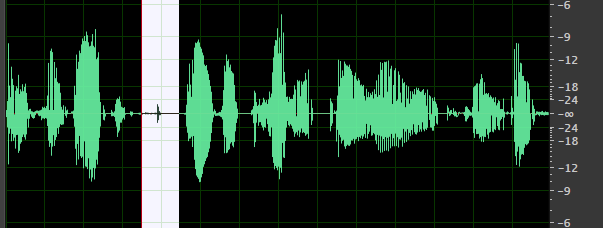
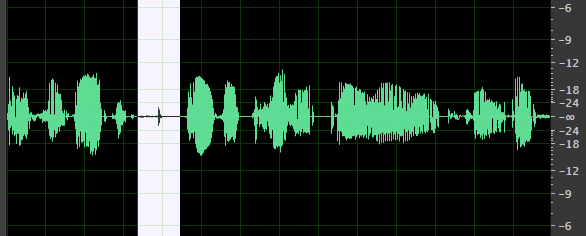
- Raw Waveform with a Click: Before compression, a mouth click might appear as a sharp, relatively tall spike against the baseline of the spoken word.
- After Compression: The compression process reduces the amplitude of the spoken word. The mouth click, being a transient sound, is also affected but its relative size compared to the now-quieter dialogue remains.
- After Normalization/Volume Increase: When the entire waveform is brought back up to a standard listening level, the previously small spikes of the mouth clicks are now significantly louder in relation to the dialogue. The noise floor, which includes subtle background hums and the amplified clicks, is raised considerably.
Therefore, a subtle click present during recording can become a jarring distraction after post-production. This underscores the principle that eradicating the problem at its source – during the recording phase – is far more efficient and effective than attempting to surgically remove every click later. Post-production editing of mouth clicks is a time-consuming and often frustrating task, requiring meticulous attention to detail and specialized software tools.

Strategic Prevention: A Three-Step Approach
Given the amplification effect of post-production, the most effective strategy for voiceover artists is to minimize mouth clicks during the recording session itself. This involves a multi-faceted approach focusing on hydration, mic technique, and consistent oral lubrication.
Step 1: Master Pre-Session Hydration
The cornerstone of click prevention is consistent and adequate hydration, commencing well in advance of the recording session. The common misconception is that drinking a large quantity of water immediately before a session will suffice. However, the human body’s capacity to absorb and distribute water is limited. Gulping down two liters of water ten minutes prior to a session will not ensure even hydration throughout the system, including the oral cavity. Instead, it can lead to an immediate over-saturation of the mouth, paradoxically causing clicks.
The recommended practice is to begin hydrating at least two hours before the scheduled recording time. This allows the body sufficient time to absorb the water and distribute it effectively, leading to optimal saliva production.
It is crucial to distinguish between true hydration and the consumption of dehydrating beverages. Anecdotal reports from voiceover professionals highlight instances where individuals believed they were adequately hydrated by consuming large volumes of beverages like Coca-Cola or sweetened coffee. These drinks, due to their caffeine or sugar content, act as diuretics, negating the intended hydrating effect. For optimal results, water should be the sole beverage of choice for hydration.
Furthermore, maintaining proper hydration is not merely about preventing clicks; it is vital for vocal health. The vocal cords, delicate mucous membranes, require consistent lubrication to vibrate efficiently and without friction. Dehydration reduces this lubrication, leading to increased friction, potential soreness, and a change in vocal quality – a deeper, more gravelly tone.
For early morning sessions, pre-session hydration should commence the night before. The body naturally loses water during sleep, and a deficit accumulated overnight can be difficult to rectify in the short window before an early start. Professionals with early sessions are often advised to begin their hydration regimen the evening prior.
Step 2: Optimize Microphone Placement and Projection
The relationship between a voiceover artist’s distance from the microphone and their vocal projection plays a significant role in managing mouth noise. Consider the extreme: speaking loudly from a great distance will naturally mask subtle mouth clicks due to the sheer volume of the intended speech. Conversely, whispering intimately into a microphone positioned inches from the mouth will make even minor clicks highly audible.
The principle is that the volume of mouth noise remains relatively constant, irrespective of how loudly one speaks or whispers. However, the perceived volume of this noise changes drastically in relation to the dialogue based on the recording level.
In a recording studio, this translates to controlling the input gain. If an artist is too close to the microphone (e.g., three inches) and speaking softly, the input gain must be increased significantly to achieve a usable recording level. This amplified gain raises not only the dialogue but also the baseline noise floor and any mouth clicks, making them comparatively louder.
Conversely, by increasing the distance from the microphone (e.g., seven to eight inches, often measured with a ruler to ensure consistency) and projecting slightly louder than normal conversational speech, the input gain can be reduced. This results in a stronger signal for the dialogue and a quieter relative presence of the noise floor and mouth clicks.
Therefore, the operative advice is to increase distance from the microphone and project more. This technique, often referred to as "backing off," is fundamental to reducing the comparative loudness of mouth clicks in the final recording. For commercial voiceovers that utilize the "proximity effect" for a close, bassy sound, artists must acknowledge that this stylistic choice inherently requires more post-production work to mitigate mouth noise.
Step 3: Sip Consistently During Sessions
The process of speaking itself is dehydrating. As a voiceover artist engages in sustained vocalization, their vocal cords are working, and the natural balance of saliva and mucus in the mouth begins to diminish. This leads to a gradual increase in clickiness, even if the artist was perfectly hydrated at the session’s outset.
A professional voiceover artist understands the necessity of continuous oral lubrication throughout a recording session. This means actively sipping water at regular intervals. While it may seem like a minor detail, the consistent intake of small amounts of water is critical to maintaining the optimal oral moisture balance.
The practice of sipping water every 10-15 lines or at designated breaks is a hallmark of a professional approach. While it may necessitate more frequent trips to the restroom, especially in climate-controlled studio environments that can further dry the air, the benefit of clean, click-free audio is invaluable. This consistent hydration ensures that the vocal cords remain lubricated and the saliva remains at an appropriate viscosity, thereby minimizing the likelihood of mouth clicks.
Debunking the Green Apple Myth
A persistent piece of advice circulating within some voiceover circles involves consuming a green apple or other acidic food items to combat mouth clicks. The rationale is that the citric acid cleanses the mouth and reduces the stickiness of saliva. While it is true that such items can temporarily alter the oral environment, they are not a reliable or professional solution for consistent click prevention.
The effectiveness of green apples is largely anecdotal and temporary. For seasoned voiceover artists who adhere to the foundational principles of hydration, microphone technique, and consistent sipping, the need for such measures is negated. Relying on a green apple suggests a failure to address the root causes of the problem.
However, in extreme circumstances, such as recovering from a significant hangover, these "remedies" might offer a fleeting respite. But for the daily demands of professional voiceover work, focusing on the established, science-backed strategies of hydration and technique is paramount. The adage "you can’t have your cake and eat it too" applies here; a desired vocal effect like proximity often comes with trade-offs, and consistent click-free delivery requires diligent adherence to best practices.
The ongoing commitment to these preventative measures—proper pre-session hydration, optimized microphone technique, and consistent sipping during recording—forms the bedrock of professional voiceover performance, ensuring not only high-quality audio but also a reputation for reliability and technical proficiency.
