

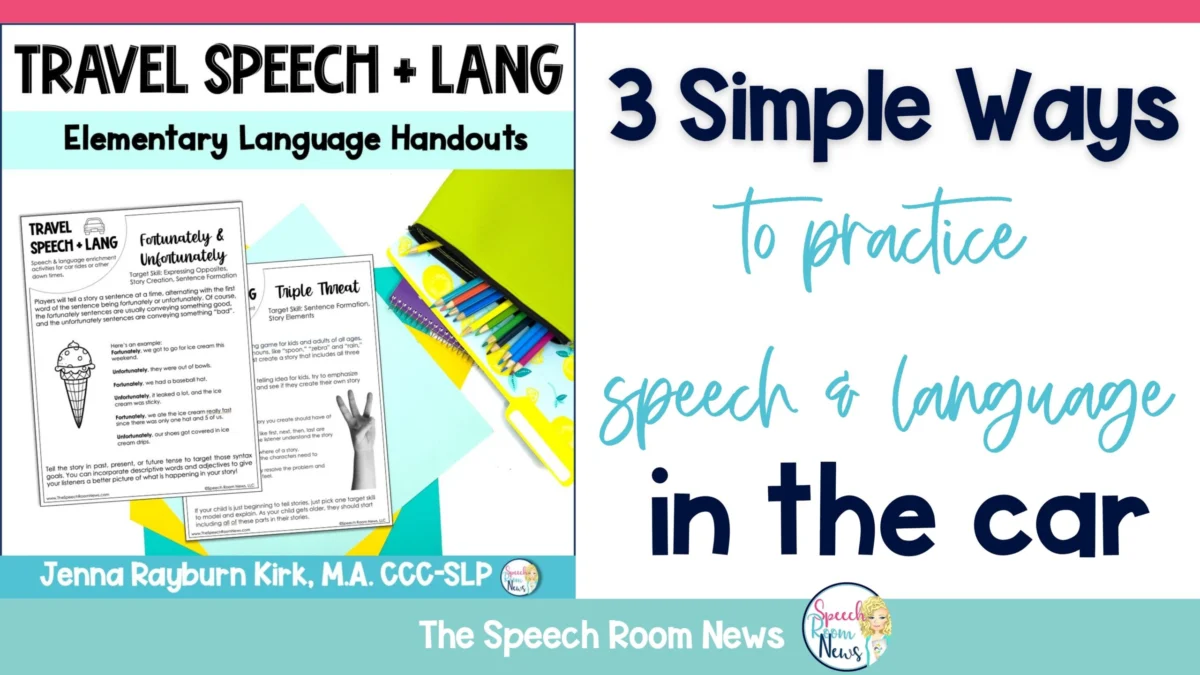
Finding consistent opportunities to practice vital speech and language skills can be a significant challenge for parents navigating the demands of modern life. However, the daily commute, often viewed as a mundane necessity, presents an unexpectedly fertile ground for fostering linguistic development in children. By approaching car journeys with intentionality, parents can transform routine drives into dynamic learning environments, supporting their children’s communication goals without adding extra burden to an already packed schedule. This approach not only optimizes valuable time but also leverages a naturally engaging setting to make learning enjoyable and effective.
The Landscape of Speech and Language Development Challenges
Speech and language disorders are among the most common developmental challenges affecting children globally. According to data from the National Institute on Deafness and Other Communication Disorders (NIDCD), approximately 7.7% of children aged 3-17 years in the United States have had a speech, language, voice, or swallowing disorder in the past 12 months. Speech sound disorders (SSDs), which involve difficulties producing speech sounds correctly, affect about 8-9% of young children, with a significant percentage requiring intervention. Similarly, specific language impairment (SLI), now often referred to as developmental language disorder (DLD), impacts roughly 7% of children, characterized by persistent difficulties with language comprehension and/or expression.
For families whose children are undergoing speech-language pathology (SLP) services, the importance of consistent practice outside of clinical sessions cannot be overstated. Research consistently demonstrates that parental involvement and carryover of therapeutic strategies into daily routines significantly enhance outcomes. However, the practicalities of integrating these exercises into a busy day, filled with school, extracurricular activities, and household responsibilities, often prove daunting. Parents frequently report struggling to find dedicated time slots, leading to concerns about progress and the generalization of learned skills. This is where the seemingly ordinary environment of the family car emerges as a powerful, yet often overlooked, resource.
The Unique Advantages of the Automotive Learning Space
The car offers a surprisingly conducive setting for speech and language practice, presenting several distinct advantages that traditional home-based activities or structured therapy sessions might not fully capture. Foremost among these is the inherent reduction of external distractions. Unlike a living room filled with toys, screens, or other family members, the confines of a car often provide a focused, one-on-one interaction space between parent and child. This concentrated attention can be particularly beneficial for children with attention difficulties or those easily overwhelmed by sensory input.
Furthermore, car conversations naturally foster a back-and-forth rhythm of communication. The shared experience of the journey—observing passing scenery, reading road signs, or simply engaging in dialogue about the day—creates organic opportunities for language use. This natural context is crucial for vocabulary expansion, as children are exposed to new words and concepts relevant to their immediate environment. For instance, discussing landmarks, vehicle types, or actions observed outside the window integrates new lexicon into meaningful contexts. The informal nature of these interactions also helps to alleviate the pressure often associated with structured learning, making the process feel more like play and less like work. This playful approach can significantly increase a child’s motivation and engagement, thereby maximizing the therapeutic benefit of each car ride. Ultimately, leveraging the car ride as a platform for speech and language practice not only optimizes valuable time but also cultivates an engaging and effective learning experience, seamlessly woven into the fabric of daily life.
Expert Perspectives on Naturalistic Language Intervention
Speech-Language Pathologists widely advocate for naturalistic language intervention (NLI) strategies, which emphasize embedding therapeutic goals within everyday activities and natural communication contexts. Dr. Eleanor S. Johnson, a renowned SLP specializing in pediatric communication disorders, commented in a recent webinar, "The goal of therapy isn’t just for a child to demonstrate a skill in my clinic room, but for them to use it confidently and spontaneously in their real life. Parent-implemented strategies, especially those that fit into existing routines like car rides, are absolutely critical for generalization and long-term success." This perspective underscores why activities that can be integrated into routine events, like commuting, are highly valued by professionals.
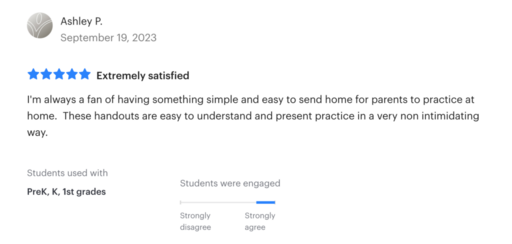
Many SLPs utilize resources that provide parents with practical, easy-to-implement ideas for home practice. The positive feedback from Speech-Language Pathologists regarding structured resources like the "Travel Speech and Language Bundle" highlights the demand for accessible, parent-friendly materials. SLPs often report that such handouts empower parents, reduce their anxiety about "doing therapy," and significantly improve carryover. "These practical tips give parents concrete ways to support their child without feeling like they need a special degree," stated Sarah Miller, an SLP with over 15 years of experience, reflecting a common sentiment among practitioners. This collaborative model, where clinicians provide strategies and parents implement them in natural settings, is considered a cornerstone of effective pediatric speech and language therapy.
Structured Activities for On-the-Go Language Development
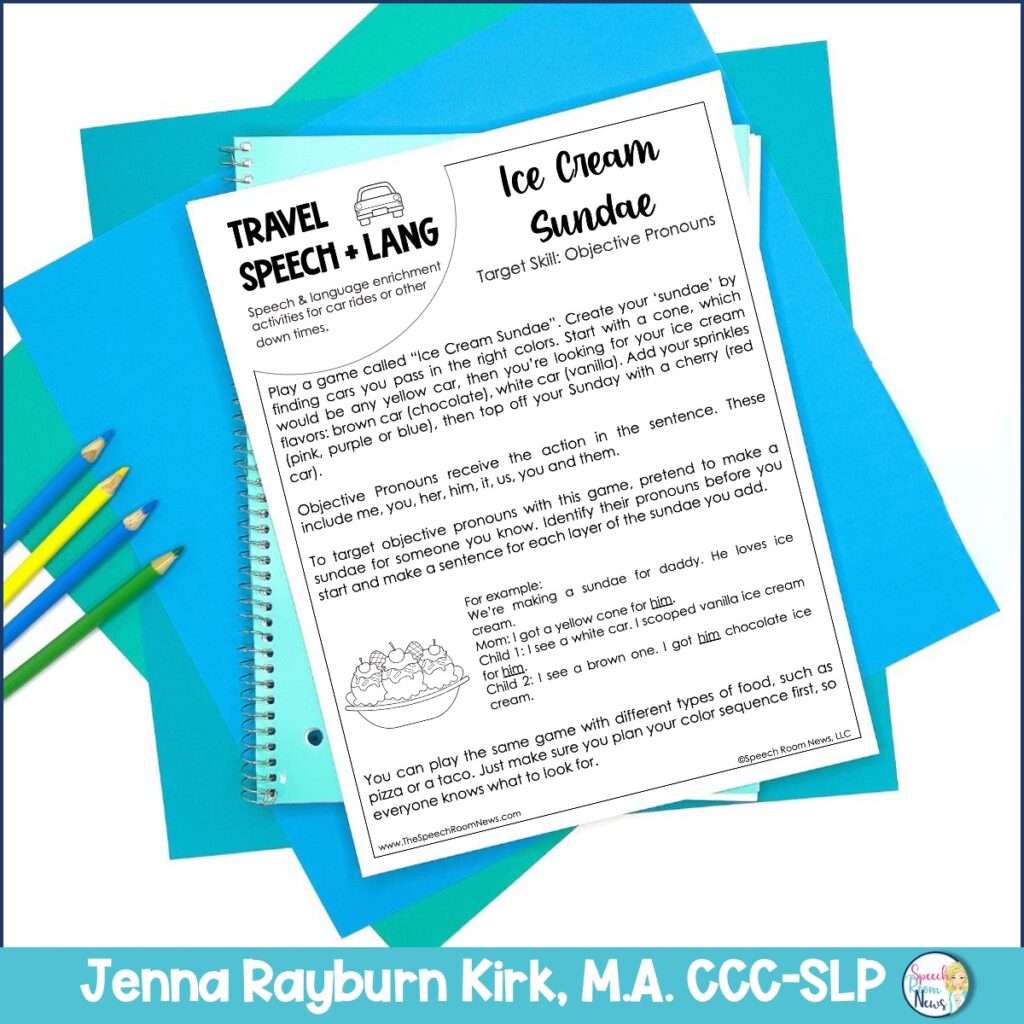
For parents seeking concrete ways to transform car rides into productive language practice sessions, several simple yet effective games can be employed. These activities are designed to subtly target specific speech and language goals, making them ideal for children with or without identified delays, and particularly beneficial for those receiving professional support.
1. The Grocery Game: Mastering Question Formation
Objective: To enhance a child’s ability to formulate grammatically correct questions and develop descriptive language skills.
Gameplay: One player secretly thinks of an item found in a grocery store. The other players take turns asking yes/no questions to guess the item. For example:
- "Is it in the freezer aisle?"
- "Is it a type of fruit?"
- "Do you drink it?"
- "Can you cook it?"
- "Will it melt if left out?"
Targeted Skills: The primary grammatical target skill for this game is question formation. Children learn to correctly order words in interrogative sentences, utilizing auxiliary verbs (e.g., "do," "is," "can," "will"). This practice is fundamental for developing complex sentence structures and conversational competence.
Secondary Language Skills: While focusing on question formation, this game naturally addresses a multitude of other language components:
- Functions: "Does it melt?" (understanding properties and actions).
- Actions: "Do you bite it?" (connecting objects to verbs).
- Categories: "Is it a fruit?" (categorization and semantic organization).
- Associates: "Is it something that goes on bread?" (understanding relationships between objects).
- Descriptive Vocabulary: Children must think about an item’s attributes (color, size, texture, taste, location) to form effective questions, thereby expanding their descriptive vocabulary.
- Inferencing and Deduction: Players must use the answers to previous questions to narrow down possibilities, developing critical thinking skills.
Chronology of Skill Development (within the game): Initially, children might ask simple, less specific questions. Over time, and with adult modeling, they learn to formulate more complex, targeted questions, demonstrating improved understanding of grammatical structures and semantic categories. The progression from basic "Is it red?" to more abstract "Does it need to be refrigerated?" showcases their growing linguistic sophistication.
2. Red Light Race: Articulation Practice on the Go
Objective: To provide repetitive practice for target speech sounds in a fun, time-bound context, promoting articulation and phonological awareness.
Gameplay: Each time the car stops at a red light, players take turns naming as many items as possible that include a specific target sound within a chosen category. For instance, if the target sound is /s/ and the category is "animals," a child might say: "snake," "spider," "seal," "sausage dog," "starfish." One person counts the named items.
Key Strategy: Auditory Bombardment and Modeling: For this activity to be most effective, the adult should actively model the target speech sound. Hearing the sound produced correctly and repeatedly (auditory bombardment) helps children develop a stronger internal representation of the sound, making them more attuned to its presence in words and improving their own production. The adult might say, "My turn! I’m looking for things with /s/ in the ‘food’ category: soup, salad, sandwich, peas."
Examples of Broad Categories for Diverse Target Sounds:
- Animals: (e.g., /s/ for snake, /r/ for rabbit, /k/ for cat)
- Foods: (e.g., /sh/ for fish, /ch/ for cheese, /l/ for lemon)
- Clothing: (e.g., /f/ for shirt, /th/ for shoes, /g/ for gloves)
- Things You See Outside: (e.g., /bl/ for blue, /gr/ for grass, /sp/ for spiderweb)
- Toys: (e.g., /j/ for jump rope, /v/ for video game, /z/ for puzzle)
- Places: (e.g., /p/ for park, /b/ for beach, /t/ for town)
- Actions: (e.g., /d/ for dance, /w/ for walk, /y/ for yawn)
- Colors: (e.g., /r/ for red, /bl/ for blue, /gr/ for green)
- School Supplies: (e.g., /p/ for pencil, /b/ for book, /m/ for marker)
- Household Items: (e.g., /k/ for cup, /t/ for table, /n/ for napkin)
Application: This game can be adapted for any target sound a child is working on, whether it’s initial, medial, or final positions in words, or specific consonant blends. It also subtly builds vocabulary within categories, further enriching language skills.
3. Triple Threat: Cultivating Narrative and Sentence Structure
Objective: To improve sentence formation, storytelling abilities, and creative thinking by integrating disparate vocabulary items into a coherent narrative.
Gameplay: The adult chooses any three unrelated nouns and presents them to the child (e.g., "dog," "milk," and "bike"). The child’s task is to create a short story that incorporates all three items. The sillier the story, the better!
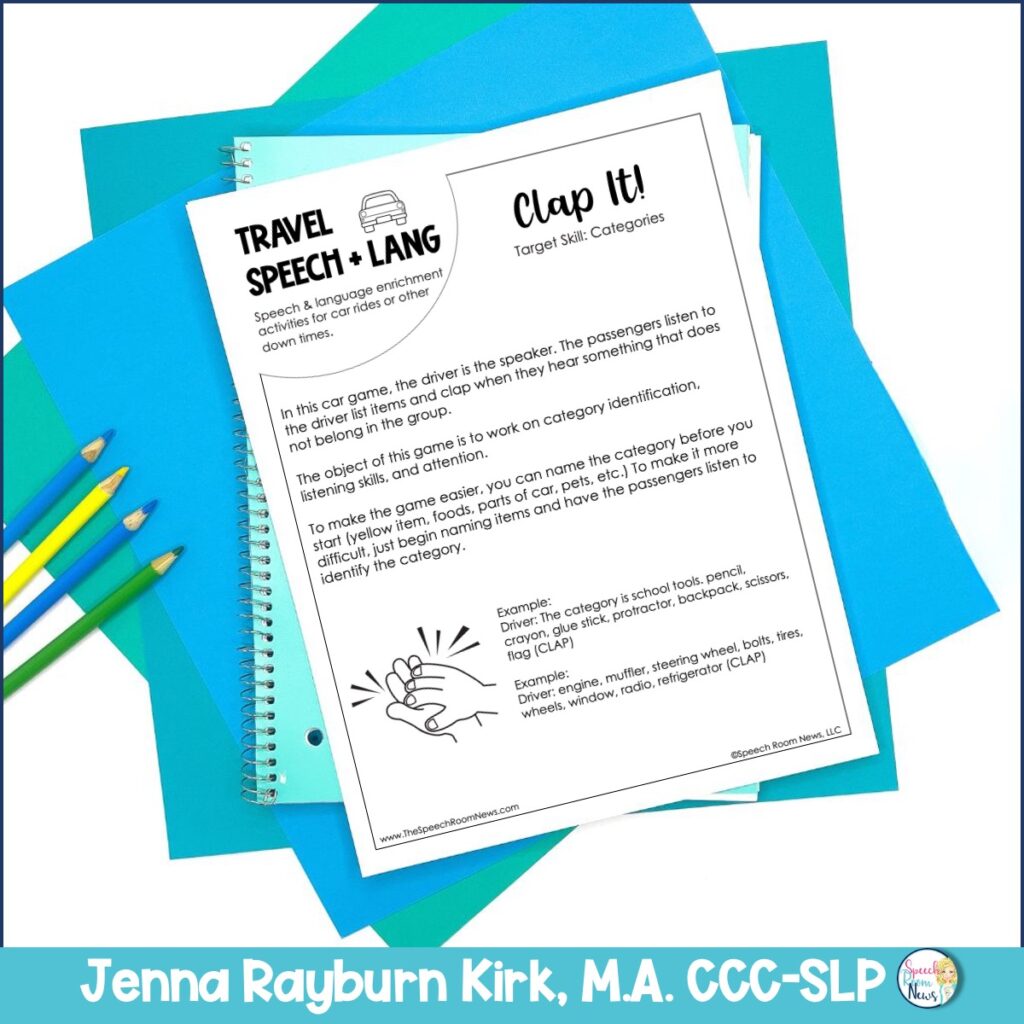
Skills to Target with this Language Activity:
- Sentence Formation (Syntax and Grammar): Children are challenged to construct grammatically correct and varied sentences to weave the nouns into a story. This encourages the use of conjunctions, prepositions, and different sentence types (simple, compound, complex).
- Vocabulary Expansion: As children try to connect the nouns, they naturally draw upon and expand their vocabulary, using descriptive adjectives, adverbs, and more precise verbs.
- Story Elements: The activity implicitly teaches the components of a narrative: characters (who?), setting (where?), plot (what happened?), and resolution.
- Sequencing and Cohesion: Children practice organizing thoughts into a logical sequence, ensuring the story flows coherently from one event to the next.
- Imagination and Creativity: The disparate nature of the nouns encourages imaginative thinking and problem-solving to create a plausible (or delightfully implausible) narrative.
- Inferencing and Problem Solving: How can a dog, milk, and a bike all fit into one story? This pushes children to think creatively about connections and consequences.
Variations: To increase complexity, add an adjective or a verb to the "threat" (e.g., "sleepy dog," "sour milk," "broken bike"). For older children, introduce a conflict or a specific genre requirement (e.g., "tell a mystery story with these three words").
Broader Impact and Implications of Car-Based Practice
Integrating speech and language practice into daily car rides extends far beyond the immediate gains in articulation or vocabulary; it carries significant broader implications for child development, family dynamics, and the overall effectiveness of therapeutic interventions.
Parental Empowerment: These strategies empower parents by transforming them from passive recipients of therapy updates into active, confident partners in their child’s developmental journey. Providing concrete, easy-to-implement tools reduces parental stress and enhances their sense of agency, fostering a more collaborative and supportive home environment for learning.
Consistency and Generalization: Regular, informal practice in natural settings like the car is crucial for generalizing skills learned in a clinical environment. A child might master a sound or grammatical structure in therapy, but applying it spontaneously in everyday conversations is a different challenge. Car games provide the consistent, low-pressure repetition needed to bridge this gap, embedding new communication patterns into habitual use.
Early Intervention and Long-Term Outcomes: For children with identified speech or language delays, consistent early intervention is paramount. Research indicates that early and intensive intervention can significantly improve long-term communication outcomes, impacting literacy development, academic achievement, and social-emotional well-being. By utilizing car time effectively, parents contribute to this crucial early and ongoing stimulation.
Strengthening Family Bonds: Beyond the therapeutic benefits, these interactive games foster positive parent-child interactions. Shared laughter, collaborative storytelling, and focused conversation strengthen emotional bonds, creating cherished memories while simultaneously nurturing essential developmental skills. The car becomes a space for connection and shared discovery, rather than just a means of transportation.

Economic and Resource Efficiency: While not a replacement for professional therapy, consistent home practice can potentially optimize the duration and intensity of clinical interventions. By reinforcing skills daily, parents may contribute to faster progress, potentially reducing the overall need for extensive therapy hours and making more efficient use of both family and professional resources.
Accessing Further Support and Resources
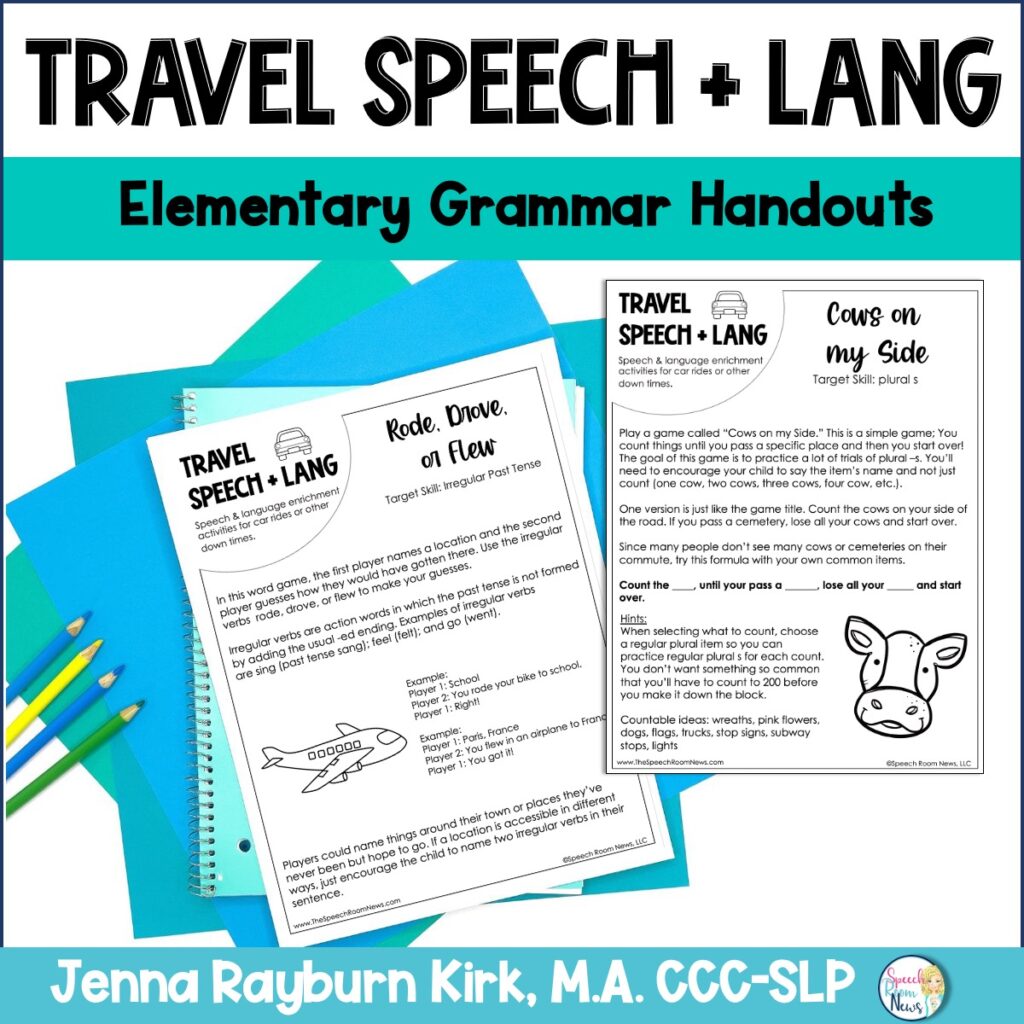
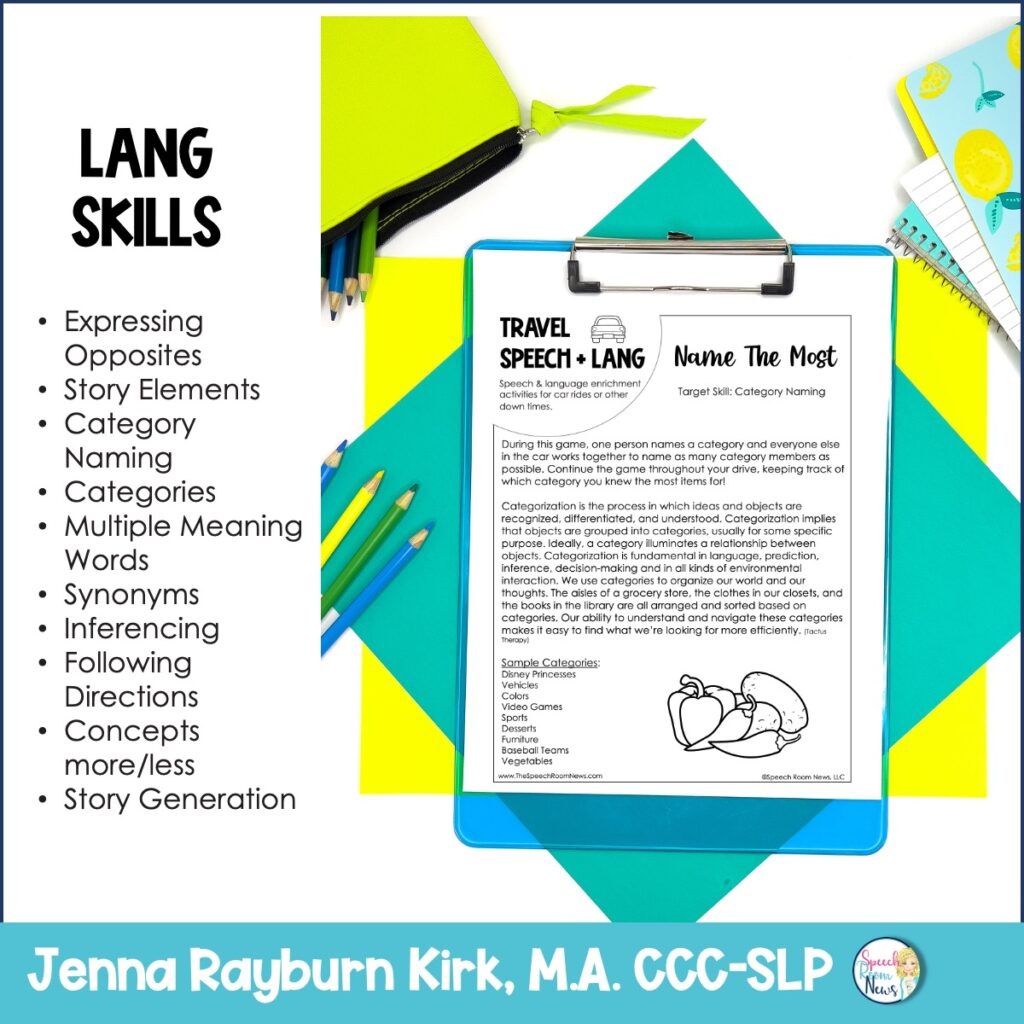
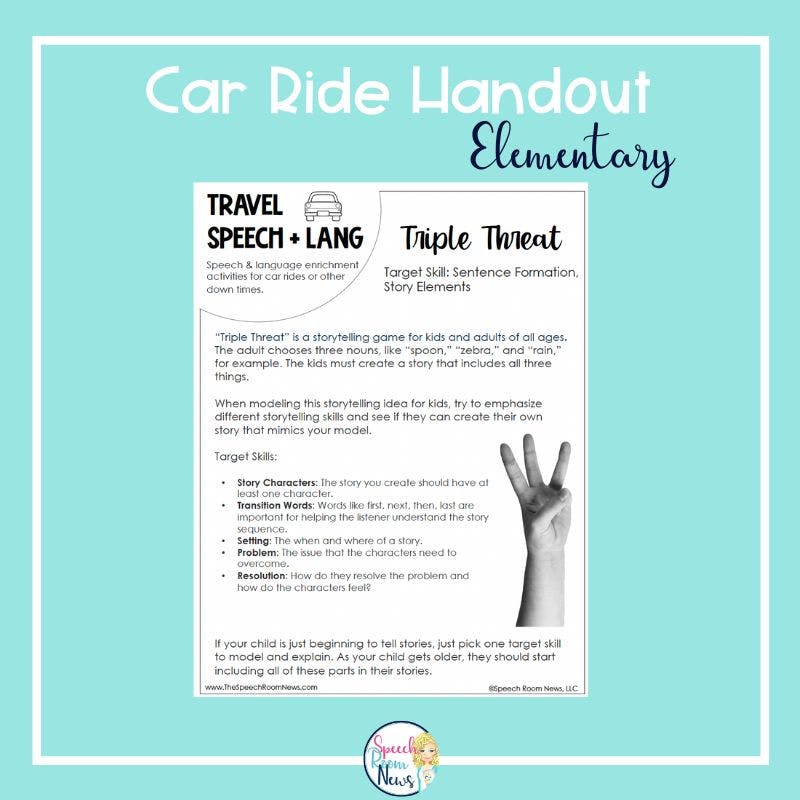
For parents and Speech-Language Pathologists seeking to deepen their repertoire of car-based activities, structured resources are available. The "Travel Bundle for Speech and Language," for instance, offers a comprehensive collection of 30 parent handouts. Each handout provides detailed explanations of practical games and activities, complete with examples, making it easy for parents to understand and implement various strategies. These resources are designed not only for direct parental use but also for SLPs to distribute to families on their caseloads, ensuring that the principles of consistent, naturalistic practice are widely adopted.
Ultimately, the daily car ride, far from being wasted time, can be reimagined as a dynamic "mobile classroom." By embracing simple, engaging activities, parents can seamlessly integrate vital speech and language practice into their routines, transforming ordinary journeys into extraordinary opportunities for growth and connection. This intentional approach not only supports a child’s communication development but also enriches family life, proving that even the busiest schedules can accommodate meaningful learning.
