

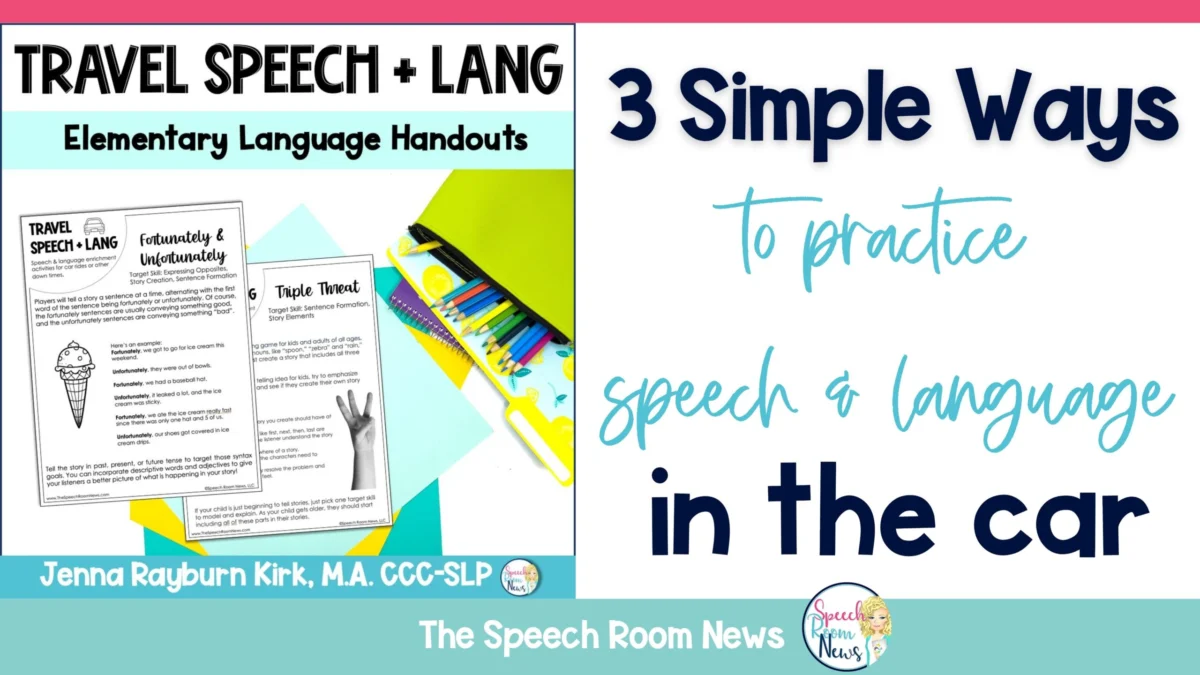
Finding dedicated time to practice crucial speech and language skills can be a significant challenge for parents navigating the demands of modern life. Yet, the often-overlooked daily commute in the car presents a unique, distraction-reduced opportunity for intentional engagement that can significantly bolster a child’s communication abilities. This proactive approach transforms passive travel into an active learning environment, directly addressing speech and language goals in a natural, low-pressure setting.
The Undeniable Value of Commute Time for Development
The car, frequently perceived merely as a means of transit, offers a surprisingly potent platform for speech and language therapy. One of its primary benefits lies in creating a naturally contained, distraction-free space. Unlike a busy home environment filled with toys, screens, or other family members, the car confines interaction, encouraging focused communication between parent and child. This inherent lack of external stimuli aids concentration, allowing children to better process auditory information and participate in verbal exchanges. Furthermore, integrating learning into the commute helps alleviate "boredom," turning potentially restless travel into an engaging and productive experience for many children.
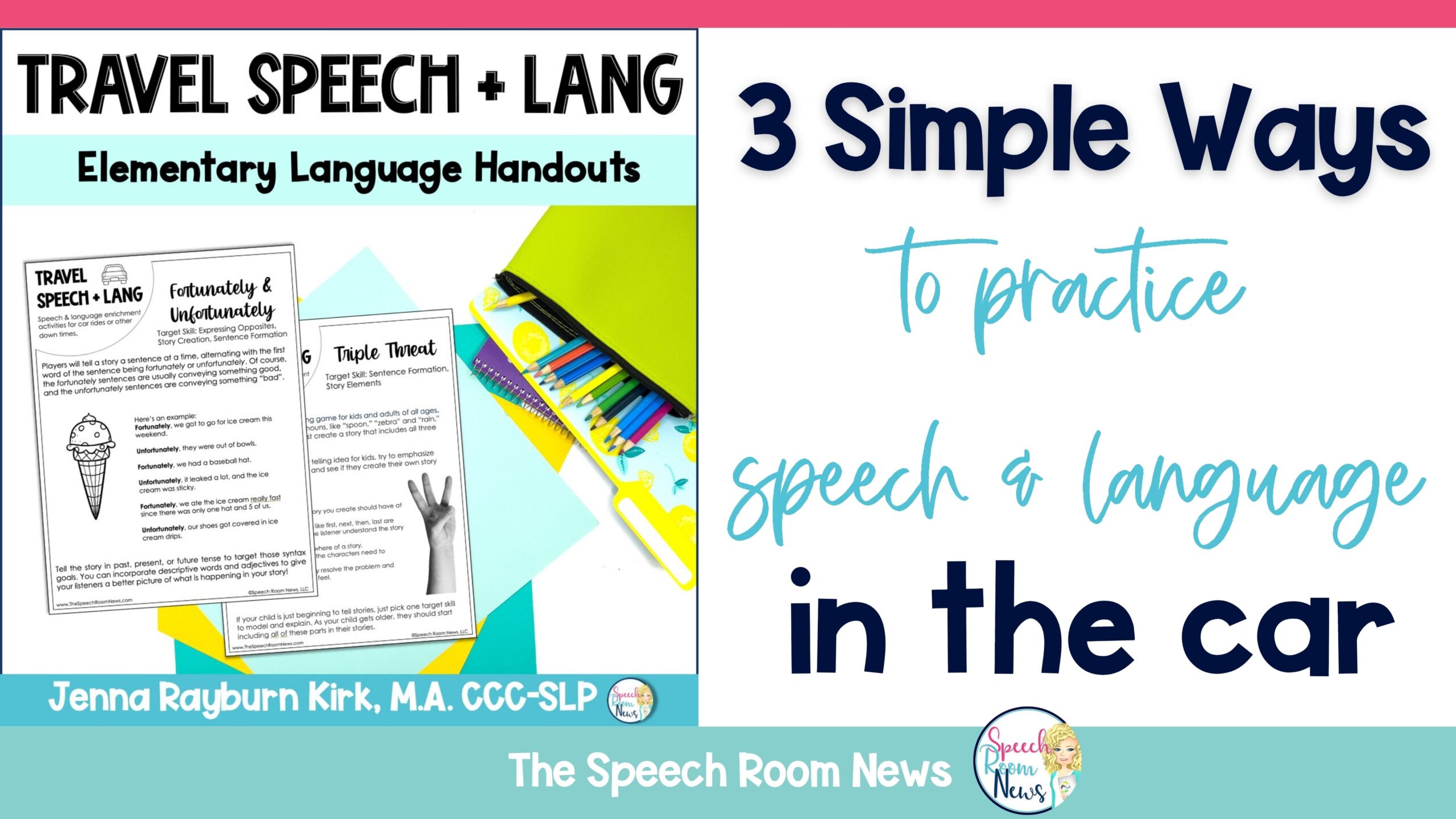
Beyond distraction management, car conversations inherently foster a natural back-and-forth rhythm of communication. This reciprocal interaction is fundamental to developing conversational turn-taking, active listening, and responsive language use. The dynamic scenery passing by—road signs, landmarks, other vehicles, and environmental observations—provides a rich, organic context for vocabulary expansion. Children are exposed to new words and concepts in real-time, allowing for immediate contextualization and discussion, which solidifies understanding more effectively than rote memorization. Overall, leveraging car rides for speech and language practice is not just about maximizing valuable time; it’s about crafting a consistent, fun, and engaging learning experience that seamlessly integrates into the daily routine.
The Foundation: Why Early and Consistent Practice Matters
Speech and language delays are more prevalent than many realize. According to the Centers for Disease Control and Prevention (CDC), about 1 in 12 (7.7%) U.S. children aged 3-17 years have had a disorder of speech, voice, language, or swallowing in the past 12 months. Early identification and consistent intervention are paramount for these children. Research consistently demonstrates that early intervention significantly improves outcomes for children with communication disorders, impacting not only their linguistic development but also their cognitive, social, and emotional growth. A study published in the Journal of Speech, Language, and Hearing Research highlighted that children receiving early and intensive speech and language therapy showed greater gains in communication skills compared to those who started therapy later.
Parents are unequivocally a child’s first and most influential communication partners. Their active involvement in therapy and daily practice is a critical determinant of success. However, the modern parent often faces immense time pressures, making it difficult to schedule additional therapy sessions or dedicated practice time at home. This is where integrating therapeutic activities into existing routines, like car commutes, becomes invaluable. It transforms what could be passive time into active, meaningful engagement without adding extra burdens to an already packed schedule. A consistent, even if brief, daily practice reinforces skills learned in formal therapy, helps generalize new abilities to different contexts, and builds a child’s confidence in their communication. Without such consistent reinforcement, progress can be slower, and skills may not generalize effectively beyond the clinical setting.
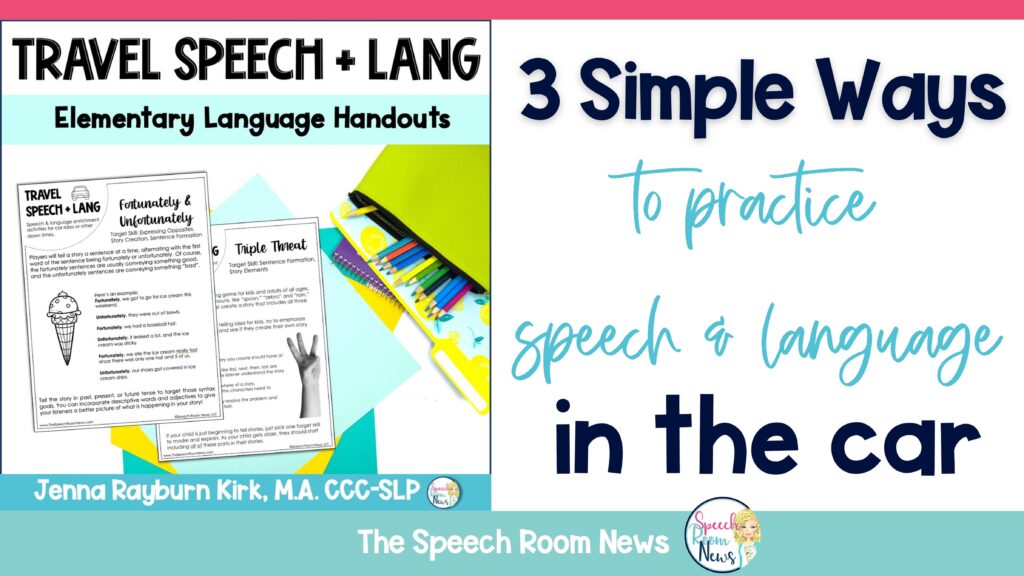
Bridging the Gap: Practical Strategies for the Road
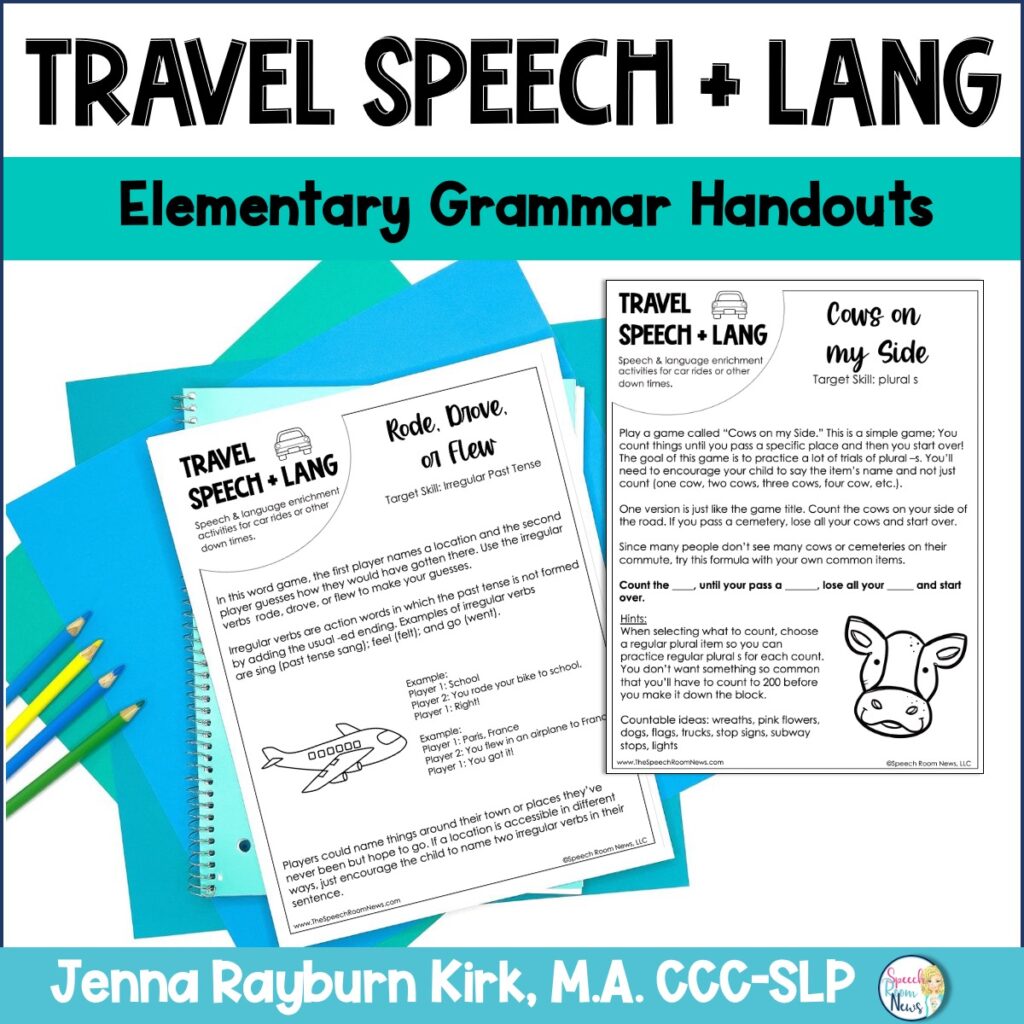
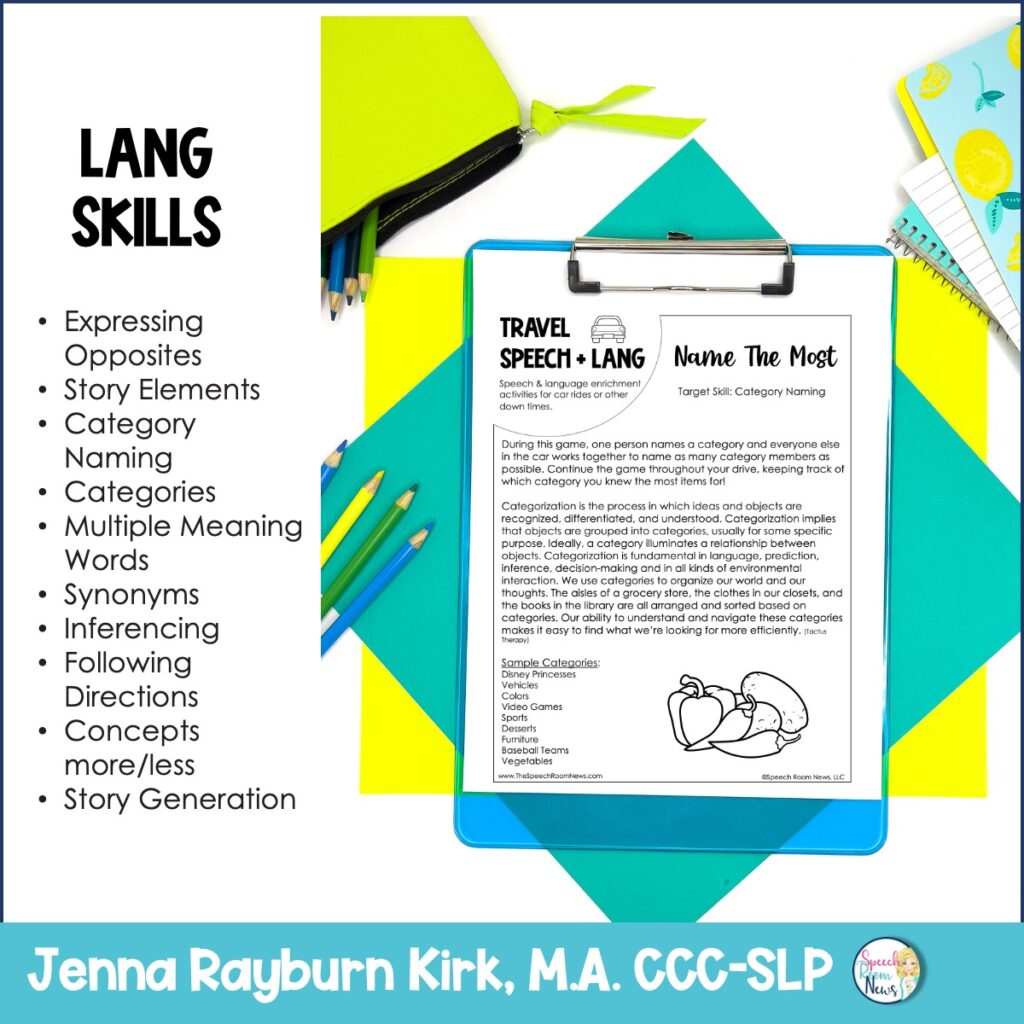
Speech-language pathologists (SLPs) often emphasize the importance of "carryover" – the application of learned skills into everyday environments. The car provides an ideal, everyday setting for this. Here are three simple yet highly effective strategies that parents can employ, informed by professional speech and language therapy principles, to foster communication skills during car rides. These activities are designed to be engaging, adaptable, and require minimal to no materials, making them perfect for on-the-go practice.
Strategy 1: The Grocery Game – Mastering Question Formation
Objective: To practice the grammatical structure and pragmatic function of question formation, while simultaneously enhancing vocabulary and categorical thinking.
How to Play:
One player (initially the parent to model) secretly thinks of an item they could purchase at a grocery store. The other players then take turns asking "yes" or "no" questions to guess the item.
Examples:
- "Is it in the freezer aisle?"
- "Is it a type of vegetable?"
- "Do you drink it?"
- "Can you bake with it?"
- "Does it come in a can?"
Therapeutic Value and Expansion:
This seemingly simple game is a powerhouse for language development. The primary grammatical target is question formation, requiring children to correctly order words (syntax) to convey meaning. Children practice forming various question types, including:
- Yes/No Questions: "Is it…?", "Do you…?"
- Wh-Questions (indirectly): While answers are yes/no, the thinking behind the questions often involves "where," "what kind," "how used." For example, "Is it in the produce section?" implies "Where is it found?"
- Auxiliary Verb Use: Correctly using "do," "can," "is," "will."
Beyond syntax, the game naturally targets numerous other language skills:
- Functions: Asking about an item’s purpose ("Does it melt?", "Do you cook it?"). This encourages understanding of verbs and object functions.
- Actions: Describing what one does with an item ("Do you bite it?", "Do you spread it?"). This builds verb vocabulary and semantic associations.
- Categories: Classifying items ("Is it a fruit?", "Is it dairy?"). This is crucial for organizational language skills and semantic networks.
- Associates: Linking items to related concepts ("Is it something that goes on bread?", "Is it used for breakfast?"). This strengthens associative thinking and inferential reasoning.
- Descriptive Language: Children learn to use adjectives as they refine their questions (e.g., "Is it crunchy?", "Is it sweet?").
An SLP specializing in early language acquisition, Dr. Lena Hansen, notes, "Games like ‘The Grocery Game’ are invaluable because they provide repeated, meaningful practice of complex grammatical structures in a low-stakes environment. Children aren’t just memorizing rules; they’re actively applying them to solve a puzzle, making the learning deeply embedded and functional." For children struggling with question formation, the parent can model correct questions repeatedly, then gradually encourage the child to form their own, providing gentle corrections and prompts as needed. This iterative process is highly effective for skill acquisition.
Strategy 2: Red Light Race – Sharpening Articulation Skills
Objective: To provide concentrated practice for specific articulation sounds (phonemes) in a fun, time-bound context, utilizing the principle of auditory bombardment.
How to Play:
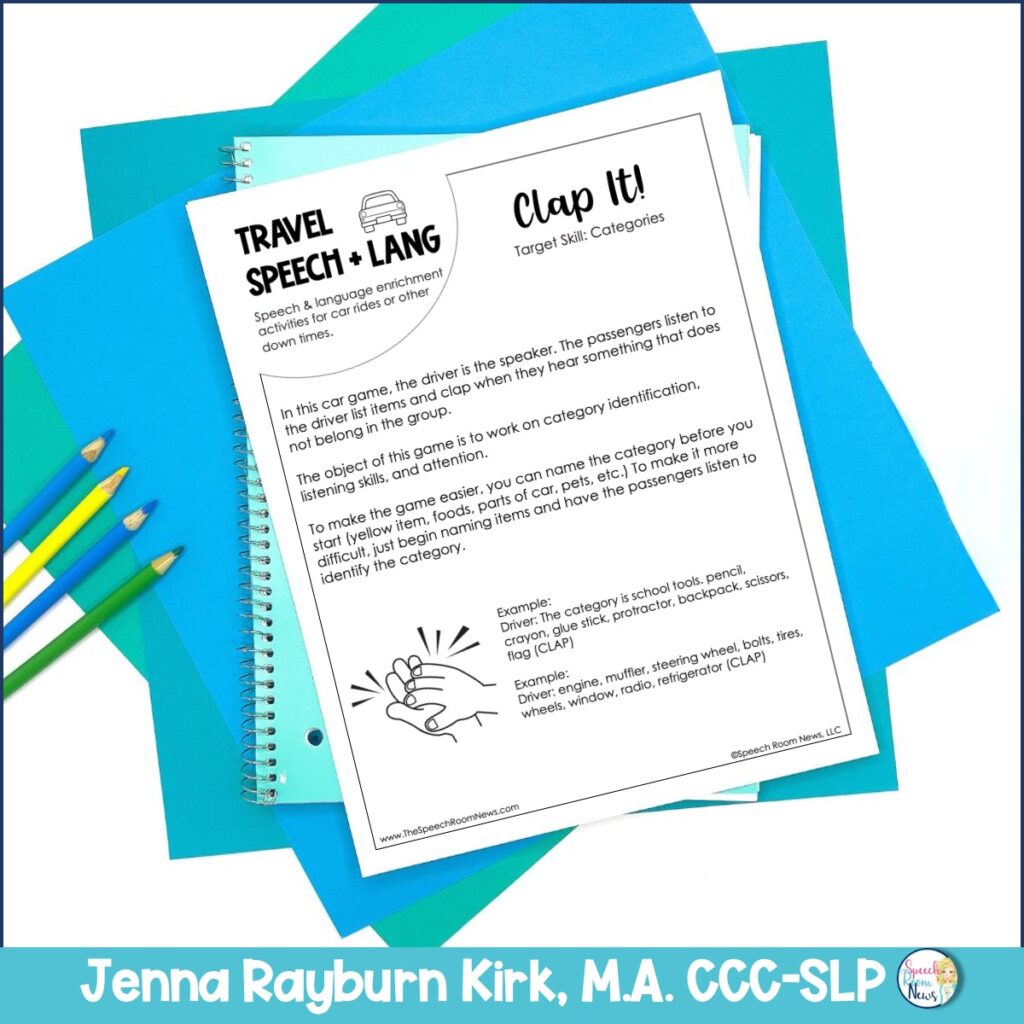
When the car stops at a red light, players take turns naming as many items as possible within a chosen category that include a specific target sound. One person names items, and the other counts how many are correctly produced. The adult should always model the target sound clearly and frequently.
Examples:
Let’s assume the target sound is /s/ in the initial position of words.
- Category: Animals
- Child: "Snake," "Seal," "Squirrel," "Sheep," "Spider"
- Category: Foods
- Child: "Soup," "Salad," "Sandwich," "Sausage," "Strawberries"
- Category: Things in a house
- Child: "Sofa," "Sink," "Stairs," "Shelf," "Switch"
Therapeutic Value and Expansion:
This activity directly addresses articulation goals, focusing on the accurate production of specific speech sounds. The timed nature of a red light stop adds an element of playful challenge without undue pressure.
- Auditory Bombardment: A key technique in articulation therapy, this involves the child hearing the target sound repeatedly and correctly produced by the adult. By modeling words with the target sound, the parent helps the child develop a stronger auditory perception of that sound, which is crucial before they can accurately produce it themselves.
- Phonological Awareness: Identifying words that contain a specific sound enhances a child’s awareness of sound structure in language.
- Vocabulary Integration: Children are encouraged to recall words from various semantic categories, broadening their active vocabulary.
- Flexibility: The game can be adapted for any target sound (e.g., /r/, /l/, /th/, /sh/) and for different positions within a word (initial, medial, final).
Broad Categories to Get Started:
- Animals: (e.g., for /f/ sound: "fox," "fish," "frog")
- Foods: (e.g., for /k/ sound: "cake," "cookie," "carrot")
- Things in a house: (e.g., for /g/ sound: "rug," "bag," "leg" – if targeting final position)
- Clothes: (e.g., for /t/ sound: "shirt," "pants," "hat")
- Toys: (e.g., for /p/ sound: "puppet," "plane," "ball")
- Things outside: (e.g., for /z/ sound: "zebra," "zoo," "flowers" – if targeting /s/ that sounds like /z/)
- Transportation: (e.g., for /ch/ sound: "truck," "train," "bus")
Speech pathologist Sarah Miller, who works extensively with school-aged children, observes, "Red Light Race is fantastic because it’s so adaptable. You can target specific sounds in a highly motivating way. The competitive element, counting items, keeps kids engaged, and the short bursts of practice prevent fatigue often associated with more formal drills." For children struggling with a particular sound, the adult can provide cues (e.g., "lips together" for /m/, "tongue up" for /t/) or simplify the categories.
Strategy 3: Triple Threat – Cultivating Narrative and Sentence Structure
Objective: To encourage creative thinking, develop sentence construction skills, enhance narrative abilities, and integrate vocabulary in a meaningful context.
How to Play:
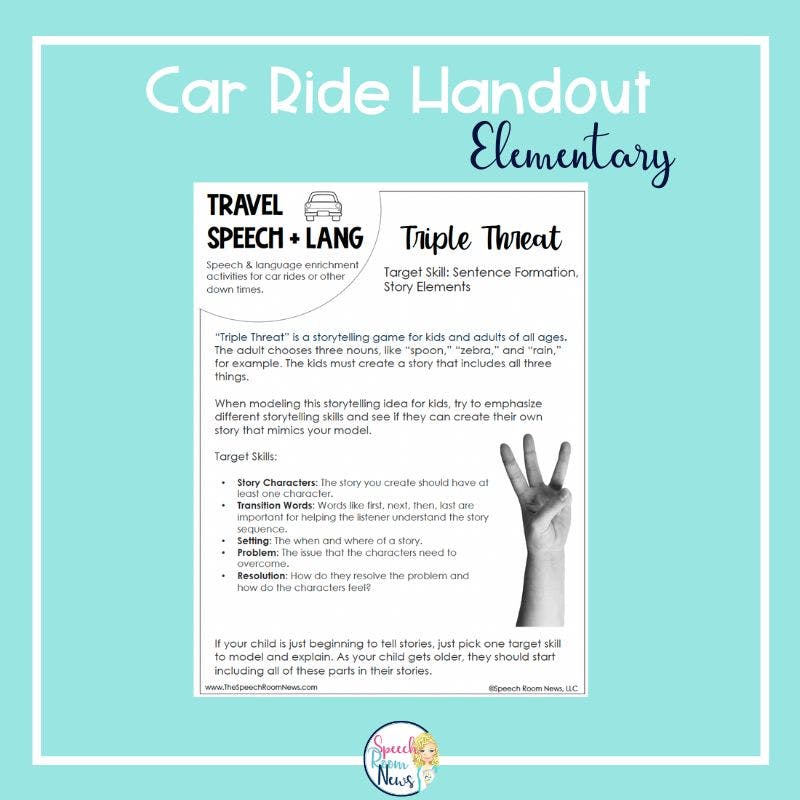
The adult chooses any three unrelated nouns and says them to the child. For example, "dog, milk, and bike." The child then has to create a story, as silly as it might be, that incorporates all three items. Players can take turns being the story creator.
Examples:
- Nouns: "cloud," "shoe," "banana"
- Child’s Story: "One sunny day, a big fluffy cloud floated by. Suddenly, a tiny shoe fell out of it! A monkey on the ground grabbed the shoe, peeled a banana, and tried to put the shoe on the banana."
- Nouns: "tree," "robot," "pizza"
- Child’s Story: "A friendly robot was trying to climb a tall tree to reach a giant pizza that had gotten stuck in the branches."
Therapeutic Value and Expansion:
This activity targets a range of complex language skills crucial for academic and social success:
- Sentence Formation: Children must construct grammatically correct sentences to weave the nouns into a coherent (or hilariously incoherent) narrative. This involves working on subject-verb agreement, tense, and appropriate use of conjunctions and prepositions.
- Story Retell & Narrative Skills: This game is a foundational step in developing narrative structure: identifying characters, setting, a problem, and a resolution (even if simple). These skills are directly linked to reading comprehension and written expression.
- Vocabulary Integration: Children are challenged to use the given nouns, along with other descriptive words, to make their stories engaging.
- Inferential Thinking: Depending on the nouns, children might need to infer connections or create imaginative scenarios to link them logically (or illogically).
- Sequencing: Stories inherently require events to unfold in a logical sequence, which is a key cognitive and linguistic skill.
- Syntax & Semantics: Children experiment with different sentence structures and word meanings to create their stories, improving their overall linguistic flexibility.
Skills to Target with this Language Activity for the Car:
- Sentence structure and grammar: Encouraging varied sentence lengths and complexity.
- Story grammar elements: Helping identify character, setting, initiating event, conflict, resolution.
- Sequencing events: Using temporal markers like "first," "next," "then," "finally."
- Creative thinking and imagination: Fostering divergent thinking and narrative play.
- Descriptive language: Encouraging the use of adjectives and adverbs to enrich the story.
Dr. Emily Chen, a developmental psychologist, emphasizes, "Narrative skills are predictive of literacy outcomes. Activities like ‘Triple Threat’ not only boost imagination but systematically build the child’s ability to construct and understand stories, which is vital for academic success and social communication." For children who find this challenging, the parent can start with two nouns, provide a story starter, or offer sentence frames to guide their creation. The goal is engagement and practice, not perfection.
Expert Perspectives and Parental Empowerment
The integration of these simple, engaging games into daily car rides offers a powerful method for parents to support their child’s speech and language development. Speech-language pathologists widely advocate for parental involvement, recognizing that the limited time in therapy sessions often requires consistent reinforcement at home. Dr. Hansen further explains, "Many parents feel overwhelmed, unsure how to help their child outside of formal therapy. These car games provide concrete, low-barrier strategies that empower parents, turning routine moments into therapeutic opportunities. It demystifies speech therapy and shows them they are capable, effective communication partners."
Parental feedback on such initiatives is overwhelmingly positive. Many parents report feeling less stressed about finding extra time for practice and appreciate the practical nature of the activities. "I used to dread long car rides, but now they’re a chance for us to connect and practice," shares Maria Rodriguez, mother of a child with an articulation delay. "It doesn’t feel like homework; it just feels like playing together." This sentiment underscores the effectiveness of embedding learning into natural, enjoyable interactions.
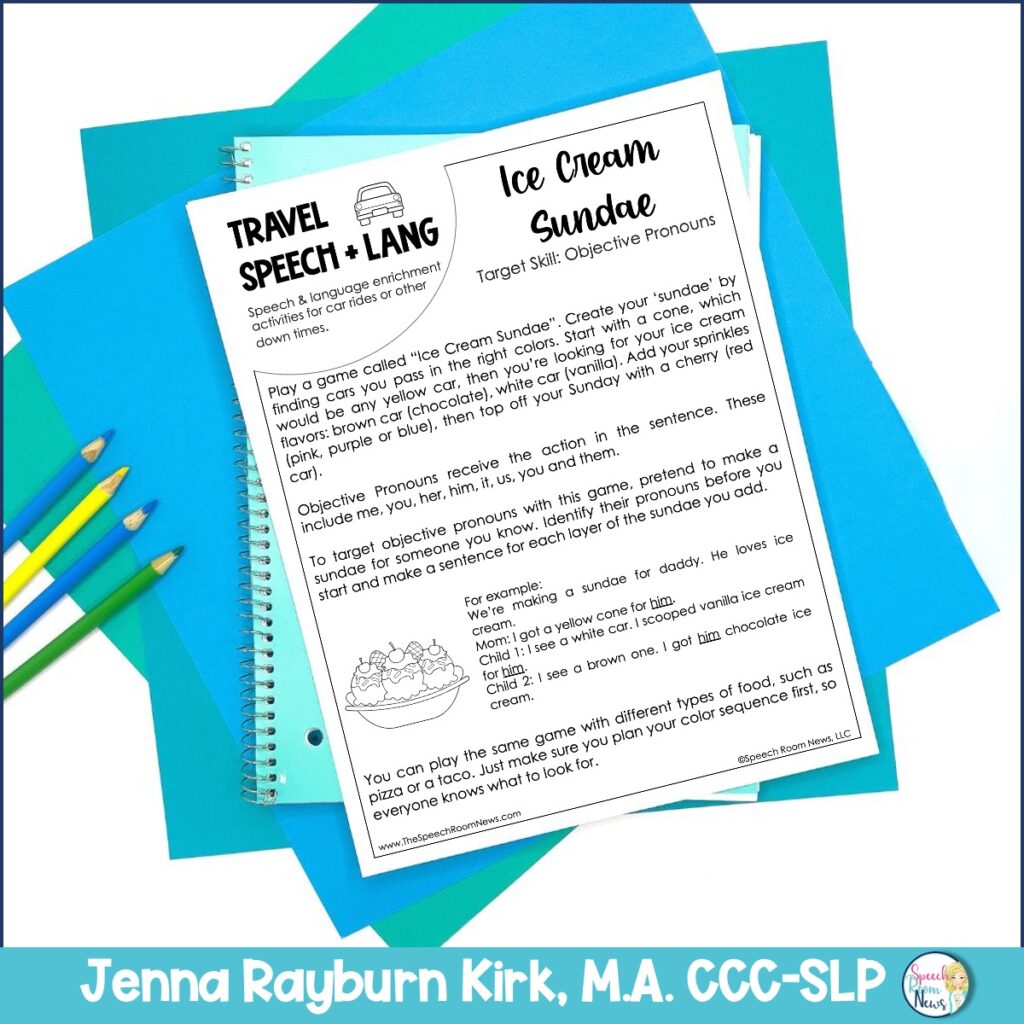
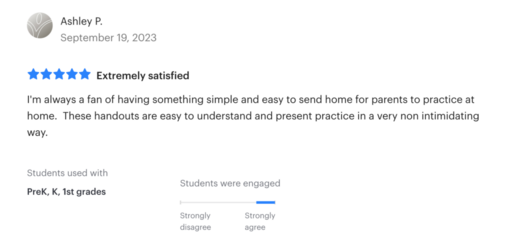
To further support parents and SLPs, comprehensive resources like the "Travel Speech and Language Bundle" (as mentioned in the original source) are designed to provide a wealth of these practical ideas. Such bundles typically include dozens of parent handouts with clear explanations and examples for various games targeting different speech and language goals. These resources can be invaluable for SLPs to share with families, ensuring that therapeutic strategies extend beyond the clinic and into the everyday fabric of a child’s life.
Beyond the Car Ride: A Holistic Approach
While car-based activities offer a unique and effective avenue for speech and language practice, they are best viewed as part of a holistic approach to a child’s development. These strategies complement formal therapy, reinforce learned skills, and foster a positive attitude towards communication. The consistent, low-pressure environment of the car can also reduce communication anxiety for some children, allowing them to experiment with new sounds and sentence structures without the perceived scrutiny of a clinical setting.
The broader implications of incorporating such practices extend beyond linguistic proficiency. Improved communication skills positively impact a child’s social-emotional development, enhancing their ability to express needs, share feelings, build relationships, and navigate social situations. Furthermore, strong language skills are foundational for academic success, influencing reading comprehension, written expression, and overall learning capacity. By making speech and language practice an integral, enjoyable part of daily life, parents are not just addressing a specific developmental delay; they are investing in their child’s overall well-being and future potential.
Conclusion: Driving Towards Communication Success

The daily commute, often dismissed as mundane or unproductive, holds untapped potential as a dynamic classroom for speech and language development. By embracing simple, expert-backed strategies like "The Grocery Game," "Red Light Race," and "Triple Threat," parents can transform car rides into engaging, consistent opportunities for skill building. This approach not only maximizes valuable time but also empowers parents, reinforces therapeutic goals, and contributes significantly to a child’s communication proficiency, social confidence, and academic readiness. In a world where every moment counts, turning the car into a mobile speech and language lab is a smart, effective, and joyful path to fostering communicative success.
