

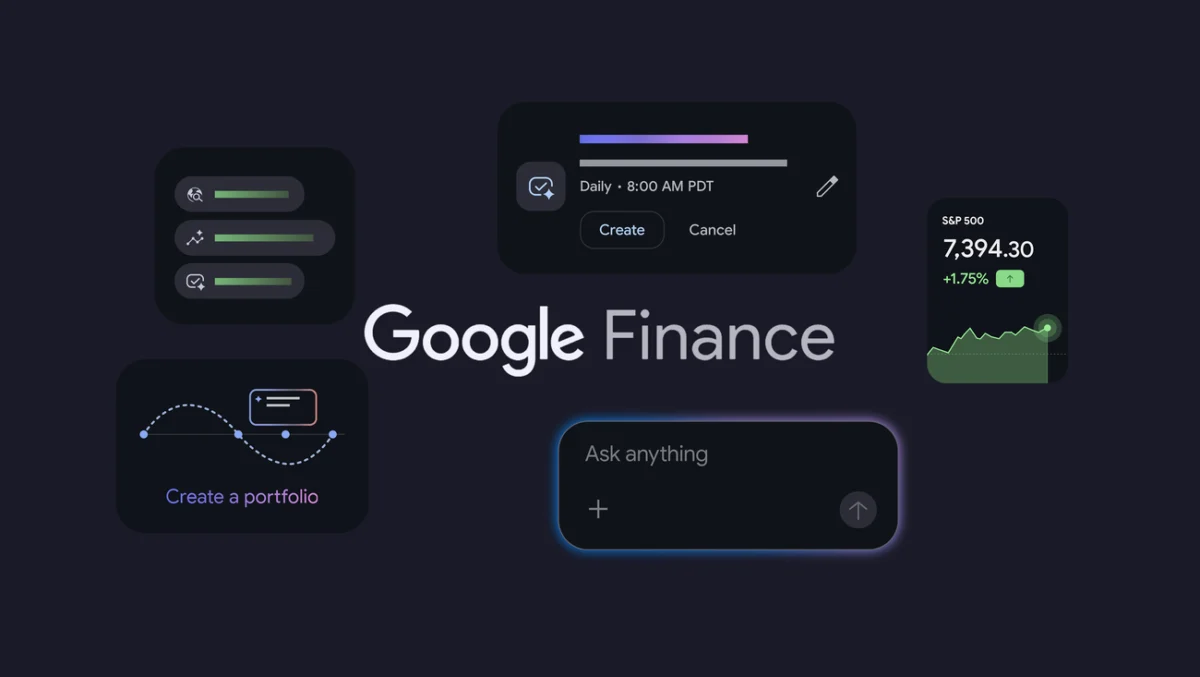
Google has officially announced a significant overhaul of its financial tracking ecosystem, signaling the end of the beta period for the revamped Google Finance platform. This transition introduces a suite of sophisticated tools designed to democratize access to complex market data through artificial intelligence and streamlined user interfaces. Alongside the web-based upgrades, the company has launched a dedicated Android application, with an iOS counterpart slated for release later this year. These updates, spearheaded by Barine Tee, Principal Engineer for Search at Google, represent a strategic move to consolidate Google’s position in the competitive retail investment information market, which has seen explosive growth over the last five years.
The timing of this release coincides with a broader industry trend where retail investors are increasingly seeking institutional-grade data presented in an accessible format. By integrating Large Language Models (LLMs) and advanced data visualization into Google Finance, the tech giant aims to reduce the friction associated with portfolio management and market research. The platform’s transition from a beta experiment to a full-scale financial hub suggests a long-term commitment to the fintech space, focusing on personalization and automated intelligence.
The Evolution of Google Finance: From Search Tool to Financial Hub
Google Finance originally launched in 2006 as a direct competitor to established services like Yahoo Finance and MSN Money. For over a decade, it functioned primarily as a repository for stock charts and news headlines integrated into Google Search results. However, a major 2017 redesign pivoted the service toward a more "Search-centric" model, which some long-time users found restrictive. The latest updates address these historical criticisms by reintroducing robust portfolio tracking and adding forward-looking AI capabilities that were previously unavailable to the general public.
The exit from beta marks a pivotal moment in the product’s chronology. During the beta phase, Google tested various methods of data ingestion and user interface layouts to determine how best to present volatile market data without overwhelming the user. The finalized version reflects a balance between high-level overviews for casual observers and granular data for active traders. This evolution is part of a broader "Search Generative Experience" (SGE) strategy where Google seeks to provide direct answers and actionable insights rather than just a list of links.
Advanced Portfolio Management and Data Ingestion
One of the most significant pillars of the new Google Finance is its enhanced portfolio tracking capability. In an era where investors often hold assets across multiple brokerages, crypto exchanges, and retirement accounts, consolidation is a primary pain point. Google has addressed this by implementing a "consolidated dashboard" that offers a holistic view of an individual’s net worth across various asset classes.
The method of data entry has been significantly modernized. While traditional platforms require manual entry of every ticker symbol and purchase price, Google Finance now supports "intelligent ingestion." Users can upload files such as CSVs or PDFs of their brokerage statements, and the system’s optical character recognition (OCR) and data processing layers automatically populate the portfolio. Perhaps most innovatively, the platform now allows users to describe their holdings in natural language or upload screenshots of their current positions. This feature utilizes Google’s advancements in computer vision and natural language processing (NLP) to interpret visual data from other financial apps and convert it into a digital ledger.
Once the data is ingested, the dashboard provides sophisticated analytics, including asset allocation breakdowns and performance benchmarking. This allows investors to see, for instance, if they are over-weighted in the technology sector or if their international exposure is lacking. By automating the "bookkeeping" aspect of investing, Google is positioning itself as the primary interface through which users interact with their wealth, regardless of where the assets are actually held.
AI-Powered Research and Natural Language Queries
The integration of artificial intelligence into the research process represents the most substantial technical leap for the platform. The new "Research Tool" allows users to move beyond static charts and engage in a dialogue with their financial data. By asking questions such as, "How does my fixed income allocation impact my long-term growth potential?" or "Which sectors in my portfolio are most sensitive to interest rate hikes?", users receive synthesized insights that would typically require the expertise of a financial advisor or the use of expensive terminal software.
This AI functionality is not limited to the user’s own portfolio. It extends to broader market intelligence. Google has introduced a "Market Intel" feature that allows for the creation of custom, automated briefings. A user can request a daily pre-market briefing that specifically analyzes overnight moves in cryptocurrencies or a weekly summary of earnings reports for companies on their watchlist. This shift toward "push" intelligence—where the platform works in the background to find relevant data—contrasts with the traditional "pull" model, where users must manually search for updates.
The underlying technology leverages Google’s Gemini-class models to parse through thousands of news articles, earnings transcripts, and regulatory filings in real-time. By identifying "Key Moments" in a stock’s price action, the AI can explain the "why" behind a market move, such as a surprise dividend announcement or a geopolitical event, rather than just reporting the "what."

The Mobile Strategy: The New Android Application
Recognizing that the modern investor is mobile-first, Google has launched a dedicated Android app to bring the full power of the web experience to smartphones. Previously, mobile users had to rely on the Google Search app or a mobile browser to access Finance features. The new standalone app is designed for high-frequency use, offering a dedicated space for watchlists, real-time price alerts, and a live financial news feed.
The app serves as the mobile hub for the AI research tools, allowing users to conduct deep dives into company fundamentals while on the go. One of the standout features of the mobile experience is the notification system. Integrated with both the Google app for Android and iOS, these notifications deliver the custom briefings and "Market Intel" tasks directly to the user’s lock screen.
Google’s roadmap for the mobile app is aggressive. Over the coming months, the company plans to integrate live earnings calls directly into the app, allowing users to listen to corporate leadership and view real-time sentiment analysis simultaneously. The upcoming iOS version, expected later in 2024, is promised to have feature parity with the Android version, ensuring a consistent experience across the mobile ecosystem.
Market Context and Competitive Landscape
The revitalization of Google Finance occurs in a highly competitive environment. Platforms like Yahoo Finance have long held the crown for retail data, while newer fintech entrants like Robinhood and SoFi have integrated social features and simplified trading. Furthermore, the rise of "fin-influencers" on social media has changed how younger generations consume financial news.
Google’s competitive advantage lies in its massive data index and its existing user base. By tying financial tracking into the broader Google account ecosystem, the company creates a "sticky" experience. If a user is already using Google for email, calendar, and search, having their financial life integrated into that same ecosystem is a logical progression.
Industry analysts suggest that this move is also a defensive strategy against the rise of specialized AI search engines. By providing high-quality, real-time financial data within its own walled garden, Google ensures that users do not migrate to other platforms for their specialized queries. The "Key Moments" feature, in particular, is seen as a direct challenge to financial news outlets, as it provides a summarized, objective explanation of market events without the need for a subscription to a news site.
Implications for the Retail Investment Community
The broader implications of these upgrades are significant for the democratization of finance. For decades, institutional investors had an information advantage due to their access to expensive data feeds and analytical tools. While Google Finance does not replace a Bloomberg Terminal, it significantly narrows the gap for the average retail investor.
The ability to ask complex questions about asset allocation and receive instant, data-driven answers could lead to better-informed decision-making among the general public. However, it also places a premium on the accuracy of the AI. Google has emphasized that these tools are for informational purposes, but the "Principal Engineer" designation of the announcement’s author underscores the technical rigor applied to ensuring the data’s reliability.
Furthermore, the global rollout of these features—available in multiple languages and covering diverse international markets—reflects the global nature of modern investing. Whether a user is tracking stocks in New York, London, or Tokyo, the platform provides a unified interface for global market intel.
Conclusion and Future Outlook
The launch of the new Google Finance and its accompanying mobile applications marks a new chapter in Google’s history with financial data. By moving out of beta, the platform is no longer an experiment but a core component of the Google Search experience. The focus on AI-driven insights, natural language interaction, and seamless data ingestion positions Google to be a leader in the next generation of financial information services.
As the company prepares to launch the iOS app and integrate features like live earnings calls, the focus will likely shift toward even deeper personalization. The goal is clear: to transform Google Finance from a simple ticker-tracking site into an indispensable personal financial assistant. For the millions of users who check the markets daily, these upgrades provide the tools and insights necessary to navigate increasingly volatile global markets with greater confidence and clarity. The "Market Intel" of tomorrow is no longer just about having the data; it is about having the intelligence to understand what that data means for one’s personal financial future.
