

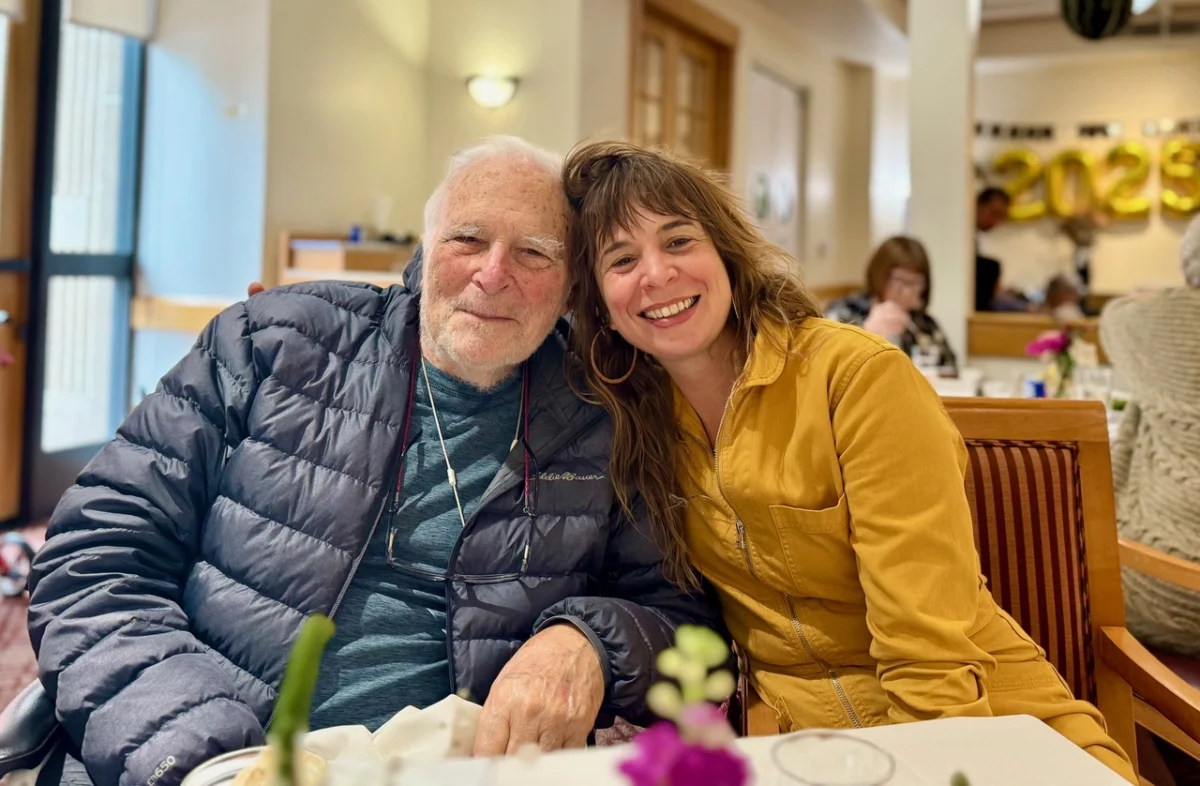
The passing of Dr. Paul Ekman, a towering figure in the field of emotion research and a pioneer in the study of facial expressions, has prompted a wave of reflection on his multifaceted legacy. While a recent obituary in The New York Times focused on perceived controversies, his daughter, Eve Ekman, offers a more comprehensive perspective, emphasizing not only his significant scientific contributions but also his profound personal journey of transformation and his lifelong commitment to reducing human suffering. This expanded account seeks to provide a balanced view of Dr. Ekman’s impact, drawing on his extensive body of work, his pivotal personal experiences, and the broader implications of his research.
A Foundation Built on Early Trauma and a Quest for Understanding
Paul Ekman’s journey into the complexities of human emotion was deeply rooted in his own early life experiences. As a child, he endured significant trauma and loss, events that profoundly shaped his worldview and ignited a lifelong quest to understand the universal language of emotions. These formative experiences fueled his determination to become the kind of supportive and present parent he had lacked, a commitment that resonated throughout his personal and professional life.
Born in Washington, D.C., in 1934, Ekman’s childhood was marked by instability. His father, a psychiatrist, died by suicide when Paul was a teenager, a devastating event that left a lasting impact. This early exposure to profound grief and the complex interplay of emotions within families undoubtedly contributed to his later focus on the universal and observable aspects of human emotional expression. He often spoke of his desire to build the kind of secure and loving family environment he had been denied, a motivation that undergirded his dedication to his own children and his marriage.
His marriage to Eve’s mother, a distinguished academic at UC Berkeley, spanned 41 years until her death in 2020. This partnership, described by Eve as a source of immense joy and mutual support, exemplified his capacity for deep connection and his commitment to fostering the growth and success of those he loved. He often expressed his astonishment and gratitude that his wife had chosen to build a life with him, a testament to the enduring strength of their bond.
The Landmark Dharamsala Meeting and a Profound Personal Shift
A pivotal moment in Dr. Ekman’s life and career occurred in 2000 at a historic meeting in Dharamsala, India. This gathering brought together Dr. Ekman, His Holiness the Dalai Lama, and a distinguished group of scientists and contemplatives to explore the nature of "Destructive Emotions." For Ekman, this experience was not merely an academic pursuit; it was a deeply transformative event that fundamentally altered his understanding of himself and the world.
For years, colleagues and friends knew of Ekman’s personal struggles with anger. However, the Dharamsala meeting provided him with an unprecedented, embodied insight into the possibility of living with reduced emotional reactivity. He frequently recounted this experience, admitting he could never fully articulate the profound shift it engendered. This encounter with Buddhist contemplative practices, particularly those focused on mindfulness and the cultivation of compassion, offered him a practical framework for managing his own emotional landscape.
The Dalai Lama’s philosophy, which advocates for the application of Buddhist principles to reduce suffering by fostering emotional understanding, mental calm, and universal kindness, deeply resonated with Ekman. He embraced this philosophy not as a departure from his scientific rigor, but as a complementary path to his lifelong pursuit of knowledge. The scientist in him was compelled to investigate the efficacy of these contemplative tools, driven by a desire to help others achieve a similar sense of inner peace and emotional freedom.
Cultivating Emotional Balance and the Atlas of Emotions
The convergence of Dr. Ekman’s extensive scientific research and his newfound appreciation for contemplative traditions led to the development of groundbreaking initiatives aimed at practical emotional well-being. Recognizing the need for evidence-based tools to help individuals understand and regulate their emotions, he collaborated with Alan Wallace to create "Cultivating Emotional Balance" (CEB). This program, grounded in rigorous scientific research and ancient wisdom, has been implemented globally, offering participants practical strategies for managing emotions and fostering compassion.
Eve Ekman, with her background as a clinical social worker in a level-one trauma center, played a crucial role in supporting and disseminating CEB. Her clinical experience provided a vital bridge between the theoretical underpinnings of the program and its real-world application, ensuring that its teachings were accessible and impactful for diverse populations.
Further extending this mission, Dr. Ekman, alongside Eve, collaborated on the creation of the "Atlas of Emotions." Commissioned by the Dalai Lama in 2016, this free online tool provides a comprehensive vocabulary for describing the nuances of our emotional lives. The Atlas is designed to enhance emotional literacy, empowering individuals to better understand their feelings and those of others. As it approaches its ten-year anniversary, the Atlas of Emotions is set to be relaunched, continuing its important work of fostering emotional awareness and understanding on a global scale. These projects, born from a deep personal transformation and a profound commitment to reducing suffering, represent the culmination of Dr. Ekman’s later-life aspirations.
Addressing Scientific Disagreement and Reframing the Narrative
The recent obituary in The New York Times, which framed Dr. Ekman’s work primarily through the lens of "controversy" and highlighted a single dissenting opinion, has drawn criticism from those who believe it misrepresents the breadth and depth of his scientific contributions. Eve Ekman asserts that while scientific discourse and disagreement are inherent to the scientific process, reducing a career spanning decades of extensive peer-reviewed research to a single critique is misleading.
Dr. Ekman’s foundational work on universal facial expressions of emotion, initially based on research conducted in the 1960s and 1970s, faced challenges and refinements over the years. His research identified six basic emotions—anger, fear, disgust, sadness, joy, and surprise—that he posited were universally recognized across cultures through distinct facial expressions. While subsequent research has expanded upon, challenged, and nuanced these findings, the overwhelming consensus within the scientific community acknowledges the significant impact of his pioneering work. Hundreds of studies and dozens of research laboratories worldwide have built upon his foundational discoveries, contributing to a more comprehensive understanding of emotional expression and its neurological underpinnings.
The implication of focusing solely on a single critique is that it overshadows the vast body of evidence that supports and expands upon his work. This includes its application and validation across diverse fields such as psychology, neuroscience, medicine, anthropology, national security, animation, and even everyday communication. Dr. Ekman consistently welcomed rigorous debate and new evidence, recognizing that science progresses through continuous inquiry and refinement. However, presenting his life’s work through a selective lens risks distorting its historical significance and its lasting impact on global understanding.
A Legacy of Science, Transformation, and Compassion
Paul Ekman’s life was a testament to the power of scientific inquiry in the service of human well-being. His meticulous research provided invaluable insights into the universal nature of emotions, offering a common ground for understanding across diverse cultures. Beyond his academic achievements, however, lay a profound personal narrative of resilience and transformation.
He was a man who confronted his own vulnerabilities, demonstrating that personal growth and profound change are possible, even in the face of deep-seated challenges. His journey from grappling with anger to embodying a life of greater compassion and reduced reactivity serves as an inspiration. He actively worked to repair relationships and soften his own emotional responses, evolving into a man characterized by his openness, generosity, and deep capacity for joy.
His ability to forge meaningful connections, even in the final months of his life, speaks to the enduring strength of his human spirit and his commitment to living fully. He was a complex individual, imperfect as all humans are, yet distinguished by his kindness, bravery, humor, insatiable curiosity, and an unwavering dedication to making the world a better place.
The Broader Impact and Enduring Influence
The implications of Dr. Ekman’s work extend far beyond academic circles. His research has informed therapies aimed at treating emotional disorders, enhanced communication strategies in fields ranging from diplomacy to customer service, and even influenced the creation of animated characters in Hollywood. The universal recognition of facial expressions of emotion provides a fundamental building block for understanding human interaction and empathic connection.
The development of tools like Cultivating Emotional Balance and the Atlas of Emotions represents a significant contribution to public mental health and emotional literacy. By providing accessible and evidence-based resources, Dr. Ekman and his collaborators have empowered countless individuals to navigate their emotional lives with greater skill and understanding. This work directly addresses the Dalai Lama’s aspiration to reduce suffering by equipping people with the tools to understand their emotions, cultivate a calmer mind, and act with greater kindness in an increasingly interconnected world.
In conclusion, the narrative of Paul Ekman is one of remarkable scientific achievement intertwined with profound personal evolution. It is a story of a man who dedicated his life to unraveling the mysteries of human emotion, not for abstract intellectual pursuit, but with a genuine desire to foster greater understanding, reduce suffering, and expand compassion. While acknowledging the complexities and disagreements inherent in any scientific endeavor, his enduring legacy lies in his contributions to science, his visible personal transformation, and his unwavering commitment to a more emotionally intelligent and compassionate world. The outpouring of well wishes from individuals around the globe attests to the significant and positive impact his work has had on countless lives.
