

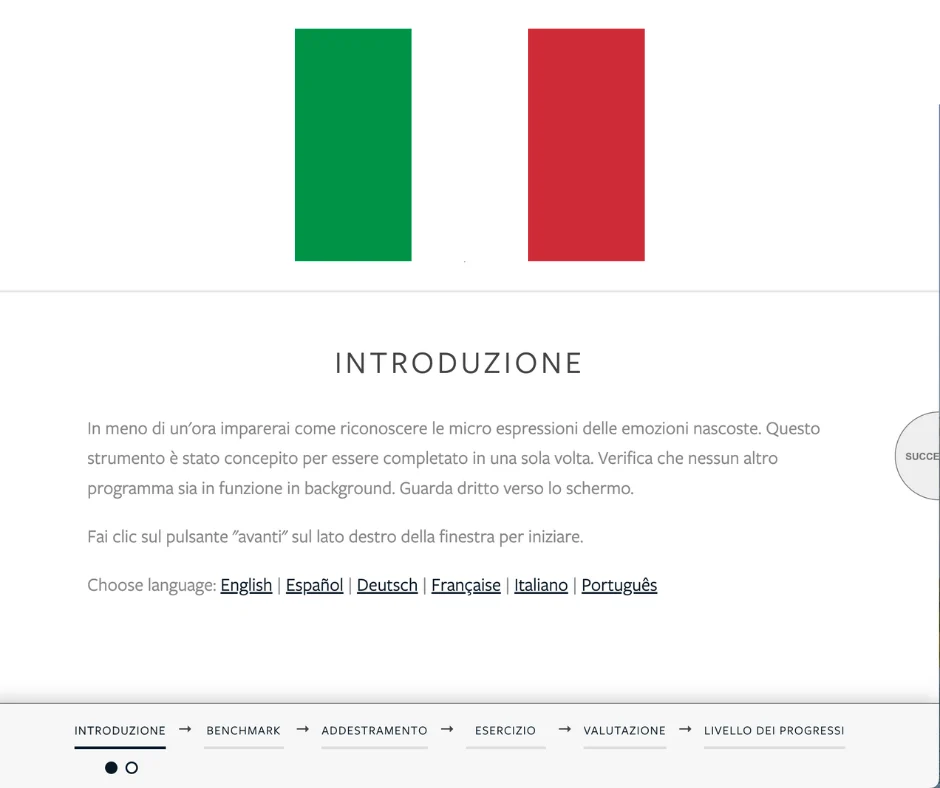
The Paul Ekman Group, a renowned leader in the science of emotions and facial expressions, has announced a significant expansion of its online micro-expression training tools, making them now fully accessible in Italian, French, and German. This strategic move, building upon existing Spanish and Portuguese translations, aims to democratize access to crucial emotional intelligence and deception detection skills for a broader international audience. The enhanced language offerings are integrated into all seven core online training modules, available across three distinct training packages. Users will be prompted to select their preferred language at the commencement of each course, ensuring a seamless and intuitive learning experience.
Background: The Science of Micro-Expressions and Paul Ekman’s Legacy
The foundation of this expansion lies in the groundbreaking work of Dr. Paul Ekman, a pioneering psychologist and Emeritus Professor of Psychology at the University of California, San Francisco. Dr. Ekman’s research, spanning over five decades, has established the universality of certain basic emotions and their corresponding facial expressions across cultures. His seminal studies, often involving arduous cross-cultural fieldwork, identified seven universal emotions: happiness, sadness, anger, fear, surprise, disgust, and contempt.
Central to his work is the concept of micro-expressions, which are fleeting, involuntary facial expressions that last for a fraction of a second, typically between 1/25th and 1/2 of a second. These are distinct from deliberate facial expressions, as they occur unconsciously and can betray a person’s true emotional state, even when they are attempting to conceal it. The ability to recognize these subtle cues has profound implications for understanding human behavior, interpersonal communication, and discerning truth from deception.
The Paul Ekman Group has been at the forefront of translating this scientific understanding into practical training programs. Their online tools, developed through rigorous research and pedagogical design, equip individuals with the ability to detect these transient emotional signals. The initial availability of these tools in English, followed by Spanish and Portuguese, laid the groundwork for this latest multilingual expansion, reflecting a growing global demand for such expertise.
Timeline of Expansion and Global Accessibility
The journey towards making micro-expression training universally accessible has been a gradual but deliberate process. While Dr. Ekman’s research began in the mid-20th century, the formalization and commercialization of his training programs gained momentum in the late 20th and early 21st centuries.
- Early Research Phase (Mid-20th Century Onwards): Dr. Paul Ekman’s foundational studies on universal emotions and facial expressions commenced, establishing the scientific basis for micro-expression recognition.
- Development of Training Methodologies (Late 20th – Early 21st Century): The Paul Ekman Group began developing and refining training methodologies based on this research, initially for law enforcement and intelligence agencies.
- Introduction of Online Training Tools (Early 2010s): The advent of online learning platforms allowed for wider dissemination of these specialized skills, making them accessible to a broader professional and public audience.
- Initial Multilingual Rollout (Mid-2010s): Recognizing the global nature of communication, the group initiated the translation of their core training materials into key languages, starting with Spanish and Portuguese.
- Recent Expansion (Late 2024/Early 2025): The latest phase, encompassing Italian, French, and German, marks a significant acceleration in making these tools available to major European markets. This expansion is a direct response to increasing international interest and the identified need for localized learning resources.
The commitment to offering these tools in multiple languages underscores the group’s dedication to its mission: "to help people around the world better understand themselves and others, by improving emotional awareness skills." By removing language barriers, the Paul Ekman Group is effectively democratizing access to advanced emotional intelligence and deception detection capabilities.
Supporting Data: Global Reach and Impact
The Paul Ekman Group’s training tools have already demonstrated a substantial global footprint, with evidence suggesting their utilization in over 230 countries. This widespread adoption highlights the universal relevance of understanding human emotions and facial cues. The demand for such skills is not confined to specific sectors or regions.
- Professional Applications: Law enforcement officers, intelligence analysts, security personnel, and fraud investigators have long been primary users, leveraging micro-expression recognition for threat assessment and evidence gathering.
- Healthcare Professionals: Doctors, nurses, therapists, and counselors can benefit from enhanced empathy and the ability to detect unspoken patient distress or pain.
- Business and Leadership: Team leaders, HR professionals, negotiators, and sales representatives can improve their communication, build stronger relationships, and make more informed decisions by understanding the emotional undercurrents in interactions.
- Education: Teachers and educators can better gauge student engagement, identify learning difficulties, and foster a more supportive classroom environment.
- Personal Development: Individuals seeking to improve their relationships, enhance their self-awareness, and navigate social situations with greater confidence also find value in these programs.
The addition of Italian, French, and German is projected to significantly boost engagement from these key European markets. For instance, the European Union alone comprises 27 member states with diverse linguistic landscapes. The inclusion of these three major languages will cater to a substantial portion of the European population, facilitating deeper understanding and application of emotional intelligence principles.
What’s Included: Comprehensive Training Modules
The newly translated offerings encompass all seven of the Paul Ekman Group’s core online micro-expression training tools. These tools are strategically bundled into three distinct training packages, designed to cater to varying levels of expertise and learning objectives.
The seven core modules are:
- Micro Expressions Training Tool (METT): This foundational tool introduces users to the seven universal emotions and their corresponding micro-expressions. It employs a rigorous training methodology that includes visual identification exercises and quizzes.
- Facial Expressions Training Tool (FETT): This module delves deeper into the nuances of facial expressions, expanding beyond micro-expressions to cover more subtle and prolonged emotional displays.
- Emotional Skills Training (EST): This program focuses on developing the ability to accurately identify and label emotions, both in oneself and in others, contributing to enhanced emotional literacy.
- Stress and Emotion Management (SEM): This training explores the relationship between stress and emotional expression, offering insights into managing emotional responses under pressure.
- Truth and Deception Training (TDT): This module specifically addresses the detection of deception by focusing on behavioral cues, including micro-expressions, that may indicate insincerity.
- Advanced Micro Expressions Training Tool (AMETT): For those who have mastered the basics, this advanced module presents more challenging examples and complex emotional displays.
- Universal Emotions Training Tool (UETT): This comprehensive tool consolidates the knowledge of universal emotions and their expressions, providing a holistic understanding.
These modules are accessible through the group’s intuitive online platform. Users are guided through interactive lessons, real-world video examples, and self-assessment tools. The ability to select a preferred language at the outset ensures that the learning experience is tailored and effective, regardless of the user’s native tongue. The existing translations in Spanish and Portuguese continue to serve a significant global user base, particularly in Latin America and parts of Africa.
Why It Matters: The Importance of Emotional Awareness
In an increasingly interconnected and complex world, the ability to accurately read and understand human emotions is paramount. Micro-expressions, though brief, offer a window into the authentic emotional landscape of individuals.
- Enhancing Empathy: Recognizing subtle emotional cues allows individuals to respond with greater empathy and understanding. This is crucial in therapeutic settings, caregiving roles, and everyday interpersonal interactions. When someone is experiencing pain or distress but is trying to mask it, a trained observer can pick up on the fleeting facial signals and offer appropriate support.
- Improving Precision in Communication: Misunderstandings often arise from misinterpretations of emotional states. By accurately identifying emotions, individuals can tailor their communication more effectively, leading to clearer dialogues and stronger relationships.
- Developing Intuition: Consistent exposure to and recognition of micro-expressions can sharpen one’s intuitive sense about people and situations. This heightened intuition can be invaluable in decision-making, risk assessment, and leadership.
- Navigating Delicate Situations: In fields like law enforcement or diplomacy, understanding the true emotional state of individuals during sensitive negotiations or interrogations can be critical for de-escalation, truth-finding, and achieving favorable outcomes. For example, recognizing a flicker of fear during a reassurance can indicate underlying anxiety that needs to be addressed.
- Strengthening Relationships: On a personal level, understanding the unspoken emotions of loved ones can foster deeper connection, resolve conflicts more effectively, and build more resilient bonds.
The Paul Ekman Group’s emphasis on the "science of emotions" underscores that these skills are not about mind-reading but about developing a sophisticated observational capacity based on verifiable scientific principles. The training empowers individuals to move beyond surface-level interactions and engage with a more profound understanding of human psychology.
The Science of Emotions for a Global Audience: Broader Implications
The expansion of Paul Ekman Group’s training into Italian, French, and German represents more than just an increase in language options; it signifies a strategic commitment to bridging cultural divides through the universal language of emotions. Dr. Ekman’s research has consistently posited the universality of basic emotions, suggesting that the underlying emotional responses are shared across humanity, irrespective of cultural background.
- Standardization of Emotional Literacy: By providing standardized training in multiple languages, the group is contributing to a global benchmark for emotional literacy. This can foster a more consistent and accurate understanding of human behavior across international collaborations, business dealings, and diplomatic efforts.
- Countering Cultural Nuances in Expression: While the core emotions are universal, the way they are expressed can have cultural nuances. The training tools, however, focus on the underlying physiological expressions of emotion, which are less susceptible to cultural masking than overt behavioral responses. This allows for a more objective assessment of emotional states.
- Facilitating Cross-Cultural Competence: In an era of globalization, professionals frequently interact with individuals from diverse linguistic and cultural backgrounds. The ability to accurately interpret emotional cues, even across these divides, is a critical component of cross-cultural competence. The availability of these tools in major European languages will equip professionals in these regions with a significant advantage.
- Empowering Non-Native English Speakers: For a considerable portion of the global population, English is not their first language. The previous reliance on English-language resources created an accessibility gap. The introduction of Italian, French, and German directly addresses this, empowering a vast number of individuals who may have previously found comprehensive micro-expression training out of reach.
The fact that these tools are already used in over 230 countries speaks to their inherent adaptability and relevance. This latest linguistic expansion is a logical progression, reinforcing the Paul Ekman Group’s mission to make the science of emotions accessible and actionable for everyone, everywhere.
Future Outlook and User Engagement
The Paul Ekman Group has indicated that this expansion is not exhaustive. The organization is actively engaged in developing and preparing to launch new language offerings in the future. This forward-looking approach suggests a continuous effort to broaden the reach of their vital training programs.
To facilitate this ongoing development, the group actively encourages feedback from its global community. Users who would like to see specific languages added to the training platform are invited to provide their input. This user-centric approach ensures that future expansion efforts are aligned with demonstrable demand and can effectively serve emerging markets.
A direct channel for this feedback has been established via email at [email protected], inviting individuals to express their language preferences. This open communication line underscores the group’s commitment to building a truly global community united by a deeper understanding of emotions.
The announcement concludes with a message of gratitude and anticipation for continued collaboration. "Thank you for being part of our global community. We look forward to continuing this journey together – whatever your language." This sentiment reinforces the inclusive vision of the Paul Ekman Group, aiming to foster a world where emotional intelligence and the ability to understand human behavior are not limited by linguistic boundaries. Users are encouraged to explore the newly available courses and experience the benefits of micro-expression training in their native tongue.
