

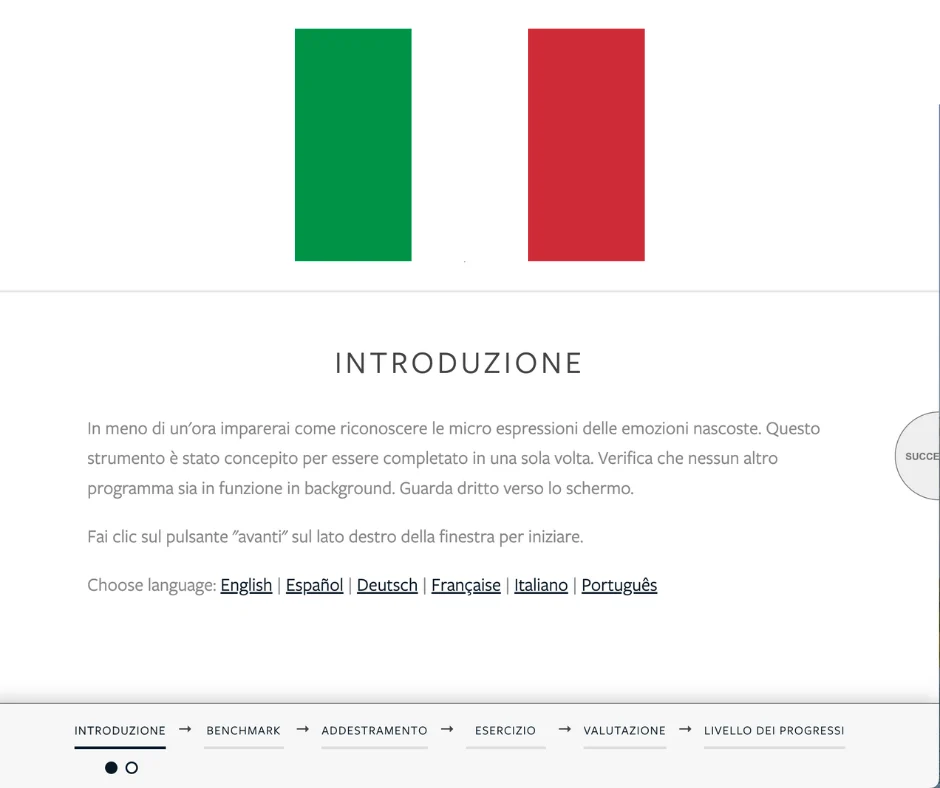
The Paul Ekman Group, a leading authority in the science of emotions and facial expressions, has announced a significant expansion of its online training tools, making its renowned micro-expression courses accessible to a wider international audience. The latest development sees the full suite of seven core online training tools, previously available in English, Spanish, and Portuguese, now fully translated and offered in Italian, French, and German. This strategic move aims to democratize access to vital emotional intelligence skills, aligning with the organization’s mission to foster greater self-awareness and interpersonal understanding worldwide.
The expansion, which has been in development over the past year, represents a concerted effort by the Paul Ekman Group to break down language barriers and cater to the growing global demand for scientifically-backed emotional literacy. The introduction of these new language options signifies a pivotal moment for professionals and individuals across Europe and beyond who are keen to master the subtle yet powerful art of recognizing micro-expressions.
A Mission for Universal Emotional Understanding
At its core, the Paul Ekman Group’s mission is to empower individuals with the tools to better understand themselves and others through enhanced emotional awareness. Dr. Paul Ekman, a pioneering psychologist and co-discoverer of micro-expressions, has dedicated his career to studying the universality of human emotions and their corresponding facial expressions. His research has consistently demonstrated that certain emotional expressions are innate and recognizable across all cultures, forming a foundational element of human communication.
"Our mission is to help people around the world better understand themselves and others, improving emotional awareness skills," stated a representative from the Paul Ekman Group. "With these new translations, we are making it easier for individuals, educators, professionals, and organizations in Europe (and beyond) to learn how to recognize facial micro-expressions in their native language."
The decision to prioritize Italian, French, and German was driven by market analysis indicating significant interest and a substantial user base for emotional intelligence training within these linguistic regions. This expansion is not merely a localization effort but a strategic investment in global accessibility, acknowledging that effective communication and understanding are paramount in an increasingly interconnected world.
Comprehensive Training Suite Now Multilingual
The newly translated offerings encompass all seven of the Paul Ekman Group’s primary online training tools. These tools are typically presented within three distinct training packages, designed to cater to varying levels of expertise and specific professional needs. The seven core tools include:
- Facial Expressions – The Science: An introductory module covering the foundational principles of facial expressions and emotions.
- Micro Expressions Training Tool (METT): The flagship program designed to train users to detect fleeting micro-expressions.
- Micro Expression Training Tool Advanced (METT-A): An advanced version of METT for users seeking to refine their skills further.
- Emotional Skills for Law Enforcement: Specialized training for law enforcement professionals.
- Emotional Skills for Healthcare: Training tailored for healthcare providers.
- Emotional Skills for Educators: Resources for educators to better understand student emotions.
- Emotional Skills for Leaders: Tools for business leaders to enhance team dynamics and communication.
Previously, these tools were available in English, Spanish, and Portuguese. The addition of Italian, French, and German significantly broadens the accessibility, bringing the total number of supported languages to six. Users will be prompted to select their preferred language at the beginning of each course, ensuring a seamless and intuitive learning experience.
The Critical Importance of Micro-Expression Recognition
Micro-expressions are involuntary, brief facial expressions that flash across a person’s face in as little as one-fifteenth of a second. They occur when a person is trying to conceal an emotion, but a genuine emotional response briefly betrays their true feelings. Often occurring outside of conscious awareness, these fleeting expressions can be critical for discerning emotional truth in sensitive situations, personal relationships, and everyday interactions.
The ability to recognize micro-expressions offers profound benefits across a wide spectrum of professions and personal pursuits. For law enforcement officers, it can aid in deception detection and witness assessment. For healthcare professionals, it can improve patient rapport and diagnostic accuracy. Educators can use this knowledge to better understand student engagement and emotional distress. Business leaders can leverage it to foster more effective team communication, negotiation, and conflict resolution. Even for individuals seeking to improve their personal relationships, understanding micro-expressions can lead to greater empathy and more nuanced interactions.
"Learning to recognize micro-expressions can improve your ability to respond with empathy, accuracy, and insight – key elements of emotional intelligence and relational skills," the Paul Ekman Group noted. This enhanced ability to read emotional cues allows for more informed and compassionate responses, ultimately leading to stronger connections and more effective communication.
A Commitment to Global Accessibility: The Science of Emotions for a Global Audience
Dr. Ekman’s extensive body of work has consistently emphasized the universality of emotions and facial expressions, a concept that underpins the global applicability of his training methodologies. With tools already in use in over 230 countries, the expansion into new languages is a natural progression of this commitment.
The introduction of Italian, French, and German is particularly significant for the European market, where there is a growing awareness of the importance of emotional intelligence in both professional development and personal well-being. This initiative aims to provide a robust and accessible platform for individuals whose native language is not English, Spanish, or Portuguese, enabling them to acquire these valuable skills in a way that resonates deeply with their cultural and linguistic backgrounds.
"We hope that these new versions will offer greater opportunities to all people whose native language is not English, Spanish, or Portuguese," the organization stated. This inclusive approach underscores the Paul Ekman Group’s dedication to making cutting-edge psychological research and practical skill development available to everyone, regardless of their linguistic background.
Timeline and Development Process
The development and integration of these new language translations have been a meticulous process. While the exact start date of the project is not publicly disclosed, the announcement suggests a significant period of investment in translation, localization, and quality assurance.
The translation process likely involved not only linguistic accuracy but also cultural sensitivity to ensure that the nuances of emotional expression and the training materials are conveyed effectively in each new language. Expert translators with a deep understanding of psychology and the specific terminology used in Dr. Ekman’s work were likely engaged.
The rollout of the Italian, French, and German versions has been carefully orchestrated to coincide with the announcement, allowing users to immediately access the courses in their preferred language. The user interface for the online tools has been updated to seamlessly integrate language selection, typically presented as a prominent option at the beginning of the learning modules or within user account settings.
Supporting Data and Market Demand
The demand for emotional intelligence and related skills training has seen a significant surge globally. Market research reports consistently highlight the growing recognition of emotional competencies as critical drivers of success in both personal and professional spheres.
- Global E-learning Market: The global e-learning market is projected to reach substantial figures in the coming years, indicating a strong appetite for online educational resources. The inclusion of new languages directly taps into this expanding market.
- Emotional Intelligence in the Workplace: Studies by organizations like the Consortium for Research on Emotional Intelligence in Organizations (CREIO) and various business consultancies have demonstrated a strong correlation between high emotional intelligence and improved leadership effectiveness, team performance, and employee retention.
- Cross-Cultural Communication: In an era of globalization, effective cross-cultural communication is essential. The ability to understand subtle emotional cues across linguistic barriers is a valuable asset.
- Specific Regional Interest: While exact figures for interest in micro-expression training in Italy, France, and Germany are proprietary, the proactive expansion suggests a data-driven decision based on prior market analysis, user inquiries, and potential partnership opportunities within these regions.
The Paul Ekman Group’s existing reach, with tools used in over 230 countries, provides a strong foundation for this expansion. By offering training in key European languages, they are poised to capture a significant segment of the market that may have previously found the language barrier a deterrent.
Official Responses and Future Outlook
The announcement has been met with positive anticipation within the fields of psychology, education, and professional development. While direct quotes from specific European educational institutions or professional bodies are not yet available, the general sentiment is one of appreciation for the Paul Ekman Group’s commitment to making these valuable skills more accessible.
"We are excited about the potential impact these new language options will have," the Paul Ekman Group stated. "Our goal is to empower more individuals with the ability to navigate the complexities of human emotions, fostering greater empathy and understanding in all aspects of life."
Looking ahead, the Paul Ekman Group is committed to further expanding its linguistic offerings. The organization has actively solicited feedback from its global community, encouraging users to suggest languages they would like to see added to the training platform.
"We are actively working to expand our offerings with new languages," the group announced. "If there is a language you would like to have available, please let us know here [[email protected]]." This open-door policy demonstrates a user-centric approach to growth and a dedication to serving a truly global audience.
The continuous development and expansion of these training tools underscore the enduring relevance of Dr. Ekman’s foundational research and the Paul Ekman Group’s commitment to disseminating this knowledge effectively. As the world becomes increasingly interconnected, the ability to understand and interpret emotions accurately will continue to be a cornerstone of successful human interaction. The expansion into Italian, French, and German is a significant step towards realizing a future where emotional intelligence is a universally accessible skill.
