

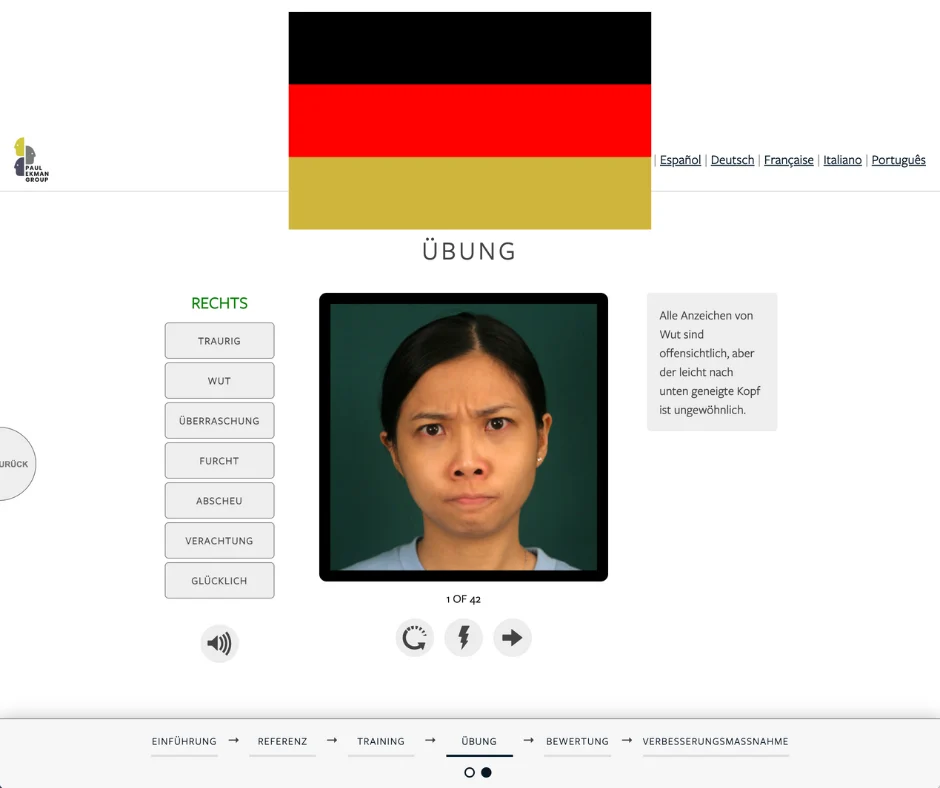
The Paul Ekman Group, a leading authority in the science of emotions and deception detection, has announced a significant expansion of its groundbreaking online micro-expression training tools, now offering comprehensive courses in German, French, and Italian. This strategic move democratizes access to scientifically validated emotional awareness and deception detection skills, making them available to a broader European and global audience than ever before. Previously available in English, Spanish, and Portuguese, the addition of these three major European languages marks a pivotal moment in the organization’s mission to foster deeper self-understanding and improved interpersonal relationships worldwide.
The initiative directly addresses a growing demand for accessible, high-quality training in understanding subtle, involuntary facial expressions that can reveal true emotions. Micro-expressions, fleeting facial movements lasting fractions of a second, are critical indicators of underlying emotional states that often go unnoticed. Their recognition is vital across a multitude of professional fields, including law enforcement, education, psychotherapy, and leadership, as well as in everyday personal interactions.
A Deepening Commitment to Global Emotional Literacy
The Paul Ekman Group’s mission has consistently centered on empowering individuals with the tools to better understand themselves and others through the lens of emotional awareness. Dr. Paul Ekman, a renowned psychologist and pioneer in the study of micro-expressions, has long emphasized the universality of basic human emotions and their corresponding facial expressions. This foundational principle underpins the organization’s educational approach, aiming to bridge cultural divides through a shared understanding of human emotional signaling.
The translation of its core micro-expression training tools into German, French, and Italian represents a substantial investment and a significant step towards fulfilling this global mission. Previously, users relying on languages other than English, Spanish, or Portuguese faced a linguistic barrier to accessing this specialized knowledge. The new translations ensure that educators, professionals, and individuals in German-, French-, and Italian-speaking regions can now engage with the training content in their native tongue, removing a crucial obstacle to learning.
Comprehensive Training Modules Now Multilingual
The expansion encompasses all seven of the Paul Ekman Group’s core online micro-expression training tools. These tools are integrated into three distinct training packages, catering to different levels of engagement and learning objectives. Each of these modules has undergone a thorough translation process to ensure accuracy, cultural nuance, and pedagogical effectiveness in German, French, and Italian.
Upon initiating any micro-expression course, users will now be prompted to select their preferred language from a readily accessible menu. This user-friendly interface ensures a seamless transition into the training environment, allowing learners to immediately immerse themselves in the material without the cognitive load of navigating a foreign language. The existing translations in Spanish and Portuguese remain available, further solidifying the organization’s commitment to serving a diverse international clientele.
The Science and Significance of Micro-Expression Recognition
Micro-expressions are involuntary, brief facial movements that occur when a person conceals or suppresses an emotion. Unlike deliberate expressions, they are unconscious and reveal the speaker’s true feelings. Dr. Ekman’s seminal research, conducted over decades, identified seven universal micro-expressions corresponding to basic emotions: happiness, sadness, anger, fear, surprise, disgust, and contempt.
The ability to detect these fleeting expressions offers profound benefits:
- Enhanced Empathy and Connection: Recognizing the subtle emotional cues of others allows for more compassionate and understanding responses, fostering stronger personal and professional relationships.
- Improved Communication: By understanding the unspoken emotional undercurrents, individuals can navigate conversations with greater clarity and address potential misunderstandings before they escalate.
- Deception Detection: While not solely focused on identifying liars, micro-expression training provides insights into emotional incongruence, which can be a critical component in assessing the veracity of statements.
- Professional Advancement: In fields where accurate assessment of human emotion is paramount, such as law enforcement, intelligence, and human resources, micro-expression recognition is an invaluable skill.
The implications of mastering micro-expression detection extend to enhancing emotional intelligence, a widely recognized predictor of success in both personal and professional spheres. Individuals with higher emotional intelligence are better equipped to manage their own emotions, understand the emotions of others, and use this understanding to guide their thinking and behavior. The Paul Ekman Group’s training directly contributes to developing this crucial skillset.
A Timeline of Global Expansion
The journey to making micro-expression training globally accessible has been a gradual but determined one. Dr. Ekman’s research began in the mid-20th century, with foundational work on facial expressions and their universality published in the 1970s. The development of training tools followed, initially in English, as the scientific community and practitioners sought practical applications for this research.
The advent of online learning platforms in the early 21st century provided a revolutionary avenue for disseminating this specialized knowledge. The Paul Ekman Group leveraged this technology to reach a wider audience. The initial expansion beyond English saw the introduction of Spanish and Portuguese language versions, catering to significant linguistic blocs. This paved the way for the current rollout of German, French, and Italian, marking a significant acceleration in the organization’s global outreach strategy.
The decision to prioritize these three languages was likely influenced by several factors:
- Linguistic Influence: German, French, and Italian are among the most widely spoken languages in Europe, with significant economic and cultural influence.
- Professional Demand: These regions host robust professional sectors, including law enforcement, healthcare, education, and business, where micro-expression training is highly valued.
- Existing Partnerships and Outreach: The Paul Ekman Group likely has established networks and a significant user base in these regions, making the translation a strategic response to existing demand.
The current expansion represents a culmination of years of translation efforts, linguistic review, and platform integration. It signifies a commitment to not only providing scientific knowledge but also ensuring its practical application across diverse cultural and linguistic landscapes.
Supporting Data and Broader Impact
The global market for emotional intelligence training is experiencing substantial growth. According to recent market research reports, the global emotional intelligence market size was valued at USD 1.7 billion in 2022 and is projected to grow at a compound annual growth rate (CAGR) of 15.2% from 2023 to 2030. This growth is driven by increasing awareness of the importance of soft skills in professional development, the rise of remote work necessitating improved interpersonal communication, and the growing emphasis on mental health and well-being.
The Paul Ekman Group’s expansion directly taps into this burgeoning market, offering a unique and scientifically rigorous approach to emotional intelligence. By providing training in multiple languages, the organization is positioning itself as a leader in a globalized marketplace.
The implications of this multilingual offering are far-reaching:
- Democratization of Expertise: Cutting-edge psychological science, previously accessible primarily to English speakers, is now available to millions more, fostering a more informed and emotionally intelligent global populace.
- Enhanced Cross-Cultural Understanding: As individuals from different linguistic backgrounds gain a common framework for understanding emotions, it can facilitate more effective cross-cultural communication and collaboration.
- Professional Development Across Europe: The availability of training in German, French, and Italian will equip professionals in these countries with advanced skills, potentially leading to improved performance in their respective fields and a more competitive workforce.
- Support for International Organizations: Multinational corporations and international bodies can leverage this training to improve team dynamics, leadership effectiveness, and client relations across their diverse workforces.
Official Responses and Future Outlook
While specific official statements from translated language users are not yet available, the expansion is a clear indicator of the Paul Ekman Group’s proactive approach to meeting global demand. The organization’s consistent messaging emphasizes its dedication to making the science of emotions universally accessible.
The announcement is likely to be met with enthusiasm from educators, therapists, law enforcement agencies, and business leaders across German-, French-, and Italian-speaking countries. These professionals have long sought reliable and effective methods for understanding human behavior, and Dr. Ekman’s work represents a gold standard in this field.
Looking ahead, the Paul Ekman Group has indicated that this is not the end of their multilingual expansion. The organization is actively working to broaden its offerings to even more languages. They have extended an open invitation for individuals to suggest languages they would like to see added to the training repertoire, demonstrating a commitment to continuous improvement and responsiveness to user needs. This forward-looking strategy ensures that the Paul Ekman Group remains at the forefront of global emotional intelligence education.
The journey to understand human emotions is a universal one, and the Paul Ekman Group’s latest initiative is a significant stride in making that journey more accessible and impactful for people around the world, regardless of their native language. The availability of their micro-expression training in German, French, and Italian marks a new era of global emotional literacy, promising to foster deeper understanding and connection across diverse communities.
