


A decade after its groundbreaking introduction, the Atlas of Emotions, a pioneering framework for understanding and navigating the complex landscape of human feelings, is celebrating its tenth anniversary. Launched in 2016, this ambitious project emerged from a unique and profound collaboration between renowned emotion scientist Dr. Paul Ekman, his daughter and fellow researcher Dr. Eve Ekman, and His Holiness the Dalai Lama. The Atlas was conceived with the ambitious goal of mapping the vast terrain of human emotion, grounded in robust scientific consensus yet presented in a manner that is both accessible and deeply resonant with individuals across diverse backgrounds. Over the past ten years, its influence has steadily expanded, permeating educational institutions, therapeutic practices, academic research, and the fabric of everyday human interaction on a global scale.
A Decade of Emotional Exploration: The Genesis and Evolution of the Atlas
The inception of the Atlas of Emotions can be traced back to Dr. Paul Ekman’s extensive research into universal emotions. A pivotal moment in its development was Dr. Ekman’s comprehensive survey of nearly 250 leading emotion scientists. This landmark study aimed to identify areas of widespread agreement within the scientific community regarding the nature and universality of emotions. The findings of this survey, which revealed significant consensus on core emotional states, provided the foundational bedrock upon which the Atlas was built. This rigorous scientific inquiry was then synthesized with sophisticated graphic design principles and infused with the contemplative wisdom of His Holiness the Dalai Lama.
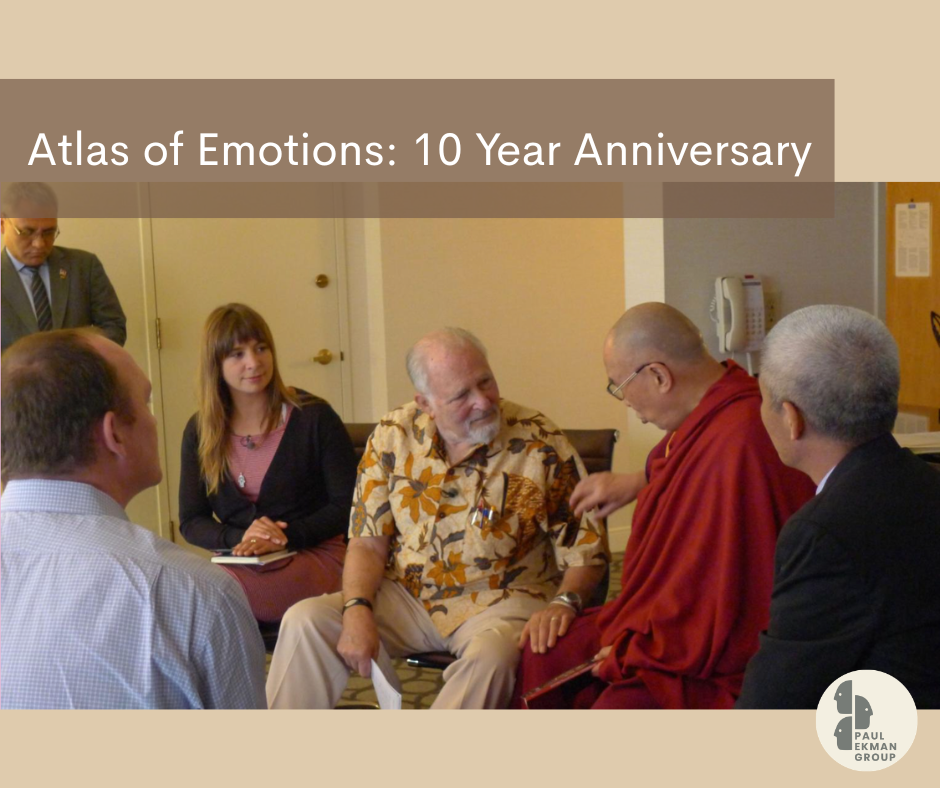
The collaborative spirit that defined the Atlas’s creation is vividly illustrated in recently released, never-before-seen footage. This archival material captures a working meeting between Paul and Eve Ekman and the Dalai Lama as they meticulously reviewed the Atlas in its developmental stages. The video offers an intimate glimpse into the interdisciplinary dialogue, showcasing the seamless integration of psychological research, artistic representation, and spiritual insight. This footage underscores the project’s commitment to a holistic understanding of emotion, bridging the empirical with the experiential.
From Concept to Global Recognition: The Atlas’s Journey
The official launch of the Atlas of Emotions in 2016 garnered immediate and widespread international attention. Prominent media outlets, including The New York Times, featured the Atlas, highlighting its innovative approach to visualizing and demystifying the complexities of human emotions for a public audience. The New York Times article, published on May 7, 2016, specifically noted the unique synergy between the scientific rigor of Dr. Ekman’s work and the spiritual guidance of the Dalai Lama, characterizing the Atlas as a “website [that] aims to map the emotions.” This early validation was instrumental in propelling the Atlas into broader public consciousness and fostering its adoption across various sectors.
The subsequent decade has witnessed a remarkable trajectory of impact. The Atlas has transitioned from a novel concept to an indispensable tool for many. Its applications are diverse and far-reaching:
- Educational Settings: The Atlas has been integrated into curricula, providing students with a structured framework for understanding their own emotional experiences and those of others. This has been particularly impactful in fostering emotional intelligence and empathy from an early age. Educators have reported increased student engagement with emotional literacy concepts, leading to improved classroom dynamics and a more supportive learning environment.
- Therapeutic Practices: Mental health professionals have found the Atlas to be an invaluable resource in their work with clients. Its visual and conceptual clarity aids in the process of identifying, articulating, and processing complex emotional states. Therapists utilize the Atlas to help individuals develop greater self-awareness, build coping mechanisms, and enhance their emotional regulation skills. Anecdotal evidence from therapists suggests a correlation between the use of the Atlas and accelerated progress in treatment for conditions ranging from anxiety and depression to trauma.
- Research Laboratories: The Atlas continues to serve as a foundational model for ongoing research into the neurobiology, psychology, and sociology of emotions. Researchers are leveraging its established framework to explore new hypotheses, design experiments, and analyze emotional responses in various contexts. Its existence has facilitated cross-disciplinary dialogue among researchers, accelerating the pace of discovery in the field of affective science.
- Personal Development and Everyday Conversations: Beyond formal settings, the Atlas has empowered individuals to engage more thoughtfully with their own emotions and with the emotional lives of those around them. It provides a common language and a shared understanding that can de-escalate conflict, foster deeper connections, and promote more mindful interactions. Its accessibility has made complex psychological concepts understandable and applicable to the challenges and joys of daily life.
The success of the Atlas can be partially attributed to the growing global awareness of the importance of emotional intelligence. Studies have increasingly demonstrated a strong correlation between high emotional intelligence and positive life outcomes, including improved relationships, greater career success, and enhanced overall well-being. For instance, research published in the Journal of Personality and Social Psychology has indicated that individuals with higher emotional intelligence tend to experience less stress and exhibit better mental health. The Atlas of Emotions provides a practical and accessible pathway for cultivating these essential skills.
Engaging the Community: Shaping the Future of Emotional Understanding
As the Atlas of Emotions commemorates this significant ten-year milestone, the team behind the project is not only reflecting on past achievements but also actively looking toward the future. A crucial component of this forward-looking strategy involves engaging directly with the community of users who have embraced and benefited from the Atlas. To this end, a direct appeal has been made to users to share their experiences and insights.
Individuals are invited to articulate how they have utilized the Atlas of Emotions, what new perspectives it has afforded them, and what changes it may have facilitated in their understanding or behavior. This feedback is being collected through a dedicated online form, serving as a vital mechanism for gathering qualitative data that will inform the next phase of the Atlas’s development. The project leaders emphasize that these user-generated insights are invaluable in ensuring that future iterations remain relevant, impactful, and responsive to the evolving needs of its global audience.
A Glimpse into What Lies Ahead: Enhancements and New Publications
The celebration of the Atlas’s tenth anniversary coincides with exciting announcements regarding its future development. Significant updates are planned for the online, interactive Atlas of Emotions, promising enhanced features and an even more intuitive user experience. These enhancements are expected to build upon the existing strengths of the platform, incorporating user feedback and the latest advancements in understanding emotional science.
Furthermore, Dr. Eve Ekman is currently undertaking the ambitious project of developing a comprehensive "Atlas of Emotions" book. This forthcoming publication, slated for release in 2027, is anticipated to delve deeper into the foundational concepts of the Atlas, offering expanded explorations of emotional states, updated scientific insights, and novel methodologies for engaging with the intricate emotional landscape that profoundly shapes human existence. The book aims to serve as a definitive resource, consolidating a decade of learning and research into a tangible and enduring format.
Individuals interested in being among the first to know when the "Atlas of Emotions" book becomes available are encouraged to join a dedicated announcement list. This proactive approach ensures that those invested in the Atlas’s journey are kept informed of its ongoing evolution and future offerings. The anticipation surrounding both the digital updates and the new book signifies a commitment to the continued growth and dissemination of emotional literacy, solidifying the Atlas of Emotions’ legacy as a vital tool for understanding ourselves and the world around us.
