

The Evolution of Business Communication: Why Narrative Matters
For decades, business communication often prioritized raw data and logical argument, assuming that rational facts alone would drive decisions. However, a growing body of research in cognitive science and psychology has underscored the human brain’s innate preference for stories. Narratives activate more areas of the brain than mere data points, enhancing comprehension, recall, and emotional connection. A 2016 study published in the Journal of Marketing Research found that narratives can significantly increase willingness to pay for products and services by fostering greater empathy and identification. Furthermore, a Stanford Graduate School of Business study revealed that facts are 20 times more likely to be remembered if they are part of a story. This scientific backing explains the shift from purely analytical presentations to those integrated with strategic narrative, reflecting a deeper understanding of human decision-making. The timeline of this evolution shows a gradual transition from the era of "information overload" where presenters simply dumped data, to the current emphasis on "sense-making" through storytelling, recognizing that clarity and connection are paramount.
Architecting Persuasion: Mastering the Storytelling Structure
At the heart of compelling business storytelling lies a well-defined structure, often echoing classical narrative arcs. The "Hero’s Journey," a monomyth identified by mythologist Joseph Campbell, provides a powerful template for business presentations. This structure typically involves a hero embarking on an adventure, encountering challenges, receiving guidance from a mentor, overcoming obstacles, and returning transformed. Adapting this framework for business requires a nuanced understanding of its components and how they translate into a corporate context.

1. The Hero’s Journey: A Business Blueprint
In a business presentation, establishing a clear beginning, middle, and end is non-negotiable. The "beginning" sets the scene, outlining the current problematic state or unmet need. The "middle" details the struggles, complexities, and potential pitfalls associated with this challenge. The "end" presents a resolution, a vision of "happily ever after" made possible by the proposed solution. Critically, this structure necessitates defining who embodies the "hero" and who takes on the "mentor" role within the narrative. This framework provides a psychologically resonant path for the audience, drawing them into a journey of problem-solving and transformation.
2. Your Audience: The Indispensable Hero
A common pitfall in business presentations is for the presenter to inadvertently position themselves or their company as the hero. This often manifests as lengthy recitations of company history, impressive client lists, or numerous accolades. While credibility is vital, excessive self-focus can alienate an audience by failing to address their core concerns. Communication experts consistently advise that the most impactful storytelling presentations strategically position the audience as the hero. This shift is fundamental because it is the audience who faces the challenge, seeks a solution, and ultimately stands to benefit from the "new bliss." By centering the narrative on the audience’s pain points, aspirations, and potential for growth, presenters foster a sense of shared purpose and demonstrate genuine understanding. This empathetic framing is crucial for building rapport and trust, which are foundational for persuasion.
3. Your Role: The Guiding Mentor
If the audience is the hero, then the presenter naturally assumes the role of the mentor. Experienced presentation storytellers exemplify this by focusing not on personal glory, but on empowering their audience with the tools and insights needed to overcome their challenges. Consider the example of a meal kit delivery service. A "hero" presenter might boast about "the freshest ingredients, most creative menu, and over 1,000 five-star reviews." While factual, this approach is company-centric. In contrast, a "mentor" presenter would frame the problem from the audience’s perspective: "One of the most difficult things about being a parent is feeling torn between spending time with your children and cooking them a fresh, healthy meal. But what if someone could come alongside you and cut the time it takes you to cook for your family in half? That’s what our meal kit delivery service does. By sending fresh, pre-prepared ingredients straight to your door, we save the average family 5 hours per week. No more choosing between time in the kitchen or time with your children. We allow you to do both." This reorientation immediately resonates, demonstrating empathy and offering a tangible solution to a real-world problem, thereby strengthening the presenter’s credibility as a helpful guide.
Dynamic Engagement: The Art of Contrast and Memorable Moments
Beyond structure, keeping an audience engaged requires dynamic pacing and the strategic introduction of contrast. Monotonous, linear presentations often fail to capture attention, leading to disinterest and reduced information retention.

4. Add Contrast: The Presentation Sparkline™ Framework
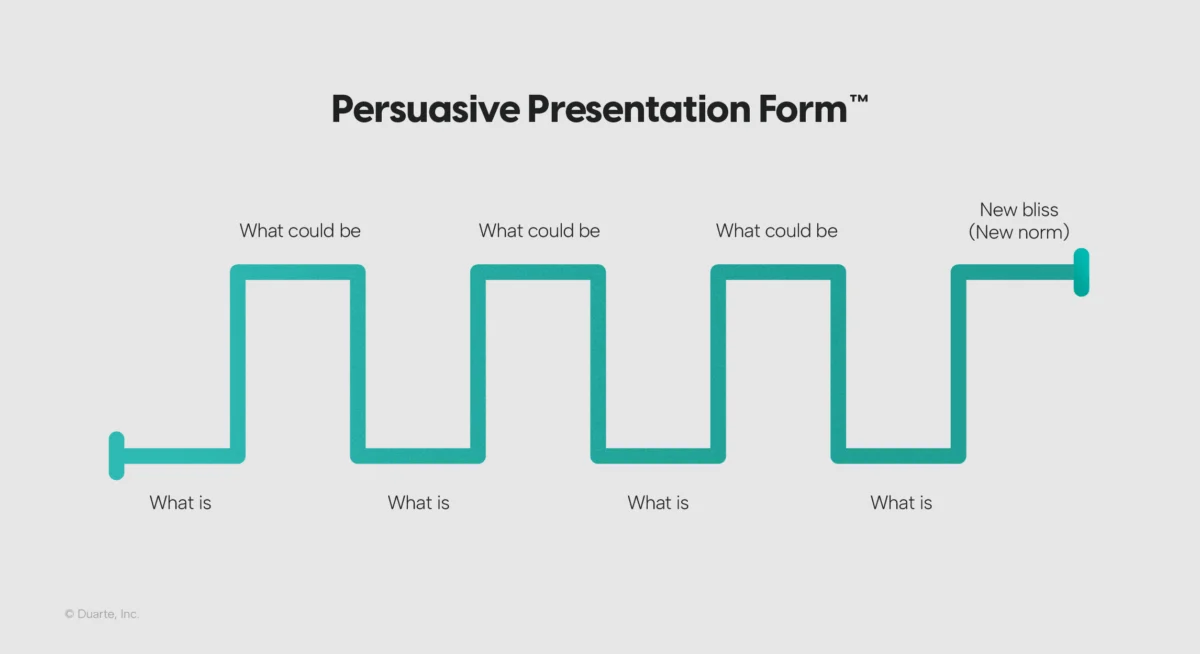
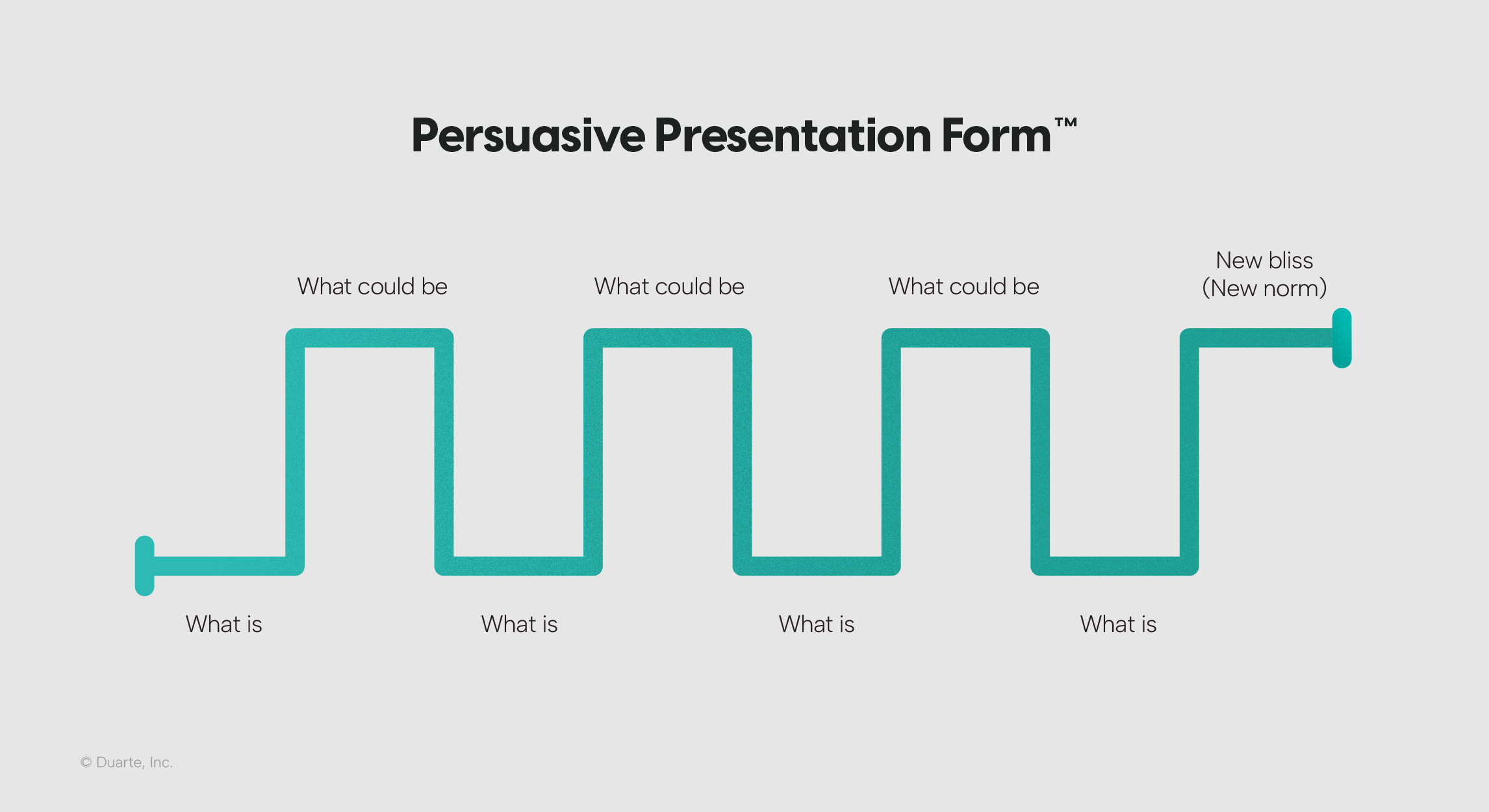
The human brain is wired to pay attention to novelty and shifts. Simply listing facts in a linear fashion ("and then this happened, and then that happened") can quickly become dull. The most engaging stories introduce contrast, often using phrases like "but then." In presentations, this translates to the "Presentation Sparkline™" framework, which oscillates between "what is" (the current reality, challenges, problems) and "what could be" (the proposed solution, the desired future state, the benefits).
Traditional business presentations often fall into two traps:
- The Report: Primarily focuses on "what is," detailing current status, challenges, and data, with a brief recommendation at the end. This can be informative but often lacks persuasive power and can be perceived as dry.
- The Pitch: Opens with "what is" but quickly jumps to an extended focus on "what could be," promoting an idea or product. While optimistic, this can sound overly salesy or too good to be true if not grounded in addressing current realities.
The Presentation Sparkline™, popularized by communication expert Nancy Duarte, avoids these pitfalls by constantly shifting between the current reality and the aspirational future. This creates a rhythmic tension that keeps the audience mentally engaged. Duarte illustrates this by analyzing iconic speeches like Steve Jobs’ 2007 iPhone launch and Dr. Martin Luther King, Jr.’s "I Have a Dream" speech. Both masterfully alternated between describing the undesirable present ("what is") and envisioning a glorious future ("what could be"), building emotional momentum and a powerful call to action. This constant interplay prevents boredom and maintains a dynamic flow, crucial for audience retention and persuasion.
5. Make S.T.A.R. Moments™: Something They’ll Always Remember
Given the volume of information people encounter daily, remembering specific details can be challenging. This is where S.T.A.R. Moments™ – "Something They’ll Always Remember" – become indispensable. These are carefully crafted, vivid instances within a presentation designed to lodge themselves in the audience’s memory, encapsulating key messages or data points in an unforgettable way.
A classic example comes from Al Gore’s presentation, which formed the basis of his documentary An Inconvenient Truth. Tasked with communicating the drastic projected rise in CO2 concentration over 50 years, Gore didn’t just show a graph. He created a S.T.A.R. Moment by stepping into a hydraulic lift that physically ascended alongside the projected CO2 curve on a massive screen. This experiential demonstration transformed abstract data into a visceral, memorable event, making the urgency of climate change palpable and unforgettable. Such moments leverage visual, kinesthetic, and emotional engagement to bypass cognitive overload, ensuring the core message sticks long after the presentation concludes.

Elevating Data: Storytelling with Numbers
One of the most significant challenges in business communication is making data compelling. Raw statistics, while essential, rarely speak for themselves. They require narrative framing to convey meaning, context, and impact.
6. Incorporate Data Storytelling
Data storytelling involves transforming numbers into insights and then embedding those insights within a narrative that resonates with the audience. Presenters have several powerful strategies:
- Marvel at the Magnitude: Highlight the sheer scale or significance of a data point.
- Humanize the Data: Connect statistics to individual experiences or relatable scenarios.
- Surprise the Audience with the Unexpected: Present data in a way that defies conventional expectations, creating intrigue and memorability.
Steve Jobs’ 2008 MacBook Air reveal provides an iconic example of surprising the audience with the unexpected. Instead of simply stating the device’s thinnest point was 0.76 inches – a number that might not immediately convey its revolutionary slimness – Jobs dramatically slid the laptop out of a standard manila envelope. This unexpected visual comparison immediately conveyed the MacBook Air’s unprecedented thinness in a tangible, astonishing way that resonated with everyone in the room. This wasn’t just data; it was a demonstration that transcended mere numbers, creating a legendary product reveal moment.
7. End with a "New Bliss": The Vision of an Achievable Future
Every compelling story culminates in a resolution, a "happily ever after." In business storytelling, this is the "new bliss" – a vivid, attainable vision of the future state for the audience, made possible by the solution or idea being presented. This is more than just a call to action; it’s a painted picture of transformation.
The "new bliss" serves as the ultimate reward for the audience, the hero, who has navigated the challenges presented in the story. It reassures them that the proposed solution is not merely theoretical but a practical path to a better reality. By clearly articulating this positive future, the presenter, as the mentor, reinforces their credibility and the value of their offering. This ending provides closure, inspires confidence, and motivates the audience to take the necessary steps to achieve this desirable future. It transforms abstract possibilities into a concrete, desirable outcome, cementing the presentation’s persuasive power.
Organizational Impact and Future Outlook
The consistent application of business storytelling principles has profound implications for organizations. It drives not only external success, such as increased sales and successful product launches, but also internal alignment and effective change management. When leaders across an organization master the art of crafting and delivering compelling narratives, they foster a shared vision, enhance team cohesion, and navigate periods of uncertainty with greater clarity and purpose. A study by Forrester Research indicated that companies with strong corporate storytelling capabilities saw a 30% higher engagement rate from employees and customers.
The demand for enhanced communication skills, particularly in strategic narrative development, is steadily increasing. Organizations are investing in training programs to equip their teams with these vital competencies, recognizing that the ability to tell the right story, at the right moment, in the right way, is no longer a soft skill but a strategic imperative. Whether through engaging communication agencies to craft pivotal presentations or providing internal training for widespread adoption, the future of effective business communication is undeniably intertwined with the power of storytelling. The shift from simply conveying information to inspiring action through narrative is a testament to storytelling’s enduring power in shaping perceptions, driving decisions, and ultimately, moving businesses forward.
