

Achieving a natural, engaging flow in voiceover dialogue is paramount for effective communication, yet a common pitfall known as "blocking" can hinder even experienced performers. This phenomenon, characterized by an unnatural, disjointed delivery, often plagues newcomers to the industry but can be identified and rectified with awareness and practice. This in-depth exploration delves into the concept of voiceover flow, dissects the mechanics of blocking, and provides actionable strategies for voiceover artists to master this crucial aspect of their craft.
The Essence of Natural Conversation
To grasp the importance of flow in voiceover, one must first understand the rhythm of natural human conversation. Imagine recording a casual chat with a friend or observing conversations in a public setting. Several key characteristics emerge:
- Pauses and Breaths: Human speech is punctuated by natural pauses for thought, emphasis, and breath. These are not random but integral to the rhythm and comprehension of speech.
- Vocal Inflection and Cadence: Conversations are rarely monotone. Intonation, pitch variations, and the rise and fall of speech (cadence) convey emotion, meaning, and engagement.
- Varied Pacing: While conversations generally have a discernible pace, it’s not uniform. Moments of quick exchange might be followed by slower, more deliberate statements, reflecting the ebb and flow of ideas.
- Subtle Imperfections: Hesitations, fillers like "um" and "uh" (when used judiciously), and slight stumbles are part of authentic human speech. These elements, far from detracting, often add to the perceived authenticity.
These elements combine to create a seamless, engaging auditory experience for the listener, allowing them to absorb information without conscious effort.
Defining Voiceover Flow
In the realm of voiceover, "flow" refers to the smooth, natural progression of spoken dialogue that mirrors the cadence and rhythm of authentic human speech. The objective is to create an auditory experience that is both pleasing and easily digestible for the audience. This natural flow is crucial across all voiceover genres, from the dramatic intensity of character work to the informative clarity of e-learning, the professional polish of corporate narration, and the whimsical nature of animation.
While the specific pace and delivery style will vary depending on the project’s requirements, the underlying principle of good flow remains constant. It ensures that the listener remains engaged, can process the information effectively, and perceives the delivery as human and relatable. In many instances, this necessitates the introduction of subtle humanizing elements, though their appropriateness is dictated by the context of the voiceover.
As industry expert Hugh Edwards notes, "It’s crucial that we deliver dialogue with a good, human flow to it, so that the listener doesn’t have to work to understand or accept it." This underscores the fundamental goal: to make the listener’s experience effortless and compelling.
Understanding "Blocking" in Voiceover
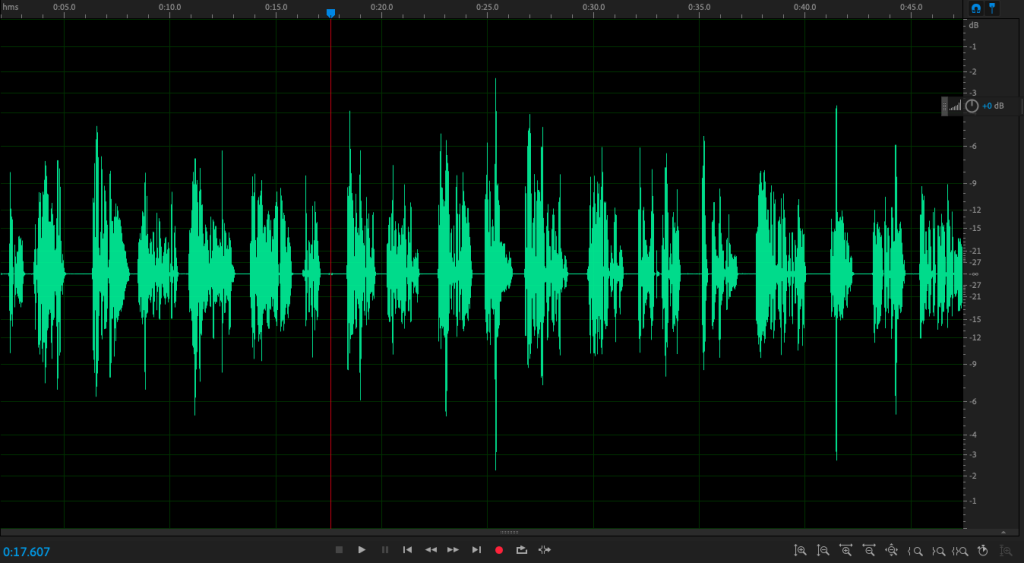
"Blocking" is a term used within the voiceover industry to describe an unnatural and disjointed delivery that disrupts the intended flow of dialogue. The term derives from the visual representation of such deliveries in audio editing software. When examined on a waveform, blocking manifests as distinct, isolated segments of audio, separated by unusually large gaps of silence. These "blocks" of sound create a visual representation of the disruption in the natural cadence of speech.
A common characteristic of blocking is a "staccato" or choppy delivery. Instead of a continuous, flowing stream of words, the voiceover artist delivers phrases or sentences in a series of disconnected bursts. This can make the audio feel mechanical, robotic, or as if the speaker is struggling to articulate their thoughts.
The visual evidence of blocking is stark. The accompanying image of a waveform clearly illustrates these "blocks" of sound, interspersed with significant silences. When audio exhibits this characteristic, listeners often perceive it as jarring and unnatural. It forces the audience to actively anticipate the next segment of speech, rather than passively absorbing the message. This cognitive load detracts from the content and can lead to listener fatigue and disengagement.
The Visual Disparity: Blocking vs. Natural Waveforms
The distinction between a blocked delivery and natural dialogue is visually striking when observing audio waveforms.
Waveform Indicative of Blocking:
As previously illustrated, a waveform exhibiting blocking will show distinct, separated peaks of audio activity, with prominent stretches of silence in between. This visual fragmentation directly correlates with the disjointed, staccato auditory experience. The delivery might sound like: "This… is… a… demonstration… of… blocking." Each word or short phrase is delivered as a discrete unit, with extended pauses.
Waveform Indicative of Natural Flow (The "Hairy Caterpillars"):

In contrast, a voiceover delivery with good, natural flow is often described as resembling "hairy caterpillars" in its waveform. This evocative metaphor highlights the continuous, undulating nature of the audio. Instead of stark blocks, the waveform shows a more consistent, albeit varied, level of activity, with subtle peaks and valleys that reflect natural speech patterns.
The provided image of a "normal dialogue waveform" exemplifies this. The audio appears more cohesive, with less pronounced gaps between segments of speech. This visual representation corresponds to an auditory experience that is smooth, humanistic, and easily comprehensible. The listener can follow the narrative or information without the jarring interruptions characteristic of blocking.
The Genesis of Blocking: Why it Occurs
Blocking is a common issue, particularly among individuals new to the voiceover profession, though it is not exclusively confined to them. Several factors can contribute to its development:
- Overly Cautious Delivery: Newcomers may be excessively focused on enunciation and clarity, leading them to pause deliberately between each word or phrase to ensure they are "saying it right." This hyper-vigilance can stifle natural rhythm.
- Fear of Making Mistakes: The anxiety of mispronouncing a word, stumbling over a phrase, or deviating from the script can lead to a hesitant and fragmented delivery, where each utterance is approached with extreme caution.
- Lack of Script Familiarity: Insufficient preparation or a lack of deep understanding of the script can result in the voice actor reading the text for the first time during the recording session. This often leads to a piecemeal approach as they process the words as they speak them.
- Misinterpretation of Pacing Instructions: If a script calls for a slower pace, some performers might interpret this as requiring extended pauses between individual words rather than allowing for natural breath and thought pauses within sentences.
- Inadequate Breath Control: Poor breath management can lead to short, choppy phrases as the voice actor struggles to take full breaths, resulting in fragmented deliveries.
- Absence of Natural Conversational Practice: Without regular engagement in natural, unscripted conversation, individuals may not fully internalize the nuances of human speech rhythms.
- Influence of Other Media: Exposure to certain styles of public speaking or broadcasting that employ deliberate pauses for emphasis might be inadvertently mimicked without understanding the underlying intent or context.
The Opposite Extreme: Over-Editing and Excessive Pace
While blocking creates an unnatural choppiness, its opposite can be equally detrimental to listener comprehension and engagement. This occurs when dialogue is over-edited, excessively de-breathed, or delivered at an unnaturally fast pace.
This phenomenon is characterized by a complete absence of the necessary pauses that allow the listener to process information. It’s akin to a rapid-fire delivery where no space is provided for the audience to absorb what has been said. A prime example is the often-cited scenario of local radio advertisements where a significant amount of copy is crammed into a limited time slot. The result is a barrage of words that leaves the listener feeling overwhelmed and unable to recall the message. The common refrain in such instances is, "I have no idea what I just heard!"
This excessive speed and lack of breathing room are just as detrimental to effective communication as blocking, albeit for diametrically opposed reasons. Both scenarios fail to create a comfortable and comprehensible listening experience.
When Blocking Might Be Intentional
While generally considered a flaw, there are specific artistic and narrative contexts where a delivery that might appear "blocked" can be a deliberate and effective choice by the voiceover artist. These situations arise when the staccato or fragmented delivery serves a specific purpose within the performance or narrative:
- Portraying Specific Emotional States: A character experiencing extreme anxiety, panic, confusion, or delivering fragmented thoughts due to trauma or mental distress might intentionally use a disjointed vocal delivery.
- Character Quirks: Some characters might have naturally choppy speech patterns as a defining personality trait. This could be for comedic effect or to establish a unique vocal signature.
- Artistic Interpretation: In certain avant-garde or experimental audio projects, a voice actor might intentionally employ a staccato delivery as an artistic statement or to create a specific atmospheric effect.
- Representing Mechanical or Non-Human Entities: For robotic characters or artificial intelligences, a segmented, less fluid delivery can effectively convey their non-human nature.
- Emphasis and Dramatic Effect: In rare instances, a brief, deliberate pause can be used for dramatic emphasis, creating a sharp, impactful delivery. However, this is a nuanced technique requiring precise execution.
In these scenarios, the voiceover artist is making a conscious and controlled artistic choice. They understand the implications of their delivery style and are using it as a tool to enhance the narrative or characterization. This is distinct from unintentional blocking, where the artist is unaware of the disjointedness and its negative impact.
Strategies for Eliminating and Preventing Blocking
Fortunately, the issue of blocking is addressable. With focused practice and an understanding of its root causes, voiceover artists can cultivate a natural, flowing delivery. Here are key strategies:
- Thorough Script Preparation: Before stepping into the recording booth (or setting up your home studio), thoroughly read and understand the script. Familiarize yourself with the content, flow of ideas, and pronunciation of any challenging words. Practice reading the script aloud multiple times, focusing on natural rhythm and pacing.
- Focus on Natural Speech Patterns: Listen to recordings of natural human conversations. Pay attention to how people pause, breathe, and link words together. Try to emulate these organic patterns in your delivery. Record yourself and compare your speech to natural speech.
- Embrace the Power of the Pause: Understand that pauses are not empty spaces but integral to conveying meaning and allowing the listener to process information. Learn to use natural breath pauses and thoughtful pauses effectively within sentences, rather than creating extended silences between words.
- Practice Breath Control: Develop strong breath support and control. This will allow you to deliver longer phrases smoothly and prevent the need for choppy, gasping breaths that disrupt the flow. Techniques like diaphragmatic breathing are essential.
- Listen to Your Own Recordings Critically: Regularly record yourself and listen back to your performances. Pay close attention to the rhythm, pacing, and any instances of disjointedness. Identify specific areas where blocking might be occurring.
- Seek Constructive Feedback: Share your recordings with experienced voiceover coaches, peers, or mentors. They can offer invaluable insights and identify areas for improvement that you might not notice yourself.
- Focus on the Message, Not Just the Words: Instead of focusing on individual words, try to convey the overall meaning and emotion of the sentence or paragraph. This holistic approach naturally encourages a more fluid delivery.
- Vary Your Pace and Inflection Intentionally: Practice delivering the same lines at different paces and with varying intonation. This builds vocal flexibility and control, allowing you to adapt your delivery appropriately without resorting to fragmented speech.
- Master the Art of "Linking": Learn to smoothly connect words together, particularly at the ends of phrases, mimicking natural speech. This involves subtle changes in articulation and a natural flow of sound.
- Understand the "Opposite": Be mindful of the danger of over-editing or rushing. Strive for a balance where there is adequate space for comprehension but no unnecessary dead air that makes the delivery feel slow or plodding.
Conclusion: The Artist’s Control Over Delivery
Ultimately, the professional voiceover artist holds the reins of their delivery. They are the architect of the auditory experience, tasked with understanding the listener and devising the most effective means to engage them. Whether the chosen approach is fast-paced, staccato, or naturallyistic, it is the artist’s prerogative.
The critical distinction lies in conscious choice versus unawareness. When a voiceover artist deliberately opts for a particular delivery style – be it a rapid-fire narration or a more deliberate, fragmented approach for character portrayal – and does so with control and intent, it is a valid and professional execution of their craft. However, when blocking occurs due to a lack of awareness or control, it becomes a detrimental impediment to effective communication.
By understanding the nuances of vocal flow, recognizing the tell-tale signs of blocking, and actively employing strategies to refine their delivery, voiceover artists can elevate their performances from merely functional to truly captivating, ensuring their message resonates powerfully with their audience. The mastery of flow is not just about avoiding errors; it’s about unlocking the full potential of the human voice as a compelling storytelling and communication tool.
