

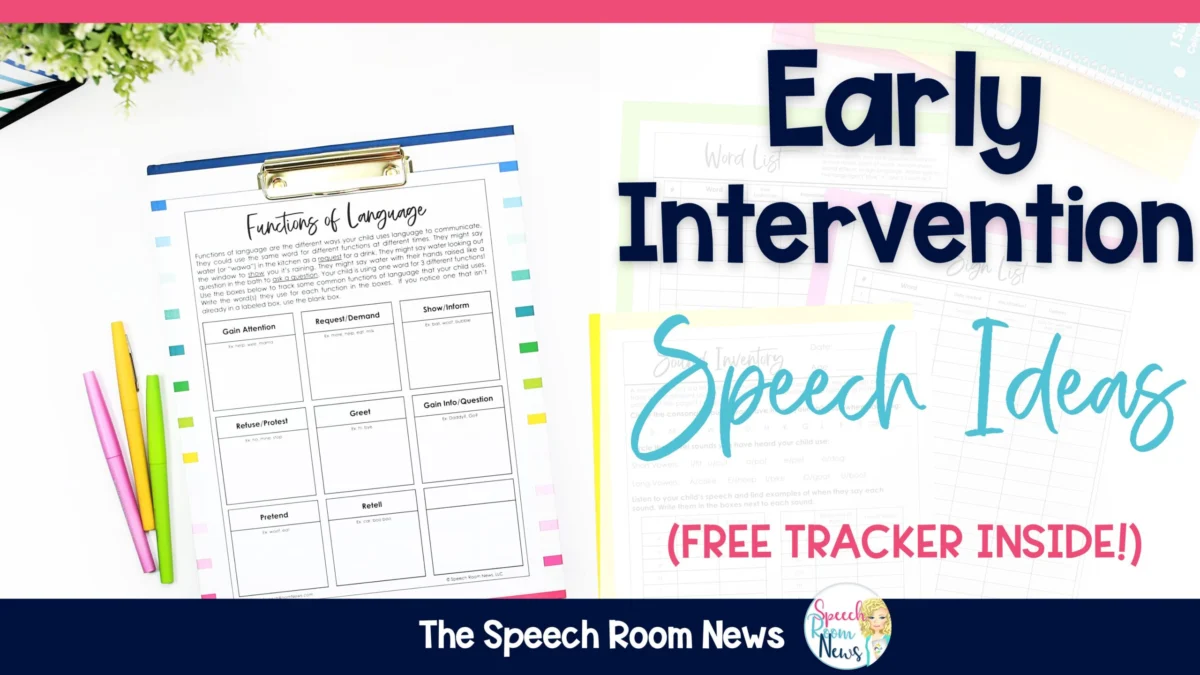
The journey of a child’s early speech and language development is a complex and fascinating process, yet for many families, it can present significant challenges. The undeniable power of early intervention speech-language therapy (EI-SLT) stands as a cornerstone in addressing these developmental hurdles, offering a critical window of opportunity that can profoundly influence a child’s future communicative abilities and overall well-being. For speech-language pathologists (SLPs) and parents alike, understanding and actively participating in this early phase is not merely beneficial but essential. This comprehensive exploration delves into the scientific basis, practical strategies, and broader implications of early intervention, emphasizing the critical role of systematic data tracking and accessible resources in fostering foundational communication skills.
Understanding Early Intervention Speech-Language Therapy (EI-SLT)
Early intervention speech-language therapy refers to therapeutic services provided to infants and young children, typically from birth to three years of age, who are identified as having or being at risk for developmental delays in speech, language, or communication. Its primary goal is to address these delays promptly, leveraging the brain’s remarkable plasticity during these formative years. By intervening early, professionals aim to mitigate the severity of potential communication disorders, enhance developmental trajectories, and equip children with the tools necessary for successful interaction with their environment.
The prevalence of speech and language disorders in young children underscores the necessity of robust EI-SLT programs. According to the National Institute on Deafness and Other Communication Disorders (NIDCD), approximately 8 to 12 percent of preschool-aged children experience some form of communication disorder. Speech sound disorders affect about 2-3% of children by age six, while language disorders can impact a higher percentage. These statistics highlight a significant segment of the pediatric population that can benefit immensely from timely and targeted intervention.
Historically, the understanding and treatment of childhood communication disorders have evolved considerably. Early approaches often focused on remediation once a clear deficit was established, frequently leading to delays in intervention. However, advancements in developmental psychology, neuroscience, and speech-language pathology have underscored the profound advantages of proactive, preventative, and early-stage interventions. Research consistently demonstrates that early identification and intervention lead to significantly better outcomes compared to delayed approaches, influencing not only speech and language but also cognitive, social, and emotional development. The shift towards family-centered care, where parents are viewed as integral partners in the therapeutic process, has further revolutionized EI-SLT, recognizing the home environment as the primary learning laboratory for young children.
The Indispensable Role of Data Tracking in Speech Development
One of the most powerful yet often overlooked tools in early intervention is the systematic tracking of a child’s speech sounds and emerging vocabulary. This practice moves beyond anecdotal observations, providing objective evidence of a child’s developmental trajectory and the effectiveness of intervention strategies. For parents, who are often the primary observers of their child’s daily communication attempts, meticulous data collection transforms subjective impressions into actionable insights.
The value of tracking extends across several critical dimensions:
- Objective Evidence of Progress: Developmental milestones for speech and language are established benchmarks, yet individual progress can be subtle. A detailed record of sounds, word approximations, and new words provides concrete data points that illustrate growth, even when it feels slow or inconsistent. This objective evidence is invaluable for both parents and therapists in understanding a child’s unique developmental pace.
- Informing Therapeutic Strategies: For SLPs, comprehensive tracking data from parents offers a crucial diagnostic and evaluative tool. It allows therapists to tailor interventions more precisely, identify specific sound patterns or vocabulary gaps, and adjust therapy goals as the child progresses. Understanding the types of syllable shapes a child is producing (e.g., consonant-vowel (CV) like "mama," vowel-consonant (VC) like "up," CVCV like "wawa," or CVC like "dog") provides insight into their phonological development and guides targeted activities.
- Empowering Parents: When parents are equipped with tools to track their child’s communication, they become more active and informed participants in the intervention process. This empowerment fosters a deeper understanding of their child’s needs and celebrates incremental successes, which can be highly motivating. The transition from being merely recipients of therapy to active data collectors and reporters can transform a parent’s engagement, making them effective co-therapists in the home environment. The personal experience of an SLP who became a parent to a late talker vividly illustrates this transformation. Initially approaching their child’s language development with professional enthusiasm, the reality of a delay shifted their perspective. The need for systematic tracking became a personal imperative, enabling them to organize observations and report effectively to their child’s intervention team, demonstrating the universal utility of such tools.
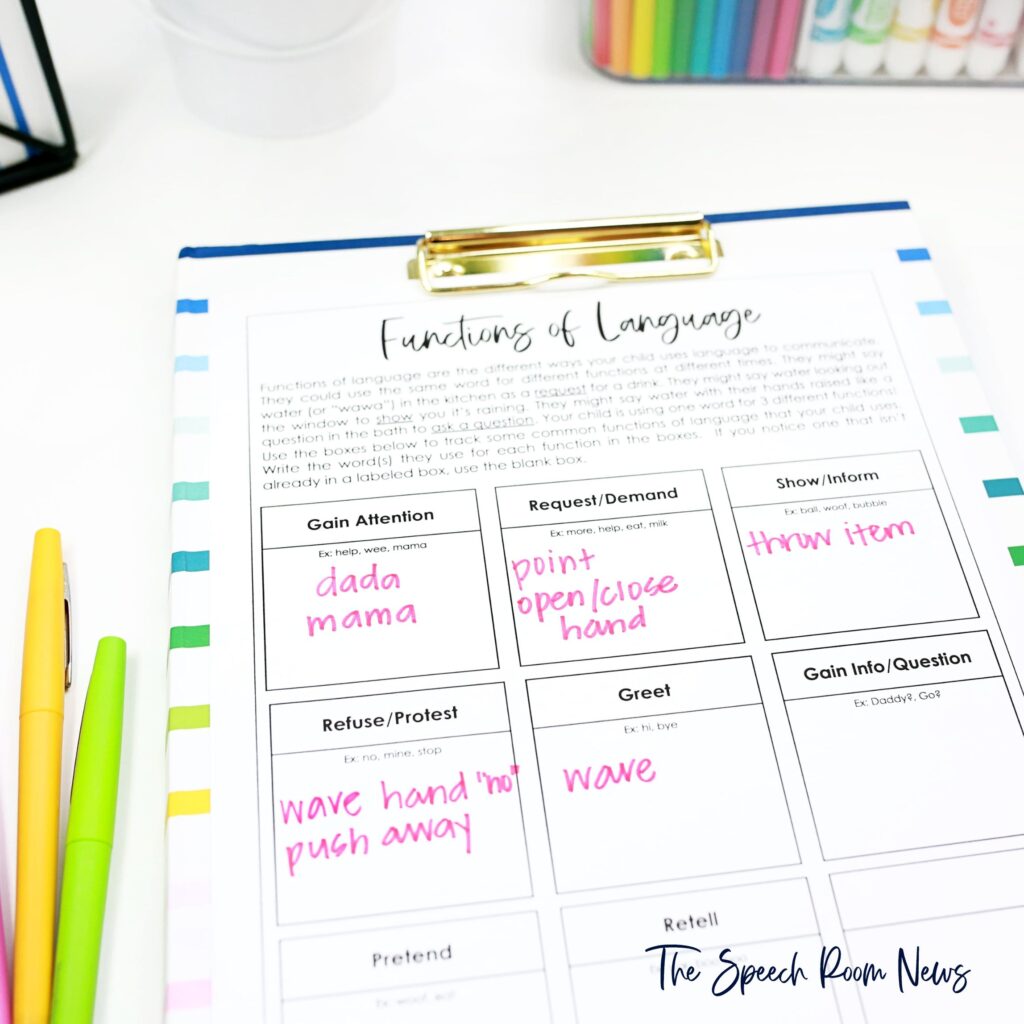
- Minimizing Guesswork: As a child begins to say a few words, and then many, it becomes increasingly difficult to remember each new utterance or sound. Tracking eliminates guesswork, ensuring that all emerging communication attempts are documented. This detailed record is essential for accurately reporting progress during monthly coaching sessions or clinical appointments. Resources like a "First Words Tracker" can significantly simplify this process, offering structured pages for recording new sounds, words, and even the functions of language (e.g., requesting, protesting, commenting). Families utilizing such tools often report being pleasantly surprised by the sheer volume of sounds and words their child is actually producing once they start tracking intentionally.
Recognizing Developmental Milestones and Red Flags
While every child develops at their own unique pace, there are generally accepted developmental milestones that serve as important guideposts. Awareness of these milestones is crucial for parents and caregivers to identify potential delays and seek professional guidance promptly.
- Early Vocalizations (0-6 months): Cooing, gurgling, and babbling with repetitive sounds like "ba-ba" or "da-da."
- Babbling and Gestures (6-12 months): More complex babbling, imitating sounds, responding to their name, using gestures like pointing or waving.
- First Words (12-18 months): Typically producing 1-3 meaningful words by 12 months, expanding to 10-20 words by 18 months. These words might be approximations (e.g., "baba" for bottle).
- Two-Word Combinations (18-24 months): Combining words (e.g., "more milk," "daddy go"), vocabulary growing rapidly to 50+ words.
- Sentence Development (24-36 months): Producing 3-4 word sentences, asking simple questions, understanding complex directions.
When to Worry: Red Flags for Late Talkers
A "late talker" is generally defined as a child between 18 and 30 months who has a limited expressive vocabulary for their age but no other developmental delays. While some late talkers catch up on their own, a significant percentage may continue to experience language difficulties.
Key indicators that warrant professional consultation include:
- No babbling by 9-12 months.
- No first words by 15-18 months.
- Fewer than 10-20 words by 18-20 months.
- Fewer than 50 words and no two-word combinations by 24 months.
- Difficulty understanding simple instructions or questions.
- Lack of gestures or pointing to communicate needs/wants.
- Regression in speech or language skills.
If any of these red flags are observed, it is imperative to consult with a pediatrician. The pediatrician can provide an initial assessment and, if necessary, refer the family to a speech-language pathologist or advise on contacting local early intervention programs or school districts for a comprehensive evaluation. Early identification through such channels ensures that children receive timely access to therapeutic services, maximizing their potential for improved communication outcomes. Professional resources, such as specialized handouts on late talkers, can provide parents with detailed information on what constitutes a word, stages of babbling, and strategies for child-led play, serving as an invaluable starting point for families navigating these concerns.

Effective Home-Based Strategies and Activities
The therapeutic environment is not confined to the SLP’s office; it extends into the child’s daily life. Integrating speech and language activities into everyday routines is a highly effective approach, capitalizing on the predictability and repeated exposure inherent in these activities. Daily routines create natural learning opportunities for vocabulary acquisition, social expectations, and action-verb associations.
1. Eating a Snack: A Communication Temptation
Snack time, unlike a full meal, offers a low-pressure, high-motivation opportunity for communication practice. The desirable nature of snacks creates "communication temptations" that encourage children to initiate interactions.
- Preparation: Pour a desired snack into a bowl.
- Modeling: Verbally describe your actions and the snack: "Look, I’m pouring some [snack name] into the bowl. Yum! I love to eat [snack name]. You like to eat [snack name] too. Mmmm, [snack name]." Use varied intonation and facial expressions.
- Prompting and Waiting: Offer the child the snack and ask, "Do you want [snack name]?" Look expectantly at the child and wait for a response.
- Celebrating All Attempts: Acknowledge and celebrate any attempt at communication, whether it’s a word approximation, a gesture, or even a vocalization. The goal is consistent modeling and creating opportunities for imitation, not immediate perfect production.
2. Brushing Teeth: Building Language in the Mirror
The bathroom mirror provides a unique space for establishing back-and-forth social routines and expanding descriptive language.
- Explain Actions and Rationale: Verbally narrate the entire process, explaining what you are doing and why. Instead of a simple "Brush your teeth," try: "It’s time to brush your teeth! We brush and clean our teeth so they stay healthy. We want healthy teeth so we can eat all kinds of yummy foods. Let’s get your green toothbrush. Can you find the toothpaste? Squeeze just a little bit out. Now what do we do? Yes! Let’s brush the front. Now what? Yes—time to brush the back! You brushed your teeth. Now let Mommy brush them too. I am brushing the front and the back. I go up and down and make sure I get all your teeth. We did it! Time to rinse our teeth and our brush so they stay clean."
- Back-and-Forth Routines: Use the mirror to engage in reciprocal activities:
- Making silly faces (open mouth wide, stick out tongue).
- Pointing to body parts (eyes, nose, mouth, teeth).
- Imitating sounds (brushing sounds like "shhh," "scrub-scrub").
- Using positional words (up, down, front, back) as you brush.
These activities are just two examples of how everyday moments can be transformed into rich language-learning opportunities. Further resources, such as the "Early Intervention Daily Routines Handbook," provide extensive ideas for integrating speech therapy into various aspects of a child’s day, from playtime to bedtime routines. These handbooks are designed to empower parents with practical, evidence-based strategies to encourage speech and language development at home.
The Broader Impact and Implications of Early Intervention
The benefits of early intervention extend far beyond a child’s immediate ability to communicate. The implications are profound, influencing long-term academic success, social-emotional development, and even public health.
- Long-Term Outcomes: Children who receive timely and effective EI-SLT are significantly more likely to develop age-appropriate communication skills. This, in turn, positively impacts their readiness for school, their ability to learn to read and write, and their overall academic performance. Effective communication is foundational for social interaction, fostering healthy peer relationships and reducing the risk of social isolation or behavioral challenges often associated with communication frustrations. Studies have consistently shown that early language skills are strong predictors of later literacy and educational achievement.
- Social-Emotional Development: The ability to express needs, thoughts, and feelings is crucial for emotional regulation and social competence. Children with unaddressed speech and language delays may experience heightened frustration, leading to tantrums or withdrawal. Early intervention provides them with the communicative tools to navigate their social world more effectively, fostering self-confidence and positive social interactions.
- Reduced Need for Intensive Services Later: Proactive early intervention can often prevent the need for more intensive and costly special education services later in a child’s academic career. By addressing issues early, children are better positioned to integrate into mainstream educational settings, reducing the long-term burden on educational and healthcare systems. This translates into significant economic benefits for families and society as a whole.
- Policy Considerations: The documented efficacy of early intervention underscores the importance of robust public health policies that ensure universal access to screening, identification, and therapeutic services. Funding for early intervention programs, comprehensive training for SLPs, pediatricians, and early childhood educators, and public awareness campaigns are critical components of a system that prioritizes the communication health of its youngest citizens. The collaborative model, involving pediatricians, SLPs, educators, and most importantly, parents, is essential for a holistic and effective intervention framework.
In conclusion, the journey of speech development is a critical pathway in a child’s life, and early intervention stands as a vital support system. From the nuanced observations of an SLP-turned-parent to the systematic tracking of first words, every effort to identify and address communication delays early contributes significantly to a child’s overall growth. By leveraging data, understanding developmental milestones, and integrating therapeutic strategies into daily routines, parents, in partnership with dedicated speech-language pathologists, play an unparalleled role in unlocking a child’s full communicative potential. The proactive engagement of families, supported by comprehensive professional resources and sound public policy, is not just beneficial but a profound imperative for nurturing resilient, articulate, and socially capable individuals.
