

The quest for the perfect microphone is a foundational step for any aspiring or established voice over artist. This comprehensive guide delves into the nuances of selecting the ideal recording instrument, catering to a spectrum of budgets from beginner to advanced professionals. Understanding the technical specifications, characteristic sound profiles, and practical applications of various microphone types is paramount to capturing pristine audio and launching a successful career in voice acting. This article aims to demystify the process, offering a detailed overview of essential equipment and a curated list of industry-leading microphones, empowering artists to make informed decisions that align with their artistic vision and financial considerations.
Essential Voice Over Recording Equipment: A Foundational Overview
Before embarking on the microphone selection journey, it’s crucial to establish a baseline understanding of the necessary components for a functional voice over recording setup. A well-rounded setup not only ensures quality audio capture but also facilitates the creation of compelling demo reels and seamless audition submissions.
The core elements of a voice over recording environment typically include:
- Microphone: The primary instrument for capturing vocal performances.
- Audio Interface/Mixer: A device that converts the analog microphone signal into a digital format that a computer can process, often providing preamplifiers to boost the signal.
- Headphones: Essential for accurate monitoring of audio during recording and playback, preventing feedback loops.
- Pop Filter/Windscreen: A device placed in front of the microphone to mitigate plosive sounds (like "p" and "b") and reduce breath noise.
- Microphone Stand: To position the microphone optimally and reduce handling noise.
- Acoustically Treated Space: Minimizing unwanted room reflections and ambient noise is critical for professional-sounding recordings.
For newcomers to voice acting, an initial assessment of vocal suitability for the industry is also a prudent starting point. This often involves seeking feedback from experienced professionals or participating in introductory workshops to gauge one’s vocal potential and marketability.
Understanding Microphone Technologies: Dynamic vs. Condenser
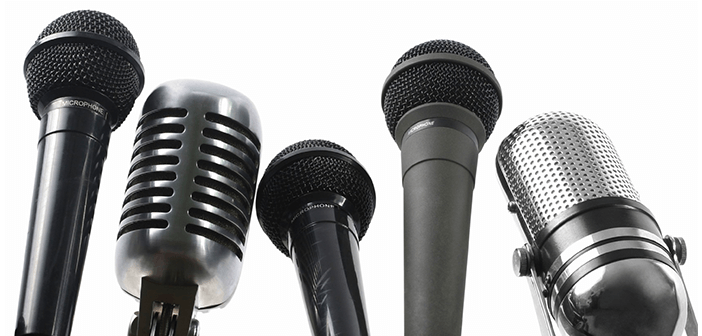
The vast landscape of microphones can be broadly categorized into two primary types, each with distinct characteristics that make them suitable for different applications: dynamic microphones and condenser microphones.
The Nuances of Phantom Power
A significant differentiator, particularly for condenser microphones, is the requirement for phantom power. Phantom power is a direct current (DC) voltage, typically +48 volts, supplied through the microphone cable (usually an XLR cable) from a mixing console, audio interface, or dedicated power supply. Its purpose is to provide the necessary electrical charge to the internal circuitry of condenser microphones, enabling them to convert subtle acoustic vibrations into an electrical signal. This might sound technically intimidating, but modern audio interfaces often feature a simple switch to activate phantom power, making its use straightforward and accessible even for beginners.
The Appeal of USB Microphones
USB microphones represent a convenient entry point into the world of digital audio recording. Their primary advantage lies in their plug-and-play functionality, directly connecting to a computer’s USB port without the need for an external audio interface or preamplifier.
-
USB Microphone Pros:
- Simplicity and Convenience: Easy setup and operation, ideal for beginners.
- Cost-Effectiveness: Often more affordable than traditional XLR microphone setups.
- Portability: Compact and easy to transport for on-the-go recording.
- Direct Computer Connection: Eliminates the need for additional audio hardware.
-
USB Microphone Cons:
- Limited Upgrade Path: Often less versatile and may not offer the same sonic fidelity as professional XLR setups.
- Potential for Latency: In some cases, direct USB connection can introduce slight delays in audio monitoring.
- Lower Signal-to-Noise Ratio: May be more susceptible to picking up background noise compared to higher-end professional microphones.
- Fewer Connectivity Options: Limited to USB connectivity, restricting integration with other studio gear.
The Robustness of Dynamic Microphones
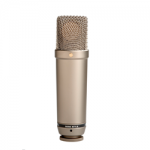
Dynamic microphones operate on the principle of electromagnetic induction. Sound waves cause a diaphragm attached to a coil of wire to move within a magnetic field, generating an electrical current. This inherent design makes them durable and less sensitive to ambient noise.
-
Dynamic Microphone Pros:
- Durability and Ruggedness: Built to withstand rough handling and demanding environments.
- High Sound Pressure Level (SPL) Handling: Can capture loud sounds without distortion.
- Less Susceptible to Background Noise: Their lower sensitivity makes them ideal for untreated rooms.
- No Phantom Power Required: Simplifies setup and compatibility.
-
Dynamic Broadcast Voice Over Mic Cons:
- Lower Sensitivity: May require more gain from a preamplifier to achieve optimal recording levels.
- Less Detailed High Frequencies: Generally do not capture the subtle nuances and air of high-frequency sounds as effectively as condenser mics.
- Less "Open" Sound: Can sometimes sound more compressed or less airy compared to condenser microphones.
The Clarity of Large Diaphragm Condenser Microphones
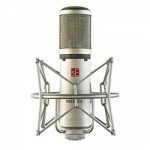
Large diaphragm condenser microphones are renowned for their sensitivity, detail, and broad frequency response, making them a popular choice for studio vocals. They utilize a thin, conductive diaphragm stretched over a backplate, forming a capacitor. When sound waves hit the diaphragm, its capacitance changes, altering the electrical charge and creating an audio signal.
-
Large Diaphragm Condenser Pros:
- Exceptional Detail and Nuance: Capture subtle vocal inflections and high-frequency details with clarity.
- Wide Frequency Response: Offer a rich and full sound across the entire audible spectrum.
- Higher Sensitivity: Can pick up quieter vocal performances and subtle room ambiance.
- "Airy" and Open Sound: Often provide a more natural and lifelike vocal reproduction.
-
Large Diaphragm Condenser Cons:
- Require Phantom Power: Need an external power source to operate.
- More Sensitive to Background Noise: Their high sensitivity makes them prone to picking up ambient sounds and room noise.
- More Fragile: Generally less robust than dynamic microphones and require careful handling.
- Can Accentuate Sibilance: Their detailed high-frequency response can sometimes emphasize harsh "s" sounds.
Understanding Polar Patterns: The Directionality of Sound Capture
A crucial aspect of microphone design is its polar pattern, which describes the microphone’s sensitivity to sound arriving from different directions. This directional characteristic significantly influences how a microphone interacts with a sound source and its surrounding environment.
The primary polar patterns include:
- Omnidirectional: Picks up sound equally from all directions. Ideal for capturing natural room ambiance or when the exact position of the sound source is less critical.
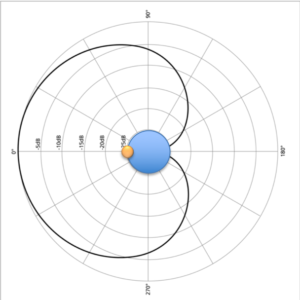
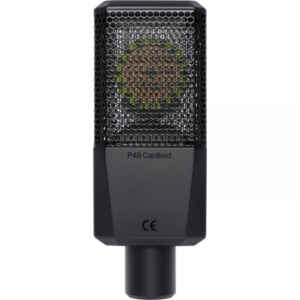
- Cardioid: Picks up sound primarily from the front, with significant rejection from the rear and sides. This is the most common pattern for voice over work, as it helps to isolate the voice and minimize unwanted room reflections.
- Supercardioid/Hypercardioid: Offer even tighter front pickup than cardioid, with increased side rejection but also a small lobe of sensitivity directly from the rear. These are often used in live sound or broadcast situations where extreme isolation is needed.
- Bidirectional (Figure-8): Picks up sound equally from the front and rear, with maximum rejection from the sides. This pattern is useful for capturing two sources simultaneously, such as in an interview setting.
For voice actors, the cardioid pattern is paramount. It effectively focuses on the speaker’s voice while minimizing the pickup of unwanted background noise and room echo. Some high-end microphones, such as the renowned Neumann U87, offer switchable polar patterns, providing greater versatility for different recording scenarios. However, for most voice over applications, ensuring the microphone possesses at least a cardioid pattern is essential.
(Diagram illustrating the cardioid polar pattern, showing primary sensitivity from the front.)
As illustrated in the diagram, a cardioid pattern’s directional sensitivity is key. Ideally, at approximately 20 degrees off-axis, plosives are minimized while still capturing the full dialogue.
Understanding Microphone Features: Pads and Connectors
Beyond polar patterns, other features contribute to a microphone’s functionality and suitability for voice over work.
The Role of Pads
Pads are internal attenuators, essentially switches that reduce the incoming signal level before it reaches the microphone’s internal electronics. They are primarily used to prevent distortion when recording extremely loud sound sources, such as close-miking a guitar amplifier. For typical voice over applications, pads are generally not a critical feature, as vocal levels rarely reach the intensity requiring such attenuation. However, their presence can offer an added layer of protection against unexpected loud vocal bursts.
The Distinction Between Jack and XLR Connectors
The physical connection of a microphone to an audio interface or mixer is typically achieved through either a Jack (TS or TRS) or an XLR connector.
-
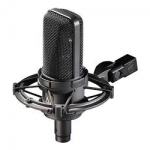
XLR Cables: These are three-pin connectors, predominantly used for professional microphones, especially those requiring phantom power. XLR cables are balanced, meaning they employ a system that cancels out electromagnetic interference and noise picked up along the cable’s length. This balanced signal transmission results in cleaner audio and is a hallmark of professional audio setups. Any microphone requiring phantom power will invariably use an XLR connection. The use of balanced cables, wherever possible within a signal chain, is highly recommended for optimal sound quality.
-
Jack Cables: These are more common in consumer audio equipment and instrument connections. While some microphones may feature a 1/4-inch jack output, professional voice over microphones almost exclusively utilize XLR connections for their superior signal integrity and ability to carry phantom power. If a microphone is solely equipped with a jack connector and doesn’t offer an XLR alternative, it’s generally advisable to seek out more professional-grade equipment.
Key Considerations When Choosing the Best Microphone for Voice Acting
The ultimate "best" microphone for voice acting is subjective and highly dependent on individual vocal characteristics, desired sonic signature, and the specific types of voice over work an artist undertakes. However, a few guiding principles can help navigate the selection process.
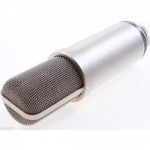
The most effective microphone is one that minimizes technical challenges while delivering the highest possible audio quality for your voice. It’s crucial to consider your unique vocal timbre – whether it’s deep and resonant, bright and airy, or somewhere in between – and the demands of your target market. For instance, a character voice actor might benefit from a microphone that captures a broader range of dynamics, while a narrator might prioritize clarity and a smooth, consistent tone.
Not all microphones are created equal in terms of their frequency response. Some exhibit a "flat" response, meaning they reproduce sound as accurately as possible without coloration. Others have a non-flat response, intentionally boosting or cutting certain frequencies. For example, a microphone with an artificial lift in its high frequencies might make some female voices sound overly sibilant, while a microphone with a gentle low-frequency roll-off can help reduce muddiness or proximity effect.
Ultimately, the most suitable microphone for your voice may not be the most expensive. Establishing a realistic budget and exploring the best options within that range is a pragmatic approach.
A Spectrum of Voice Over Microphones: From Budget-Friendly to Professional Standards
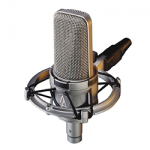
The following list presents a curated selection of microphones, categorized by their typical price points and renowned suitability for voice over work. This is not an exhaustive list, but rather a guide to some of the most respected and effective tools available in the market.
Entry-Level and Mid-Range Options (Approx. $100 – $400)
These microphones offer excellent value and are ideal for beginners and those on a moderate budget. They provide a significant step up in audio quality from basic USB microphones.
-
#1 – Rode NT1 / NT1-A (~$249 / £200):
The Rode NT1 and its predecessor, the NT1-A, have long been lauded as exceptional first microphones for voice over artists. They offer a remarkably low self-noise (a critical factor for capturing clean audio) and a balanced, neutral sound profile. Their frequency response is well-suited for a wide range of voices, providing good resonance and a wide dynamic range. While some seasoned engineers might detect a subtle "Rode character" in their sound, for newcomers, they represent an accessible and high-quality entry point into professional vocal recording. The NT1-A, in particular, is known for its bright and airy sound, while the newer NT1 focuses on an even flatter response and lower noise floor.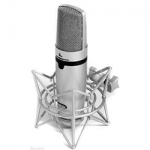
-
#3 – sE Electronics sE2200a II C ($299):
This large-diaphragm condenser microphone delivers a clear, upfront sound that is highly regarded for vocal applications. It’s a versatile choice for aspiring voice actors, offering features like a switchable high-pass filter and a 10dB pad, which provide valuable sound-shaping capabilities and help manage plosives and room noise. Its low self-noise ensures clean recordings, making it a strong contender in its price bracket. -
#4 – Lewitt LCT 440 Pure (£245):
A more recent entrant into the voice over microphone market, the LCT 440 Pure has garnered attention for its impressive performance at its price point. This large-diaphragm cardioid condenser microphone features an innovative open-front design, a magnetic pop shield, and an included shock mount. Tests have indicated a clear and crisp sound quality, making it a potentially excellent option for budget-conscious artists seeking professional results. -
#14 – Blue Yeti Pro ($249.00):
While USB microphones are generally not the first choice for professional studios, the Blue Yeti Pro stands out as a capable option for those starting out with a limited budget. It offers both USB and XLR connectivity, providing a degree of future-proofing and flexibility. The Pro version boasts higher recording bit depth and the ability to connect via XLR, bridging the gap between basic USB mics and more traditional setups. For a USB microphone, its audio quality is notably good, making it a viable starting point for many aspiring voice actors.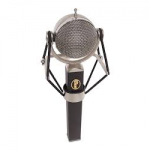
Professional and High-End Options (Approx. $300 – $1,200+)
These microphones represent the pinnacle of audio quality and are favored by seasoned professionals for their exceptional detail, nuanced sound, and robust build.
-
#1 – Sennheiser MKH 416 (Circa $700 / £550):
The Sennheiser MKH 416 is an iconic microphone, frequently encountered in professional voice over studios worldwide. It’s a hypercardioid shotgun microphone, originally designed for film and broadcast to capture audio from a distance. However, when used up close for voice work, it delivers a remarkably punchy, clear, and commercially-oriented sound. Its exceptional ruggedness and durability make it an ideal travel companion for on-location recording. While its hypercardioid pattern requires precise positioning to avoid off-axis coloration, many voice actors swear by its unique sonic character for commercial reads. Often, professionals who own a 416 also possess a large-diaphragm condenser to cover a wider range of applications. -
#5 – Shure SM7B ($349):
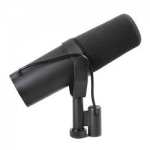
The Shure SM7B is a legendary dynamic microphone, a staple in radio broadcasting and podcasting for decades, and increasingly adopted for voice over work. Its sound is exceptionally clear, with a warm presence that flatters many vocal types. The SM7B features a broad frequency response that can be subtly adjusted with a built-in presence boost. Its robust design and internal shock mounting make it highly resistant to handling noise and external vibrations, making it an excellent choice for home studios. While it requires a significant amount of gain from a preamplifier due to its dynamic nature, the resulting sound is often considered unparalleled for its warmth and clarity in spoken word applications.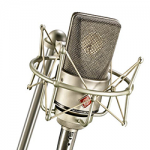
-
#6 – Audio-Technica AT4033 ($399):
The Audio-Technica AT4033 is a respected large-diaphragm cardioid condenser microphone that offers excellent transient response and a clean output signal. It features an 80Hz high-pass filter that can be switched to a low-end roll-off, effectively reducing ambient noise and proximity effect for close vocal recordings. Its consistent performance and clear articulation make it a solid choice for various voice over projects. -
#8 – Rode NTK ($529):
Building on Rode’s reputation for quality, the NTK is a tube condenser microphone that delivers a warm, rich, and clear sound profile. Tube microphones are known for adding a characteristic "color" and harmonic richness to the audio, which can be highly desirable for certain vocal performances. The NTK is ruggedly built and offers a captivating sonic signature for voice over artists seeking a more vintage or characterful tone. -
#9 – Audio Technica AT4047 ($699):
The Audio-Technica AT4047 is part of a range of microphones designed for versatility. Its transformer-coupled output and specially tuned element evoke the sonic characteristics of classic FET studio microphones from an earlier era. It boasts low self-noise, a wide dynamic range, and high SPL capability. The precision-machined brass construction enhances stability and sensitivity, making it a durable and high-performing choice for professional voice work.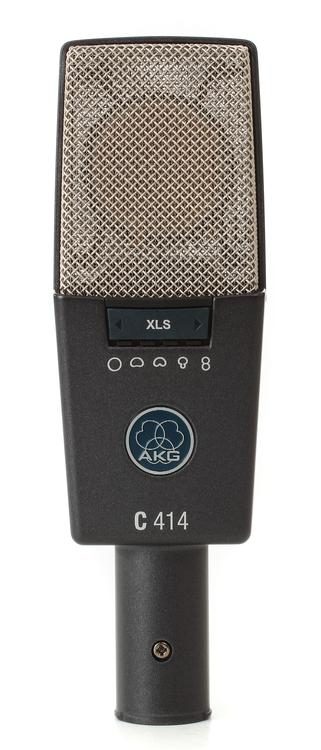
-
#10 – Miktek C7 ($899):
The Miktek C7 is a large-diaphragm FET condenser microphone that has earned praise for its pleasing, natural sound. It is often described as a "set it and forget it" microphone due to its inherent sonic quality that requires minimal post-processing. A key feature of the C7 is its three selectable pickup patterns: cardioid, omnidirectional, and bidirectional. This versatility makes it exceptionally useful for a range of applications, including interviews and general voice over work, where the ability to capture multiple sound sources is beneficial. -
#11 – Blue Dragonfly:
The Blue Dragonfly is noted for its ability to impart a "sweet" sound, reminiscent of vintage Neumann and AKG microphones. It offers a distinctive sonic signature and a unique capsule design that allows for a wide range of positioning angles relative to the sound source, opening up numerous sonic possibilities for the voice over artist. While its price point places it in the mid-to-high range, its unique character and flexibility are highly valued. -
#12 – Neumann TLM 103 ($1,099):
Although the TLM series (Transistorless Microphone) was not originally designed with voice over as its primary application, the Neumann TLM 103 is frequently recommended by voice actors. It features a transformerless circuit that contributes to a very low self-noise level and a wide dynamic range. Its cardioid polar pattern is meticulously tuned for acoustic balance and excellent phase cancellation of sounds from the rear. A common observation is that its high-frequency lift can occasionally make higher-pitched female voices sound slightly sibilant, a characteristic that can often be managed with proper mic technique and post-processing.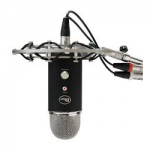
-
#13 – AKG C414 ($1,100):
The AKG C414 is a studio legend, celebrated for its exceptional quality and versatility. It offers a broad pickup range with a pleasingly flat frequency response, making it a professional and robust choice for a wide array of recording tasks, including voice over. With switchable polar patterns and a pad setting, the C414 provides significant flexibility, allowing artists to adapt to different recording environments and vocal styles. It is widely considered a benchmark for quality in its price category. -
#15 – Neumann U87 ($3,180 / £2,500):
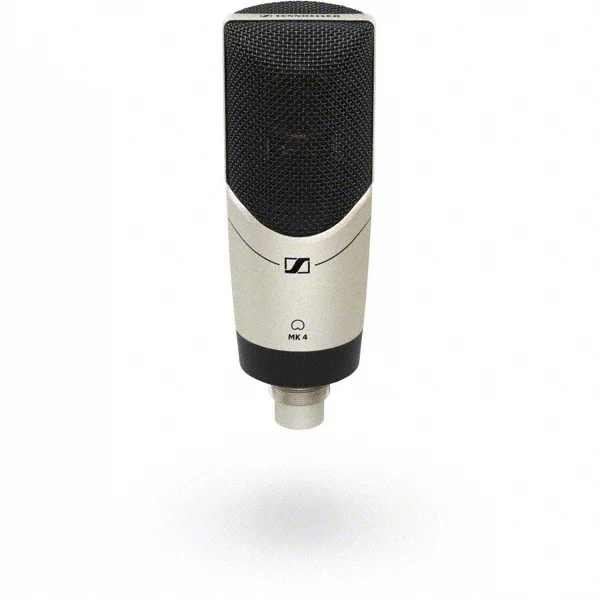
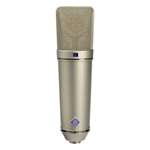
The Neumann U87 is arguably the most iconic and revered microphone in professional recording studios worldwide. It has long been considered one of the finest microphones for vocal recording, a reputation reflected in its build quality, performance, and significant price tag. The U87 boasts switchable polar patterns, a pad, and a remarkably flat frequency response, making it exceptionally well-suited for both male and female voices across diverse genres. While it represents a substantial investment, for those with the budget, the U87 offers an unparalleled recording experience and is a true industry standard. The Sennheiser MK4 is often cited as an excellent alternative that offers a fraction of the performance at a tenth of the price.
Conclusion: Making the Informed Choice
Selecting the best microphone for voice acting is a journey that begins with self-assessment and budget definition. The microphones detailed above, ranging from accessible yet capable options to the industry’s most esteemed tools, each offer unique strengths. The Sennheiser MK4, with its capsule designed by the same team behind the Neumann U87 and its superior performance-to-price ratio, stands out as a top recommendation for many working voice artists. However, the ideal choice ultimately rests on the individual’s voice, artistic goals, and financial capacity. By understanding the fundamental principles of microphone technology, polar patterns, and the specific characteristics of each model, voice over artists can confidently invest in a tool that will serve as the cornerstone of their professional sound.
For those seeking to deepen their understanding of microphone technology and studio setup, comprehensive resources are available. Exploring courses and educational materials can provide further insights into optimizing recording environments and mastering the art of vocal capture, ensuring that every performance is delivered with clarity, presence, and professional polish.
