

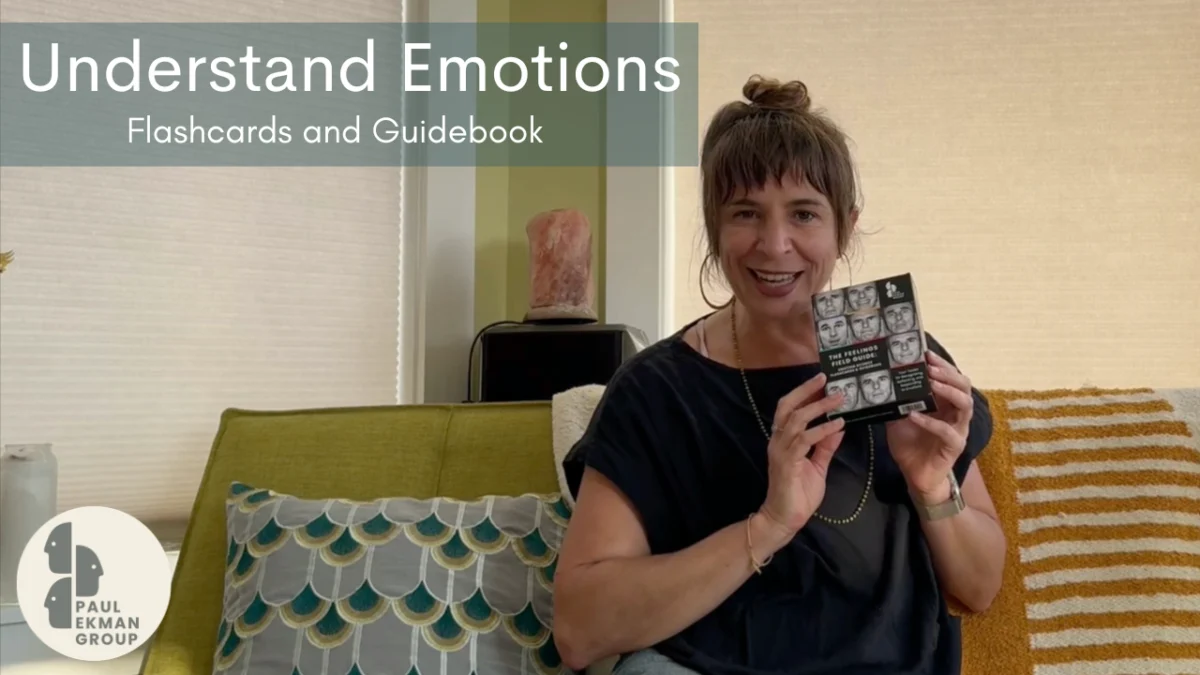
In a world increasingly defined by complex interpersonal dynamics and the rapid exchange of information, the ability to accurately understand and respond to human emotions is no longer a soft skill, but a critical competency. Recognizing this, Drs. Paul and Eve Ekman, pioneers in the field of emotion research, have unveiled "The Feelings Field Guide," a comprehensive, science-backed toolkit designed to translate over five decades of groundbreaking behavioral research into practical, everyday skills. This innovative guide aims to equip individuals with the ability to identify universal facial expressions and foster more constructive responses, proving invaluable for parents navigating childhood anxiety, professionals engaging in high-stakes negotiations, and anyone seeking to deepen their emotional intelligence.
The Foundation: Decades of Research in Emotion Science
The development of The Feelings Field Guide is deeply rooted in the extensive work of Dr. Paul Ekman, a renowned psychologist whose research on facial expressions and emotions has shaped our understanding of non-verbal communication. His seminal studies, beginning in the mid-20th century, challenged prevailing theories by demonstrating the universality of certain facial expressions across diverse cultures. This research culminated in the identification of seven fundamental emotions – happiness, sadness, anger, fear, surprise, disgust, and contempt – each associated with a distinct and universally recognizable set of facial muscle movements.
Dr. Ekman’s work, particularly his development of the Facial Action Coding System (FACS), provided a precise, objective method for analyzing facial movements. FACS breaks down the face into its constituent muscles and their actions, allowing for the detailed and reliable identification of even fleeting emotional expressions, often referred to as micro-expressions. This rigorous scientific framework forms the bedrock of The Feelings Field Guide, ensuring its practical applications are grounded in verifiable data.
Introducing The Feelings Field Guide: A Comprehensive Toolkit
The Feelings Field Guide is not merely an academic exercise; it is a tangible and accessible resource designed for practical application. At its core, the toolkit comprises 92 meticulously crafted emotion flashcards, each depicting a specific facial expression associated with one of the universal emotions. These cards are paired with a scientific guidebook that elaborates on the research, methodology, and practical uses of the guide.
The guide’s objective is to elevate emotional awareness and enhance non-verbal communication skills. By engaging with the flashcards and the accompanying material, users are encouraged to:
- Identify Universal Facial Expressions: Learn to recognize the subtle yet distinct facial cues that signal fundamental emotions, regardless of cultural background.
- Develop Emotional Literacy: Expand one’s vocabulary and understanding of the nuances within each of the seven universal emotions and their various manifestations.
- Improve Non-Verbal Communication: Become more attuned to the emotional states of others, leading to more empathetic and effective interactions.
- Enhance Self-Awareness: Gain a deeper understanding of one’s own emotional responses and how they are conveyed non-verbally.
Dr. Eve Ekman, who has worked closely with her father on this project, emphasizes the guide’s role in translating complex scientific findings into actionable insights. In an introductory video, she explains the core methodology, highlighting how the visual representation of facial expressions on the flashcards directly corresponds to the muscle movements identified by FACS. This visual-tactile approach makes the learning process intuitive and memorable, moving beyond abstract concepts to concrete recognition.
From Insight to Action: The Practical Application of Emotional Intelligence
The Feelings Field Guide distinguishes itself by bridging the gap between theoretical knowledge and practical application. The creators understand that simply recognizing an emotion is only the first step; knowing how to respond constructively is equally crucial. The guide encourages users to move beyond passive observation to active engagement with emotions.
Within the thoughtfully designed package, users will find:
- 92 Emotion Flashcards: Each card features a high-quality image of a specific facial expression, meticulously chosen to represent the universal emotions. These are not generic depictions but scientifically validated representations.
- A Scientific Guidebook: This comprehensive booklet delves into the research behind each emotion, explains the FACS system in accessible terms, and provides practical exercises and reflection prompts. It offers context for each expression, detailing the likely underlying emotional state and suggesting potential behavioral responses.
The emphasis is on transforming awareness into action. The guide prompts users to consider not just what emotion is being displayed, but also why it might be present and how to engage with the individual displaying it in a manner that fosters understanding and positive outcomes. This practical dimension makes the guide a valuable tool for a wide range of scenarios, from resolving interpersonal conflicts to building stronger personal relationships.
Designed for Flexibility: Adaptable to Individual Needs
Recognizing that individuals learn and interact with information differently, The Feelings Field Guide has been intentionally designed for flexibility. There is no single prescribed method for its use, allowing individuals to tailor their experience to their specific learning styles and goals. Users can:
- Self-Quiz: Utilize the flashcards for self-assessment, testing their ability to identify emotions from visual cues.
- Focus on Specific Emotions: Dedicate time to exploring one emotion at a time, delving into its various subtle expressions and implications.
- Engage in Reflection Exercises: The guidebook offers structured exercises that encourage deeper introspection and the application of learned concepts to real-life situations.
- Group Learning: The guide is also suitable for small group settings, facilitating discussions and shared learning experiences.
This adaptability ensures that The Feelings Field Guide can be integrated seamlessly into personal development plans, educational curricula, or professional training programs. Its intuitive design makes it accessible to individuals with no prior background in psychology or behavioral science, while its scientific rigor offers depth for those with existing knowledge.
Testimonials: Real-World Impact and Endorsements
The efficacy of The Feelings Field Guide is underscored by the positive feedback from early users who have found it to be a transformative tool.
Mark B., a parent of a child experiencing anxiety and social regression, expressed his appreciation for the guide’s practical utility. He noted, "I have always been fascinated by the science of emotions and how I can be used by a layman such as myself. I have no formal scientific background in behavioral sciences or psychology but I do have a son who has issues with anxiety and social regression. I appreciate that ‘The Feelings Field Guide’ deck turned out to be an effective tool to use in discussing emotions with my son. Knowing that this science was practically pioneered by Dr. Ekman gave me a very high degree of confidence in the validity of this product." This testimonial highlights the guide’s success in demystifying complex psychological concepts for everyday use in family settings.
Simon B., who works in information security and data protection, found the guide to be an essential asset in his professional life. He stated, "The Field Guide is a great tool to have and I recommend it to anyone interested in understanding micro-expressions and emotions… Working in information security and data protection, understanding micro-expressions and emotions has helped me understand colleagues, customers and suppliers better and improved my interactions with people. These are great skills to have as a security professional, especially in determining what people really feel compared to what they are saying." Simon’s experience underscores the guide’s value in high-stakes professional environments where discerning true feelings from stated words can be critical for decision-making and relationship management.
The Profound Significance of Emotional Understanding
The importance of accurately understanding emotions cannot be overstated. Emotions are not merely fleeting feelings; they are fundamental drivers of human cognition, communication, and decision-making. They influence our perceptions, shape our judgments, and guide our actions, often in ways we are not consciously aware of.
When we misinterpret emotions – whether in ourselves or in others – the consequences can be far-reaching. These misinterpretations can lead to:
- Misunderstandings and Conflict: Unrecognized anger can be perceived as rudeness, unacknowledged fear can lead to defensiveness, and a lack of empathy can create rifts in relationships.
- Missed Opportunities for Connection: Failing to recognize joy or sadness in others can prevent us from offering support, celebrating successes, or building deeper bonds.
- Ineffective Communication: When our emotional signals are misread, our messages can be distorted, leading to frustration and inefficiency.
Conversely, by developing the skills to accurately recognize and respond to emotions, individuals gain significant advantages:
- Improved Relationships: Enhanced empathy and understanding foster stronger, more trusting connections with family, friends, and colleagues.
- Effective Communication: The ability to read and respond to emotional cues leads to clearer, more impactful messaging and reduced misunderstandings.
- Better Decision-Making: By understanding the emotional underpinnings of situations and individuals, one can make more informed and nuanced decisions.
- Increased Professional Success: In fields ranging from sales and customer service to leadership and negotiation, emotional intelligence is a key differentiator.
- Enhanced Personal Well-being: Greater self-awareness and the ability to manage one’s own emotions contribute to reduced stress and improved mental health.
The Feelings Field Guide is meticulously engineered to cultivate these essential skills. Its grounded, practical, and repeatable approach provides a reliable pathway for individuals to enhance their emotional intelligence, making it a valuable asset for personal and professional growth in an increasingly complex world.
Addressing Common Inquiries: Clarifying the Guide’s Uniqueness
As awareness of the importance of emotional intelligence grows, so too does the market for related tools. The Feelings Field Guide addresses potential questions regarding its distinctiveness.
How is this different from other emotion flashcards?
A key differentiator of The Feelings Field Guide lies in its scientific foundation. While many flashcards offer simple labels for emotions, this guide is the only tool directly based on the scientifically validated Facial Action Coding System (FACS). This ensures that the expressions depicted are not subjective interpretations but accurate representations of the universal facial muscle movements associated with specific emotions. This scientific accuracy is crucial for developing a reliable understanding of non-verbal cues.
Is there a digital version?
The Feelings Field Guide is intentionally designed as a physical, tactile tool to promote hands-on engagement and deeper learning. However, for individuals seeking a more advanced, performance-based mastery of micro-expressions and emotion recognition, it is often complemented by Dr. Ekman’s digital Micro-expression Training Tools. These digital resources offer interactive exercises and assessments that build upon the foundational knowledge gained from the physical guide.
In conclusion, The Feelings Field Guide represents a significant advancement in making the science of emotion accessible and actionable. By translating decades of rigorous research into a user-friendly toolkit, Drs. Paul and Eve Ekman are empowering individuals to navigate the complexities of human interaction with greater insight, empathy, and effectiveness. In a world where understanding each other is paramount, this guide offers a powerful path toward building stronger connections and fostering more harmonious relationships.
