


The complex world of human emotions, often perceived as abstract and elusive, is now more accessible than ever thanks to a groundbreaking tool developed by leading behavioral scientists. Drs. Paul and Eve Ekman, pioneers in the study of emotions and facial expressions, have translated over five decades of rigorous research into a tangible resource designed to empower individuals with practical emotional intelligence skills. "The Feelings Field Guide," a science-backed toolkit, aims to demystify the recognition and understanding of universal facial expressions, offering a pathway to more constructive communication and deeper interpersonal connections.
Understanding the Foundation: Decades of Research
The genesis of "The Feelings Field Guide" lies in the extensive and seminal work of Dr. Paul Ekman, whose research began in the 1960s. His groundbreaking studies, often conducted across diverse cultures, identified a set of universal emotions – happiness, sadness, anger, fear, surprise, disgust, and contempt – that are expressed through distinct and recognizable facial patterns. This discovery challenged prevailing theories that suggested emotional expressions were solely learned cultural constructs. Dr. Ekman’s work, meticulously documented and validated over decades, provided a scientific framework for understanding the biological underpinnings of human emotion.
The development of the Facial Action Coding System (FACS) by Dr. Ekman and his colleagues was a pivotal moment. FACS is a comprehensive, anatomically based system for describing all observable facial movements. It breaks down facial expressions into their smallest measurable units, known as "action units" (AUs), each corresponding to the contraction or relaxation of specific facial muscles. By cataloging these AUs, FACS allows for objective and precise analysis of facial behavior, moving beyond subjective interpretation. This scientific rigor forms the bedrock upon which "The Feelings Field Guide" is built.
"The Feelings Field Guide": A Toolkit for Emotional Literacy
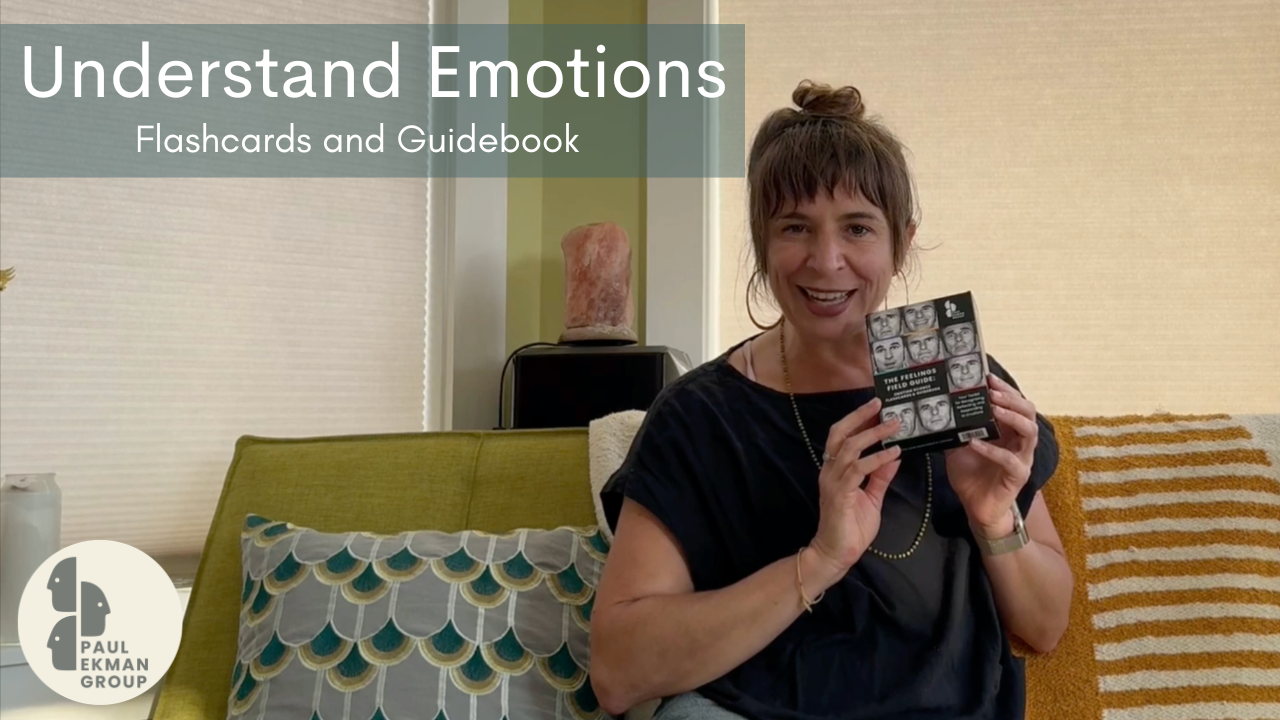
"The Feelings Field Guide" is not merely a collection of cards; it is a carefully curated toolkit designed to bridge the gap between theoretical knowledge and practical application. The guide consists of 92 emotion flashcards, each meticulously designed to represent the universal facial expressions identified by Dr. Ekman’s research. These cards are accompanied by a scientific guidebook that delves into the methodology behind recognizing these expressions and offers insights into their behavioral implications.
The core objective of the guide is to enhance emotional awareness and improve non-verbal communication skills. By providing a tactile and visual means to identify these expressions, the guide equips users with the ability to better understand their own emotional states and those of others. This enhanced understanding is crucial in a variety of contexts, from parenting and education to professional negotiations and leadership.
Dr. Eve Ekman, who plays a significant role in the current development and application of her father’s work, often highlights the practical utility of the Field Guide. In introductory materials and demonstrations, she emphasizes the guide’s capacity to translate complex scientific findings into everyday skills. This approach ensures that the knowledge derived from decades of research is not confined to academic circles but is accessible and beneficial to a broad audience.
Unveiling the Mechanics: How the Field Guide Works
The methodology behind "The Feelings Field Guide" is rooted in the scientific understanding of facial musculature and its correlation with specific emotional states. The seven universal emotions are characterized by distinct configurations of facial muscle movements, often subtle and fleeting, known as micro-expressions. The flashcards in the guide are designed to illustrate these expressions clearly, often showcasing the key action units involved.
For instance, recognizing genuine happiness might involve observing the contraction of the orbicularis oculi muscles, which raise the cheeks and create crow’s feet around the eyes – a phenomenon often referred to as the "Duchenne smile." Conversely, a forced smile might involve only the zygomaticus major muscles, which pull the corners of the mouth upwards, but lack the characteristic eye crinkling. The guide trains users to discern these nuances.
The accompanying scientific guidebook provides detailed explanations of each emotion, its associated facial markers, and the underlying behavioral science. It moves beyond simple identification, offering guidance on how to interpret these expressions in context and how to respond constructively. This dual focus on recognition and response is what elevates "The Feelings Field Guide" from a mere educational tool to a practical skill-building instrument.
Transforming Insight into Action: Practical Applications
The primary aim of "The Feelings Field Guide" is to facilitate a transition from passive observation to active understanding and informed action. The guide’s creators recognize that simply identifying an emotion is only the first step. The true value lies in knowing what to do with that awareness.
The toolkit’s design facilitates this by encouraging users to engage actively with the material. The flashcards can be used for self-quizzing, for teaching others, or as prompts for reflection. The guidebook offers exercises and scenarios that encourage users to apply their newfound knowledge in real-world situations.
Flexibility and Adaptability: Tailoring the Learning Experience
One of the key strengths of "The Feelings Field Guide" is its inherent flexibility. The creators understand that individuals have different learning styles and varying levels of prior knowledge. Therefore, the guide is designed to be adaptable to a wide range of needs and preferences.
Users can choose to:
- Focus on individual emotions: Dedicate time to mastering the recognition of one emotion at a time before moving on to others.
- Practice with expression cards: Engage in regular practice sessions using the flashcards to reinforce learning and improve speed and accuracy in identification.
- Utilize reflection exercises: Work through the guided reflection exercises in the guidebook to connect the scientific principles with personal experiences and observations.
- Integrate into daily life: Consciously apply the learned skills in everyday interactions, observing facial cues in conversations, media, and social settings.
There is no single "correct" way to use the guide. The emphasis is on finding the approach that yields the most personal benefit and leads to tangible improvements in emotional literacy and communication. This user-centric design ensures that "The Feelings Field Guide" remains relevant and effective for a diverse range of individuals.
Testimonials: Real-World Impact and Validation
The effectiveness of "The Feelings Field Guide" is underscored by the experiences of its users. Testimonials highlight its practical value across different demographics and professional fields.
Mark B., a parent, shared his success in using the guide to discuss emotions with his son who struggles with anxiety and social regression. He noted the "high degree of confidence in the validity of this product" due to its scientific foundation pioneered by Dr. Ekman. This sentiment reflects the guide’s ability to provide parents with concrete tools to navigate challenging emotional landscapes with their children.
Simon B., working in information security and data protection, found the guide to be an invaluable asset in his professional life. He stated, "Understanding micro-expressions and emotions has helped me understand colleagues, customers and suppliers better and improved my interactions with people." He further emphasized the utility of these skills for a security professional, particularly in discerning true feelings from spoken words. This testimonial illustrates how emotional intelligence, facilitated by the guide, can enhance professional judgment and interpersonal effectiveness.
These endorsements, coming from individuals with diverse backgrounds and motivations, attest to the guide’s broad applicability and its capacity to deliver measurable improvements in emotional understanding and communication.
The Crucial Importance of Emotional Intelligence
The significance of understanding emotions extends far beyond interpersonal relationships. Emotions are fundamental drivers of human thought, communication, and decision-making. They often operate beneath the surface of conscious awareness, subtly influencing our perceptions, motivations, and actions.
Misinterpreting emotions – whether in ourselves or in others – can lead to a cascade of negative consequences. These can range from minor misunderstandings and interpersonal friction to significant conflicts, damaged relationships, and missed opportunities for collaboration and personal growth. The subtle cues conveyed through facial expressions, body language, and vocal tone are rich sources of information that, when accurately read, can prevent such pitfalls.
Conversely, developing the ability to accurately recognize and respond to emotions yields substantial benefits. These include:
- Enhanced Empathy: A deeper capacity to understand and share the feelings of others, fostering stronger connections.
- Improved Communication: The ability to convey messages more effectively and to interpret the underlying emotions behind spoken words.
- Conflict Resolution: Skills to de-escalate tension, understand differing perspectives, and find mutually agreeable solutions.
- Stronger Relationships: Building trust and rapport through genuine understanding and responsive interactions.
- Better Decision-Making: Incorporating emotional intelligence into cognitive processes to make more balanced and informed choices.
- Increased Self-Awareness: A clearer understanding of one’s own emotional states and how they influence behavior.
"The Feelings Field Guide" is specifically engineered to cultivate these essential skills. Its grounded, practical, and repeatable approach ensures that users can build a robust foundation of emotional literacy that can be applied consistently and effectively throughout their lives.
Frequently Asked Questions: Clarifying the Field Guide’s Uniqueness
The proliferation of resources related to emotions and facial expressions raises important questions about what sets "The Feelings Field Guide" apart.
How is this different from other emotion flashcards?
The key differentiator lies in its scientific foundation. While many emotion flashcards may simply provide labels for feelings, "The Feelings Field Guide" is the only tool explicitly based on the Facial Action Coding System (FACS). This means the expressions depicted are not subjective interpretations but are scientifically validated representations of universal facial movements associated with specific emotions. This adherence to FACS ensures a level of accuracy and scientific rigor that is unparalleled in many other comparable resources.
Is there a digital version?
"The Feelings Field Guide" is fundamentally a physical, tactile tool designed to leverage the benefits of hands-on learning and direct engagement with the flashcards. However, for individuals seeking a more comprehensive and performance-based mastery of emotional recognition, it is often recommended to pair the Field Guide with the Paul Ekman Group’s "Micro-expression Training Tools." These digital resources offer certified training programs that build upon the foundational knowledge provided by the Field Guide, catering to those who require advanced proficiency.
Broader Implications and Future Directions
The development and widespread adoption of tools like "The Feelings Field Guide" signal a growing societal recognition of the importance of emotional intelligence. In an increasingly interconnected and complex world, the ability to understand and navigate emotions is no longer a soft skill but a critical competency.
The implications of this work are far-reaching. In educational settings, it can equip students with essential life skills from an early age, fostering greater social-emotional learning. In the workplace, it can lead to more effective leadership, improved team dynamics, and enhanced customer relations. In therapeutic contexts, it can provide a valuable adjunct for individuals working through emotional challenges.
As research in affective neuroscience and psychology continues to evolve, the insights gained from Dr. Ekman’s foundational work will undoubtedly be further integrated into practical applications. "The Feelings Field Guide" represents a significant step in making this complex science accessible, empowering individuals to harness the power of their emotions for more fulfilling and effective lives. The ongoing efforts to translate scientific discovery into accessible tools underscore a commitment to enhancing human understanding and connection through the universal language of emotion.
