

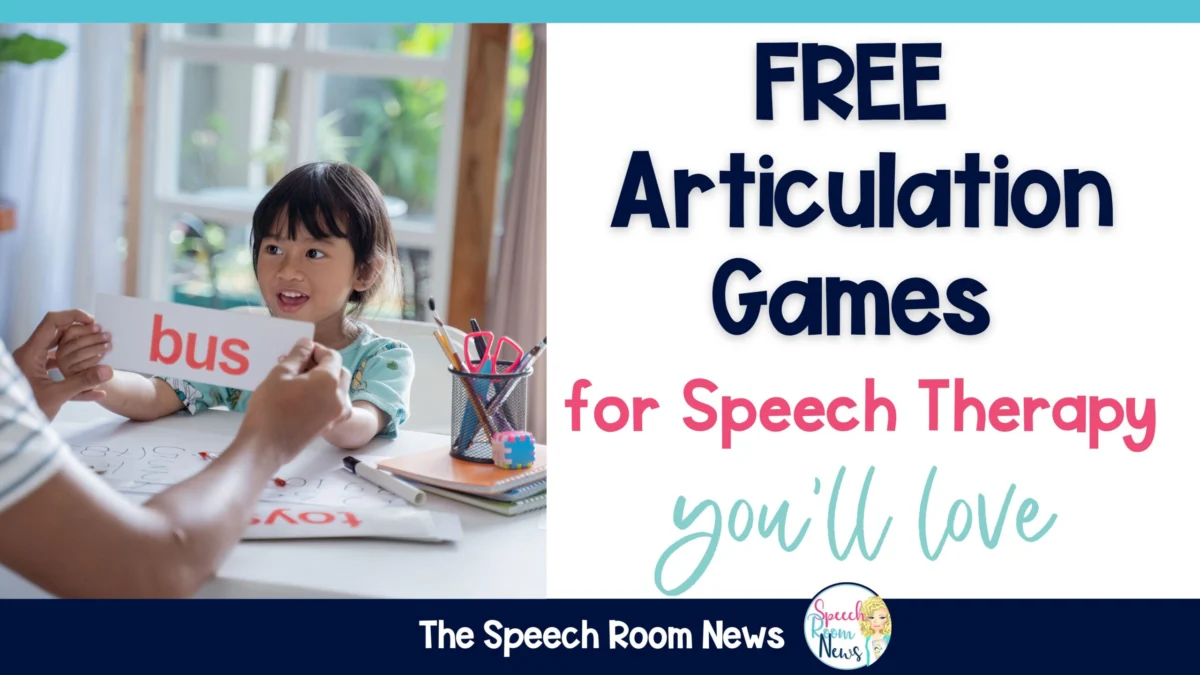
The integration of play-based methodologies into therapeutic interventions, particularly within speech-language pathology, has demonstrably enhanced student engagement and fostered a more memorable learning experience, concurrently providing invaluable opportunities to generalize language skills into real-world contexts. This pedagogical shift, driven by a deeper understanding of child development and learning, underscores why games have become an indispensable and favored tool for students practicing speech sounds. In an era where speech therapy sessions traverse virtual, in-person, and hybrid modalities, the accessibility of high-quality, no-cost resources is not merely convenient but increasingly critical for Speech-Language Pathologists (SLPs) and the families they serve. The availability of free articulation games, encompassing online platforms, printable materials, and even material-free exercises, represents a significant stride towards democratizing effective speech therapy, ensuring that foundational communication skills are nurtured without financial barriers.
The Foundational Importance of Articulation Therapy
Articulation therapy is a specialized intervention designed to help individuals, predominantly children, produce speech sounds correctly. Speech sound disorders (SSDs), which include articulation and phonological disorders, are among the most common communication disorders affecting children, with prevalence rates varying but often cited as affecting between 8% and 9% of preschool-aged children. Untreated SSDs can have far-reaching implications, impacting a child’s intelligibility, self-esteem, academic performance, and social interactions. Early and effective intervention is therefore paramount. Historically, articulation therapy often relied on repetitive drills and flashcards, which, while effective, sometimes struggled to maintain sustained child engagement, particularly for younger learners or those with co-occurring attention challenges. The shift towards incorporating play recognized the inherent human inclination for games as a powerful motivator and a natural conduit for learning, especially in developmental stages where play is a primary mode of exploration and understanding. By embedding target speech sounds within engaging game structures, therapy transcends rote memorization, becoming an interactive, enjoyable, and therefore more effective process.
The Digital Transformation: Interactive Online Resources
The advent of digital technology has profoundly reshaped the landscape of speech therapy, with interactive online games emerging as a transformative tool for enhancing students’ articulation skills. This digital shift, significantly accelerated by the global health crisis that mandated widespread adoption of teletherapy, has led to a proliferation of online resources that make practicing speech sounds both effective and enjoyable, often at no cost. These platforms cater to a diverse range of ages and therapeutic needs, offering dynamic environments that can adapt to individual learning styles.

One notable example is ABCya’s “Alphabet BINGO,” specifically designed for younger students. This game leverages the familiar and enjoyable format of Bingo to reinforce letter sounds, a crucial precursor to correct articulation. Its visual and auditory feedback mechanisms help children associate letters with their corresponding phonemes in a low-pressure, playful setting. Similarly, the Articulation Station App (Lite Version), available for download on various devices, exemplifies the power of mobile technology. While a premium version exists, the free "Lite" iteration provides access to several key sound options and interactive games. SLPs and parents frequently cite its user-friendly interface and engaging activities as critical factors in maintaining student focus and promoting consistent practice, making it a staple in both clinical and home environments.
Language Playroom stands as another significant online repository, offering a growing collection of free online games specifically focused on articulation. The platform’s commitment to continually expanding its resources to include fluency, language, and social communication activities highlights a broader trend towards comprehensive, multi-faceted digital therapy tools. This centralized access to diverse games reduces the burden on SLPs to constantly seek out new materials, allowing them to focus more on individualized therapy planning. Phoneme Pop, an online game where children pop bubbles containing words with their target sounds, offers a highly visual and satisfying interaction that reinforces auditory discrimination and sound production. The immediate feedback and gamified reward system make it particularly effective for drill-based practice disguised as entertainment.
Beyond dedicated game platforms, interactive digital tools like Boom Cards have gained immense popularity within the speech therapy community. These self-checking, interactive digital task cards are accessible through platforms like Teachers Pay Teachers and Boom Learning. A vast ecosystem of free Boom Card decks exists for various articulation sounds, providing SLPs with a flexible and adaptable resource for both in-session and homework assignments. The ability to track student progress automatically and offer immediate corrective feedback makes Boom Cards an efficient and data-driven option. The ease of assigning these decks for home practice further bridges the gap between clinical intervention and daily reinforcement, crucial for skill generalization.
Tangible Tools: The Enduring Value of Printable Articulation Games
Despite the digital revolution, printable games continue to hold a significant and cherished place in articulation practice. These hands-on activities offer a tactile experience that complements digital resources, providing versatility for in-person therapy sessions, homework assignments, and contexts where digital access may be limited. The physical manipulation of game pieces, dice, and cards can be particularly beneficial for kinesthetic learners and for fostering fine motor skills alongside speech development.
Resources like "Whack-a Sound /S/ Self-Checking Articulation Freebie" are exemplary of printable games tailored for specific phonemic targets. Designed for preschool through second grade, this game helps children identify the position (initial, medial, or final) of the target /s/ sound within words, a critical skill for phonological awareness and accurate production. Its self-checking mechanism empowers children to learn independently, fostering a sense of autonomy in their therapy journey. Articulation Worksheets from Super Duper Publications represent another valuable category. While Super Duper is a well-known publisher of paid therapy materials, they generously offer a selection of free printable worksheets and activity ideas. These resources often include varied tasks like word searches, coloring pages, and simple fill-in-the-blanks, all designed to integrate articulation targets into engaging paper-based activities.

The "Hot Chocolate Articulation Board Game," particularly popular during winter months, showcases how themed printable games can boost motivation. The premise is simple yet effective: students draw flashcards with target words, say the word correctly, and then roll a die to move spaces on the board. This format can be easily adapted for different articulation goals by simply changing the target word flashcards. Such games promote turn-taking, social interaction, and sustained practice in a fun, competitive environment.
For clinicians focused on achieving high trial counts, "100 Trial Challenges" by Peachie Speechie are invaluable. These printable sheets often feature thematic or holiday designs, encouraging students to produce their target sounds 100 times within a session or homework assignment. The thematic elements make the repetitive task more engaging, and the clear visual goal helps students understand and track their progress. Finally, "Color & Play Ocean Articulation Bingo" exemplifies a classic game format adapted for articulation. These printable Bingo cards feature target words, allowing for group therapy or one-on-one practice. The act of coloring the squares after correct production adds an extra layer of engagement and a sense of accomplishment. The tactile nature of these printables ensures that therapy remains accessible and varied, catering to different learning preferences and environmental constraints.
Beyond the Clinic: Material-Free Games for Everyday Practice
Effective articulation practice is not confined to the therapy room or structured assignments; it thrives when integrated into daily routines and natural environments. A crucial aspect of generalization, the ultimate goal of speech therapy, involves applying learned skills spontaneously outside of therapy sessions. Material-free games, often adaptable for settings like car rides or waiting rooms, offer an invaluable means to achieve this without requiring any special equipment or preparation. These activities encourage observational skills, critical thinking, and spontaneous speech production, embedding articulation goals within genuine communication.
"I Spy" is a classic game that can be ingeniously modified to target specific speech sounds. Instead of simply identifying objects, the game can be focused on finding items that start with a particular target sound (e.g., "I spy something that starts with /s/"). This encourages auditory discrimination and the initiation of words with the correct phoneme in a natural, conversational context. Similarly, "20 Questions" serves as an excellent vehicle for articulation practice. By asking descriptive questions and formulating answers, children are prompted to use a wide range of vocabulary and sentence structures, providing multiple opportunities to produce their target sounds in connected speech. The focus on descriptive language naturally enhances linguistic complexity.
"Rhyme Time" is another simple yet powerful material-free game. Taking turns saying words that rhyme with a target word not only strengthens phonological awareness but also requires precise articulation of each rhyming word. This game can be particularly beneficial for targeting vowel sounds and the final sounds in words. The rhythmic and playful nature of rhyming makes it highly engaging for children. Lastly, "The Alphabet Game," where participants go through the alphabet and say a word that starts with each letter, can be adapted to focus on articulation targets. For instance, if a child is working on the /r/ sound, they might be encouraged to find words like "rabbit" for ‘R’ or "red" for ‘R’, explicitly focusing on accurate production. This game also reinforces letter-sound correspondence and expands vocabulary. The beauty of these material-free games lies in their inherent flexibility and their ability to transform everyday moments into valuable therapeutic opportunities, fostering consistent practice and promoting generalization in the most naturalistic way possible.

Expert Perspectives and Pedagogical Impact
Speech-Language Pathologists widely affirm the profound impact of game-based learning on therapy outcomes. Dr. Emily Carter, a seasoned SLP with over two decades of experience, remarked, "The shift towards gamified articulation practice isn’t just about making therapy fun; it’s about making it effective. When children are engaged and motivated, their neural pathways are more receptive to learning and retaining new speech patterns. Free resources, in particular, empower us to diversify our therapy plans without budget constraints, reaching more students with high-quality, interactive interventions."
Studies in educational psychology consistently demonstrate that play-based learning enhances cognitive development, problem-solving skills, and social-emotional growth, all of which are synergistic with speech and language development. For articulation therapy, games reduce the cognitive load associated with explicit sound production, allowing children to practice sounds more spontaneously and with less performance anxiety. The inherent reward systems in games, whether points, progress tracking, or simply the joy of participation, act as powerful positive reinforcers, solidifying correct productions and encouraging repeated trials. This sustained engagement is critical for mastering articulation targets, which often require thousands of repetitions.
Economic Benefits and Accessibility
The emphasis on free articulation games carries significant economic and accessibility implications. For school districts and private clinics operating under tight budgets, free resources provide a lifeline, allowing SLPs to maintain a rich and varied therapy toolkit without incurring substantial costs. This is particularly crucial in underserved communities where access to expensive proprietary materials might be limited. The cost-saving aspect extends to families as well; parents can download printable materials or access online games at no charge, enabling them to actively support their child’s therapy at home without additional financial strain. This democratization of resources helps to mitigate disparities in access to quality speech therapy, ensuring that all children, regardless of socioeconomic status, have opportunities to improve their communication skills.
Furthermore, the rise of free online and printable resources has facilitated the broader adoption of teletherapy. SLPs can easily share links to online games or send printable PDFs to families, ensuring continuity of care even when in-person sessions are not feasible. This adaptability has proven invaluable in making therapy more resilient to external disruptions and more accessible to families in remote areas or those facing transportation challenges. The proliferation of free resources fosters a collaborative environment within the SLP community, with many professionals sharing self-created materials on platforms like Teachers Pay Teachers, further enriching the collective pool of accessible tools.

The Future Landscape of Speech Therapy Resources
The trajectory for speech therapy resources points towards continued innovation, integration, and accessibility. The demand for engaging, evidence-based, and cost-effective tools will only grow, driven by an increasing understanding of speech sound disorders and the benefits of early intervention. Future developments are likely to include more sophisticated adaptive learning algorithms in online games, allowing for highly personalized therapy paths that adjust difficulty in real-time based on a child’s performance. Augmented Reality (AR) and Virtual Reality (VR) applications, while currently niche, hold immense potential for creating immersive and highly motivating articulation practice environments.
The emphasis on hybrid models of care will also continue to shape resource development, requiring tools that seamlessly transition between digital and physical formats. SLPs will increasingly need training and support to effectively navigate and integrate this diverse array of resources into their clinical practice, balancing technological fluency with traditional therapeutic expertise. Ultimately, the sustained focus on free and accessible articulation games is a testament to the dedication of the speech-language pathology community to ensure that every child has the opportunity to find their voice and communicate effectively, fostering not just speech proficiency but also confidence and connection in their world. The ongoing innovation in this space promises a dynamic and ever-improving future for articulation therapy.
