


The journey of growth, whether personal, professional, or societal, is intrinsically linked with discomfort. This fundamental truth, often overlooked in the pursuit of ease, underpins the development of individuals and the progress of communities. From the seemingly minor aches of childhood development to the profound challenges of adult transformation, pain serves as an often unwelcome but essential precursor to expansion. This principle resonates across various spheres of human endeavor, highlighting that genuine advancement is rarely a passive experience.
The Universal Language of Growing Pains
The earliest manifestations of this principle are observed in childhood. A child experiencing "growing pains" may awaken in distress, unable to articulate the underlying physiological process. Their bones are lengthening, their bodies are undergoing rapid, transformative changes, and this biological imperative is accompanied by physical discomfort. While the child may not grasp the mechanics of their development, the sensation of pain is undeniable. This primal experience sets a precedent for life: significant change is often accompanied by a degree of suffering.
This pattern extends into adulthood, manifesting in diverse forms. Consider the rigorous disciplines of competitive athletics. For individuals engaged in powerlifting or bodybuilding, achieving physical growth is a testament to enduring immense physical stress. Workouts can push participants to the brink of nausea, demanding a level of exertion that borders on the unbearable. Similarly, training for endurance events like marathons requires a sustained commitment to pushing physical boundaries. This involves logging thousands of miles, waking before dawn, enduring persistent muscle soreness, and confronting the very real possibility of injury. On countless occasions, the temptation to quit, to surrender to the discomfort, looms large. These athletic pursuits serve as potent metaphors for the broader concept of growth, demonstrating that physical development is inherently tied to enduring hardship.
However, the author posits that the most profound and challenging growth is not physical, but personal. This encompasses the evolution of an individual in their roles as a spouse, parent, leader, friend, or in their spiritual journey. These dimensions of personal development often exact a far greater emotional and psychological toll than any physical exertion.
Navigating the Emotional Arena of Personal Growth
The complexities of human relationships provide fertile ground for examining personal growth. In the context of marriage, for instance, the utterance of "I’m sorry" can be one of the most difficult phrases to express. This admission requires a profound act of humility, involving the relinquishing of pride and the willingness to confront the pain of remorse for having caused hurt. This act of vulnerability is a cornerstone of relationship repair and growth.
Conversely, articulating "I forgive you" can be even more challenging. This statement acknowledges that one has been wounded. For many, admitting to being hurt is perceived as a sign of weakness. Yet, from a perspective of personal development, this acknowledgment is an act of authenticity and courage. It signifies a willingness to process past hurts and move forward, fostering deeper connection and understanding.
The author draws parallels between these interpersonal challenges and the spiritual lives of individuals. A review of scripture reveals a consistent theme: those who have achieved a profound connection with the divine have rarely traversed an easy path. Prophets, apostles, and countless other figures of faith have endured hardship, disappointment, rejection, and suffering. While their unwavering faith is often admired, the immense cost that shaped it is frequently overlooked. This historical perspective underscores the notion that spiritual growth, like other forms of development, is forged in the crucible of adversity.
The Calculated Risk: Pain Today for Gain Tomorrow
The overarching principle is that growth, in all its forms, carries an inherent price. Whether one is striving for improved physical health, stronger interpersonal relationships, enhanced leadership capabilities, or a deeper spiritual connection, there arrives a critical juncture. At this point, an individual must weigh the immediate pain against the promise of future gain. This decision-making process necessitates faith – a belief in the eventual reward that transcends present suffering.
Reflecting on personal and professional journeys, the author asserts that the answer has consistently been affirmative: the pain has always been worth the eventual gain. The individuals who have left the most significant mark, those deemed most influential, are not those who have meticulously avoided discomfort. Instead, they are the individuals who have allowed challenging experiences to fundamentally reshape their character.
The author’s work in the field of influence has reinforced a key insight: individuals are inherently drawn to those whose character has been tempered by adversity. While competence can capture attention, it is character that ultimately cultivates trust. The synergy of character and competence elevates individuals to the status of credible authorities, a status that endures and forms the bedrock of lasting influence. This enduring influence is not fleeting; it is a constant presence, a testament to the resilience and integrity developed through trial.
The Unending Cycle of Growth and Confidence
This does not imply that subsequent seasons of growth become effortless. The pursuit of excellence in any field involves a recurring cycle of challenge. For the athlete, each bodybuilding competition demands another period of rigorous and often painful training. Every marathon necessitates another disciplined training regimen. Similarly, meaningful breakthroughs in relationships, particularly in marriage, require ongoing difficult conversations and a commitment to understanding and empathy.
The presence of pain, therefore, does not necessarily diminish. What evolves is an individual’s confidence. Through repeated experiences, the understanding that significant growth lies on the other side of discomfort becomes ingrained. This hard-won confidence empowers individuals to face future challenges with greater resolve.
The "Man in the Arena": Embracing the Struggle
This perspective resonates strongly with Theodore Roosevelt’s iconic "Man in the Arena" speech. Roosevelt eloquently champions the individual who dares to step into the arena of life, to risk failure, endure hardship, and persist in their efforts. The true defeat, in this view, is not stumbling or falling. The ultimate defeat is the decision to deem the cost of growth too high, to shy away from the challenges that lead to personal evolution.
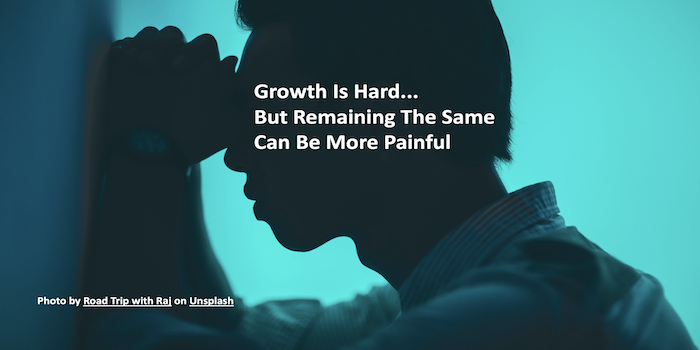
Growth is inherently difficult because it frequently entails pain. However, the alternative – stagnation – carries a far greater cost. The absence of struggle leads to a lack of development, a missed opportunity for self-discovery and fulfillment. The individual who avoids discomfort may preserve a fragile sense of ease in the short term, but they forfeit the profound rewards of a life lived fully and expansively.
A Legacy Forged in Adversity
The implications of this understanding are far-reaching. In a society that often prioritizes immediate gratification and comfort, recognizing the value of endured hardship is crucial. It reframes our perception of setbacks, not as endpoints, but as essential components of a larger developmental process. This perspective can foster greater resilience in individuals and a more robust approach to problem-solving within organizations and communities.
The author’s concluding question prompts introspection: "When you look back on your own life, what season of painful growth are you most thankful you didn’t quit?" This question serves as a powerful call to acknowledge the transformative power of overcoming challenges. It invites individuals to celebrate their own journeys of growth, recognizing that the most valuable lessons are often learned through the crucible of experience. The enduring impact of influential individuals, the strength of resilient communities, and the depth of personal fulfillment are all, in large part, a testament to the courage to embrace the pain that growth inevitably brings.
