


The Dawn of Gemini 4 Argon and the Frontier Model Evolution
The introduction of Gemini 4 Argon marks the beginning of what Google describes as the "Argon era" of AI. Unlike previous iterations that focused primarily on context window expansion for inputs, Gemini 4 Argon is defined by its unprecedented 1-million-token output limit. This technical milestone is designed to facilitate heavy-duty workloads that require massive, coherent generations, such as full-scale software engineering, comprehensive legal drafting, and autonomous cybersecurity patching.
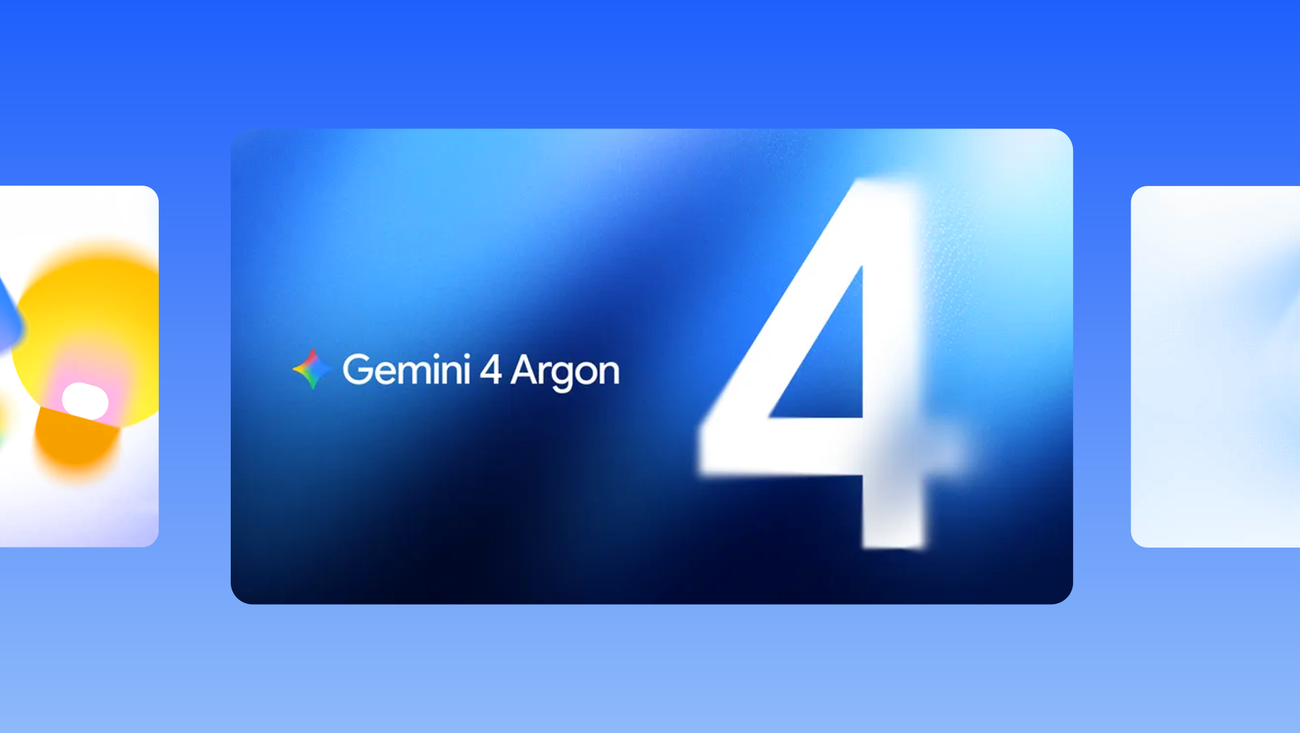
Argon’s architecture is optimized for "heavy-duty reasoning," a move that industry analysts suggest is a direct response to the increasing demand for AI that can function as a reliable co-pilot in high-stakes professional environments. To ensure the safe deployment of such powerful capabilities, Google is utilizing the Fairwind Program, a phased rollout initiative that grants access to trusted "cyber defenders" first. This allows the model to be stress-tested in real-world defensive scenarios—specifically in identifying vulnerabilities and deploying patches—before it reaches broader enterprise and developer markets.
In tandem with the flagship Argon model, Google released Gemini 3.8 Flash and 3.8 Flash Cyber. While the Argon model focuses on depth and massive outputs, the 3.8 Flash series is built for speed and efficiency. Gemini 3.8 Flash maintains the low-cost profile of its predecessor, 3.7 Flash, but provides substantial gains in "long-horizon" engineering tasks. The "Cyber" variant of 3.8 Flash is particularly notable for its autonomous vulnerability discovery, a tool designed to give IT departments a proactive edge against increasingly sophisticated AI-driven threats.

Redefining Human-Computer Interaction: Live Models and Expressive Voice
September also saw a significant leap in how users interact with Gemini through the launch of Gemini 3.8 Live and Gemini 3.8 Live Extended Thinking. These models represent the pinnacle of speech-to-speech technology, designed to eliminate the "lag" that has historically plagued voice-based AI.
The "Extended Thinking" variant is specifically tuned for multi-step reasoning. It allows users to engage in complex verbal brainstorming sessions where the AI can pause, "think" through a problem, and provide a structured response without the user needing to prompt it at every step. This technology has been integrated across Search Live and Google Workspace, enabling users to perform complex tasks in Gmail, Docs, and Keep using only their voice.

Furthermore, Google introduced the Gemini 3.8 Flash-Lite TTS (Text-to-Speech) and Flash TTS models. These are not mere updates to existing voice presets; they are dynamic "creative studios" that allow developers and users to generate custom voices and direct scene dialogue from simple text prompts. This level of expressiveness is intended to elevate audio experiences in products like Gemini Notebook and Google Vids, providing a more human-centric feel to AI-generated content.
Hardware Integration and the Launch of Googlebook
Perhaps the most tangible announcement of the month was the opening of pre-orders for Googlebook. This new laptop category represents a fundamental shift in Google’s hardware strategy, merging the desktop foundations of ChromeOS with the mobile versatility of Android, all built around a "Gemini Intelligence" core.

Googlebook is designed to be the primary computing hub for Android users, offering seamless integration with mobile devices right out of the box. Two standout features define the Googlebook experience:
- Magic Pointer: A gesture-based AI tool that allows users to "wiggle" their cursor over any element on the screen to ask Gemini for context, summaries, or actions related to that specific content.
- Rambler: A smart voice dictation system that goes beyond simple transcription. Rambler is designed to take "verbal brain dumps" and instantly structure them into organized notes, emails, or project briefs.
By moving AI from a browser tab to an on-device, system-level integration, Google is positioning itself to compete more directly with traditional desktop operating systems, emphasizing a "no-code" workflow where custom widgets and background tasks are managed by AI.

Scientific Frontiers: From Human DNA to the Brain of a Fruit Fly
Google’s September updates extended far beyond consumer products, reaching into the deep sciences through its Google DeepMind and Research divisions. The release of the AlphaGenome Atlas stands as a landmark achievement in genomics. This database predicts the effects of all 9 billion possible single nucleotide variants in the human genome. Given that the vast majority of these mutations are too numerous to test in a physical laboratory, the AlphaGenome Atlas provides a predictive map that is already being used to accelerate research into rare diseases and complex genetic disorders.
In the field of neuroscience, Google, in collaboration with Cambridge University and HHMI Janelia, announced the first complete brain map of an adult male fruit fly. This "connectome" charts over 166,000 neurons and 12,000 cell types. By utilizing AI to stitch together millions of microscopic images into a navigable 3D model, researchers can now observe how sensory cues—such as smell or sight—transform into physical movement. This breakthrough is viewed as a critical stepping stone toward understanding the functional architecture of more complex brains, including those of humans.

Global Impact: Climate Tracking and Weather Forecasting
Addressing the climate crisis remained a core focus of Google’s AI applications in September. The company announced a partnership with NASA’s Jet Propulsion Laboratory to develop MAPL-EMIT, a deep learning model designed to track global methane emissions from space.
Methane is a potent greenhouse gas, and detecting leaks is often difficult for human analysts. MAPL-EMIT has proven to be 50% more effective than human experts, having already identified over 23,000 previously unmapped methane plumes. Most notably, the model detected leaks in 24 of the world’s 25 largest-emitting landfills. In a move toward radical transparency, all data from this project is being made openly available on Google Earth Engine to empower climate researchers and policy-makers.

Simultaneously, Google launched WeatherNext 3, its most advanced global weather AI model to date. By integrating real-time satellite data and hourly refreshes, WeatherNext 3 provides higher-resolution precipitation forecasting and specific variables for clean energy production, such as cloud cover for solar farms and wind speeds for turbines. The model is now the backbone of weather services across Google Search, Maps, and the Google Maps Platform.
The Evolution of AI Agency: CC for Groups and Connected Apps
The concept of the "Personal Assistant" is evolving into the "Group Agent." Google Labs announced the expansion of CC (originally a personal agent) into a collaborative group agent designed for household logistics. CC for Groups is granted its own email address, allowing it to coordinate family calendars, track shared to-do lists, and manage daily logistics autonomously while maintaining built-in privacy controls.

To further enhance Gemini’s utility, Google introduced new "Connected Apps." This integration allows Gemini to interact directly with third-party platforms such as Airtable, Adobe, Peloton, and monday.com. Instead of the user acting as the bridge between different software tools, Gemini can now execute tasks across these platforms—for example, updating a project timeline in Linear based on a conversation in a document—thereby reducing the "daily grind" of tab-switching and manual data entry.
Strategic Infrastructure and the DeepMind Institute
Looking toward the long-term future of computing, Project Suncatcher entered its first testing phase. This initiative, a partnership with Planet, involves launching test satellites to evaluate the performance of Google’s Tensor Processing Units (TPUs) in low-Earth orbit. The project explores the hypothesis that satellites can access significantly more solar power in space (up to eight times more than on Earth), potentially leading to a future where AI infrastructure is partially off-world to maximize energy efficiency.

Finally, the establishment of the DeepMind Institute (DMI) marks a formal commitment to the ethical and societal implications of Artificial General Intelligence (AGI). As AGI moves from a theoretical concept to a foreseeable horizon, DMI is intended to serve as a global forum for researchers, ethicists, and policymakers. The institute’s mission is to ensure that the transformative impact of AGI is steered by a diverse set of global voices, rather than technologists alone, focusing on risk mitigation and the equitable distribution of AI benefits.
Through this comprehensive suite of updates, Google has demonstrated that its AI strategy for late 2026 is no longer just about "search" or "chat." It is about building a pervasive, reasoning-capable infrastructure that touches every aspect of human endeavor, from the microscopic mapping of neurons to the macroscopic monitoring of the planet’s atmosphere. As these technologies roll out to developers, enterprises, and the public, the implications for productivity, scientific discovery, and global governance are expected to be profound.
