

The perennial question from sales professionals echoes through training rooms and industry conferences: "What is the single most potent principle of influence in the art of sales?" While the intricate dance of persuasion is multifaceted, and situational nuances always play a role, a deep dive into the science and practice of influence, particularly through the lens of leading sales methodologies and psychological research, consistently points to one powerful driver: consistency. This principle, when expertly wielded, allows top-tier salespeople to achieve remarkable results, often by deviating from traditional, talk-heavy sales tactics.
The counterintuitive notion that "the best salespeople talk less" may initially seem at odds with the common perception of sales, which often conjures images of relentless pitches and feature-driven monologues. However, extensive study and decades of observation in the sales arena reveal a unifying theme among high-achievers: they dedicate a significantly larger portion of their interactions to asking insightful questions and actively listening, rather than dominating the conversation.
The Listening Advantage: A Data-Driven Shift
Industry experts and behavioral scientists frequently suggest that highly effective salespeople allocate only 25% to 30% of their speaking time during a sales engagement. The remaining 70% to 75% is dedicated to a critical process of discovery, designed to meticulously uncover what truly matters to the potential client. This paradigm shift from orator to interrogator is not merely anecdotal; it is supported by research into consumer psychology and effective communication.
Dr. Robert Cialdini, a preeminent figure in social psychology and author of the seminal work "Influence: The Psychology of Persuasion," extensively details the principle of consistency. This principle posits that individuals experience both internal psychological pressure and external social pressure to behave in ways that align with their previous statements, commitments, and actions. Humans possess a deep-seated desire to perceive themselves as consistent and reliable. Furthermore, societal norms tend to view individuals more favorably when they demonstrate follow-through. This innate drive to maintain internal and external coherence has profound implications for the sales process.
Essentially, people are intrinsically motivated to ensure their actions are congruent with their expressed beliefs and intentions. When a salesperson understands and leverages this fundamental human tendency, they can navigate the sales landscape with significantly greater efficacy.
From Information Gathering to Value Alignment
The power of consistency in sales is not about tricking customers into commitments but about facilitating their own journey towards a decision they have, in essence, already made. Skilled salespeople do not employ questions as mere tools for data collection. Instead, they use them as a sophisticated method to guide customers through a process of self-discovery, helping them to articulate and clarify their most pressing needs, aspirations, and pain points. Once these priorities are clearly established and articulated by the customer, the salesperson’s role becomes demonstrating how their product or service offers a direct and logical solution that aligns perfectly with what the customer has already identified as important.
As Brian Ahearn, a leading authority on ethical influence and Chief Influence Officer at Influence PEOPLE, often states in his workshops: "People don’t resist their own values." This pithy statement encapsulates the core of the consistency principle in sales. When a proposed solution resonates with a customer’s deeply held values, priorities, or articulated needs, the path to purchase becomes remarkably smoother.

The "Store X" vs. "Store Y" Analogy: Navigating the Sales Journey
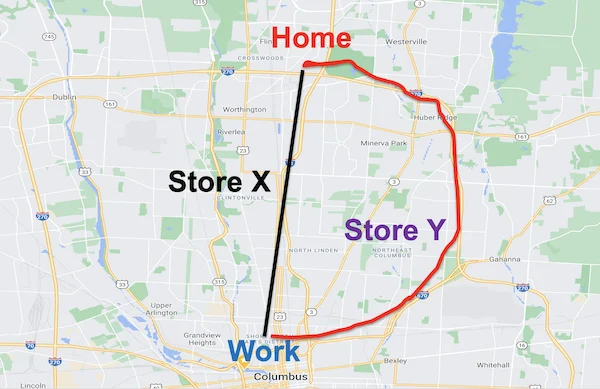
To illustrate this concept more concretely, consider a common scenario that highlights the practical application of consistency in influencing decisions. Imagine an individual who commutes approximately 15 miles to work daily, adhering to a familiar route.
Now, suppose a request comes from home: "Could you stop by the store on your way back and pick up some batteries and bug spray?"
If the necessary items are available at "Store X," a location conveniently situated just a minute or two off the individual’s regular commute, the answer is likely an immediate and uncomplicated "yes." The reason for this easy agreement is straightforward: Store X is already aligned with the established route and the existing flow of the individual’s day. The detour, if any, is negligible.
However, the situation changes dramatically if the items are only available at "Store Y," a location that requires a significant deviation from the usual path. This hypothetical Store Y might be several miles out of the way, potentially adding 20 minutes or more to the journey. In such a case, the individual might hesitate. The hesitation is not necessarily rooted in a lack of willingness to help but rather in the inconvenience and the disruption to their established routine. It necessitates stepping off the "easy, convenient path" they navigate daily.
This analogy serves as a powerful metaphor for many sales conversations. When salespeople invest time in asking thoughtful, probing questions early in the sales process, they empower customers to articulate their goals, challenges, priorities, and desired outcomes. The salesperson then has the opportunity to skillfully demonstrate how their offering precisely fits these pre-defined needs. This creates a "direct route" towards a solution, making the eventual purchase feel like stopping at Store X—it is already on the customer’s established path toward achieving their objectives.
Conversely, when salespeople bypass or shortchange the critical discovery phase, they often find themselves in the challenging position of attempting to persuade customers to embark on a significantly different and less convenient path, akin to navigating towards Store Y. They then expend considerable energy explaining, convincing, defending their position, and overcoming objections, precisely because they failed to establish the customer’s intended destination in the first place. This arduous process often feels like traditional, high-pressure "selling."
The renowned sales guru Jeffrey Gitomer famously articulated this sentiment: "People don’t like to be sold, but they love to buy." This observation underscores the importance of aligning the sales process with the customer’s natural inclination to seek solutions that meet their needs organically.
The Implications for Modern Sales Strategy
The most effective sales conversations do not force prospects down a predetermined path they never chose. Instead, they skillfully guide individuals toward outcomes they have already identified as important and valuable. This is precisely why the principle of consistency is such a potent force in sales. When customers vocalize what matters most to them, and a salesperson can authentically demonstrate how their solution directly addresses and aligns with those stated priorities, the act of saying "yes" to the solution feels natural and logical. It is consistent with the customer’s own articulated desires.

This realization prompts a crucial question for sales professionals and organizations: "Are our sales questions leading customers towards their ‘Store X,’ or are we inadvertently forcing them towards ‘Store Y’?" The answer to this inquiry can often illuminate why some sales conversations flow effortlessly, resulting in mutually beneficial agreements, while others devolve into arduous, protracted battles of persuasion.
Building a Foundation of Trust and Understanding
The mastery of asking the right questions is paramount. While a deep understanding of one’s product and the competitive landscape is essential, it pales in comparison to the ability to elicit genuine needs and aspirations from a prospect. The shortest and most effective path to a sale is frequently achieved by empowering customers to follow the path they have already implicitly or explicitly chosen, guided by their own priorities and values.
The strategic application of the consistency principle requires a shift in mindset and methodology. It demands that salespeople become adept listeners and thoughtful questioners, prioritizing the customer’s perspective above all else. This approach not only increases the likelihood of closing a sale but also fosters stronger, more enduring customer relationships built on trust and mutual understanding.
Broader Impact and Future Trends in Sales Influence
The insights derived from the consistency principle are not confined to individual sales interactions. They have broader implications for organizational sales training, marketing strategies, and the overall customer experience. Companies that train their sales teams to prioritize active listening and value-based questioning are likely to see improvements in conversion rates, customer satisfaction, and long-term loyalty.
Furthermore, as technology continues to evolve, the fundamental principles of human psychology remain constant. AI-powered sales tools, for instance, can be programmed to assist in identifying customer needs and suggesting relevant questions, but the human element of empathy, active listening, and building rapport remains irreplaceable. The ability to leverage the consistency principle will likely become even more critical in distinguishing truly exceptional sales professionals in an increasingly automated landscape.
The emphasis on ethical influence, as championed by figures like Dr. Cialdini and practitioners like Brian Ahearn, ensures that these powerful principles are applied responsibly. The goal is not manipulation but rather a deeper, more authentic connection that leads to solutions that genuinely benefit the customer. This ethical framework is crucial for long-term success and the sustainability of the sales profession.
In conclusion, while the sales landscape is dynamic, the enduring power of psychological principles like consistency offers a stable foundation for achieving influence and driving results. By understanding and applying these principles, salespeople can transform their interactions from transactional encounters into collaborative journeys, where customers feel understood, valued, and empowered to make decisions that are perfectly aligned with their own best interests. The art of listening, amplified by the science of influence, remains the most potent tool in the modern salesperson’s arsenal.
