

The persistent inquiry, "Do I need a sound reflection filter in my home studio?" is a recurring theme within the professional development circles at Gravy For The Brain. This detailed examination aims to provide a definitive and evidence-based answer, dissecting the fundamental principles of home recording environments, microphone functionality, and the practical application of acoustic treatment tools.
Understanding the Core Purpose of a Home Recording Studio
At its heart, a home recording studio is designed to establish a consistent and controllable acoustic environment. This ideal space aims to achieve three critical objectives: prevent external sound from entering the recording space (ingress), prevent recorded sound from escaping (egress), and critically, minimize unwanted sound reflections within the studio itself that can compromise the clarity and fidelity of recordings. Achieving these aims necessitates a deliberate approach to room treatment and microphone selection.
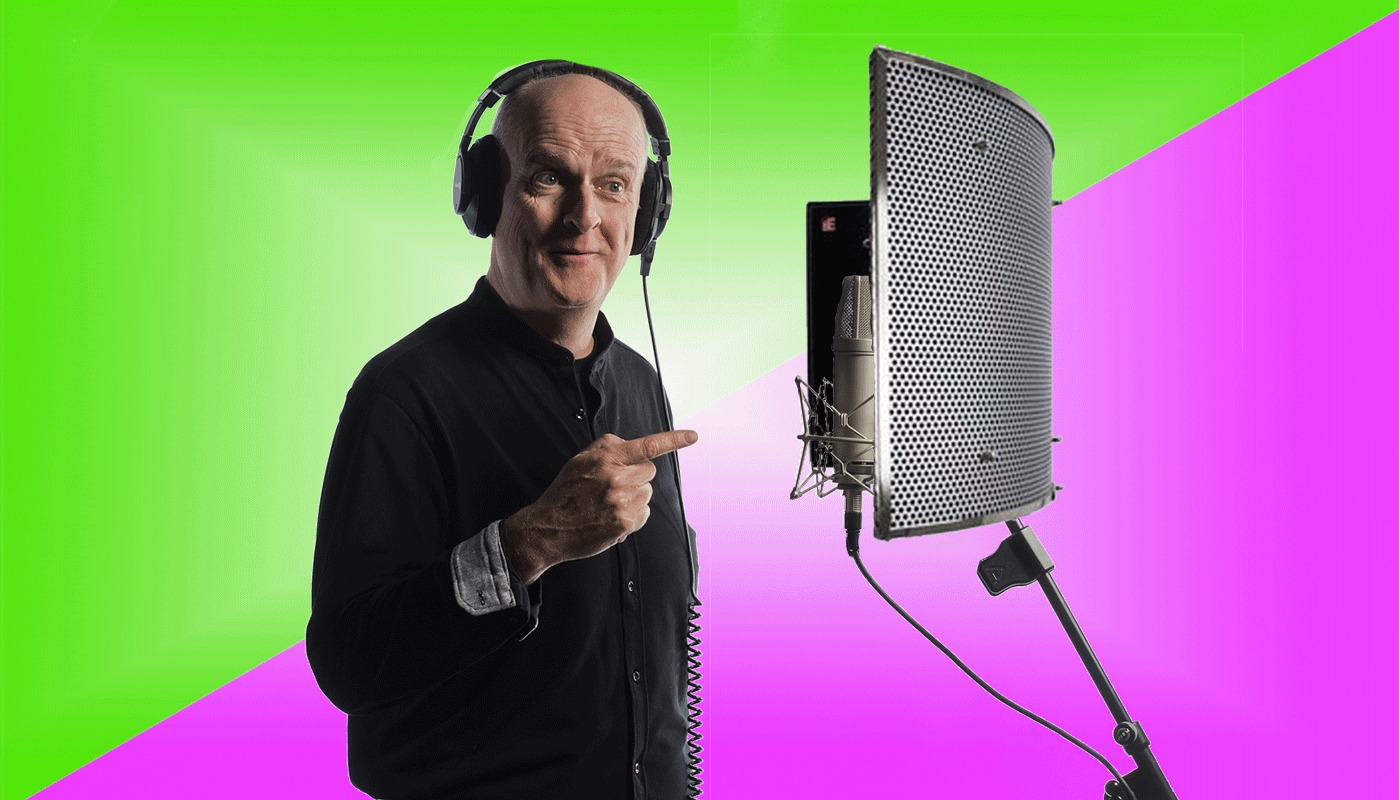
The ultimate goal of acoustic treatment within a recording space is to isolate the microphone’s pickup from any acoustically compromised areas. This means aiming to capture a pristine vocal or instrumental performance directly into the microphone, free from the coloration and degradation introduced by room reverberations. To accomplish this, audio professionals and hobbyists alike often construct dedicated recording booths, meticulously adapt existing spaces like spare rooms or garages, or even creatively repurpose areas of their homes to serve as controlled recording zones.
For those seeking a comprehensive understanding of establishing such environments, Gravy For The Brain offers extensive resources, including a dedicated "Home Recording Studio" course and recordings of "How to Build a Home Studio" webinars, accessible to their membership.
Strategies for Mitigating Unwanted Sound Reflections
The challenge of unwanted sound reflections stems from the inherent physical properties of sound waves interacting with surfaces. Hard, flat surfaces, such as bare walls, windows, or even computer monitors, tend to reflect sound waves with minimal absorption. Conversely, softer, more porous materials like thick curtains, duvets, or acoustic foam tiles are designed to absorb sound energy, thereby reducing reflections. Even living beings, covered in fur or fabric, can contribute to sound absorption, though the creative suggestion of lining a recording booth with cats is, of course, a humorous and entirely impractical one, likely to attract the attention of animal welfare organizations.
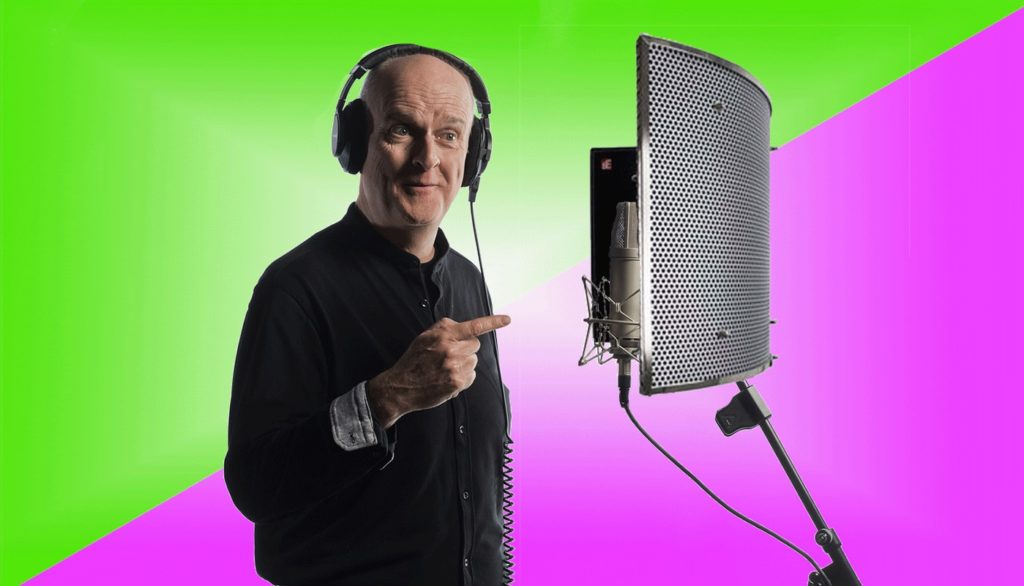
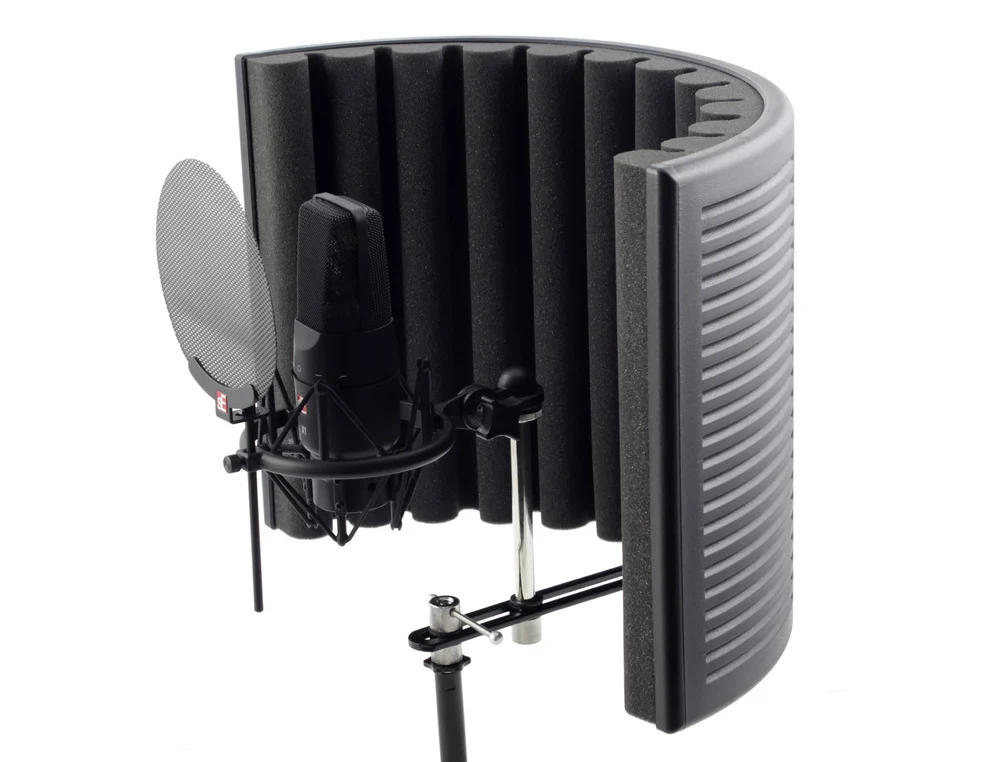
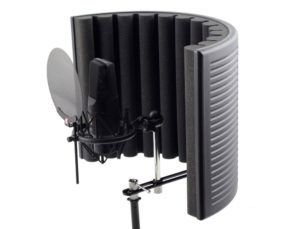
The market offers various devices marketed as "reflection filters." These typically consist of a curved, porous material designed to be mounted around a microphone. Their purported function is to absorb sound waves emanating from the sides and rear of the microphone, preventing them from bouncing off nearby surfaces and re-entering the microphone, thus potentially degrading the recording. Popular examples include the Auray Sound Reflection Filter and the sE Electronics Reflection Filter, both featuring a multi-layered construction aimed at acoustic diffusion and absorption.
A common setup involves placing the microphone centrally within the arc of the reflection filter. The premise behind these devices is that they effectively "filter out" unwanted reflections, creating a more isolated and acoustically "sweet" recording environment. However, a closer examination of microphone technology and acoustic principles reveals a more nuanced reality.
The Decisive Factor: Understanding Microphone Polar Pickup Patterns
The effectiveness of any acoustic treatment, including reflection filters, is intrinsically linked to the directional characteristics of the microphone being used. Microphones are not omniscient sound collectors; they possess distinct "polar pickup patterns," which define the areas around the microphone from which they are most sensitive to sound. Understanding these patterns is crucial for effective recording.
Most microphones exhibit some degree of directionality, meaning they capture sound more effectively from certain directions than others. This sensitivity is often visualized and categorized by a polar pattern diagram. The primary polar pickup patterns include:
- Omnidirectional: Picks up sound equally from all directions. This pattern captures a true representation of the room’s acoustics but is highly susceptible to ambient noise and reverberation.
- Cardioid: Picks up sound most effectively from the front, with progressively less sensitivity to the sides and significantly reduced sensitivity to the rear. This is the most common pattern for voice recording due to its ability to isolate the sound source and minimize room reflections.
- Figure-8 (Bidirectional): Picks up sound equally from the front and the rear, with significant rejection from the sides. This pattern is useful for recording two sources facing each other or for specific stereo recording techniques.
- Supercardioid and Hypercardioid: These are variations of the cardioid pattern, offering tighter front pickup but with a small lobe of sensitivity directly at the rear. They provide even more side rejection than a standard cardioid but can be more susceptible to rear-facing sounds.
Some high-end microphones, such as the widely recognized Neumann U87, offer switchable polar patterns, allowing users to adapt the microphone’s sensitivity to different recording scenarios. However, many microphones, particularly those commonly used in home studios, are fixed in a cardioid pattern by default.
The selection of a cardioid pattern for voice recording is a deliberate choice driven by the desire to minimize the capture of unwanted sound reflections. If a microphone were set to an omnidirectional pattern in a typical untreated room, it would capture a disproportionately large amount of ambient noise and room reverberation, leading to recordings that sound noisy and muddy. The cardioid pattern, by its nature, restricts the microphone’s "listening" area, focusing primarily on the sound source directly in front of it and thereby reducing the likelihood of capturing problematic room sound.
Visualizing the Cardioid Pickup Pattern in Action
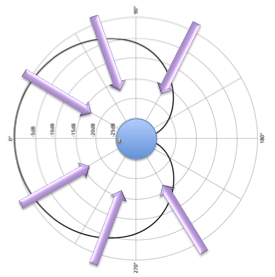
To illustrate the cardioid pattern, imagine a top-down view of the microphone. The microphone itself is represented as a central circle, with a designated "front" indicated by a logo or marking. The cardioid pattern emanates from this front, resembling a heart shape, hence the name. This pattern signifies the area of maximum sensitivity.
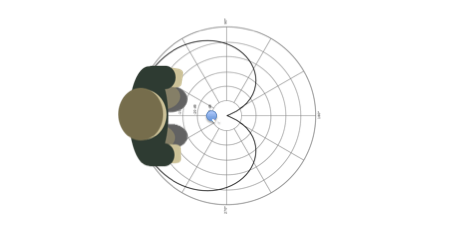
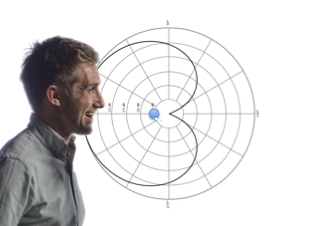
When a voice artist speaks into a microphone set to a cardioid pattern, their voice falls within this "heart-shaped bubble." While there is some pickup from the sides, the sensitivity drops off significantly towards the rear. It’s important to understand that this pattern exists not just in two dimensions but also in three. From a side view, the pickup pattern can be visualized as a more three-dimensional, heart-shaped "beanbag" extending in front of the microphone. This allows for some flexibility in positioning the voice artist slightly to the left, right, high, or low without drastically altering the pickup quality.
Now, consider the impact of sound reflections. In an untreated room, sound waves bounce off walls, ceilings, floors, and furniture, creating a complex web of reverberations that reach the microphone from all directions. These reflections are essentially delayed copies of the original sound.
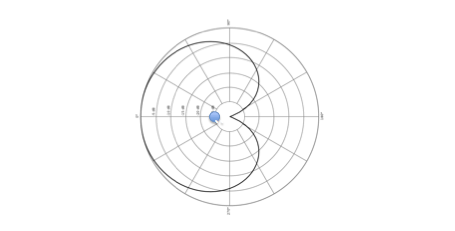
When these reflections are visualized alongside the cardioid pickup pattern, a key insight emerges. Even though reflections are arriving from all angles, the cardioid microphone is primarily capturing those that fall within its defined pickup zone. A minimal amount of reflection is picked up from the sides, and virtually none from the rear.
The Critical Assessment: Reflection Filters Under Scrutiny
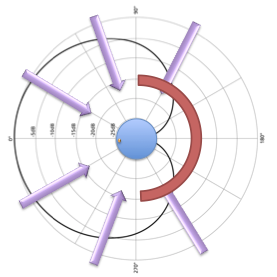
Now, let’s introduce a reflection filter into this scenario. Typically, these filters are positioned around the microphone, aiming to block or absorb sound coming from the sides and rear. The crucial question is: how much of the problematic reflections does a reflection filter actually intercept that the cardioid pickup pattern isn’t already mitigating?
When a reflection filter is placed around a microphone with a cardioid pickup pattern, it becomes evident that the filter’s effectiveness is largely redundant. The filter primarily intercepts sound waves that are already being significantly rejected by the microphone’s cardioid pattern. The sound waves arriving from the front, which are the direct sound of the voice artist and the most critical component of the recording, are intended to be captured by the microphone, and the filter is designed not to impede this.
Numerous tests and practical demonstrations, including side-by-side recordings with and without reflection filters, have consistently shown a negligible, if any, audible difference in the final audio quality. This observation leads to a stark conclusion: for microphones employing directional pickup patterns, particularly cardioid, reflection filters often provide little to no practical benefit in reducing unwanted sound reflections.
The Unvarnished Truth: Do You Need a Reflection Filter?
Based on the principles of microphone technology and acoustic physics, the definitive answer is: No, you generally do not need a sound reflection filter for a home studio, especially when using a directional microphone like a cardioid. These devices often represent a waste of both time and financial resources.
Why Then the Popularity of Reflection Filters?
The continued prevalence and marketing of reflection filters can be attributed to several factors. Inexperienced voice-over artists, or those new to studio recording, may be influenced by visual marketing materials that depict these filters as essential studio equipment. They may also observe other users employing them and assume their efficacy without a deeper understanding of the underlying technology. Furthermore, advice from individuals who themselves may not fully grasp the technical nuances can perpetuate the misconception. The illusion of acoustic treatment created by the physical presence of a reflection filter can be compelling, leading to purchases driven by perceived rather than actual utility.
While a reflection filter is unlikely to actively harm a recording, its inability to provide significant improvement renders it an inefficient investment.
Achieving High-Quality Recordings Without a Reflection Filter
If reflection filters are largely ineffective, how then can aspiring audio professionals and enthusiasts achieve high-quality recordings in their home studios? The answer lies in addressing the root cause of acoustic issues: the untreated recording environment itself.
The most effective approach to improving recording quality is to invest in proper sound treatment for the recording space. This involves creating an environment that minimizes sound ingress, egress, and, most importantly, internal reflections. This can range from constructing a purpose-built vocal booth to acoustically treating an existing room. The key is to absorb and diffuse sound waves to create a controlled and neutral acoustic space.
Untreated spaces such as offices, kitchens, or even bedrooms, with their hard surfaces and parallel walls, are inherently prone to problematic reflections and reverberations. While a reflection filter might offer a marginal reduction in side reflections, it cannot compensate for the fundamental acoustic deficiencies of such environments.
For a comprehensive guide to establishing an effective home studio recording area, resources such as the "How to Build a Home Studio" webinar are invaluable. These resources delve into the principles of acoustic treatment, material selection, and construction techniques necessary to create a studio that genuinely enhances recording quality.
In conclusion, while the intention behind reflection filters is understandable, their practical impact on recordings made with directional microphones is minimal. True improvements in home studio audio quality are achieved through dedicated acoustic treatment of the recording space, rather than relying on devices that offer superficial solutions to complex acoustic challenges. The focus should remain on creating a controlled acoustic environment, and perhaps, after dedicating time to studio setup, enjoying a moment of quiet contemplation with a well-behaved feline companion.
[Updated January 2026]
