

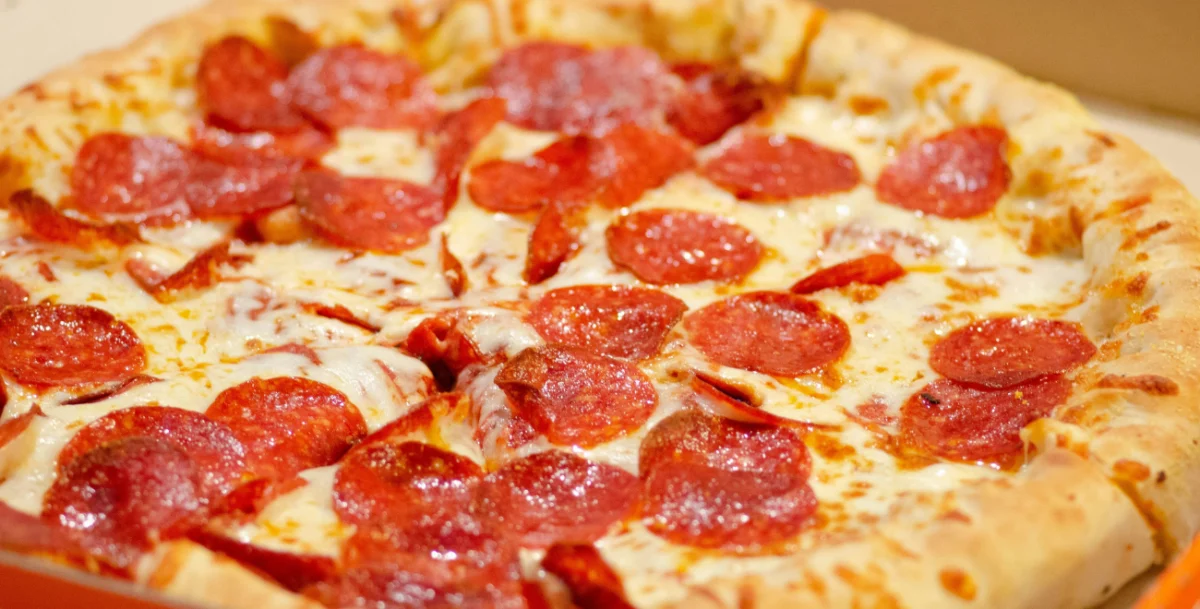
The trajectory of Domino’s Pizza from a struggling delivery chain to a dominant force in the global food service industry serves as one of the most significant case studies in corporate turnaround and brand revitalization. In 2009, the Ann Arbor-based company faced an existential crisis characterized by a plummeting share price, stagnant sales, and a public perception that its core product was inferior to its competitors. By embracing a strategy of radical transparency, technological innovation, and comprehensive product reform, Domino’s executed a transformation that not only reclaimed its market share but also redefined the role of digital integration in the fast-food sector.
The Nadir of 2009: A Brand in Freefall
To understand the magnitude of the Domino’s turnaround, one must examine the state of the company in the late 2000s. By early 2009, Domino’s was struggling under the weight of the global financial crisis and a severe identity crisis. The company’s stock price had dipped as low as $3.03 per share in late 2008, and its reputation for quality was at an all-time low. Consumer research at the time consistently ranked Domino’s last among major national pizza chains in terms of taste and quality.
The brand’s challenges were compounded in April 2009 when a viral video surfaced on YouTube showing two employees at a North Carolina franchise engaging in unhygienic behavior while preparing food. The video garnered over a million views within days, causing a public relations disaster that threatened to permanently sever the bond of trust between the brand and its customers. At the same time, internal data suggested that while Domino’s excelled at delivery logistics, its product—often described by consumers as having a crust that "tasted like cardboard" and sauce that resembled "ketchup"—was no longer competitive in a market where consumers were increasingly seeking higher-quality ingredients.
The Appointment of Patrick Doyle and the Strategy of Radical Honesty
In early 2010, Patrick Doyle assumed the role of CEO, having been with the company since 1997. Doyle recognized that incremental changes would be insufficient to save the brand. Instead, he spearheaded a campaign that defied conventional marketing wisdom: the "Pizza Turnaround." Rather than attempting to mask the company’s flaws through slick advertising, Domino’s opted for radical honesty.
Working with the advertising agency Crispin Porter + Bogusky, the company launched a series of documentary-style commercials that featured real customer complaints. These advertisements showed focus group participants comparing the pizza to "microwave pizza" and "cardboard." By acknowledging these harsh truths, the company aimed to build a foundation of authenticity. Doyle himself appeared in the advertisements, stating clearly that the company was listening and committed to changing. This approach, known in psychology as the "Pratfall Effect," suggests that people (or brands) who admit to their flaws can actually become more likable and trustworthy in the eyes of others, provided they take steps to improve.

Chronology of the Transformation: 2009 to 2021
The revitalization of Domino’s was not merely a marketing exercise; it was a total operational overhaul. The following timeline outlines the key milestones in the company’s recovery:
- Late 2009: The company initiates a complete recipe overhaul. For the first time in its 49-year history, Domino’s changes its core pizza recipe, including the crust, sauce, and cheese blend.
- December 2009: The "Oh Yes We Did" campaign launches, signaling the official start of the brand’s public admission of its past failings.
- January 2010: The new recipe is officially rolled out across all U.S. stores. The company reports a record-breaking 14.3% increase in same-store sales for the first quarter of 2010, the largest quarterly increase in the history of the fast-food industry at that time.
- 2011: Domino’s focuses on digital expansion, launching its mobile ordering app, which would become a cornerstone of its business model.
- 2012-2015: The "AnyWare" suite is introduced, allowing customers to order pizza via Twitter, smart TVs, and even emojis. The company begins to market itself as a "tech company that happens to sell pizza."
- 2018: Domino’s officially overtakes Pizza Hut to become the largest pizza chain in the world based on global retail sales.
- 2021: The company’s stock price reaches an all-time high of over $540 per share, representing a staggering increase from its 2008 lows.
Product Reform and Operational Excellence
The decision to "start from scratch" with the pizza recipe involved testing over 40 versions of the crust and dozens of sauce and cheese combinations. The final product featured a new garlic-herb seasoned crust, a sweeter, spicier tomato sauce, and a shredded mozzarella cheese blend with a touch of provolone.
To ensure the new product was received well, Domino’s implemented a "Quality Inspection" program and revamped its kitchen operations. The company also leveraged its delivery prowess, which had always been its strongest suit, by integrating the "Domino’s Tracker." This tool provided real-time updates to customers, reducing the anxiety associated with waiting for a delivery and setting a new standard for transparency in the logistics of food service.
Financial Performance and Market Impact
The financial data following the 2010 turnaround is often cited as a benchmark for corporate recovery. Between 2010 and 2017, Domino’s stock outperformed nearly every major tech company, including Google, Amazon, and Apple. From a low of approximately $3.00 in 2008, the stock climbed to over $200 by 2017 and surpassed $400 by 2020.
Market analysts attribute this success to the company’s ability to capture the "digital-first" consumer. By 2020, more than 70% of Domino’s sales were generated through digital channels. This shift allowed the company to collect vast amounts of consumer data, enabling more personalized marketing and efficient inventory management. The company’s store-level economics also improved significantly, with average unit volumes (AUV) increasing as the brand gained popularity among younger demographics who valued both the transparency of the brand and the ease of the ordering technology.
Official Responses and Industry Analysis
Industry experts have frequently commented on the "Domino’s Effect." Marketing analysts noted that the company’s willingness to be vulnerable created a "reset" for the brand. In a 2016 interview, Patrick Doyle reflected on the strategy, stating, "You can either tell people your own story, or you can let them tell it for you. We decided we wanted to own our narrative, even the parts that weren’t pretty."

Financial analysts from firms such as Stephens Inc. and BTIG have highlighted that Domino’s success was built on a "fortress" strategy—increasing store density in specific markets to reduce delivery times and lower costs. This operational strategy, combined with the brand’s digital dominance, created a barrier to entry for smaller competitors and even traditional rivals like Pizza Hut and Papa John’s.
Broader Implications for Corporate Leadership
The Domino’s story provides several critical lessons for contemporary business leaders. First, it demonstrates that transparency is a powerful tool for crisis management. In an era of social media where corporate errors are instantly magnified, the Domino’s approach suggests that owning a mistake is often more effective than attempting to litigate or ignore it.
Second, the turnaround highlights the importance of product-market fit. No amount of innovative marketing could have saved Domino’s if the underlying product remained unsatisfactory. By aligning its marketing promises with a tangible improvement in product quality, the company ensured long-term customer retention.
Finally, the case study underscores the necessity of digital transformation. Domino’s was an early adopter of the idea that every company is now a technology company. By prioritizing its mobile app and ordering platform, Domino’s moved from being a participant in the pizza industry to a leader in the broader "convenience economy."
Conclusion
The evolution of Domino’s Pizza from 2009 to the present day is a testament to the power of bold leadership and strategic pivots. By confronting its reputation head-on and backing its words with significant operational changes, the company transformed a period of near-failure into a decade of unprecedented growth. Today, Domino’s stands as a global leader, not just in the food sector, but as a model for how established legacy brands can innovate and thrive in an increasingly digital and transparency-driven marketplace. The company’s journey remains a definitive example of how authenticity, when paired with excellence in execution, can rebuild even the most damaged brand.
