

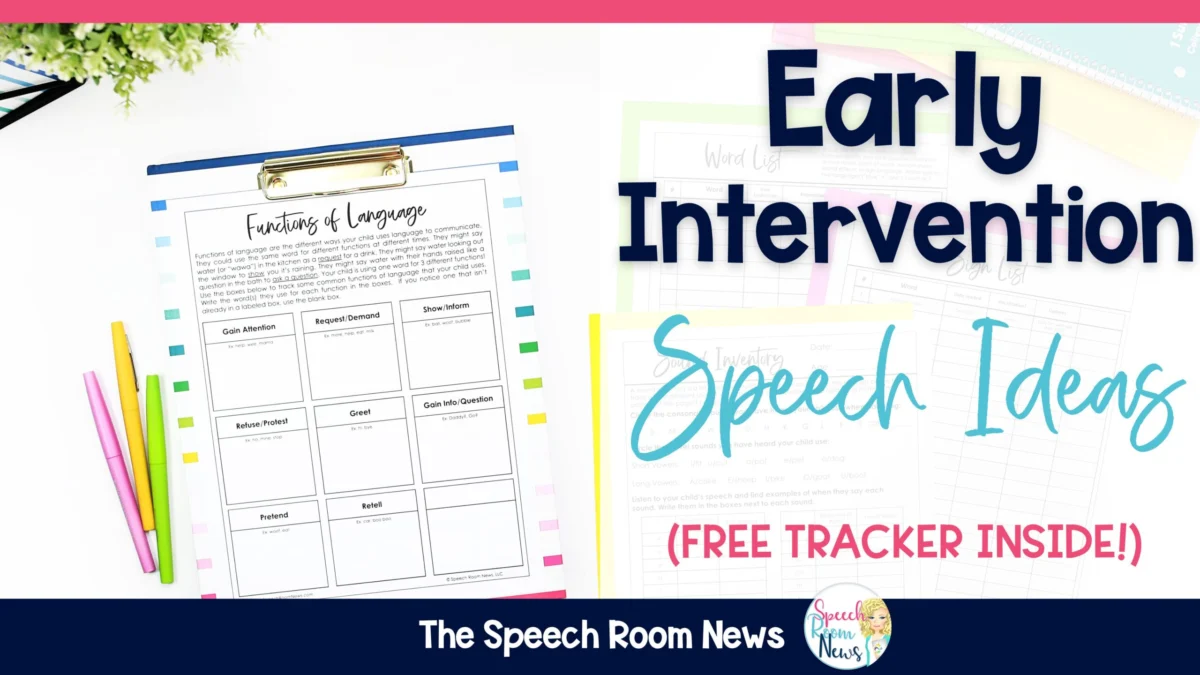
In the intricate journey of a child’s development, the early acquisition of speech and language skills stands as a cornerstone for future cognitive, social, and academic success. The profound impact of early intervention speech therapy, often initiated during the critical formative years, cannot be overstated, acting as a pivotal force in redirecting developmental trajectories for young children experiencing communication challenges. For both dedicated speech-language pathologists (SLPs) and parents navigating the complexities of early childhood, understanding the multifaceted and critical role they collectively play is not merely beneficial but absolutely essential for fostering optimal outcomes. This comprehensive exploration delves into the foundational principles of early intervention, highlights practical therapeutic activities, and underscores the indispensable value of systematic progress tracking, ultimately providing a clearer pathway for families and clinicians alike.
The Landscape of Early Speech and Language Development
Speech and language acquisition is a complex process, beginning long before a child utters their first intelligible word. From the earliest coos and babbles, infants are actively engaging with their environment, laying the groundwork for more sophisticated communication. Developmental milestones serve as crucial benchmarks, guiding parents and professionals in understanding typical progression. For instance, by 12 months, most children typically respond to their name, recognize common words, and begin to babble with varied sounds. By 18 months, a vocabulary of 6-20 words is common, often including nouns like "mama," "dada," and familiar objects. The period between 18 and 24 months is particularly significant, as vocabulary often expands rapidly, and children begin combining two words into simple phrases, such as "more milk" or "big dog." A recognized benchmark for late talkers is often fewer than 50 words and no two-word phrases by 24 months.
However, a significant number of children deviate from these typical patterns. Research indicates that approximately 10-15% of children under the age of three may experience some form of speech or language delay. While some of these "late bloomers" may catch up without formal intervention, a substantial portion will require targeted support. Early intervention programs, typically designed for children from birth to three years old, aim to identify and address these developmental delays as promptly as possible, capitalizing on the brain’s remarkable plasticity during this period. The long-term implications of unaddressed speech and language delays can be extensive, potentially affecting literacy, social interactions, emotional regulation, and academic performance throughout school-age years and beyond. Recognizing this, healthcare systems and educational bodies increasingly advocate for proactive screening and accessible early intervention services.
From Professional Insight to Personal Journey: The SLP Mom’s Perspective
The professional realm of speech-language pathology provides a robust framework for understanding language development. SLPs are trained to assess, diagnose, and treat speech, language, voice, fluency, and swallowing disorders across the lifespan. Yet, even with extensive professional knowledge, the personal experience of parenting a child with a developmental delay can offer a unique and profound shift in perspective. As one speech pathologist recounts, the anticipation of observing her own child’s language development, meticulously documenting babbling and first words, was met with an unexpected reality: her child did not babble as expected, and those anticipated first words were delayed.
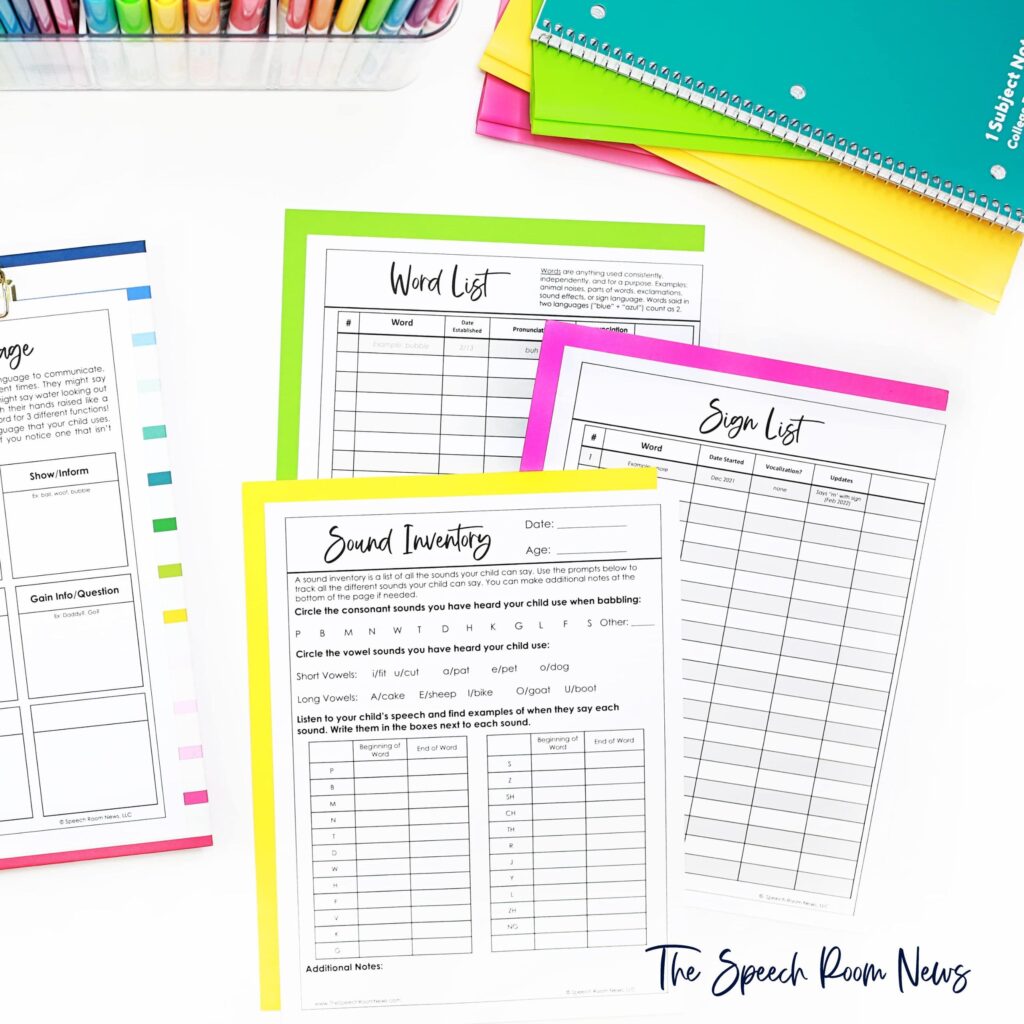
This personal encounter transformed the professional lens, highlighting the emotional weight and practical challenges faced by parents of late talkers. The experience underscored the crucial need for practical, accessible tools that empower parents to become active participants in their child’s therapeutic journey. This firsthand perspective led to the development of resources aimed at simplifying the documentation process, such as a "First Words Tracker." The creation of such tools, born from a blend of clinical expertise and personal necessity, serves to bridge the gap between professional guidance and daily parental application, providing a tangible way to monitor growth and change over time. These systematic records prove invaluable not only for parents seeking to understand their child’s progress but also for informing early intervention speech therapists during their coaching sessions, ensuring data-driven adjustments to therapy plans.
The Indispensable Value of Tracking Early Speech Sounds and Words
The systematic tracking of a child’s early speech sounds and words is a cornerstone of effective early intervention. While it might seem like a simple exercise, its implications for diagnosis, therapy planning, and parental engagement are profound. Firstly, it provides objective data against developmental milestones. As children progress through various age groups, specific communication benchmarks are expected. When a child falls short of these, detailed data collection becomes critical for observing patterns, identifying specific areas of difficulty, and tracking the trajectory of expressive language skills over time.
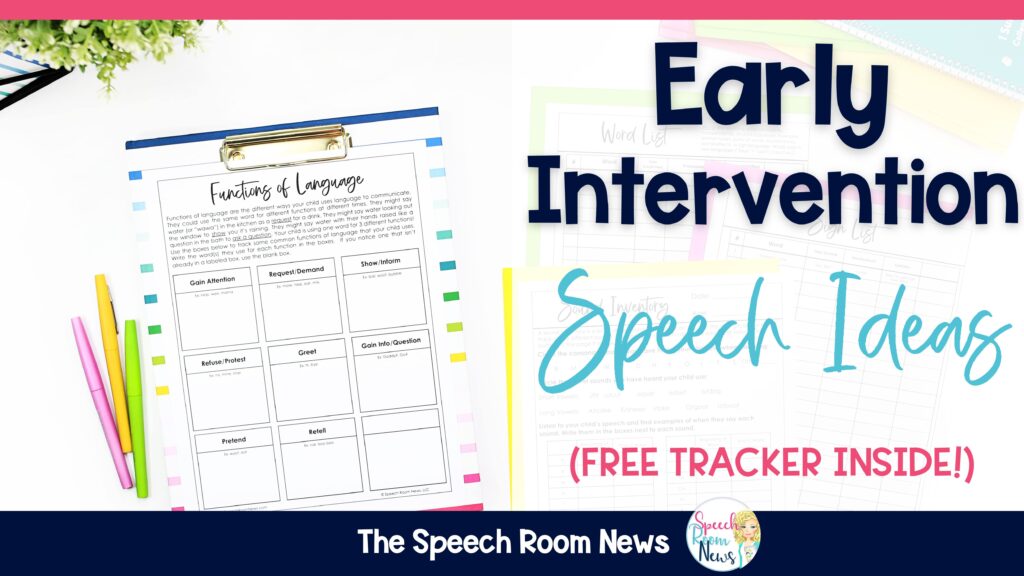
Beyond simply noting the presence of words, tracking allows for a deeper analysis of the child’s phonetic inventory and syllable structures. For instance, parents and therapists can monitor the emergence of early sounds and then observe the development of different syllable shapes:
- Consonant-Vowel (CV) words: Such as "ba" (ball), "ma" (mama).
- Vowel-Consonant (VC) words: Such as "up," "eat."
- CVCV words: Such as "dada," "baba."
- CVC words: Such as "cat," "dog."
Understanding these patterns helps identify phonological processes (systematic ways children simplify speech) and pinpoint where intervention needs to focus. Without this granular data, recalling the exact sequence or type of new words and sounds can be challenging, even for the most attentive parents. Tracking eliminates guesswork, providing concrete evidence that can be easily shared with the child’s therapist, fostering a collaborative and informed therapeutic process. Resources like "Encouraging First Words Handouts" are specifically designed to support this process, providing SLPs with materials to empower parents in documenting and understanding their child’s emerging communication. When parents intentionally track, they often express surprise at the number and variety of sounds and words their child is actually producing, reinforcing their role in the intervention process.
Identifying Late Talkers: When to Seek Professional Guidance
While every child develops at their own unique pace, there are established guidelines that can help parents identify potential concerns and determine when professional evaluation might be warranted. A "late talker" is typically defined as a toddler (18-30 months) who has a good understanding of language, uses gestures and other nonverbal communication, has good play skills, good social skills, and is typically developing in other areas, but has a limited spoken vocabulary for their age (e.g., fewer than 50 words by 24 months, or not combining two words by 24-30 months). It’s important to distinguish a late talker from a child with a broader speech or language delay or disorder, which might involve difficulties with understanding language, social interaction, or other developmental areas.
Parents often grapple with the question of "when to worry." Key indicators that might signal a need for professional consultation include:

- By 12 months: No babbling, no pointing or gesturing, no response to name.
- By 18 months: Does not say single words, does not imitate sounds or words, does not respond to simple verbal requests.
- By 24 months: Has fewer than 50 words, does not combine two words, does not follow simple directions.
- Any age: Loss of any speech or language skills previously acquired, difficulty understanding what your child says.
It is crucial to remember that these are general guidelines, and early intervention handouts specifically address concerns related to late talkers, offering valuable insights into what constitutes a "word," the stages of babbling, and strategies for child-led play to stimulate speech. However, if concerns persist, the most proactive step is to consult with a pediatrician. The pediatrician can provide an initial assessment and, if necessary, refer the family to a speech-language pathologist or recommend contacting the local school district for an early intervention evaluation. These evaluations are often provided at no cost to families and can determine eligibility for speech therapy services, providing timely support that can significantly alter a child’s developmental trajectory.
Integrating Speech Therapy into Daily Routines: Practical Activities for Parents
Effective early intervention speech therapy doesn’t solely occur in a clinical setting; it thrives when integrated into the fabric of a child’s daily life. Daily routines offer an unparalleled opportunity for language learning because they provide predictable patterns, repeated exposure to specific vocabulary, and consistent social expectations. This naturalistic approach capitalizes on the child’s existing environment and interests, making learning more engaging and less like formal "therapy."
Here are enriched examples of activities that can be seamlessly woven into everyday moments:
-
Eating a Snack: A Communication Temptation
Snack time is an ideal "communication temptation" because food is highly motivating. Instead of a full meal, which might be too overwhelming, a small bowl of favored snacks creates a focused opportunity.
- Strategy: Modeling and Expectant Pause. Pour a small portion of the snack into a bowl while narrating your actions: "Look! I’m pouring some crackers into the bowl. Yum! I love crackers. You like crackers too. Mmmm, crackers." Use varied intonation and repetition.
- Strategy: Expectant Pause. After modeling, hold the bowl near your child, make eye contact, and use an expectant facial expression. Ask, "Do you want crackers?" Then, pause and wait for a response. The pause is critical; it gives the child an opportunity to initiate communication.
- Strategy: Reinforce All Attempts. If the child makes a sound approximation (e.g., "ack" for cracker), a gesture (reaching), or even just eye contact, celebrate it enthusiastically! "Yes! You want crackers! Good job!" Then provide the snack. The goal is to encourage any form of communication, gradually shaping it towards spoken words. Continue modeling throughout the snack time, reinforcing words like "more," "eat," "finished."
-
Brushing Teeth: Mirroring Language and Actions
Time spent in front of a mirror is not only for hygiene but also a fantastic opportunity for connection, imitation, and language building.- Strategy: Parallel Talk and Self-Talk. Narrate your actions and your child’s actions. "It’s time to brush your teeth. We brush and clean our teeth so they stay healthy. We want healthy teeth so we can eat all kinds of foods!"
- Strategy: Explaining ‘Why’ and Sequencing. "Let’s get your green toothbrush. Can you find the toothpaste? Squeeze just a little bit out. Now what do we do? Yes! Let’s brush the front. Now what? Yes—time to brush the back!" Explain why you are doing each step.
- Strategy: Positional Words and Action Verbs. Actively use and model positional words like "up/down," "front/back," and action verbs like "brush," "clean," "rinse." "I go up and down and make sure I get all your teeth."
- Strategy: Turn-Taking and Imitation. Encourage back-and-forth interactions: "My turn to brush! Your turn to brush!" Make funny faces in the mirror and encourage your child to imitate them (sticking tongue out, opening mouth wide). These oral motor imitations can be precursors to speech sound production. Avoid simply stating, "Brush your teeth," and instead, immerse the child in a rich linguistic experience.
-
Bath Time: Sensory Engagement and Vocabulary Expansion
Bath time is rich with sensory input and predictable sequences, making it another excellent opportunity for language development.- Strategy: Sensory Vocabulary. Describe what you see, hear, and feel. "Splash! The water is warm. Soapy bubbles! Look at the big bubbles. Pop, pop, pop!" Introduce words like "wet," "slippery," "warm," "clean."
- Strategy: Object Naming and Requesting. Have bath toys available. "Here’s the ducky. Ducky goes swim, swim." Ask, "Where’s the boat?" or "Do you want the cup?" Encourage requesting with words or gestures.
- Strategy: Action Verbs and Prepositions. Narrate actions: "Pour the water in the cup. Pour the water out." "Wash your arm. Wash your tummy." "Splish, splash!"
- Strategy: Sound Effects and Songs. Incorporate animal sounds if playing with animal toys, or sing simple bath-related songs (e.g., "Rub-a-dub-dub"). Sound effects are excellent motivators for early vocalizations.
These activities, detailed further in resources like the "Early Intervention Daily Routines Handbook," illustrate how everyday moments can be transformed into powerful learning opportunities. The key is consistent, intentional modeling and creating an environment where communication is encouraged and celebrated.
Broader Impact and Collaborative Care in Early Intervention
The implications of effective early intervention extend far beyond a child’s immediate speech development. Timely and appropriate support can significantly mitigate potential long-term challenges in areas such as literacy, academic achievement, and socio-emotional well-being. Children who receive early intervention for speech and language delays are more likely to achieve higher academic outcomes, build stronger social relationships, and develop effective coping mechanisms for communication-related anxieties. Conversely, unaddressed delays can lead to frustration, social isolation, and learning difficulties that may persist throughout schooling and adulthood.
The success of early intervention is inherently collaborative, requiring a concerted effort from a network of stakeholders. This ecosystem includes:
- Parents and Guardians: As the primary caregivers, their active participation, consistency in applying strategies, and diligent tracking of progress are paramount. They are the child’s first and most influential language teachers.
- Speech-Language Pathologists (SLPs): They provide expert assessment, diagnosis, individualized therapy plans, and ongoing coaching for parents. Their clinical knowledge guides the intervention process.
- Pediatricians: Often the first point of contact, they play a crucial role in early screening, identifying red flags, and making appropriate referrals to specialized services.
- Educators: For children transitioning into preschool or early elementary, educators provide a supportive learning environment that reinforces communication skills learned in therapy.
- Early Intervention Programs: These government-funded or private programs provide comprehensive services, often coordinating care across multiple disciplines and ensuring accessibility for families.
The ongoing development of comprehensive resources, such as the "Early Intervention Handbooks for Parents" (Sets 1-5, covering norms, daily routines, encouraging first words, late talkers, and gestures), represents a vital contribution to this collaborative model. These materials empower parents with knowledge and practical tools, facilitating a more informed and engaged role in their child’s therapy. By putting these resources into the hands of families and bulletin boards of clinics, the goal is to demystify speech development, provide actionable strategies, and foster a shared understanding that ultimately benefits the child. The journey of speech development is a marathon, not a sprint, and with early intervention, every step is a stride towards a brighter, more articulate future.
