

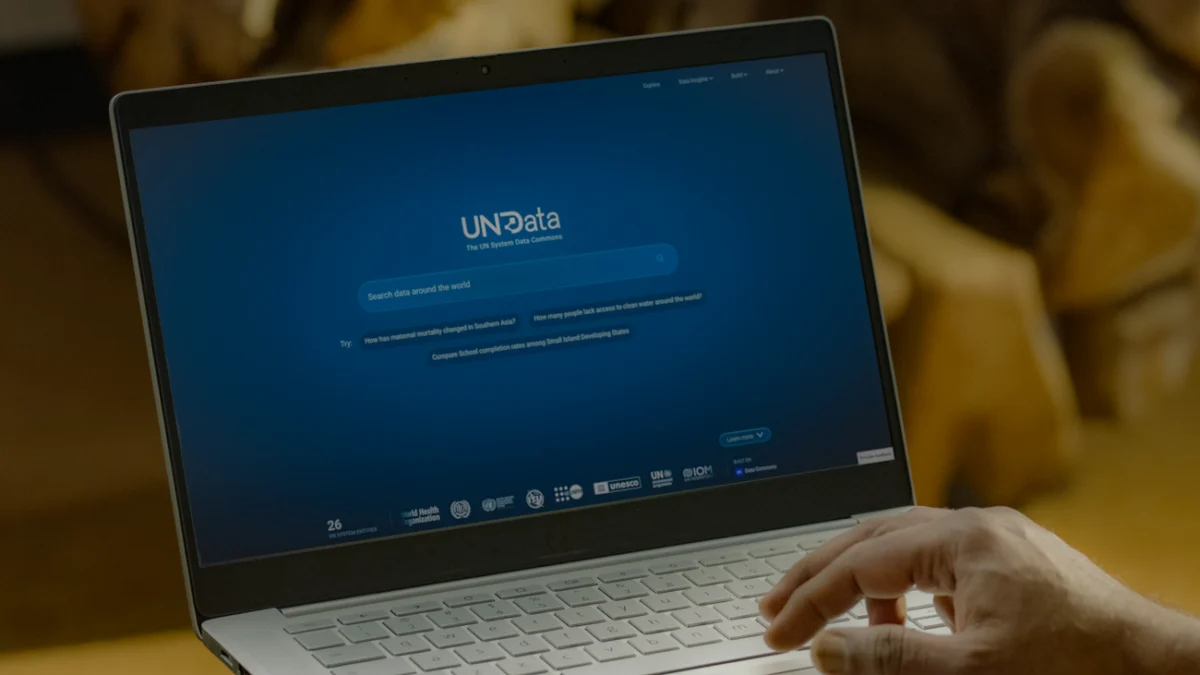
The United Nations has officially unveiled the UN System Data Commons, a sophisticated, open-source platform designed to unify the vast and often fragmented landscape of global statistics. Built on the foundational technology of Google’s Data Commons, this initiative represents a significant leap forward in how international organizations, researchers, and the general public interact with high-integrity data. By integrating disparate datasets into a single, AI-ready knowledge graph, the platform aims to eliminate the technical barriers that have historically hindered the analysis of global challenges such as climate change, poverty, and public health. Supported by Google.org and developed in collaboration with the UN Foundation, the UN System Data Commons serves as a centralized hub where data from across the UN system is not only searchable but interconnected, allowing for a more holistic understanding of the world’s most pressing issues.
The Challenge of Fragmented Global Statistics
For decades, the various entities comprising the United Nations system—including the World Health Organization (WHO), the Food and Agriculture Organization (FAO), and UNICEF—have been the primary architects of global data collection. These agencies gather millions of data points annually to track progress on the Sustainable Development Goals (SDGs) and other international benchmarks. However, a persistent challenge has been the "siloed" nature of this information. Statistics related to maternal health might be stored in one format by one agency, while economic data regarding the same geographic region is maintained in a conflicting format by another.
Before the advent of the UN System Data Commons, data analysts often spent a disproportionate amount of time—frequently months—on the manual tasks of data cleaning, normalization, and reconciliation. This "data plumbing" involved aligning different geographic boundaries, timeframes, and units of measurement before any substantive analysis could begin. In an era where global crises move at a rapid pace, this lag in data processing has often meant that policy decisions were based on outdated or incomplete information. The new platform addresses this by automatically integrating these metrics into a unified environment, effectively allowing the data to "speak the same language."
A Strategic Partnership for Digital Transformation
The development of the UN System Data Commons is the result of a strategic multi-year collaboration between the United Nations, the UN Foundation, and Google. The project’s technical backbone is Google’s Data Commons, an initiative launched in 2018 to create a comprehensive knowledge graph of public data. By applying this technology to the UN’s specific needs, the partnership has created a tool that balances the technical prowess of private-sector AI with the authoritative, verified nature of international institutional data.
Google.org provided critical funding and technical support to the UN Foundation to facilitate the project. This involvement underscores a broader trend in global governance: the reliance on public-private partnerships to solve infrastructure deficits in the digital age. Prem Ramaswami, Head of Data Commons, has highlighted that the goal is to make critical data universally accessible and "AI-ready." This transition is vital as the world moves toward more automated forms of research and decision-making, where the quality of the "ground truth" data used to train and inform AI models is paramount.
Technical Architecture: The Power of Knowledge Graphs
At the heart of the UN System Data Commons is the concept of a knowledge graph. Unlike a traditional database, which stores information in isolated tables, a knowledge graph maps relationships between entities. In the context of the UN platform, an entity could be a country, a specific demographic group, or a climate variable. By linking these entities, the platform can show how a change in one area—such as an increase in regional temperatures—correlates with changes in another, such as agricultural output or child nutrition rates.
The platform utilizes the Model Context Protocol (MCP), an open standard that enables AI models to interact securely and efficiently with external data sources. This technical integration ensures that when a user queries the system, the AI does not rely on its internal training data, which may be outdated or prone to "hallucinations." Instead, the AI acts as an agent, fetching the most recent, authoritative figures directly from the UN’s verified repositories. This grounding in official facts is a critical safeguard for researchers and policymakers who require absolute accuracy.
Democratizing Access Through Natural Language
One of the most transformative features of the UN System Data Commons is its use of natural language processing (NLP). Historically, accessing complex UN datasets required specialized knowledge of statistical software and database querying languages. The new platform lowers this barrier to entry, allowing users to ask questions in plain English.
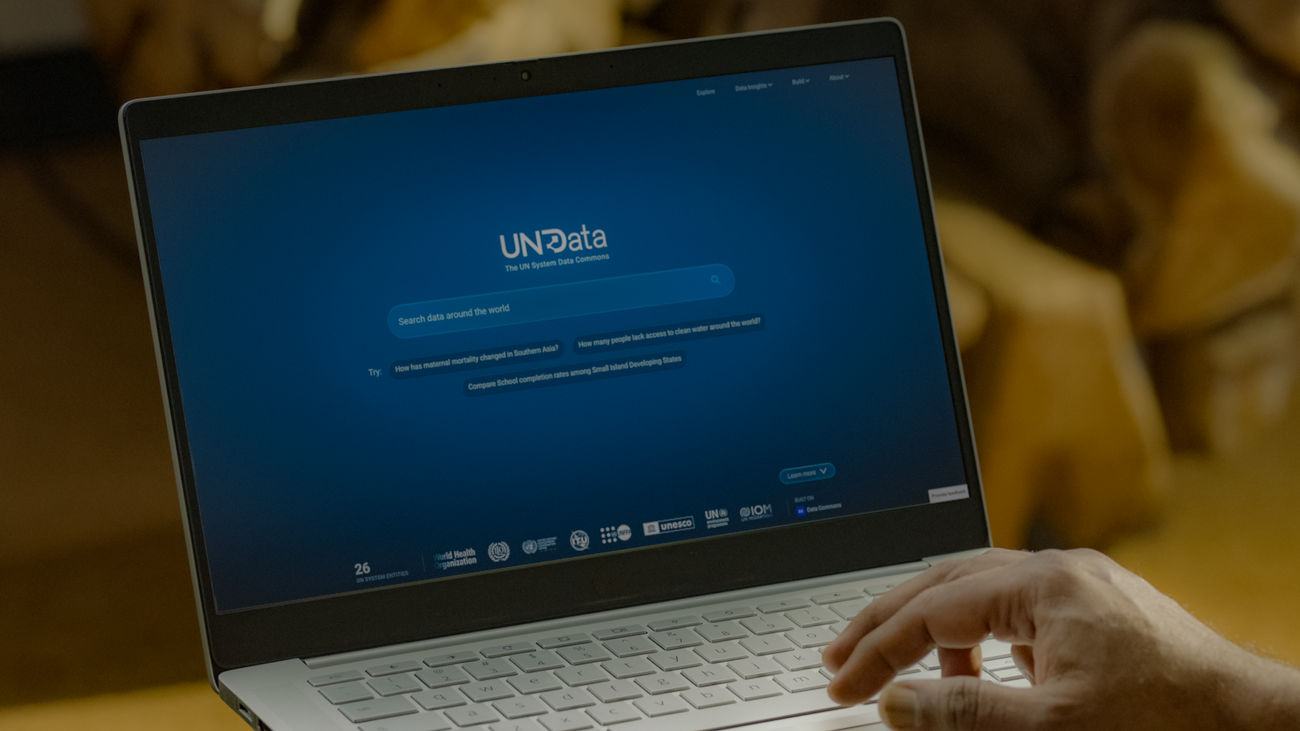
For instance, a journalist investigating environmental trends can type, "How has forest cover changed in Southeast Asia compared to economic growth over the last decade?" The system then identifies the relevant datasets, performs the necessary cross-referencing, and generates interactive visualizations, such as charts or maps, in real-time. This democratization of data ensures that insights are no longer the exclusive domain of data scientists but are accessible to nonprofit program managers, local government officials, and educators worldwide.
Supporting Evidence-Based Policy: Case Studies in Impact
The platform is already demonstrating its utility through curated insights and reports. A notable example is the integration of UNICEF data to explore strategies for reducing child poverty. By utilizing the "Explore" tab, users can filter data by themes like health, education, or location, gaining immediate access to what works in different socioeconomic contexts.
The UN System Data Commons also includes a dedicated blog section that translates complex statistical trends into readable reports. These reports are more than just summaries; they are evidence-based tools designed to inform advocacy and policy design. By providing a clear view of where progress is stalling and where interventions are succeeding, the platform enables a more surgical approach to resource allocation and international aid.
The Role of Agentic AI in Modern Research
The launch of the UN System Data Commons marks a shift toward "agentic" research assistants. In this model, the AI does more than just retrieve information; it performs complex workflows. For example, a policy analyst can prompt the AI assistant to "Create a draft report on the correlation between urban air quality and respiratory health across African capital cities, including relevant charts."
The AI agent autonomously navigates the UN System Data Commons, identifies the specific indicators for air quality (such as PM2.5 levels) and health outcomes, connects them across different domains, and packages the findings into a structured format. While the platform emphasizes that human review of underlying sources remains essential before citing critical figures, the reduction in manual labor is profound. This capability allows human experts to spend more time on high-level strategy and ethical considerations rather than data entry.
Future Roadmap and Global Implications
The current launch is only the first phase of a broader rollout. The UN system has committed to a rigorous timeline for expansion, with the goal of including 80% of all UN system statistical datasets by the year 2027. This will involve the ongoing onboarding of various UN entities, ensuring that the knowledge graph becomes increasingly comprehensive over time.
The implications of this project extend beyond mere convenience. In the context of the UN’s "Summit of the Future" and the "Global Digital Compact," the UN System Data Commons represents a tangible commitment to digital public infrastructure. By providing a common, trusted data foundation, the UN is helping to level the playing field between nations with high digital capacity and those currently facing a "data divide."
Furthermore, the platform sets a new standard for transparency. Because every dataset is validated by UN system statisticians and technical experts, the platform serves as a bulwark against misinformation. In an era where data can be easily manipulated or misinterpreted, having a single, authoritative source that is both easy to use and technically robust is a vital asset for global stability.
Conclusion
The UN System Data Commons is a landmark achievement in the intersection of technology and diplomacy. By leveraging Google’s Data Commons technology and the UN Foundation’s strategic oversight, the United Nations has created a tool that transforms raw numbers into actionable intelligence. As the platform grows toward its 2027 goal, it will likely become an indispensable resource for anyone dedicated to solving the world’s most complex challenges. By making global data easier to explore, the UN is not just sharing information; it is empowering a global community to make more informed, evidence-based decisions for the future of the planet. For those interested in exploring the current datasets, the platform is now live and accessible at data.un.org.
