

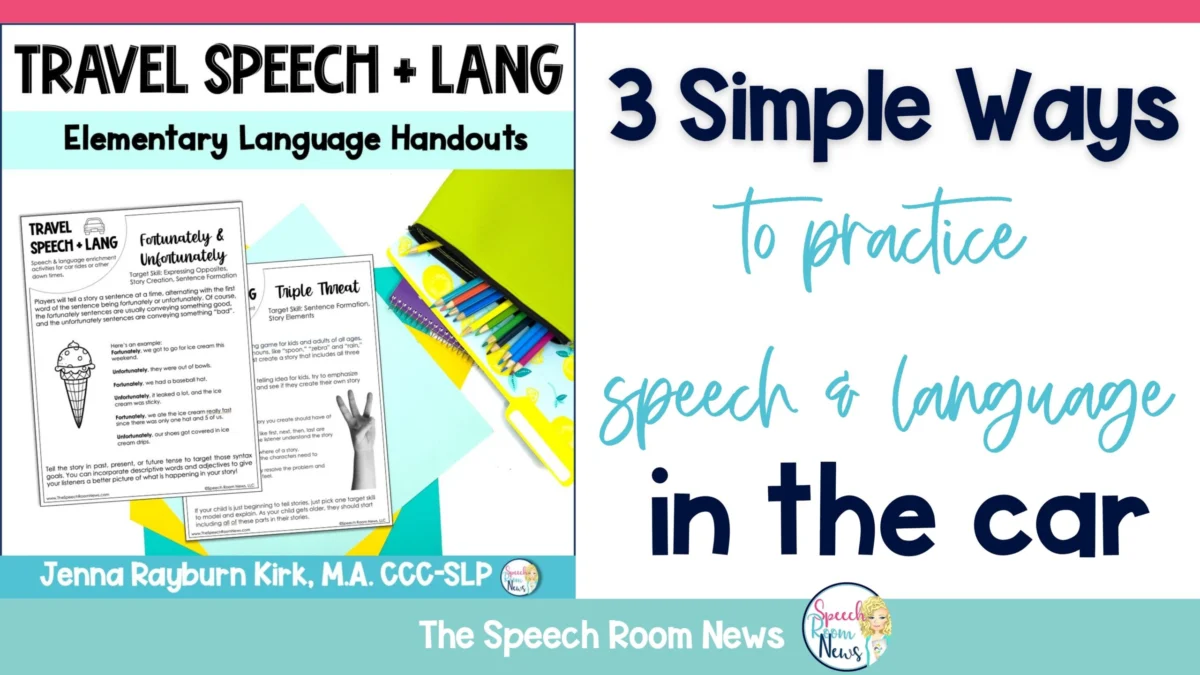
Amidst the escalating demands of modern family life, parents frequently grapple with the challenge of finding dedicated time to support their children’s speech and language development. However, a growing consensus among pediatric development experts and speech-language pathologists (SLPs) highlights the often-overlooked potential of the daily car commute. This routine journey, typically viewed as mere transit, is increasingly being recognized as a unique, distraction-reduced environment ripe for fostering crucial communication skills. By transforming mundane travel into intentional learning opportunities, parents can significantly augment professional therapy efforts and integrate developmental practice seamlessly into their busy schedules, thereby maximizing valuable time and enhancing a child’s overall linguistic proficiency.
The Critical Role of Early Intervention and Consistent Practice
Speech and language delays represent a significant concern for many families and educators. According to data from the Centers for Disease Control and Prevention (CDC), approximately 7-8% of children aged 3-17 years in the United States have a speech, language, voice, or swallowing disorder. Early intervention is paramount, as foundational communication skills are intricately linked to cognitive development, academic success, and social-emotional well-being. Children who receive timely support are more likely to overcome these challenges, reducing the risk of associated learning difficulties and behavioral issues. Consistent practice, often referred to as "carryover" in a therapeutic context, is a cornerstone of effective intervention. While formal therapy sessions with an SLP provide targeted instruction, the generalization of these skills into everyday contexts is where true progress is solidified. Without consistent application in natural environments, the gains made in therapy can be slow to translate into functional communication.
Challenges Faced by Modern Families in Supporting Development
Contemporary family dynamics are characterized by packed schedules, dual-income households, and a myriad of extracurricular activities. Parents often report feeling overwhelmed by the sheer volume of responsibilities, making it difficult to allocate specific, uninterrupted time for structured developmental exercises at home. A 2022 survey by the American Psychological Association (APA) indicated that parental stress levels remain high, with concerns about children’s development being a significant contributor. The pressure to balance work, household chores, and childcare often leaves little room for additional therapeutic activities, leading to feelings of guilt and inadequacy. In many instances, the default solution for keeping children occupied during commutes or waiting times has become screen-based entertainment, which, while offering momentary peace, can inadvertently limit opportunities for interactive communication and language exposure. This prevailing lifestyle underscores the urgent need for practical, easily implementable strategies that do not add another layer of burden to already stretched parents.
The Unsung Potential of the Car Commute as a Learning Environment
The vehicle interior, contrary to popular belief, possesses several unique attributes that render it an ideal, albeit unconventional, setting for speech and language practice. Foremost among these is the inherent reduction of external distractions. Unlike a bustling home environment filled with toys, television, and other family members, the car often provides a relatively contained and focused space. Children, particularly those prone to distraction, can benefit from this enclosed setting, which encourages attention to auditory input and verbal interaction.
Furthermore, the car commute offers a "captive audience" situation, where both parent and child are present and typically free from other immediate tasks. This shared, consistent time slot can be leveraged to establish a predictable routine for language play. The dynamic scenery outside the window—road signs, passing vehicles, buildings, and natural landscapes—provides a natural, ever-changing context for vocabulary expansion, descriptive language practice, and conversational prompts. Instead of passively observing, children can actively engage with their surroundings through guided discussion. From a psychological perspective, transforming potentially "boring" travel time into an engaging game can shift a child’s perception of the commute from a chore to an enjoyable learning experience, fostering a positive association with language practice. This deliberate shift from passive consumption (e.g., screens) to active participation is crucial for developmental growth.

Expert Perspectives: Speech-Language Pathologists Weigh In
Speech-Language Pathologists consistently advocate for integrating therapy goals into daily routines to promote generalization of skills. Dr. Eleanor Vance, a prominent SLP specializing in pediatric communication disorders, states, "The most effective therapy extends beyond the clinic walls. Parents are a child’s primary communication partners, and their consistent engagement in naturalistic environments is critical for fostering lasting language development." She emphasizes that while structured sessions are vital, the true measure of therapeutic success lies in a child’s ability to apply new skills spontaneously in varied contexts.
Another leading expert, Dr. Marcus Thorne, highlights the importance of consistency. "Short, frequent bursts of practice are often more impactful than infrequent, lengthy sessions," he notes. "The car commute, whether it’s five minutes to school or twenty minutes to the grocery store, offers a perfect micro-opportunity for these consistent engagements. It’s about making every moment count, subtly reinforcing skills without the child even realizing they’re ‘doing therapy.’" This approach aligns with modern pedagogical theories that stress play-based learning and embedding educational objectives within enjoyable, low-pressure activities.

Practical Strategies for In-Car Speech and Language Development
Leveraging the unique environment of the car, parents can implement several simple yet highly effective games designed to target specific speech and language goals. These activities not only make travel time more engaging but also provide a consistent platform for developmental practice.
-
Enhancing Question Formation and Vocabulary: The "Grocery Game" Model
The "Grocery Game," or similar guessing games like "I Spy," is an excellent tool for developing sophisticated question formation and expanding vocabulary. The premise involves one player thinking of an item (e.g., from a grocery store, or a general category like animals or objects) and the others asking "yes" or "no" questions to deduce what it is.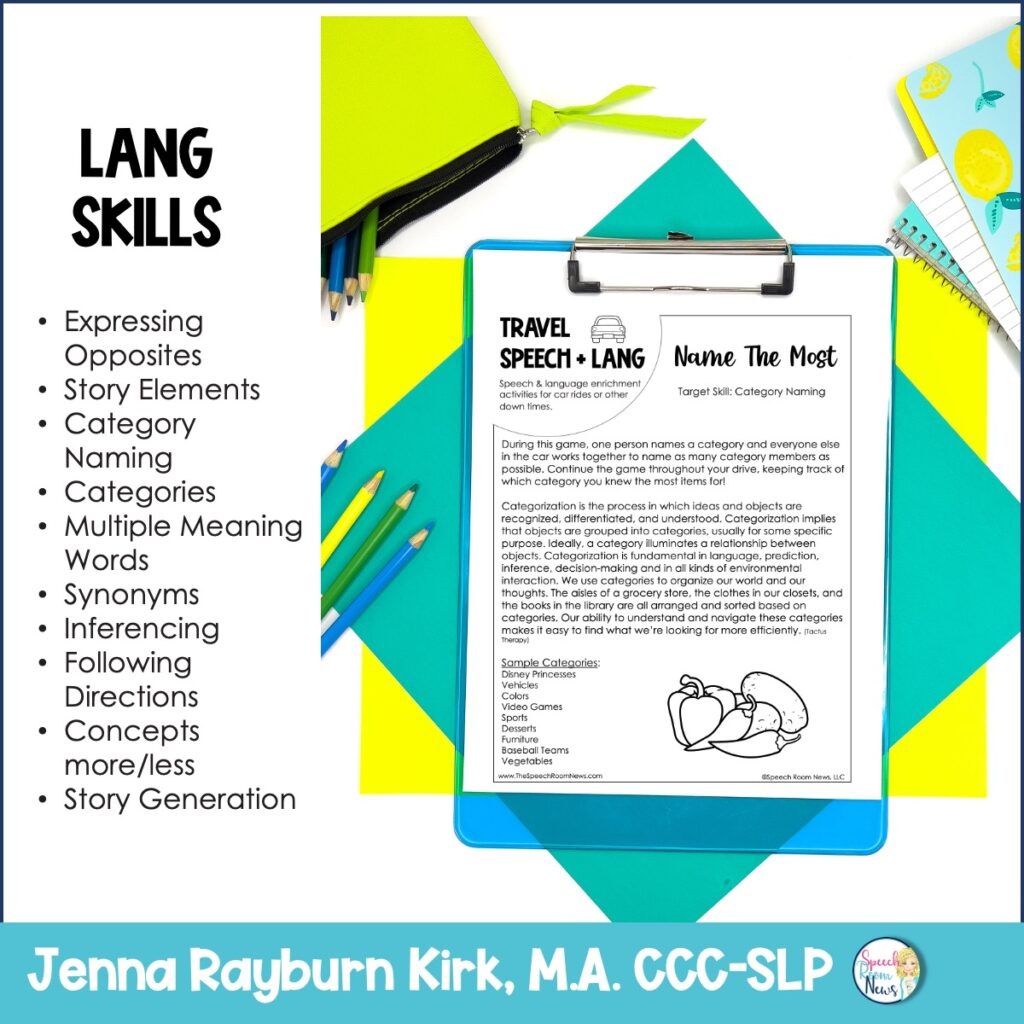
- Grammar Target: This game primarily targets question formation, focusing on the correct word order and use of auxiliary verbs (e.g., "Is it…?", "Does it…?", "Can you…?"). Children learn to structure interrogative sentences correctly, moving beyond simple declarative statements.
- Vocabulary Expansion: As children ask questions, they naturally explore semantic categories (e.g., "Is it a fruit?"), functions (e.g., "Do you eat it?"), actions (e.g., "Do you bite it?"), and associations (e.g., "Does it go with milk?"). This broadens their understanding of word meanings and relationships.
- Cognitive Benefits: The game also sharpens critical thinking and deductive reasoning skills as children formulate questions strategically to narrow down possibilities. Parents can model more complex questions and prompt children to think about different attributes of objects. For example, instead of just "Is it big?", encourage "Is it larger than a breadbox?" to introduce comparative language.
-
Articulation Practice Through Auditory Bombardment: "Red Light Race" Concept
For children working on specific speech sounds (articulation), the "Red Light Race" provides a dynamic and engaging practice method. The game involves taking turns naming as many items as possible within a chosen category, all of which must contain a specific target sound, each time the car stops at a red light.- Articulation Goal: This activity directly targets the production of specific phonemes (e.g., /s/, /r/, /k/) in various word positions. The rapid-fire naming encourages repetition, which is crucial for motor planning in speech production.
- Auditory Bombardment: A key therapeutic technique, auditory bombardment, is naturally integrated. The adult’s modeling of words containing the target sound repeatedly helps the child’s auditory system become more attuned to that sound, improving their ability to perceive and ultimately produce it correctly. For instance, if the target sound is /s/, categories like "things you see" could yield "sun," "street," "sign," "school," reinforcing the sound’s presence.
- Category Examples: Categories can be broad ("animals," "foods," "things you wear") or specific ("words starting with /s/," "words ending with /k/"). The adult should clearly enunciate the target sound in each word. Counting the named items adds a fun, competitive element and motivates children to produce more words.
-
Fostering Narrative Skills and Sentence Structure: "Triple Threat" Approach
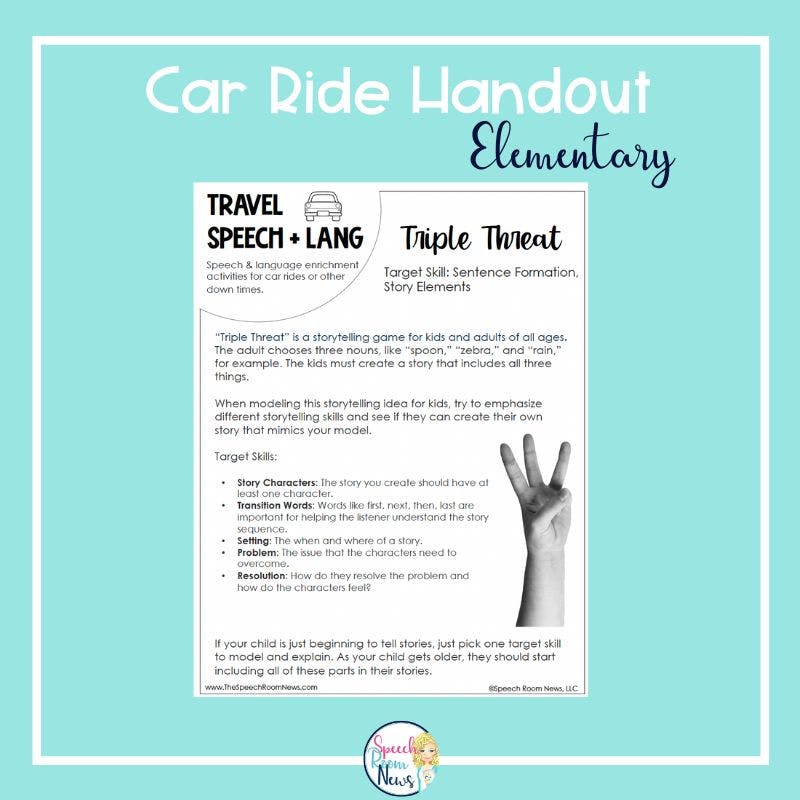
Developing narrative skills is fundamental for academic success and effective social communication. The "Triple Threat" game encourages children to construct stories using a set of unrelated nouns, promoting creativity, sentence complexity, and coherent storytelling.- Sentence Formation and Complexity: The challenge of weaving three disparate words (e.g., "dog," "milk," "bike") into a single narrative encourages the creation of more complex sentences, incorporating conjunctions, descriptive adjectives, and adverbs.
- Story Retell and Sequencing: Children learn to organize their thoughts into a logical sequence, developing a beginning, middle, and end for their story. This practice enhances their ability to recount events, follow plots, and understand narrative structure—skills essential for reading comprehension and social storytelling.
- Creativity and Imagination: The arbitrary nature of the chosen nouns stimulates imaginative thinking and problem-solving, as children devise creative links between seemingly unconnected items. This also helps develop flexible thinking and the ability to adapt to new information. Parents can prompt with questions like "What happened next?" or "How did the dog get the milk?" to guide the narrative.
Broader Implications and Long-Term Benefits
The consistent integration of speech and language practice into daily routines like car commutes yields far-reaching benefits that extend beyond immediate communication improvements. Academically, enhanced language skills directly correlate with better reading comprehension, stronger writing abilities, and overall improved academic performance. Socially, children with robust communication skills are better equipped to express their needs, engage in peer interactions, and build meaningful relationships, thereby boosting their self-esteem and reducing potential social isolation.
Furthermore, engaging in these activities strengthens the parent-child bond, transforming potentially stressful commutes into moments of shared enjoyment and connection. For children experiencing communication frustration, consistent, low-pressure practice can lead to increased confidence and a reduction in behavioral challenges often stemming from an inability to express themselves effectively. These small, consistent efforts collectively contribute to a child’s holistic development, fostering resilience and a positive attitude towards learning.
The Role of Resources and Support Systems
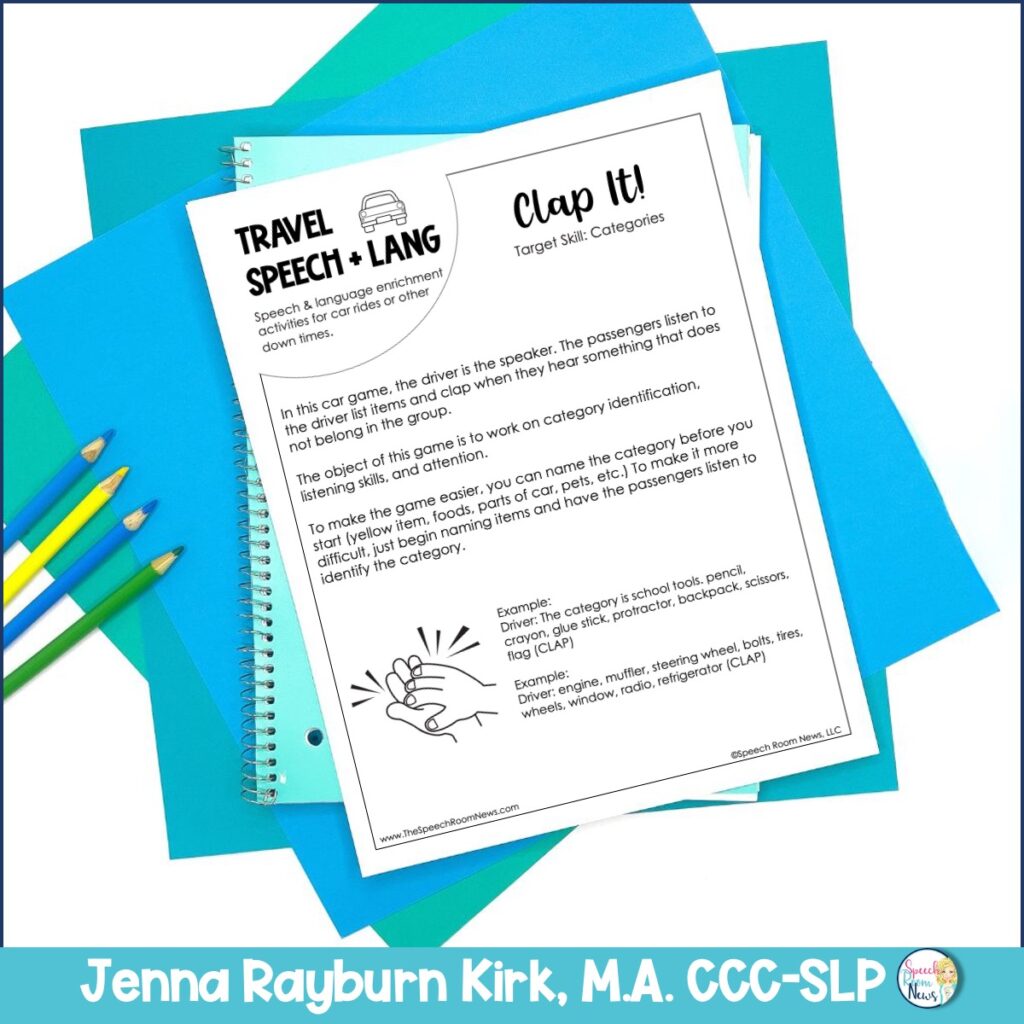
Recognizing the need for practical support, many SLPs and educational platforms are developing resources tailored for parents. These often take the form of handouts, online guides, or structured activity bundles that provide clear instructions and examples for integrating language practice into everyday scenarios, including car rides. Such resources empower parents by giving them concrete, actionable strategies, ensuring that the critical "carryover" component of therapy is effectively managed at home. The availability of these curated materials demonstrates a growing understanding within the therapeutic community of the necessity to support families holistically, bridging the gap between clinical intervention and daily life.
In conclusion, the daily car commute, often perceived as an unproductive segment of the day, presents an invaluable and underutilized opportunity for fostering speech and language development in children. By embracing intentionality and leveraging the unique attributes of this environment, parents can implement engaging, therapeutic activities that not only enhance communication skills but also strengthen family bonds and transform routine travel into a powerful learning experience. As experts continue to advocate for integrating developmental practice into natural contexts, the "car classroom" stands out as a practical, accessible, and highly effective solution for supporting children on their journey to confident and competent communication.
