

In an era increasingly defined by digital interactions, a burgeoning movement toward "touching grass"—a colloquialism for re-engaging with the physical world—has sparked a significant resurgence in home-based social gatherings. Google Search, traditionally viewed as a portal for information retrieval, has undergone a fundamental transformation into a generative planning assistant. By leveraging sophisticated artificial intelligence models, including the integration of "Nano Banana" and specialized "AI Modes," the platform now offers a comprehensive suite of tools designed to mitigate the logistical friction associated with hosting. This evolution reflects a broader shift in the tech industry, where search engines are transitioning from providing lists of links to delivering actionable, creative solutions for real-world scenarios.
The Evolution of Digital Event Planning
The shift toward AI-integrated hosting tools comes at a time when consumer behavior is pivoting back toward intimate, curated experiences. According to recent search trend data released by Google, queries related to "dinner party themes," "tablescape inspiration," and "at-home hosting tips" have seen a marked increase over the past 24 months. This trend is often attributed to a post-pandemic desire for meaningful, in-person connection, coupled with a rising interest in "slow living."
To meet this demand, Google has introduced several generative AI features that assist users in navigating the complexities of event coordination. These tools are not merely organizational; they are creative, allowing hosts to visualize aesthetics, curate menus, and manage atmospheric elements like music through a centralized interface. The integration of Gemini-class models into the search experience allows for a multimodal approach, where text, images, and app-connectivity converge to streamline the hosting process.
1. Visualizing Creative Tablescapes with Generative AI
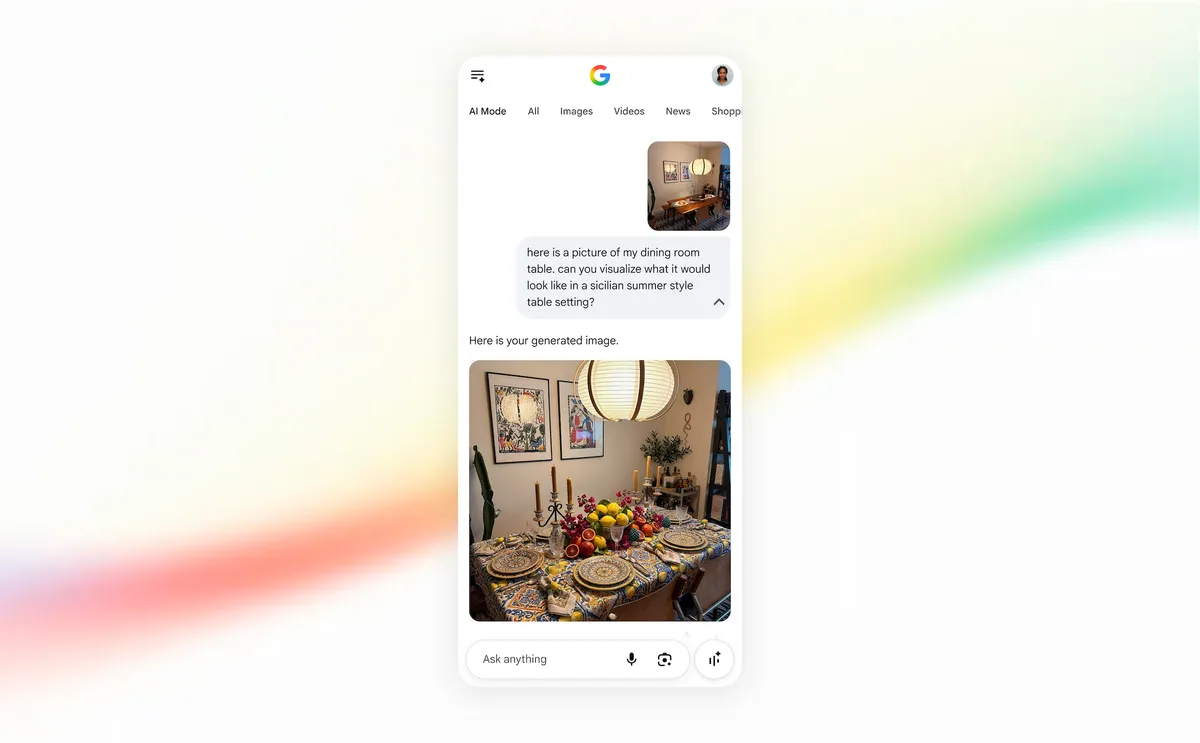
One of the most significant hurdles for hosts is the transition from a conceptual theme to a physical reality. Through the use of Nano Banana—a specialized AI model optimized for specific creative tasks—Google Search now allows users to generate high-fidelity visualizations of table settings. By inputting specific prompts such as "bohemian summer garden party" or "minimalist mid-century modern dinner," users can view AI-generated images that serve as a blueprint for their own decorations.
This feature represents a departure from traditional image searches. Rather than scrolling through existing photos that may not match the user’s specific inventory or space, the AI mode generates bespoke ideas. It suggests color palettes, centerpiece arrangements, and linen choices that are tailored to the user’s described vibe. This capability democratizes interior design, providing professional-level aesthetic guidance to casual hosts.
2. Streamlining Menu Discovery and Recipe Attribution
The centerpiece of any dinner party is the culinary experience. However, the process of finding recipes that are both impressive and achievable often involves navigating cluttered websites and disparate reviews. Google’s AI Mode has introduced a new visual treatment for recipe searches that prioritizes clarity and creator attribution.
When a user searches for a menu item, the AI generates a consolidated response that highlights prominent links from recipe creators. This interface includes essential metadata such as the creator’s name, star ratings, prep time, and the number of ingredients required. By aggregating this data at the top of the search results, Google reduces the "cognitive load" on the host. Furthermore, this update addresses a long-standing concern within the food blogging community regarding traffic; by placing creator links prominently within the AI response, Google aims to maintain a symbiotic relationship between AI-generated summaries and the original content creators who provide the underlying data.
3. Intelligent Drink Pairings and Flavor Profiles
The sophistication of a dinner party is often elevated by the quality of beverage pairings. Traditionally, this required a level of sommelier-level knowledge or extensive research. Google Search now utilizes its Large Language Models (LLMs) to provide nuanced pairing recommendations based on complex flavor profiles.
In practice, a host can input their entire menu into the search bar and ask for specific suggestions. For instance, a prompt regarding "drink pairings for miso-glazed salmon followed by a key lime pie" will yield a response that explains the logic behind each choice. The AI might suggest a high-acidity Riesling to cut through the fattiness of the salmon or a specific craft ginger beer for a non-alcoholic alternative that complements the umami of the miso. This level of detail provides hosts with the confidence to serve pairings that are backed by culinary logic, enhancing the overall guest experience.

4. Ecosystem Integration: From Search to Sound
The atmosphere of an event is heavily dependent on its soundtrack. Google has addressed this by enabling "Connected Apps" within the search interface. This allows the AI to bridge the gap between planning and execution. Users can prompt Search to "curate a playlist for a 1920s jazz-themed dinner party" or "create a chill lo-fi mix for a backyard BBQ."
Because the Search engine is integrated with YouTube Music and other ecosystem services, the AI can instantly generate a playlist and save it to the user’s library. This eliminates the manual task of searching for individual tracks or pre-made playlists that might not perfectly fit the duration or mood of the party. This cross-app functionality signifies a move toward a more "fluid" digital experience, where the search engine acts as a remote control for the user’s wider digital life.
5. Custom Graphic Design for Printed Menus
The final touch in "ultimate" hosting is often the inclusion of physical artifacts, such as printed menus. This task usually requires third-party design software or manual template editing. However, Google’s integration of Nano Banana allows users to design professional-looking menus directly through a search prompt.
By describing the courses—such as a caprese salad, chicken piccata, and tiramisu—the user can ask the AI to "visualize a menu that can be printed for the table." The AI then generates a design that reflects the theme of the meal. This feature is particularly useful for hosts looking to add a layer of formality to their event without the need for graphic design skills. The ability to move from a text-based list of food to a visually coherent, printable document in seconds is a testament to the efficiency gains offered by generative AI.
Chronology of AI Integration in Search
The path to these features has been a multi-year journey for Google.
- 2021-2022: Google began emphasizing "Multitask Unified Model" (MUM) technology to better understand complex queries.
- Early 2023: The introduction of the Search Generative Experience (SGE) in Search Labs allowed for the first public testing of AI-summarized results.
- Late 2023 – 2024: The rollout of Gemini and the "Nano" series of models enabled more specialized, on-device, and high-speed creative tasks like image generation and app connectivity.
- Present: These features have moved from experimental "Labs" phases into the mainstream search interface, signaling Google’s confidence in the accuracy and utility of AI for lifestyle management.
Market Context and Supporting Data
The shift toward AI-assisted hosting is supported by broader economic and social data. A report by Eventbrite indicated that "dinner parties" and "home-based social clubs" saw a 30% year-over-year increase in mentions across social platforms in 2023. Additionally, market research from McKinsey suggests that consumers are increasingly looking for "augmented experiences" where technology simplifies the "boring" parts of life (like grocery listing and logistics) to make room for "meaningful" parts (like socializing).
Furthermore, the "Creator Economy" continues to be a driving force in this space. Data suggests that 70% of home cooks look at three or more sources before deciding on a recipe. Google’s new AI treatment, which aggregates these sources, directly responds to this multi-source research behavior.
Analysis of Implications: The Future of the "AI Concierge"
The implications of these developments extend beyond the dining room. What Google is building is essentially a "digital concierge"—a system that understands not just the what of a user’s request, but the context and the intent.
For the tech industry, this marks a pivot away from the "attention economy," where the goal was to keep users on a page for as long as possible. Instead, these tools focus on "utility," aiming to get the user off their phone and into their real-world event as quickly and efficiently as possible. However, this transition also raises questions about the future of the open web. As AI summarizes more information, the incentive for creators to produce original content depends on whether these AI tools continue to drive meaningful traffic back to the source. Google’s inclusion of prominent creator links in its new recipe interface is a tactical move to address this tension.
Conclusion: Technology as a Tool for Human Connection
Ultimately, the integration of AI into dinner party planning serves a singular purpose: the reduction of "hosting anxiety." By automating the visualization of decor, the curation of music, and the logistical nightmare of menu planning, Google Search is positioning itself as an essential tool for modern social life. As these AI models continue to evolve, the line between a search engine and a personal assistant will continue to blur, making the "ultimate dinner party" more accessible to the average person. The focus remains on the guest experience, but the engine driving that experience is increasingly powered by sophisticated, generative intelligence.
