

The human face is a remarkably expressive canvas, capable of conveying a vast spectrum of emotions. However, the interpretation of these facial cues is far from a straightforward process. Research indicates that while a facial expression in isolation still carries some emotional information, its meaning and accuracy are significantly amplified when viewed within its broader social context. This nuanced understanding is crucial for effective interpersonal communication, trust-building, and the detection of deception.
The Isolated Expression: A Limited Window
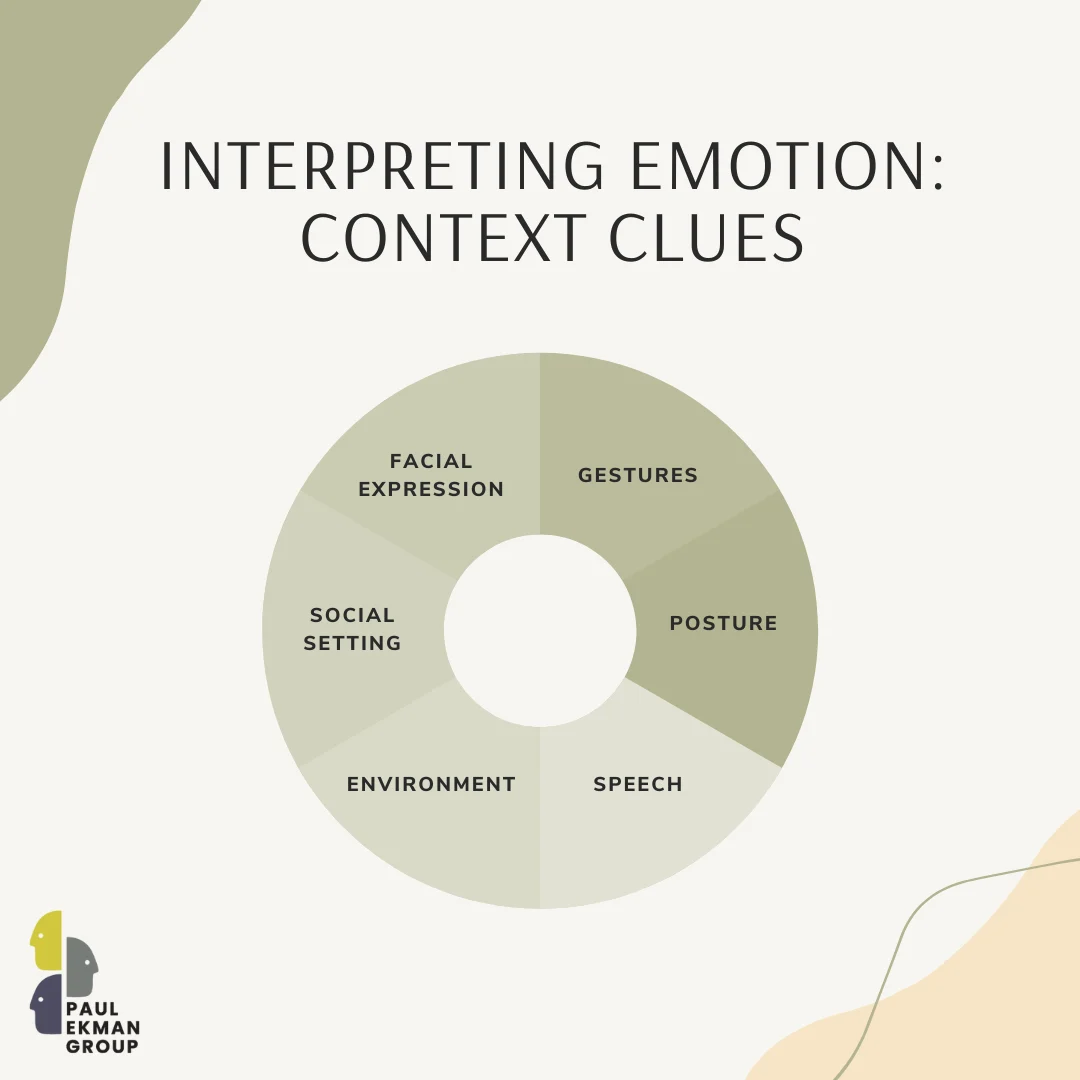
When a facial expression is presented devoid of accompanying signals—such as speech, gestures, posture, or environmental details—its communicative power is diminished. While a smile might suggest happiness or a frown sadness, the precise nature and intensity of the emotion can remain ambiguous. This limitation is particularly pronounced when the observer has no prior relationship with the individual, no shared history, or no current understanding of the situation. In such scenarios, the facial cues alone cannot be deciphered with the same degree of accuracy as when embedded within a rich social tapestry.
Consider a hypothetical experiment where participants are shown photographs of faces displaying distinct emotions. Studies utilizing such methodologies, often employing large datasets of carefully curated images, have consistently demonstrated that while general emotional valence (positive or negative) can often be discerned, the subtle nuances and specific emotional states are more difficult to pinpoint. For instance, differentiating between mild annoyance and deep disappointment based solely on a static image can be challenging. The absence of vocal tone, body language, and situational context leaves significant room for misinterpretation. This is akin to reading a single word from a complex sentence; the word has meaning, but its true significance is unlocked by the surrounding words.
The Ubiquitous Nature of Social Context
In the everyday flow of human interaction, completely isolated facial expressions are a rarity. Even a fleeting encounter with a stranger on the street offers a wealth of contextual information. Their attire, their gait, the time of day, the location, and general knowledge about the types of people typically found in that environment all contribute to an observer’s interpretation of the stranger’s emotional state. These contextual elements act as a silent, but powerful, interpreter of facial signals. For example, seeing someone smile while walking briskly in business attire in a financial district might suggest confidence and purpose, whereas the same smile on someone dressed in casual clothing in a park could indicate a more relaxed or joyful mood.
The act of deliberately stripping a facial expression of all contextual cues forces observers into an unusual and often unreliable position. It removes the very communication signals—the subtle shifts in posture, the unconscious gestures, the intonation of voice, the surrounding environment—that humans have evolved to rely upon for understanding intent, emotional states, and authenticity. This deliberate isolation, while useful for specific research purposes, highlights how our natural communication relies on a multi-modal approach.
The Intrinsic Meaning of Facial Expressions
Despite the critical role of context, facial expressions of emotion are not entirely devoid of inherent meaning. They possess an intrinsic capacity to convey information across various emotional domains, albeit imperfectly. Research pioneered by figures like Dr. Paul Ekman has identified a set of universal facial expressions associated with basic emotions such as happiness, sadness, anger, fear, surprise, and disgust. These expressions are believed to be biologically ingrained and observable across cultures, suggesting a fundamental human capacity for emotional signaling through the face.
However, the accuracy of the information conveyed by these expressions is a separate and complex issue. A significant body of research, including extensive work by Dr. Ekman, has demonstrated that individuals are capable of deliberately manipulating their facial expressions to deceive others. This ability to "lie with their faces" is a critical aspect of human social interaction, enabling individuals to mask true feelings, present a desired persona, or avoid causing unnecessary distress.
The Power of Microexpressions and Subtle Expressions
The challenge in detecting deception lies in the often-brief and involuntary nature of true emotional leakage. These fleeting, unconscious facial expressions, known as microexpressions, can flash across a person’s face for as little as one-fifteenth of a second. They represent a momentary, genuine emotional response that can occur when a person is trying to conceal a particular feeling. While individuals may consciously control their more obvious facial displays, microexpressions can betray underlying emotions or attempts at deception.
For example, a person attempting to feign happiness might display a broad, deliberate smile. However, if they are actually experiencing sadness, a microexpression of fleeting sorrow or a downturn of the lips might briefly appear before being masked by the feigned smile. The ability to recognize and interpret these microexpressions requires specialized training and keen observational skills. Research in this area has shown that individuals who undergo training in microexpression recognition exhibit a significantly higher accuracy rate in detecting deception compared to untrained individuals.
Subtle expressions, which are less intense and longer-lasting than microexpressions, also play a crucial role in emotional communication. These can be faint smiles, slight eyebrow movements, or subtle shifts in the mouth that convey nuanced emotional states. While not as dramatic as universal expressions, they provide valuable insights into a person’s ongoing emotional experience.
Enhancing Emotional Intelligence and Interpersonal Skills
Understanding the interplay between facial expressions and context is fundamental to developing enhanced emotional intelligence and interpersonal skills. By learning to recognize both overt emotional displays and the more elusive microexpressions, individuals can gain a deeper understanding of others’ true feelings and intentions. This enhanced awareness can lead to more effective communication, stronger relationships, and improved conflict resolution.
The ability to accurately interpret facial signals, particularly those that are subtle or fleeting, can foster greater empathy and build trust. When individuals feel understood and that their emotions are being accurately perceived, it strengthens their sense of connection and rapport. Conversely, a failure to read emotional cues can lead to misunderstandings, damaged relationships, and a sense of alienation.
Furthermore, in professional settings, the ability to detect deception and understand true emotional states can be invaluable. This is particularly relevant in fields such as law enforcement, security, negotiation, and customer service, where assessing credibility and understanding underlying motivations are paramount. Training programs that focus on the science of facial expressions and microexpressions are increasingly being utilized to equip professionals with these critical skills.
A Deeper Dive into Research and Implications
The scientific study of facial expressions dates back to the work of Charles Darwin, who explored the universality of emotional expressions in his 1872 book "The Expression of the Emotions in Man and Animals." Modern research, building on Darwin’s foundations, has employed advanced techniques such as electromyography (EMG) to measure subtle muscle movements in the face, correlating these with reported emotional states and observable behaviors.
Studies have also investigated the role of cultural display rules, which dictate how and when emotions should be expressed. While basic emotional expressions may be universal, the intensity and frequency with which they are shown can vary significantly across cultures. This highlights that while the face can convey emotion, the social norms surrounding its display are equally important for accurate interpretation.
The implications of understanding facial expressions and context extend to various fields:
- Psychology and Psychiatry: Diagnosis and treatment of mental health conditions often rely on assessing emotional states. Accurate interpretation of facial cues can aid in identifying conditions like depression, anxiety, or personality disorders.
- Human-Computer Interaction: Designing more intuitive and responsive artificial intelligence systems requires them to understand and interpret human emotions, often through facial recognition technology.
- Education: Teachers can use facial cues to gauge student engagement and understanding, adapting their teaching methods accordingly.
- Marketing and Advertising: Understanding consumer emotional responses to products and advertisements is crucial for effective campaign design.
Conclusion: The Art and Science of Reading Faces
In essence, while a facial expression alone provides a glimpse into a person’s emotional landscape, it is the rich tapestry of social context that allows for a profound and accurate understanding. Our faces are complex communication tools, and their messages are most clearly deciphered when we consider the full spectrum of human interaction. The ongoing research into facial expressions, microexpressions, and the influence of context continues to illuminate the intricate ways in which we connect with, understand, and navigate the emotional world of ourselves and others. By honing our ability to observe and interpret these subtle signals, we enhance our capacity for empathy, build stronger relationships, and foster a more authentic and trustworthy society.
