

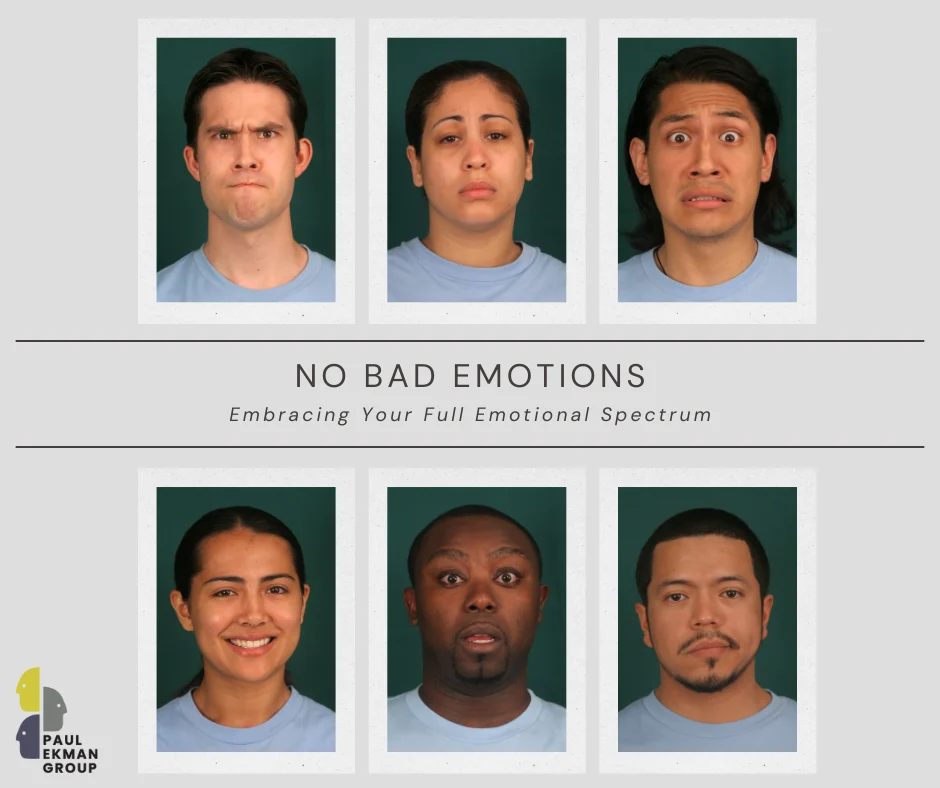
A pervasive societal tendency to categorize human emotions into a binary of "positive" and "negative" is fundamentally flawed and hinders our capacity for personal growth and well-being. This simplistic dichotomy, where desirable feelings are sought and undesirable ones are actively avoided, overlooks a critical truth: there are no inherently "bad" emotions. Each emotional experience, regardless of its perceived pleasantness or discomfort, serves as a vital conduit of information, offering indispensable insights into our internal states and external environments. Understanding this profound concept is crucial for cultivating robust emotional intelligence and a more resilient, fulfilling life.
The Evolutionary Imperative of All Emotions
From a biological and psychological standpoint, the entire spectrum of human emotions has evolved as an intricate survival mechanism, designed to facilitate not only our continued existence but also our flourishing. These are not random or arbitrary occurrences; rather, they are sophisticated biological and psychological signals, deeply embedded within our evolutionary history. They function as an early warning system, alerting us to critical shifts within our internal landscape and the world around us, thereby enabling adaptive responses.
Consider, for instance, the emotion of frustration. Far from being a purely negative experience, frustration can act as a potent catalyst for significant personal development and the initiation of positive change. It often arises when our progress towards a goal is impeded or when a deeply held value is being challenged. Instead of succumbing to the urge to suppress or dismiss this feeling, we can leverage it as an opportunity for introspection. By examining the root cause of frustration, we can ask critical questions: What specific objective is being obstructed? Which of my core beliefs or values is being threatened? This analytical approach transforms frustration from a source of distress into a powerful tool for problem-solving and personal evolution.
Similarly, loneliness, while undeniably a deeply uncomfortable and often painful sensation, serves a crucial evolutionary purpose. It acts as a profound signal, awakening a fundamental human need for connection. In its presence, we are prompted to reach out, to re-establish or strengthen existing relationships, and to invest more deeply in our social fabric. Loneliness, therefore, is not an indictment of personal inadequacy but a powerful call to action, urging us towards the social bonds that are essential for human well-being.
Unlocking Wisdom Through Emotional Exploration
When we arbitrarily label certain emotions as "bad," we inadvertently erect barriers to learning and self-discovery. This avoidance strategy not only diminishes our capacity to glean valuable insights from our emotional experiences but also hinders the development of crucial emotional resilience. Conversely, by committing to an active investigation of our emotional patterns – including the specific triggers that precipitate them and our subsequent reactions – we gain invaluable clarity. This process allows us to move beyond simply identifying what we feel to understanding the underlying "why" and, critically, to develop the capacity for making wise, deliberate responses.
It is, of course, entirely natural to gravitate towards and prefer emotions that are conventionally perceived as "positive." States such as contentment, gratitude, and awe contribute significantly to our sense of emotional well-being and foster a feeling of connection. These enjoyable emotional states serve to reinforce our sense of balance and happiness. However, it is a paradox of human experience that even these cherished emotions would likely lose much of their resonance and meaning in the absence of their emotional counterparts. The full, rich tapestry of a healthy emotional life is woven from its inherent variety. It is the stark contrast between profound sorrow and unbridled joy, paralyzing fear and overwhelming relief, or simmering anger and serene contentment that allows us to experience the true depth of human existence, cultivating empathy and building unwavering resilience.
The Science of Emotional Processing and Regulation
Research in affective neuroscience has illuminated the complex pathways through which emotions are processed and the underlying neural mechanisms involved. Studies utilizing fMRI (functional magnetic resonance imaging) have demonstrated that distinct emotional states engage specific brain regions. For example, the amygdala, a key component of the limbic system, plays a critical role in processing fear and other strong emotions, acting as an internal alarm system. The prefrontal cortex, on the other hand, is heavily involved in the cognitive appraisal and regulation of these emotional responses. When we attempt to suppress or ignore emotions, particularly those associated with threat or distress, it can lead to increased neural activity in regions associated with emotional processing, paradoxically intensifying the very feelings we seek to avoid. This phenomenon, known as the "rebound effect," underscores the inefficacy of suppression as a long-term strategy.
Furthermore, psychological research has consistently shown that emotional avoidance is linked to a higher prevalence of mental health challenges, including anxiety disorders and depression. A meta-analysis of over 150 studies, published in the journal Psychological Bulletin in 2015, found a significant correlation between emotion-avoidant coping styles and increased symptom severity across a range of mental health conditions. This suggests that actively engaging with, rather than fleeing from, one’s emotional experiences is a crucial component of psychological health.
The ability to recognize and effectively regulate emotions, rather than simply repressing or rejecting them, stands as one of the most empowering emotional regulation skills an individual can cultivate. This process involves a mindful approach, characterized by non-judgmental observation of one’s internal state, followed by a deliberate choice in how to respond. Through consistent practice and mindful attention, individuals can learn to manage their emotions in ways that are constructive rather than purely reactive. This means acknowledging the presence of an emotion, understanding its message, without allowing it to dictate actions or lead to impulsive behavior.
At its core, cultivating emotional awareness transcends the goal of perpetual happiness. It is about embracing the entirety of one’s emotional landscape, accepting all feelings, even those that are inherently unpleasant, and making conscious, mindful choices about how to respond to them. This nuanced approach to emotional processing is not merely a philosophical ideal but a scientifically supported pathway to greater psychological well-being and personal efficacy.
Historical and Cultural Perspectives on Emotion
The human experience of emotion is not monolithic and has been shaped by millennia of evolutionary development, as well as diverse cultural norms and historical contexts. Across different societies and eras, the expression and interpretation of emotions have varied significantly, highlighting the socially constructed nature of emotional display rules. For instance, in some Western cultures, particularly in the 20th century, there was a pronounced emphasis on stoicism and the suppression of overt emotional displays, especially among men. This cultural conditioning often reinforced the idea that certain emotions, like sadness or fear, were signs of weakness.
Conversely, other cultures have historically encouraged more open emotional expression. Anthropological studies have documented societies where collective grief rituals or celebratory outbursts are integral to social cohesion and cultural identity. The concept of "emotional labor," first introduced by sociologist Arlie Hochschild in her seminal 1983 book, "The Managed Heart," further illustrates how societal expectations can influence our emotional experiences and expressions, particularly in professional settings. This concept describes the process of managing feelings and expressions to fulfill the emotional requirements of a job, often involving the suppression of genuine feelings and the performance of required emotions.
The modern emphasis on "positive psychology" and "wellness" has, in some instances, inadvertently amplified the pressure to constantly feel good, potentially leading to a renewed, albeit more subtle, form of emotional avoidance. While the pursuit of happiness is a natural human endeavor, an overemphasis on positivity can create a sense of inadequacy or shame when individuals inevitably experience difficult emotions. This underscores the enduring importance of recognizing that the full spectrum of human emotion, with its inherent challenges and discomforts, is an essential part of a complete and authentic life.
Implications for Mental Health and Societal Well-being
The reframing of emotions from "good" or "bad" to valuable signals has profound implications for mental health interventions and societal well-being. Therapies such as Dialectical Behavior Therapy (DBT) and Acceptance and Commitment Therapy (ACT) are built upon the principle of accepting and working with difficult emotions rather than attempting to eliminate them. DBT, for instance, teaches skills in mindfulness, distress tolerance, emotion regulation, and interpersonal effectiveness, empowering individuals to navigate emotional crises and build a life worth living, even in the presence of significant emotional pain. ACT, on the other hand, encourages individuals to accept their thoughts and feelings without struggle and to commit to actions aligned with their core values, even when those actions are accompanied by uncomfortable emotions.
On a broader societal level, fostering an environment that encourages open and honest emotional expression, without judgment, can lead to stronger interpersonal relationships, reduced stigma surrounding mental health issues, and more compassionate communities. When individuals feel safe to express their full range of emotions, it can facilitate collective problem-solving and enhance social support networks. The ability to understand and empathize with the emotional experiences of others, a skill deeply rooted in recognizing the validity of all emotions, is fundamental to building a more inclusive and understanding society.
Expert Perspectives and Future Directions
Leading psychologists and researchers in the field of emotion science consistently advocate for a more integrated understanding of emotional experience. Dr. Lisa Feldman Barrett, a neuroscientist and author of "How Emotions Are Made: The Secret Life of the Brain," argues that emotions are not pre-programmed responses but are actively constructed by the brain based on internal states, past experiences, and environmental cues. This perspective further supports the idea that emotions are not fixed entities but dynamic processes that can be understood and influenced.
Looking ahead, the continued exploration of neurobiological mechanisms underlying emotional processing, coupled with advancements in digital mental health tools and accessible therapeutic interventions, holds significant promise. The goal is to equip individuals with the knowledge and skills to embrace their full emotional spectrum, not as a source of suffering, but as an invaluable guide to a richer, more meaningful, and resilient existence. The ultimate message is clear: there are no inherently bad emotions, only valuable signals awaiting comprehension and integration into a healthy, dynamic emotional life.
