

The Hellenic Republic continues to solidify its position as a premier global destination, with the Bank of Greece reporting that international arrivals exceeded 32 million in recent fiscal cycles. As tourism remains a cornerstone of the national economy, contributing approximately 20% to the Gross Domestic Product (GDP), the importance of linguistic integration between visitors and locals has moved to the forefront of cultural diplomacy. Proficiency in basic Greek phrases is no longer viewed merely as a courtesy but as a strategic tool for navigating the complexities of modern travel, fostering "Philoxenia"—the ancient Greek concept of hospitality to strangers—and ensuring personal safety in remote regions.
The Strategic Importance of Foundational Greetings
Linguistic experts categorize Modern Greek as a Category IV language on the Foreign Service Institute (FSI) scale, suggesting it requires approximately 1,100 class hours for an English speaker to reach professional proficiency. However, for the average traveler or business expatriate, the immediate utility lies in the mastery of high-frequency "survival" phrases. The distinction between formal and informal registers remains a critical component of Greek social etiquette.
The formal or plural greeting "Yassas" (Γεια σας) serves as the standard for addressing elders, professionals, or groups, while the informal "Ya sou" (Γεια σου) is reserved for peers and casual settings. These foundations are supplemented by time-specific salutations such as "Kalimera" (Καλημέρα) for the morning and "Kalispera" (Καλησπέρα) for the evening. Data from hospitality surveys indicate that service quality perceptions increase by nearly 15% when travelers attempt even rudimentary greetings in the local tongue, highlighting the psychological impact of linguistic effort on the "host-guest" dynamic.
Chronology of Linguistic Evolution and Modern Usage
The Greek language holds the distinction of having the longest documented history of any living Indo-European language, spanning at least 3,400 years of written records. From the Linear B script of the Mycenaean civilization to the Koine Greek of the Hellenistic period, the language has undergone significant transformations. The modern iteration, "Demotic Greek," became the official language of the state only in 1976, replacing the archaic "Katharevousa."
In the contemporary era, the integration of Greek into digital learning platforms has seen a marked increase. According to 2024 industry reports from language learning applications, interest in Modern Greek has grown by 12% year-over-year, driven largely by digital nomads and the "Golden Visa" residency programs. This surge has necessitated a standardized approach to teaching "Everyday Greek," focusing on practical interactions rather than complex grammatical structures.
Logistical Navigation and the Economics of Interaction
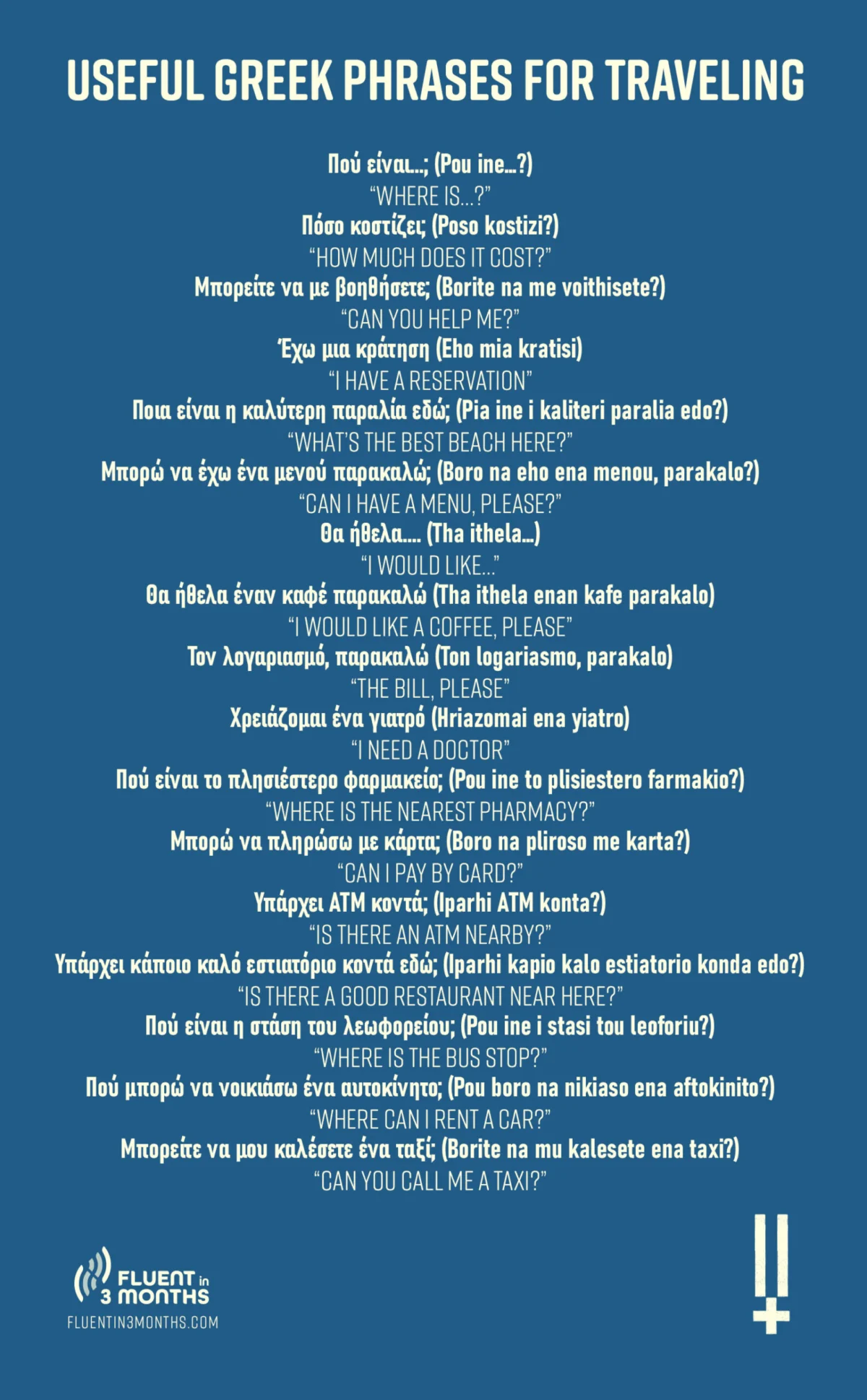
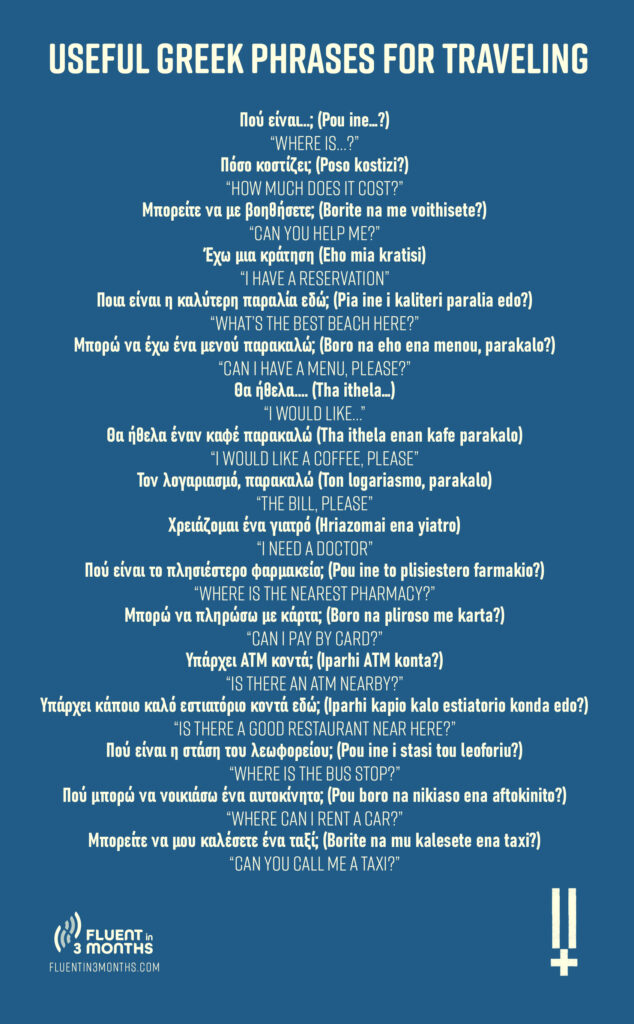
Beyond social pleasantries, functional Greek is essential for economic transactions and logistical navigation. In the bustling markets of Athens or the tavernas of the Cyclades, the ability to inquire about costs—"Poso kani?" (Πόσο κάνει;)—and request financial documentation—"Ton logariasmo, parakalo" (Τον λογαριασμό, παρακαλώ)—is vital.
While English is widely spoken in major urban centers and high-end resorts, rural Greece and the smaller islands maintain a stronger reliance on the native tongue. The phrase "Boro na pliroso me karta?" (Μπορώ να πληρώσω με κάρτα?), which translates to "Can I pay by card?", has become particularly relevant following the 2015 capital controls and the subsequent legislative push for electronic payments across the Eurozone.
Emergency Preparedness and Public Health Communication
A critical segment of language acquisition involves "Survival Greek," specifically for medical and safety emergencies. Public health officials emphasize that in moments of crisis, the ability to clearly state "Hriazomai ena yiatro" (Χρειάζομαι ένα γιατρό) or locate the nearest pharmacy ("Pou ine to plisiestero farmakio?") can significantly reduce response times.
Infrastructure navigation also plays a role in traveler safety. Phrases such as "Pou ine i stasi tou leoforiu?" (Where is the bus stop?) and "Borite na mu kalesete ena taxi?" (Can you call me a taxi?) provide a layer of independence for travelers navigating the Greek mainland’s extensive Intercity Bus (KTEL) network.
The Sociolinguistics of Self-Introduction and Rapport
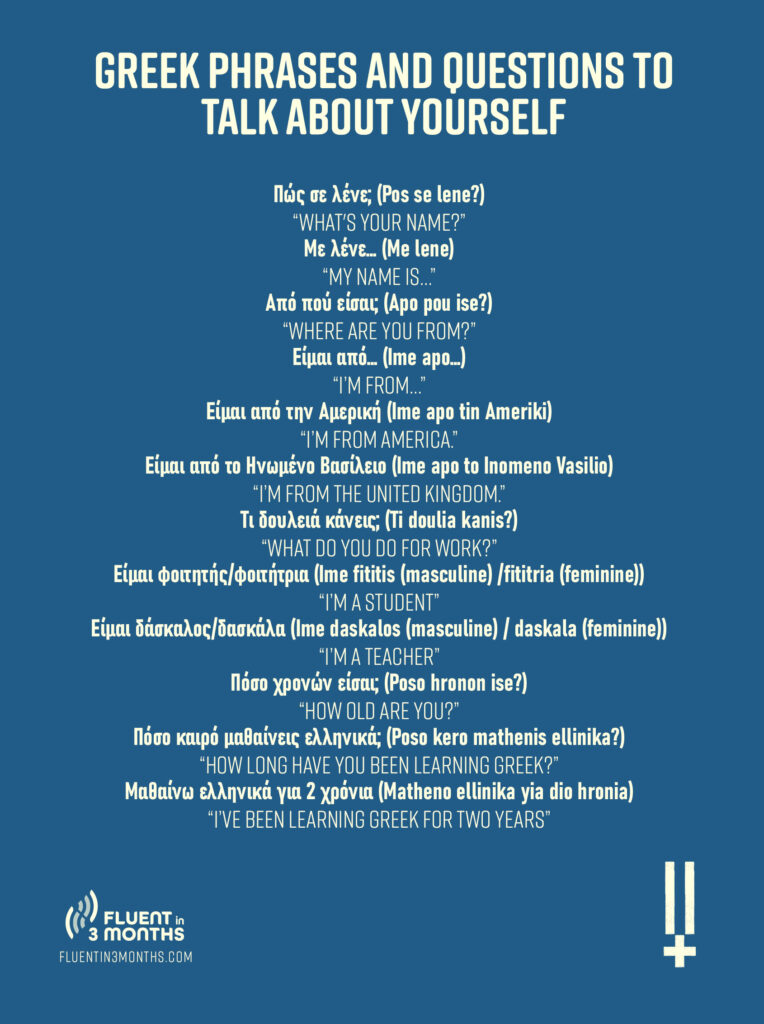
Building rapport in a foreign environment requires the ability to share personal context. The template for self-introduction in Greek—"Me lene…" (My name is…) and "Ime apo…" (I am from…)—serves as the entry point for deeper cultural exchange. In the context of the growing international student population in Greece, which saw a 20% increase in Erasmus+ participants last year, phrases regarding occupation and study are increasingly common.
The distinction between "Ime fititis" (masculine student) and "Ime fititria" (feminine student) introduces learners to the gendered nature of Greek nouns, a fundamental hurdle for native English speakers. Mastering these nuances reflects a commitment to cultural literacy that goes beyond superficial tourism.
Vernacular Evolution and the Nuances of Informal Slang
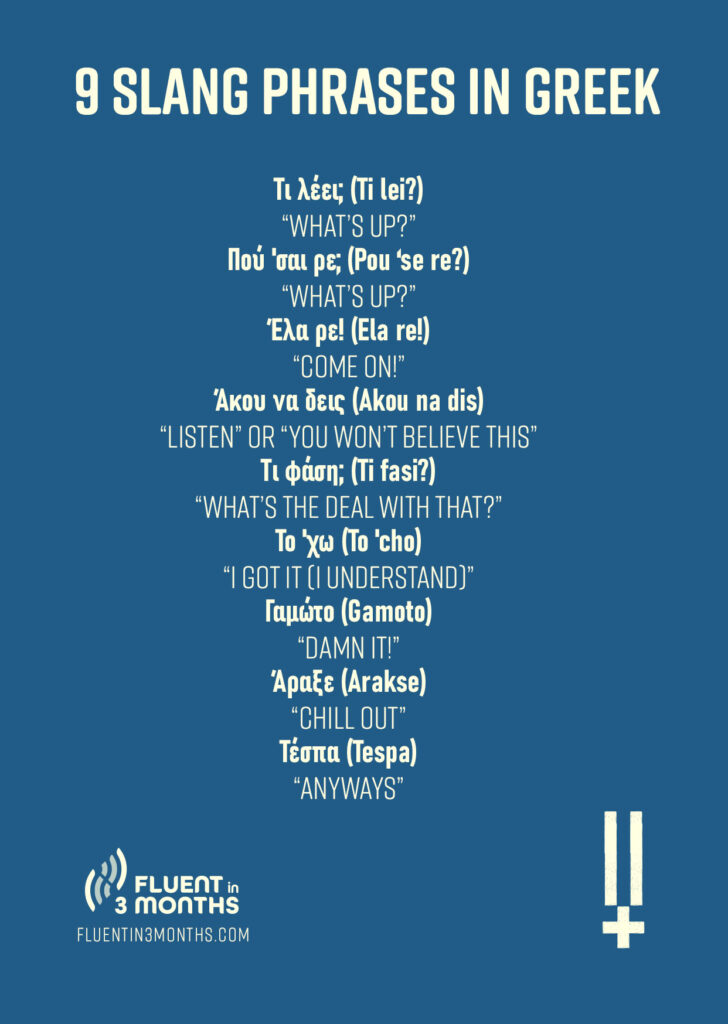
No analysis of the Modern Greek language is complete without addressing its vibrant vernacular. The term "Malaka" (μαλάκα), while technically a swear word, has evolved into a ubiquitous term of endearment or frustration among friends, depending entirely on tone and context. Sociolinguists note that the adoption of such slang by foreigners is a high-risk, high-reward endeavor; while it can signal deep immersion, it may also be perceived as disrespectful if used outside of established intimate social circles.
Other informal expressions, such as "Ela re!" (Come on!) and "Ti fasi?" (What’s the deal?), reflect the rhythmic and emotive nature of Greek communication. These phrases are often accompanied by specific non-verbal cues, such as the upward head tilt for "no" (Ochi) or the hand-on-chest gesture for "thank you" (Efcharisto), which are as essential as the spoken words themselves.
Philosophical Underpinnings: Proverbs and Cultural Identity
The Greek language is inextricably linked to its philosophical heritage. Ancient wisdom is preserved in modern proverbs that continue to influence the Hellenic worldview. Understanding these idioms provides a window into the national psyche:
- "Kathe arhi ke dyskoli" (Every beginning is difficult): A reflection of the Greek resilience in the face of historical and economic adversity.
- "O logos sou me hortase ke to psomi sou fago" (Your words filled me, and I ate your bread): Highlighting the value placed on meaningful conversation over material sustenance.
- "Agapa ton girona sou na lene ke gia sena" (Love your neighbor so they speak well of you): A testament to the importance of community reputation and "Philotimo" (honor).
These proverbs are not mere relics; they are frequently cited in political discourse and family life, bridging the gap between the classical past and the digital present.
Official Responses and Educational Initiatives
The Greek Ministry of Education and Religious Affairs, in conjunction with the Center for the Greek Language (CGL), has expanded its certification programs for the Attainment in Modern Greek. These certificates are increasingly required for third-country nationals seeking work permits or citizenship.
"The promotion of the Greek language is a priority for our cultural diplomacy," stated a representative from the Greek National Tourism Organization (GNTO). "When a visitor learns even ten basic phrases, they cease to be a spectator and become a participant in our culture. This is the essence of sustainable and respectful tourism."
Broader Impact and Implications for Global Travel
The move toward linguistic competency reflects a broader trend in the global travel industry: the shift from "passive consumption" to "active engagement." As travelers seek more authentic and "off-the-beaten-path" experiences, the language barrier becomes the final frontier.
The data suggests that linguistic integration has a direct correlation with the decentralization of tourism. Travelers who feel confident in their ability to communicate are more likely to visit less-developed regions, thereby distributing tourism revenue more equitably across the Greek prefectures. In conclusion, the mastery of basic Greek phrases is a foundational step in a larger journey toward cultural empathy, economic support for local communities, and a more profound understanding of the cradle of Western civilization. For the modern traveler, the word "Yamas!" (To our health!) is not just a toast, but an invitation to a shared human experience.
