

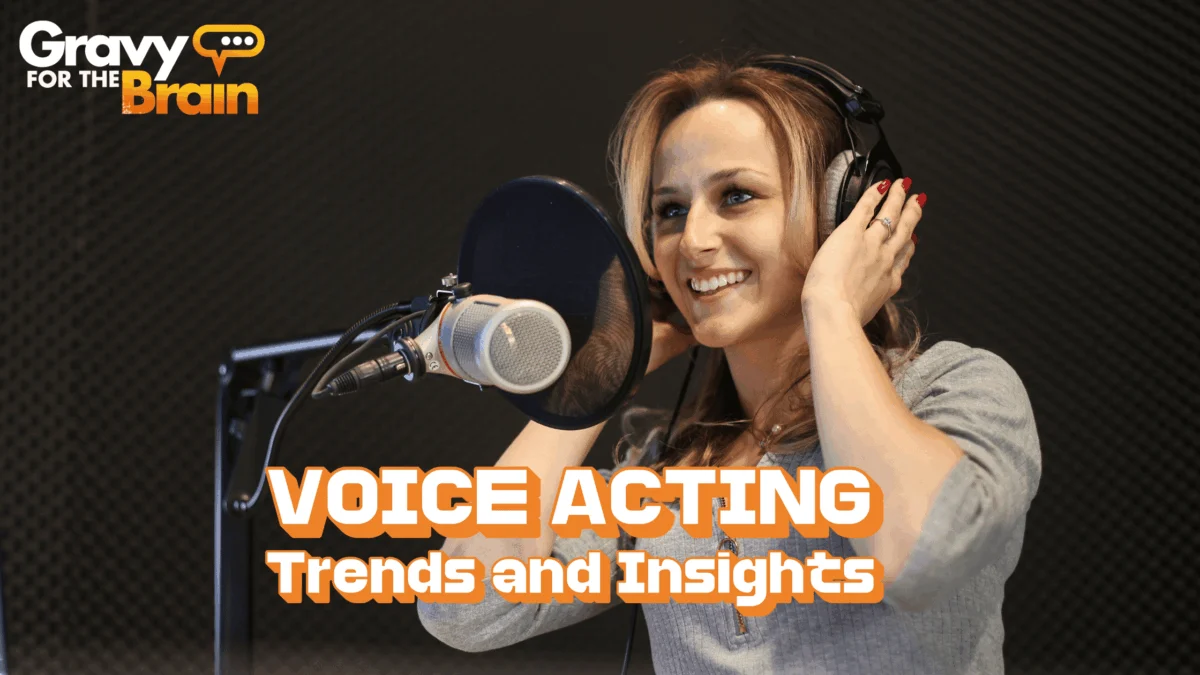
The voice acting industry has undergone a period of unprecedented and rapid transformation over the past year, fundamentally reshaping how content is created and consumed. As 2025 draws to a close and eyes turn towards 2026, this dynamic sector, deeply intertwined with the creative, marketing, and advertising economies, finds itself at a critical juncture. The rise of sophisticated AI-powered voice cloning and the normalization of remote work have challenged traditional paradigms, yet a concurrent surge in demand for authentic human vocal performances underscores the enduring value of genuine artistry. This comprehensive analysis delves into the key trends and insights from 2025, drawing on extensive industry surveys, trend reports, and expert commentary from global thought leaders, to illuminate the path forward for voice actors, producers, and brands alike.
The Unwavering Demand for Authentic Human Voices in 2025
Despite the burgeoning capabilities of artificial intelligence, a significant survey of voice-over buyers conducted by a prominent industry platform revealed that real human voice talent remains indispensable to the global creative sector. A substantial majority of surveyed companies, exceeding 50%, indicated plans to utilize human voice actors for brand marketing initiatives throughout 2025. Furthermore, nearly half anticipated a need for professional voice talent in areas such as animation, broadcast media, online advertisements, and television programming.
The survey highlighted the increasing influence of digital channels, with 58% of respondents identifying digital channels, streaming platforms, social media, and online advertising as the most effective paid media due to their sophisticated targeting capabilities. These findings collectively emphasize that authentic human voices are not merely a component but a cornerstone of effective brand storytelling, crucial for fostering deeper audience engagement and emotional resonance. In essence, the vast majority of brands, broadcasters, and content creators continue to recognize the strategic imperative of employing real human voice actors as a vital tool in their communication arsenal.
This sustained demand can be attributed to the inherent ability of human voices to convey nuanced emotion, personality, and cultural context – qualities that, while improving, remain a significant hurdle for AI. Brands understand that connecting with audiences on an emotional level, building trust, and establishing a genuine rapport often hinges on the subtle inflections, authentic warmth, and relatable delivery that only a human performer can consistently provide. The data from 2025 strongly suggests that while AI may offer certain efficiencies, it has not diminished the perceived value of human authenticity in the eyes of those commissioning voice-over work.
AI Voices: A Spectrum of Curiosity and Caution
The advancement of generative AI voice technology throughout 2025 has been remarkable, with AI-generated speech now capable of producing natural-sounding phrases and even responding to live human interactions with increasing fluidity. However, this technological leap has been met with a measured and often cautious approach from professional buyers. When queried about their sentiment towards AI adoption, survey respondents exhibited a nearly even split. Approximately one-third expressed a greater openness to AI voices compared to the previous year, while a similar proportion reported increased hesitancy. The remaining segment indicated no discernible shift in their outlook.
Of those surveyed, only about a quarter of clients had actually experimented with AI voices in their projects, and even then, most utilized them for less than a quarter of their total assignments. A notable number of these early adopters reported discontinuing the use of AI on certain projects, citing that the time investment required for fine-tuning the output was prohibitively extensive.
The primary consideration influencing the decision to opt for an AI voice, according to the survey, was the fidelity of the output to a human performance, a benchmark that most current AI models still struggle to meet consistently. Secondary factors, such as cost and speed of delivery, while important, did not outweigh the imperative for realistic human-like quality. These findings strongly suggest that AI is unlikely to displace human voice actors wholesale in the immediate future. Instead, large language models are more likely to find increased adoption in specific applications such as Interactive Voice Response (IVR) systems, cost-effective explainer videos, and as a rapid prototyping tool for script development or the creation of temporary guide tracks for final human recordings. Localization efforts, too, may benefit from AI’s speed, but the ultimate polish and emotional depth for major projects will continue to rely on professional voice actors.
Global Expansion: Broadening Horizons for Voice Actors
The increasing globalization of content consumption has led to a significant expansion in the demand for voice actors capable of delivering performances in a multitude of languages. The same industry survey indicated that a substantial 58% of buyers had either engaged with or were planning to engage with non-English voice acting talent. Spanish emerged as the most requested language after English, followed closely by French. While nearly half of businesses continued to prioritize English-language content, Spanish and, notably, Chinese were identified as key growth languages for the coming years.
Technological advancements, particularly in speech-to-speech translation, are accelerating this trend. These innovations enable spoken words to be translated into different languages while meticulously preserving the original tone and emotional inflection. This capability significantly streamlines the process of dubbing videos, audiobooks, and providing multilingual customer service. As burgeoning markets like Latin America and China continue their economic and cultural expansion, the value of multilingual skills and the ability to collaborate effectively with translators is set to become an even more critical asset for voice actors. This opens up new avenues for talent development and career diversification.
Emerging Genres and Immersive Experiences
Beyond the established domains of gaming, audiobooks, and e-learning, 2025 witnessed a notable uptick in opportunities within short-form and interactive content. The demand for voiceovers for social media clips, podcast introductions, and branded explainer videos has seen consistent growth. Furthermore, the proliferation of emerging technologies such as virtual reality (VR), augmented reality (AR), and other immersive media platforms is actively creating novel roles for voice talent. As VR and AR become increasingly integrated into mainstream applications for training, entertainment, and wellness, voice actors who possess the ability to deliver compelling and nuanced performances within 360-degree environments will find themselves in high demand. This requires a different approach to performance, often demanding greater presence and the ability to guide listeners through expansive digital spaces.
Implications for Voice Actors and Producers: Adapting to a New Era
The prevailing sentiment across both audiences and advertisers remains a strong preference for performances that feel genuinely human and relatable. The era of the stereotypical, often disembodied announcer voice is rapidly giving way to a preference for conversational reads that emulate the dynamic of peer-to-peer communication, fostering a sense of trust and familiarity. In an environment where AI voices are becoming more commonplace, human warmth, authenticity, and nuanced delivery serve as crucial differentiators. Indeed, some filmmakers and advertisers are now actively marketing their content as "AI-free" to underscore their commitment to employing real human voice acting talent and to signal authenticity to their target demographics.
For voice actors, this paradigm shift necessitates a focus on cultivating and amplifying their unique, authentic vocal signature. Whether their natural delivery is playful and upbeat, or calm and authoritative, the emphasis is on delivering dialogue with naturalism and emotional veracity. Investing in general acting skills, including improvisation, comedic timing, and the expansion of their emotional range, will be paramount in maintaining a competitive edge against synthetic AI voices. The ability to imbue a performance with genuine feeling and relatable humanity will be the ultimate distinguishing factor.
Expanding the Skillset: Beyond the Script
Clients are increasingly seeking talent who can offer more than just the ability to read a script. Many producers value voice actors who also possess a foundational understanding of audio editing, sound processing, basic sound design, or even script consulting. The capability to deliver polished audio directly from a home studio has evolved from a desirable trait to a baseline expectation. Acquiring additional competencies, such as proficiency with professional Digital Audio Workstations (DAWs) or the ability to coordinate multilingual projects, can significantly elevate a voice actor’s professional profile and marketability.

Furthermore, personal branding and strategic networking have assumed greater importance in a competitive landscape. Showcasing high-quality demo reels, maintaining an up-to-date online portfolio, and actively engaging with voice acting communities and industry conferences, such as One Voice, can help individuals stand out. Developing a specialized niche, whether it be in children’s audiobooks, character voices for animation, or instructional videos for technical subjects, can further distinguish a voice actor from generalists and attract clients seeking specialized expertise.
Championing Diversity, Inclusion, and Multilingual Proficiency
Brands are actively seeking voices that authentically represent a broader spectrum of cultures and dialects to better connect with their increasingly diverse target audiences. In this context, authenticity transcends mere language proficiency; it encompasses the ability to convey lived experience and cultural nuance. Voice actors who possess multilingual capabilities or can authentically perform regional accents are urged to highlight this expertise. For those who do not, exploring accent coaching or establishing collaborative partnerships with translators can be instrumental in expanding their vocal range and market appeal.
From a producer’s perspective, a commitment to inclusive casting practices in voice acting and the prioritization of underrepresented voices can lead to campaigns that are not only more resonant and impactful but also more socially responsible. This approach aligns with evolving consumer expectations and contributes to a more equitable media landscape.
Protecting Rights and Staying Informed in the Age of AI
The ethical and legal complexities surrounding AI-generated voices have spurred ongoing negotiations within professional unions worldwide, including EQUITY in the UK and SAG-AFTRA and NAVA in the USA, all of which represent voice actors. As AI models become increasingly sophisticated, ensuring fair compensation for voice actors whose vocal data is used to train large language model algorithms is of paramount importance. Consequently, it is crucial for voice actors and their representatives to meticulously review contracts for clauses pertaining to AI usage and to remain diligently informed through professional organizations and dedicated voice acting industry news channels. Staying abreast of these evolving legal and ethical frameworks is essential for safeguarding professional interests.
Projections for 2026 and Beyond: The Future of Voice Acting
The global demand for voice content is projected to continue its trajectory of diversification. Key growth languages are expected to include Spanish, French, German, Chinese, and Hindi. Advancements in speech-to-speech translation technology will further facilitate the reach of content to international audiences without the necessity of reshooting or re-voicing entire projects. Producers will increasingly adopt strategies to tailor content to specific regional nuances, creating a sustained demand for voice actors adept at navigating cross-cultural storytelling.
The expansion of VR and AR applications beyond gaming into sectors such as education, healthcare, and corporate training will solidify the integral role of voice acting talent in guiding users through these virtual environments. Interactive narratives, offering multiple branching pathways, will require actors capable of delivering varied responses while maintaining character consistency, nuance, and empathy. Those comfortable with improvisation and non-linear storytelling methodologies are poised to lead in this evolving landscape.
The ethical considerations surrounding AI-generated speech are intensifying. While technology can now produce convincingly human-sounding dialogue, it continues to grapple with conveying profound emotional depth and range. Consumers and regulatory bodies are increasingly advocating for transparency regarding AI voice data and emphasizing that synthetic voices should never be employed to mislead audiences. Brands that champion ethical sourcing and highlight human involvement in their productions will foster greater trust. Voice artists should be prepared to articulate the role of AI in their projects and advocate for the fair and ethical use of their vocal data.
The relentless pace of technological advancement in voice-created media and evolving media consumption habits necessitates a commitment to continuous learning and adaptability. Voice actors and producers alike must cultivate a spirit of curiosity. Seeking out training in acting techniques, audio engineering, dialect coaching, and emerging technologies will be vital. Networking with peers and mentors to share strategies and best practices is also crucial. Embracing a mindset of lifelong learning is no longer optional; those who evolve in tandem with the industry will thrive, while those who do not risk being left behind.
The transformative events of 2025 have unequivocally demonstrated that the voice acting industry is neither immune to change nor on the brink of obsolescence. Authentic human voices remain indispensable for compelling brand storytelling and emotionally resonant content. The concurrent rise of AI tools, the normalization of remote production workflows, and the forces of globalization are collectively expanding opportunities rather than diminishing them.
As professionals prepare for the challenges and opportunities of 2026, a strategic focus on amplifying individual vocal uniqueness is paramount. Investing in high-quality home studios, mastering new technological tools, engaging with AI ethically, and staying informed about evolving market trends are essential steps. Exploring new genres and languages, and actively advocating for fair compensation and ethical data utilization will further strengthen individual careers. By harmonizing traditional craft with emerging technologies, voice actors can successfully navigate a future where human and synthetic voices coexist, contributing to the creation of richer, more inclusive, and more engaging storytelling experiences.
For those aspiring to embark on a career in voice acting, Gravy for the Brain, accessible at www.gravyforthebrain.com, stands as the world’s largest online voice acting training academy. It offers a comprehensive suite of resources, including mentorship, courses, webinars, workshops, one-to-one training, rate guides, technical assistance, studio building advice, and a dedicated shop. Moreover, it fosters a vibrant and supportive community designed to assist individuals at every stage of their career journey, from inception and development to refining their craft, understanding the latest technologies, and identifying their unique niche. Gravy for the Brain serves as a comprehensive resource for all individuals involved in voice acting, ensuring they feel supported and never alone. Download their free PDF for deeper insights and consider a discounted membership to their world-class training platform. Together, the industry can ensure that every voice is heard, and that the human element remains at the heart of every story.
