

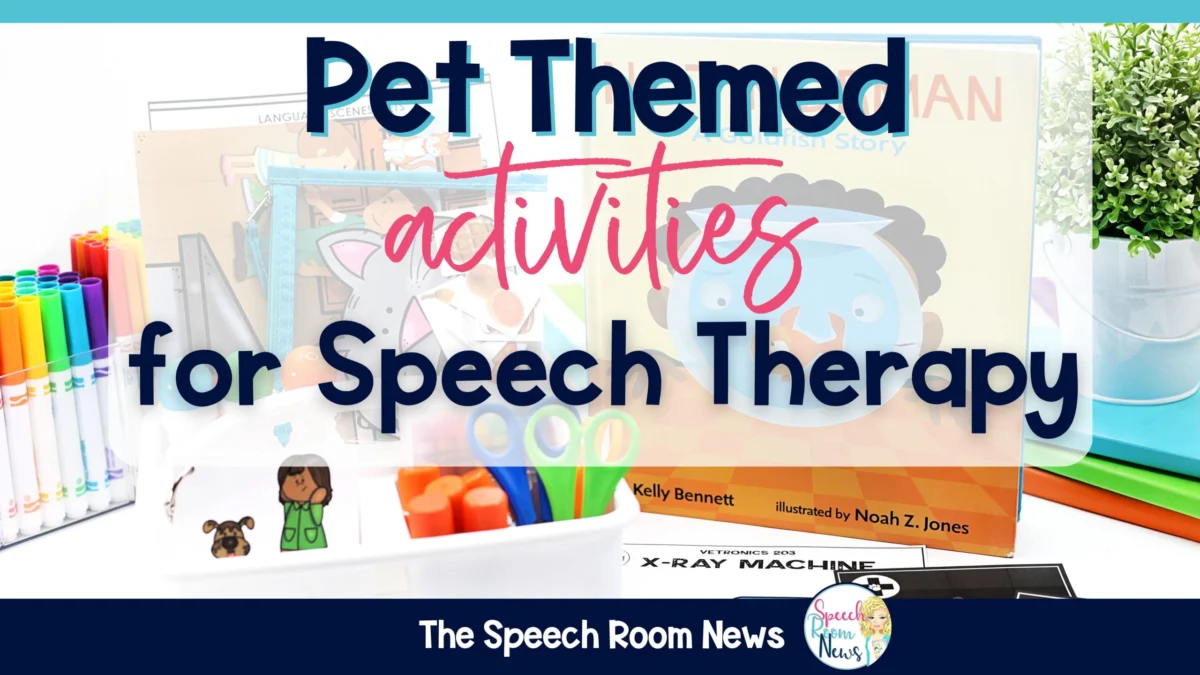
The field of speech-language pathology (SLP) is witnessing a growing adoption of thematic approaches, with "pet themes" emerging as a particularly effective and versatile strategy for engaging young learners and optimizing therapeutic outcomes. This pedagogical shift, driven by the desire for more engaging, time-efficient, and cost-effective interventions, represents a significant development in the delivery of speech and language services for preschool and early elementary students. Practitioners report that integrating year-round themes, such as those centered around pets, not only streamlines lesson planning but also significantly enhances student participation, leading to more robust skill acquisition and generalization.
The Strategic Integration of Themed Therapy in SLP

The use of overarching themes in educational and therapeutic settings is not a novel concept, but its deliberate and structured application within speech-language therapy has gained considerable momentum. This approach moves beyond isolated skill drills, instead embedding target skills within a rich, contextualized framework that mirrors natural learning environments. By concentrating on a single theme for an extended period—often several weeks—therapists can revisit vocabulary, grammatical structures, and articulation targets across a variety of activities, reinforcing learning through repetition and varied application.
Experts in child development and special education consistently highlight the benefits of play-based and interest-driven learning, especially for children grappling with communication disorders. Themes capitalize on children’s natural curiosity and enthusiasm, fostering an intrinsic motivation that can be challenging to achieve with traditional, decontextualized methods. Furthermore, for speech-language pathologists, the adoption of pre-planned, adaptable themed materials offers substantial practical advantages, including reduced preparation time, improved organizational efficiency, and the long-term cost-effectiveness of materials that can be reused multiple times throughout the year, unlike holiday-specific resources.
Unpacking the Universal Appeal of Pet Themes

Among the myriad of potential themes, pets hold a unique and powerful position due to their near-universal appeal to children. The inherent fascination with animals provides a rich, emotionally resonant context for addressing a wide array of speech and language goals. From a developmental perspective, engaging with pet-related content taps into children’s capacities for empathy, imaginative play, and narrative development, all of which are crucial for communication growth.
The "pet theme" offers an expansive semantic field, encompassing diverse vocabulary related to animal names, physical characteristics, actions (e.g., "fetch," "purr," "hop"), sounds (e.g., "woof," "meow"), care routines (e.g., "feed," "walk," "groom"), and emotions (e.g., "happy," "scared," "loved"). This breadth allows therapists to target specific linguistic structures, expand semantic networks, and practice articulation in a highly motivating and meaningful way. For instance, describing a cat’s "soft fur" or a dog’s "wagging tail" naturally elicits descriptive adjectives and action verbs, while role-playing a visit to a veterinarian promotes social communication scripts and problem-solving language.
Core Components of an Effective Pet-Themed Curriculum

A comprehensive pet-themed curriculum for speech therapy typically integrates a variety of multimodal resources, carefully selected to target specific communication goals while maintaining high levels of engagement. These components often include literature, music, interactive games, hands-on toys, creative crafts, and sensory experiences.
Literature as a Foundation for Language Development:
Books serve as an excellent starting point for themed instruction, providing rich narratives and opportunities for vocabulary acquisition and comprehension.
- "Not Norman" by Kelly Bennett: This humorous story about a boy who initially dislikes his goldfish offers a springboard for discussing emotions, character perspectives, problem-solving, and the responsibilities of pet ownership. Therapists can use it to target inferencing skills (e.g., "How do you think the boy felt when…?"), sequencing events, and identifying cause-and-effect relationships. The contrast between expected and actual pet behaviors allows for rich descriptive language practice.
- "Some Pets" by Angela DiTerlizzi: With its vibrant illustrations and focus on a diverse group of children and their animal companions, this book is ideal for early vocabulary building. It allows for identification of different types of pets, their associated actions, and simple descriptive adjectives. It also fosters an appreciation for diversity in pet ownership and can introduce basic concepts of belonging and friendship.
- "Lola Gets a Cat" by Anna McQuinn: This narrative delves into the realities of pet ownership, contrasting Lola’s daydreams with the actual responsibilities involved. It provides opportunities to discuss routines, planning, cause-and-effect (e.g., "If you don’t feed the cat, what happens?"), and the distinction between fantasy and reality. It’s excellent for developing complex sentence structures and understanding temporal concepts.
- Interactive Vocabulary Books about Pets: These specialized resources often feature lift-the-flaps, textures, or movable pieces, actively engaging students in learning core pet-related vocabulary. They support receptive and expressive language skills, reinforcing concepts through direct interaction. When paired with hands-on activities like a toy vet clinic, these books create a highly immersive learning experience, enhancing vocabulary retention and application.
Musical Engagement for Auditory Processing and Articulation:
Songs are powerful tools in speech therapy, leveraging rhythm and repetition to aid memory, articulation, and auditory processing. Pet-themed songs provide an enjoyable way to practice animal sounds, action verbs, and basic vocabulary.

- "I Have a Pet" and "Do You Have a Pet?": These songs are excellent for targeting simple sentence structures ("I have a [animal].") and question-answer formats. They also provide opportunities for practicing different animal names and their corresponding sounds, enhancing phonological awareness.
- "I Love Dogs": This song can be used to elicit preferences, describe dog characteristics, and practice action words associated with dogs (e.g., "run," "jump," "bark").
- "Wag Your Tail": Focuses on body parts and actions, promoting imitation and understanding of verbs. The repetitive nature supports early articulation and motor planning for speech.
Gamified Learning for Targeted Skill Practice:
Games introduce an element of fun and motivation, making repetitive practice more palatable and effective.
- "Color and Play Pets Bingo": This game is versatile, targeting a range of skills. It can be used for articulation practice (calling out words with target sounds), vocabulary reinforcement (identifying different pets or colors), following directions (e.g., "Color the red dog"), and developing social skills like turn-taking and attention. The visual nature aids comprehension for many learners.
- "Feed the Dog Articulation Boom Cards": Digital interactive games like Boom Cards offer immediate feedback and a highly engaging format. Students "feed" the virtual dog words containing their target articulation sounds, with auditory feedback ("crunch sound") further reinforcing the activity. This gamified approach promotes high-repetition practice, which is crucial for articulation carryover, and allows therapists to customize targets for individual students.
Hands-on Exploration with Themed Toys:
Manipulative toys facilitate imaginative play and provide concrete contexts for language use.
- Critter Clinic Toy Vet Set: This toy is a staple for role-playing, offering rich opportunities for social scripts, narrative development, and vocabulary expansion. Students can practice language related to medical tools, animal body parts, actions (e.g., "examine," "bandage," "listen"), and prepositions (e.g., "put the bandage on the paw"). The act of opening and closing doors, and locking/unlocking, also supports fine motor skills, which can indirectly aid speech motor planning. This toy pairs exceptionally well with interactive vocabulary books, allowing for practical application of learned terms.
- Hape Family Pet Houses: These miniature sets encourage imaginative play, fostering storytelling and the use of spatial concepts. Therapists can target prepositions (e.g., "The cat is inside the house," "The dog is under the tree"), descriptive language, and the expansion of mean length of utterance (MLU) as children narrate the pets’ activities. The small pieces also support fine motor development.
Creative Expression Through Crafts:
Craft activities integrate fine motor skills with language targets, offering a tangible outcome for students.

- Clifford the Big Red Dog Craft (e.g., Paper Plate Clifford): Inspired by beloved characters like Clifford, crafts like this allow students to follow multi-step directions, learn color and shape vocabulary, and practice descriptive language. The craft can be accompanied by reading Clifford books, further enriching the thematic experience and linking the hands-on activity to a narrative context.
Sensory Play for Multi-Sensory Learning:
Sensory bins offer a multi-sensory experience that can be highly engaging for children, promoting exploration and language use.
- Pet-Themed Sensory Bin: A bin filled with rice, beans, or shredded paper, hiding small plastic pet figures and pet-related items (e.g., mini bowls, bones), provides a rich environment for language. Therapists can target descriptive language (e.g., "What does the rice feel like?"), spatial concepts (e.g., "Is the dog under the beans?"), and inferencing skills (e.g., "I see a pointy black ear—what could it be?"). This tactile experience enhances engagement and provides a natural context for spontaneous language production.
Streamlining Implementation with Comprehensive Kits
Recognizing the demands on speech-language pathologists’ time, resources like the "Pet Themed Speech Therapy Kit" have emerged to provide ready-to-use, comprehensive solutions. These kits typically encompass an entire month’s worth of lessons and activities, including therapy printables, interactive play resources, circle time lessons, parent handouts for home practice, book companions, and craft templates. Such pre-packaged curricula significantly reduce planning time, allowing therapists to focus more on direct student interaction and individualized intervention. This approach ensures consistency in thematic integration and comprehensive coverage of various speech and language goals within the chosen theme.

Broader Impact and Implications for the Field
The widespread adoption and positive reception of themed therapy, particularly pet-themed approaches, carry significant implications for the future of speech-language pathology:
- For Therapists: It promotes efficiency, reduces burnout from extensive lesson planning, and increases job satisfaction by fostering a more dynamic and enjoyable therapeutic environment. The versatility of year-round themes also means a better return on investment for purchased materials.
- For Students: The primary beneficiaries are the students, who experience enhanced motivation, improved carryover of newly acquired skills into natural settings, and a more positive perception of therapy. The contextualized learning environment supports deeper understanding and better generalization of communication abilities.
- For Research and Development: The growing anecdotal success of themed therapy encourages further empirical research into its efficacy, leading to evidence-based guidelines and potentially inspiring the development of more innovative thematic resources.
- For Parent/Caregiver Involvement: The clear structure of themed units, often accompanied by parent handouts, facilitates home-based reinforcement, creating a more cohesive and supportive communication environment for the child.
As speech-language pathology continues to evolve, the integration of engaging, child-centered, and practical strategies like pet-themed lessons underscores a commitment to effective and holistic intervention. This approach not only addresses specific communication challenges but also nurtures a love for learning and fosters a positive therapeutic experience, setting children on a path toward lifelong communication success.
