

Magnetic tiles, long celebrated in homes and classrooms for their capacity to foster imaginative play and foundational STEM skills, are gaining significant traction within the field of pediatric speech-language pathology (SLP). These colorful, geometrically shaped pieces, which connect via magnets, offer a dynamic and highly adaptable medium for addressing a broad spectrum of speech and language goals in young children. Their inherent versatility, engaging nature, and multi-sensory appeal make them an increasingly invaluable resource for clinicians seeking innovative and effective therapeutic interventions.
The shift towards more play-based and child-led approaches in speech therapy underscores the utility of tools like magnetic tiles. Traditional therapy often relied on highly structured drills, but contemporary SLP recognizes the profound impact of engagement and intrinsic motivation on learning outcomes, especially for young learners. Children learn best when they are actively involved, curious, and enjoying the process. Magnetic tiles naturally facilitate this environment, transforming abstract linguistic concepts into concrete, manipulable experiences.
The Foundational Appeal of Magnetic Tiles in Therapy
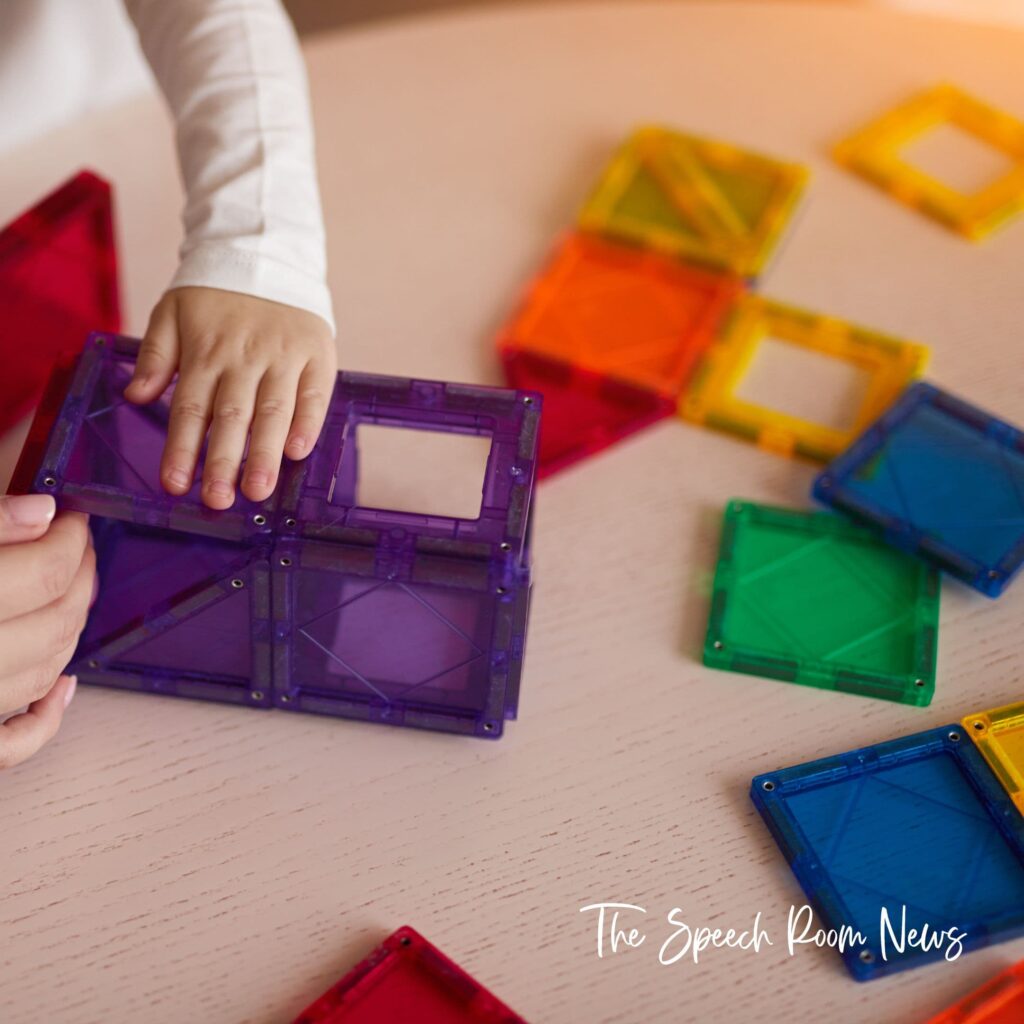
Magnetic tiles possess several inherent characteristics that make them particularly well-suited for therapeutic settings. Firstly, their tactile nature provides a sensory input that can enhance learning and memory. Children can physically manipulate the tiles, building and dismantling structures, which directly translates to a hands-on learning experience. Secondly, their visual appeal—often vibrant colors and various shapes—captures and maintains attention, a critical factor for children with diverse learning needs or attention challenges. Lastly, their open-ended design encourages creativity and problem-solving, allowing therapists to tailor activities to individual goals while maintaining a sense of play and exploration for the child. This combination of sensory engagement, cognitive stimulation, and flexibility positions magnetic tiles as a powerful adjunct to conventional speech therapy methods.
Ten Key Therapeutic Applications for Speech-Language Development
The adaptable nature of magnetic tiles allows for their integration into a wide array of therapeutic activities, targeting diverse speech and language objectives. Here are ten distinct applications where these constructive tools can significantly enhance therapy outcomes:
1. Fostering Social Cooperative Work and Communication
Magnetic tiles serve as an exceptional catalyst for promoting social interaction and collaborative communication among students during group therapy sessions. The very act of constructing a shared structure necessitates back-and-forth dialogue, joint planning, and mutual problem-solving. Therapists can design activities that require students to delegate tasks, negotiate ideas, share materials, and provide verbal instructions to one another. For instance, building a "community" or a "tallest tower" together naturally instigates conversations about design, resource allocation, and sequential actions. This environment not only enhances expressive and receptive language skills but also nurtures crucial social communication competencies such as turn-taking, active listening, perspective-taking, and conflict resolution, which are foundational for effective interpersonal communication.
2. Reinforcing Prepositional and Spatial Concepts
The concrete and manipulable nature of magnetic tiles makes them an ideal medium for teaching abstract spatial concepts and prepositions. Students can physically demonstrate and describe relationships like "on," "under," "beside," "between," "in front of," and "behind" by arranging tiles in various configurations. A therapist might instruct a child to "Put the red square on the blue triangle" or ask, "Where is the yellow piece in relation to the green one?" This hands-on manipulation provides immediate visual and kinesthetic feedback, helping children to solidify their understanding of these concepts. This direct experience reinforces the linguistic terms for spatial relationships, moving beyond rote memorization to a deeply understood, functional application.
3. Developing Sorting and Categorization Skills
Utilizing magnetic tiles for sorting by shape, color, or even size provides an engaging and interactive method for students to practice categorization and differentiation. Therapists can prompt children to group all the "squares" together, separate the "red" tiles, or identify pieces of similar dimensions. This activity not only enhances descriptive language as students verbalize their sorting criteria ("This is a circle," "These are all blue") but also sharpens their cognitive skills related to identifying similarities and differences, pattern recognition, and logical reasoning. Advanced applications might involve building distinct "bins" or "houses" with the tiles themselves, then sorting other small objects or pictures into these designated categories, further integrating the tiles into a multi-step cognitive task.
4. Enhancing Articulation and Phonological Awareness
Magnetic tiles can be seamlessly integrated into articulation therapy by associating target speech sounds with building activities. For instance, if the target sound is /k/, a therapist might encourage students to build a "castle," a "cage," a "car," or a "kitchen." As they construct these objects, they are prompted to repeatedly produce words containing the /k/ sound in a meaningful context. This approach transforms repetitive drill practice into an exciting, purposeful activity. The visual and motor components of building help to anchor the sound production, making the practice more memorable and less monotonous. This method also supports phonological awareness by encouraging children to segment words into sounds or identify initial, medial, or final sounds within words related to their constructions.
5. Mastering Irregular Verbs and Past Tense Forms
Magnetic tiles offer a dynamic platform for practicing irregular verbs. Students can narrate stories or describe sequences of actions as they build, incorporating irregular past tense verbs such as "built," "fell," "ran," "saw," "ate," or "went." For example, a child might build a tower and then describe how it "fell down," or construct a car and recount where it "went." By creating various scenes or scenarios with the tiles and verbalizing the associated actions, children gain meaningful and repeated exposure to these often-challenging verb forms. The physical act of building and enacting provides contextual cues that aid in the recall and correct usage of irregular verbs, moving beyond abstract memorization.
6. Cultivating Executive Functioning Skills
Tasks involving magnetic tiles are excellent for honing executive functioning skills, which are crucial for planning, organizing, and problem-solving. Therapists can introduce challenges that require students to strategize and execute their designs within specific parameters, such as building a structure that can hold a specific weight, creating a maze, or constructing a particular shape within a time limit. This encourages children to plan their steps, anticipate outcomes, adapt to unexpected challenges, and manage their time efficiently. Verbalizing their plans, problem-solving strategies, and self-correction during the building process also enhances their meta-cognitive and linguistic abilities, allowing them to articulate their thought processes.
7. Practicing Regular Plurals and Noun Morphology
Engaging students in creating patterns, structures, or collections using various magnetic tile shapes (e.g., squares, triangles, blocks) provides ample opportunities to practice regular plurals. As children add pieces, therapists can prompt them to describe the quantity and type of tiles, encouraging the use of plural forms: "I have two squares," "We need more triangles," "Look at all the blocks." This activity promotes speech development by requiring children to articulate their observations and intentions using correct noun morphology within a playful and interactive context. It reinforces the grammatical rules for forming plurals, making the learning experience both fun and grammatically enriching.
8. Developing WH Question Comprehension and Expression
Magnetic tiles serve as a powerful catalyst for practicing the comprehension and expressive use of WH questions (who, what, where, when, why, how). During building activities, therapists can pose questions related to the construction process or the resulting structures. Examples include: "Where does this piece go?" "Who built the tall tower?" "What are you making?" "When will it be finished?" "Why did it fall?" or "How did you make that arch?" Encouraging students to discuss the placement of tiles, the roles of participants, the purpose of their creations, or predicting outcomes prompts both receptive and expressive language skills. This interactive questioning helps children develop a deeper understanding of narrative structure, causality, and informational retrieval within a context they are actively creating.
9. Integrating the Pronoun "I" for Self-Reference
For children who struggle with personal pronoun usage, particularly "I," magnetic tile activities offer a natural and effective practice environment. Therapists can encourage students to describe their individual actions and contributions to the building process. By asking questions like, "What are you adding next?" or "Who wants to put the next piece on?" the child is prompted to respond using "I." For instance, a child might say, "I have a red tile for the top," or "I want to build a garage." This repetitive, self-referential language practice within a meaningful and motivating activity helps to solidify the correct use of the first-person singular pronoun, fostering greater self-awareness and grammatical accuracy.
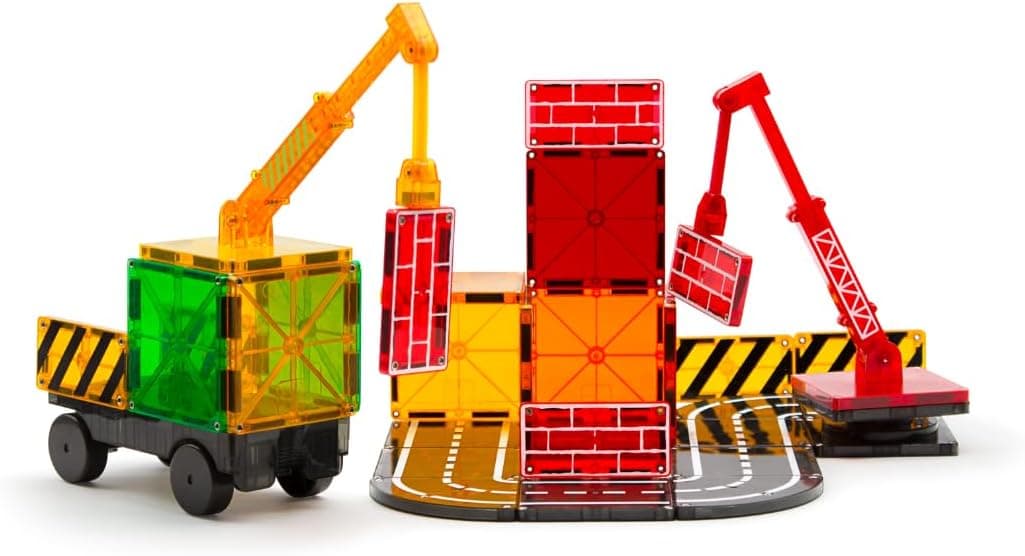
10. Supporting AAC Core Words in Functional Contexts
Magnetic tiles are exceptionally useful for reinforcing Augmentative and Alternative Communication (AAC) core words, which are high-frequency words crucial for functional communication. During play, therapists can model and elicit the use of core words such as "more," "on," "off," "that," "this," "help," "up," "down," "go," "stop," and "big/little." For example, a child might request "more" tiles, indicate a piece is "on" top, ask for "help" to connect pieces, or comment that a tower is "up." This provides practical, contextualized exposure to these essential words, allowing children who use AAC systems to practice their communication skills in an engaging and purpose-driven manner, thereby enhancing their overall communicative competence and independence.
Expert Perspectives and Practitioner Adoption
Speech-language pathologists nationwide are increasingly integrating magnetic tiles into their therapeutic repertoires. Many practitioners report that the tactile and visual engagement offered by these tools significantly boosts client motivation and attention span, especially in younger children or those with neurodevelopmental differences. Dr. Elara Vance, a developmental psychologist specializing in play therapy, notes, "The beauty of magnetic tiles lies in their ability to bridge the gap between abstract linguistic concepts and concrete, physical experience. They are inherently motivating, reducing the perceived ‘work’ of therapy and increasing the likelihood of generalization of skills." Educators and early childhood specialists also recognize the cross-disciplinary benefits, observing improvements not only in speech and language but also in fine motor skills, spatial reasoning, and collaborative play.
Accessibility and Investment Considerations
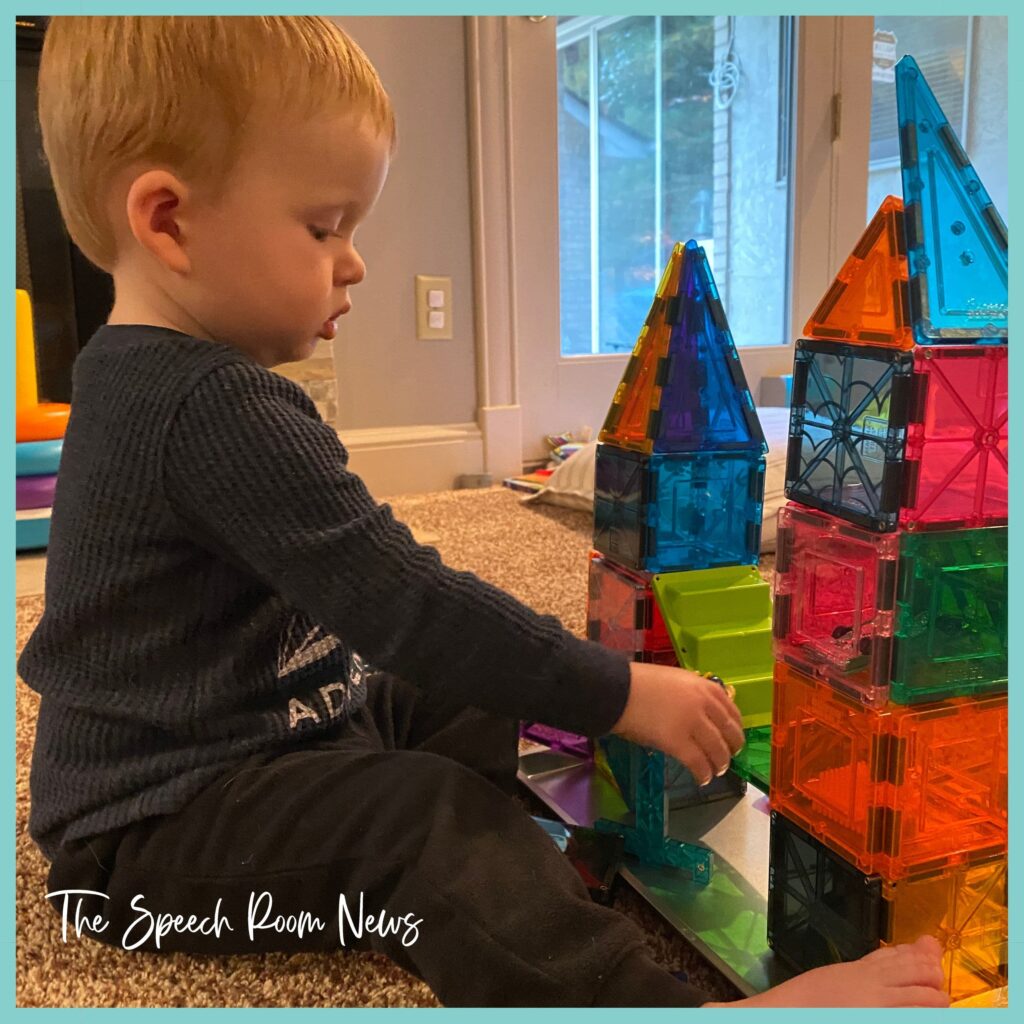
While magnetic tiles represent a valuable therapeutic investment, their initial cost can be a consideration for some families or therapy clinics. However, many therapists advocate for their long-term value, citing their durability and endless reusability across a wide age range and for numerous therapeutic goals. Grant opportunities, school budgets, or community fundraising efforts are often explored by clinicians to acquire comprehensive sets for their therapy rooms. For parents, adding magnetic tiles to wish lists for birthdays or holidays can be a strategic way to build a home-based resource that supports ongoing developmental and therapeutic practice in a fun, naturalistic setting. The market also offers various brands and expansion packs, allowing for incremental investment.
Broader Impact on Child Development
Beyond their specific applications in speech and language therapy, magnetic tiles contribute to a child’s holistic development. Their use fosters creativity, imagination, and critical thinking. The problem-solving inherent in construction activities builds resilience and encourages a growth mindset. Furthermore, collaborative play with magnetic tiles enhances emotional regulation as children navigate shared goals and occasional frustrations. This integrated approach to therapy, leveraging engaging and open-ended tools, ensures that children are not just addressing specific deficits but are also developing a robust foundation of cognitive, social, and emotional skills that support their overall well-being and future learning.
In conclusion, magnetic tiles have firmly established their place as a remarkably effective and versatile tool in pediatric speech-language pathology. Their capacity to transform abstract linguistic goals into tangible, interactive, and highly engaging experiences offers a significant advantage for therapists. By capitalizing on children’s natural inclination to play, these colorful, magnetic shapes facilitate improved articulation, enhanced grammatical understanding, strengthened social communication, and better executive functioning. As the field of SLP continues to embrace innovative, child-centered methodologies, magnetic tiles stand out as a prime example of how simple, yet ingenious, play materials can profoundly impact therapeutic outcomes and foster comprehensive developmental growth.
