

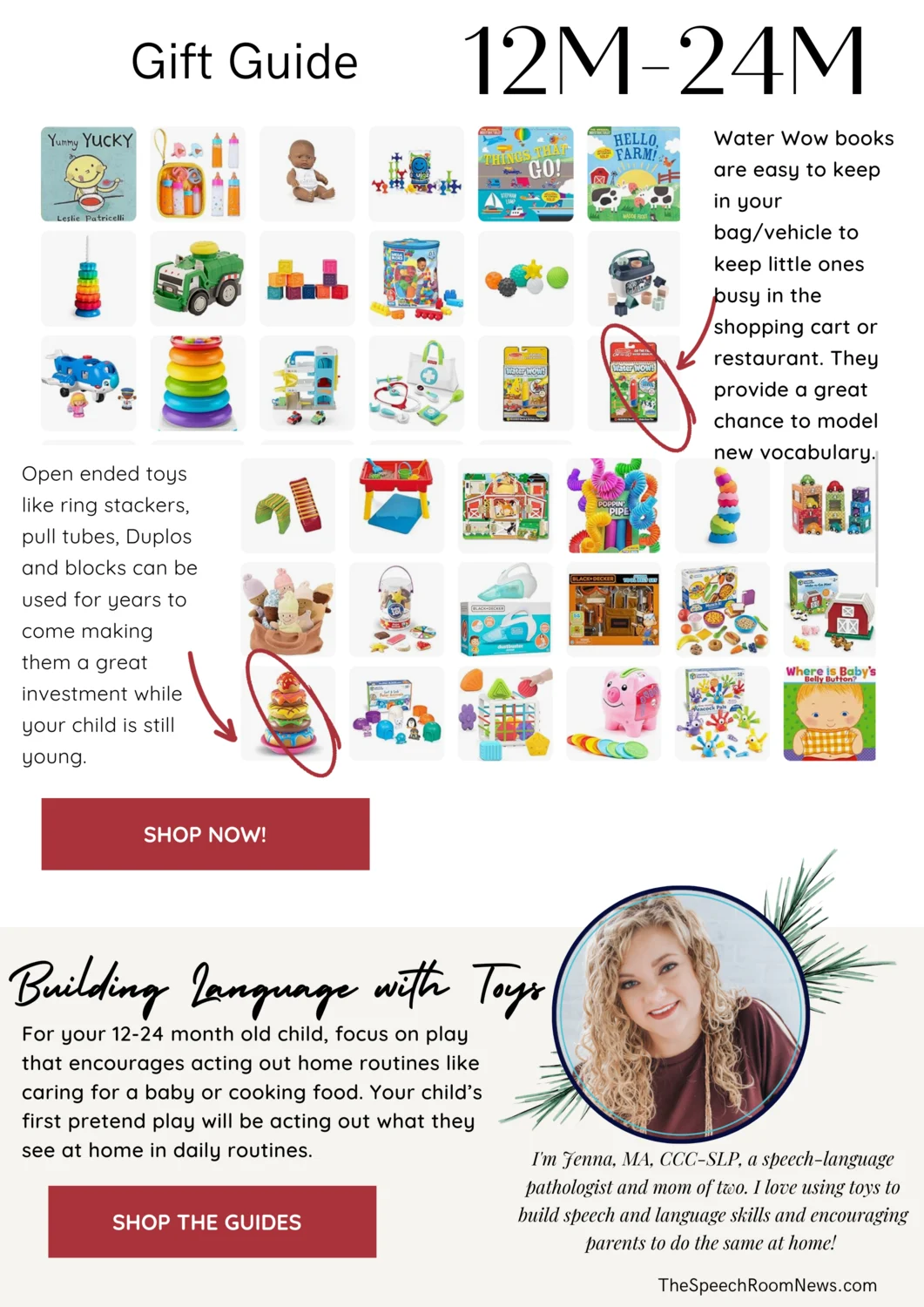
In an initiative aimed at empowering parents and caregivers with informed choices for their children’s developmental needs, Jenna Kirk, MA, CCC-SLP, a distinguished pediatric speech-language pathologist, has launched a series of expertly curated holiday gift guides. These guides, accessible via Amazon and as a downloadable PDF, meticulously recommend toys designed to enhance speech and language skills across various age groups, from infancy through school-age, including specialized suggestions for stocking stuffers. Kirk’s recommendations stem from her extensive professional expertise and her personal experience as a mother of two, one of whom navigates Childhood Apraxia of Speech, a complex speech sound disorder.
The Significance of Play in Speech and Language Acquisition
The importance of play in a child’s holistic development, particularly in the acquisition of speech and language skills, is a widely acknowledged principle in pediatric therapy and early childhood education. Play is not merely a recreational activity; it serves as a critical medium through which children explore, experiment, and internalize linguistic structures and social communication norms. Through interactive play, children naturally engage in turn-taking, problem-solving, narrative development, and vocabulary expansion, all foundational elements for robust speech and language development.
According to the American Speech-Language-Hearing Association (ASHA), approximately 1 in 12 children aged 3-17 years in the U.S. has had a disorder of voice, speech, language, or swallowing in the past 12 months. Early identification and intervention are paramount, and integrating therapeutic principles into everyday activities, such as play, can significantly enhance outcomes. Toys, when chosen strategically, become powerful tools in this developmental journey, facilitating targeted skill-building in an engaging and non-intimidating manner. Jenna Kirk’s guides are specifically designed to bridge this gap, offering practical, evidence-informed selections that transform playtime into a constructive learning experience.
Expert Criteria for Selecting Speech- and Language-Building Toys

Jenna Kirk’s methodology for curating her gift guides is rooted in specific criteria that prioritize developmental efficacy. While the original article alluded to her "focus on a few things," comprehensive expert advice from speech-language pathologists typically emphasizes several key characteristics when selecting toys to foster communication:
- Open-Ended Play Potential: Toys that do not have a single "right" way to play encourage imagination, creativity, and flexible thinking. Examples include building blocks, play-doh, art supplies, or simple figures. These toys allow children to create their own narratives, fostering expressive language, sequencing skills, and imaginative play, which are precursors to storytelling.
- Interaction and Joint Attention: Toys that naturally prompt interaction between a child and a caregiver or other children are invaluable. Board games, puzzles, dress-up clothes, or puppets facilitate turn-taking, shared focus, and conversational exchanges. These interactions are crucial for developing pragmatic language skills, such as understanding social cues and maintaining a conversation.
- Vocabulary Expansion: Toys that expose children to a wide range of objects, actions, and concepts can significantly broaden their vocabulary. Picture books, animal sets, playsets depicting various environments (e.g., farm, doctor’s office), or cooking sets provide opportunities to label, describe, and categorize.
- Cause and Effect: Simple toys that demonstrate cause and effect (e.g., pop-up toys, musical instruments, shape sorters) help children understand logical sequences and develop early problem-solving skills, which underpin complex language structures. Explaining these connections also provides natural language models.
- Symbolic Play: Toys that encourage children to assign roles or use objects to represent something else (e.g., dolls, action figures, toy vehicles) promote symbolic thinking, a critical cognitive skill that supports the understanding and use of abstract language, metaphors, and narratives.
- Sensory Engagement: Toys that appeal to multiple senses (e.g., textured blocks, scented play-doh, musical instruments) can enhance engagement and provide varied opportunities for descriptive language. Describing how something looks, feels, sounds, or smells encourages the use of adjectives and sensory vocabulary.
- Durability and Safety: Beyond developmental benefits, practical considerations like safety standards and the toy’s durability are always paramount, ensuring a long-lasting and safe play experience.
These principles guide Kirk’s selections, ensuring that each recommended item offers tangible benefits for speech and language growth, rather than just momentary entertainment.
Developmental Stages and Tailored Toy Recommendations

The beauty of Kirk’s gift guides lies in their organization by age, acknowledging the dynamic nature of child development. Speech and language acquisition unfolds in distinct stages, with specific milestones typically achieved at different ages. A toy that is perfectly suited for a toddler might be too simplistic or too complex for an older child.
- Infants (0-12 months): At this stage, communication is primarily non-verbal, focusing on babbling, gestures, and understanding simple commands. Toys that promote joint attention and sensory exploration are ideal. Soft books with varied textures, rattles, unbreakable mirrors, and simple stacking rings encourage vocalization, visual tracking, and early interaction. Caregivers can narrate actions ("Look at the shiny mirror!") or label objects ("Shake the rattle!"), building early receptive language.
- Toddlers (1-3 years): This period is marked by an explosion of vocabulary and the emergence of two-to-three-word phrases. Toys that encourage imitation, object identification, and simple sentence formation are beneficial. Shape sorters, simple puzzles, animal sounds books, toy phones, and baby dolls facilitate labeling, action words, and early pretend play. Engaging in "conversations" with puppets or dolls helps practice turn-taking.
- Preschoolers (3-5 years): Preschoolers develop more complex sentences, ask "wh-" questions, and begin to grasp narrative structures. Toys that support imaginative play, problem-solving, and social interaction are crucial. Dress-up clothes, play kitchens, building sets (like LEGO Duplo), board games requiring simple rules, and storybooks with detailed illustrations provide rich contexts for storytelling, role-playing, and expanding conversational skills. This age group also benefits from toys that encourage phonological awareness, such as rhyming games.
- School-Aged Children (5+ years): As children enter school, their language skills continue to refine, with a focus on narrative complexity, social reasoning, and literacy development. More complex board games, science kits, chapter books, creative writing tools, and construction sets (like advanced LEGOs or K’nex) support critical thinking, descriptive language, sequential storytelling, and abstract reasoning. These toys provide opportunities for discussions, explanations, and collaborative problem-solving, all of which enhance advanced language use.
Kirk’s categorization ensures that parents can easily identify toys that are developmentally appropriate and maximally beneficial for their child’s specific stage, supporting a targeted approach to speech and language enrichment.
Addressing Specific Needs: Childhood Apraxia of Speech

Jenna Kirk’s personal connection to Childhood Apraxia of Speech (CAS) adds a profound layer of insight to her recommendations. CAS is a neurological speech sound disorder where the brain has difficulty planning and coordinating the movements necessary for speech. Children with CAS often struggle with producing sounds, syllables, and words consistently, despite understanding language.
For children with CAS, certain types of toys can be particularly helpful:
- Cause-and-effect toys: These can provide immediate feedback and motivation for vocalizations or simple motor actions that accompany speech.
- Repetitive action toys: Toys that encourage repeated motor actions or vocalizations can help with motor planning for speech.
- Imitation-based toys: Simple games that involve imitating sounds or actions can be adapted to target specific speech sounds or syllable shapes.
- Toys that encourage specific sounds: Certain animal figures or vehicles can prompt children to practice specific sounds (e.g., "moo" for a cow, "vroom" for a car).
The inclusion of a perspective informed by direct experience with CAS underscores the guides’ utility for families facing similar challenges, offering hope and practical tools for intervention that extend beyond traditional therapy sessions into daily play.

The Role of Speech-Language Pathologists in Toy Selection
Speech-language pathologists (SLPs) are crucial allies for families navigating communication development. They possess specialized knowledge of typical and atypical speech and language acquisition, making them uniquely qualified to recommend tools and strategies for support. Kirk’s initiative exemplifies the proactive role SLPs play in translating clinical understanding into accessible, everyday resources for parents. By offering these curated lists, she effectively extends her professional guidance into the home environment, demystifying the process of selecting "educational" toys from the overwhelming array available on the market. This empowers parents to become active participants in their child’s language development journey, reinforcing skills learned in therapy and creating a language-rich home environment.
Broader Impact and Implications

The release of these expert-curated gift guides carries significant implications for parents, educators, and the toy industry alike. For parents, it provides a trusted, accessible resource that cuts through marketing noise, offering clarity on how toy choices can directly impact developmental milestones. In an era where "educational" is often a buzzword, Kirk’s guides provide genuine, professionally vetted recommendations. This empowers parents to make thoughtful purchases that align with their child’s specific developmental needs, potentially reducing anxieties about speech and language delays.
For educators and other professionals working with children, these guides can serve as valuable reference points for recommending play-based learning tools to families. They reinforce the concept that learning is not confined to classrooms or therapy rooms but is an integral part of everyday life and play.
Furthermore, this initiative highlights a growing demand for toys that are not only entertaining but also purposefully designed to foster developmental skills. It sends a clear message to the toy industry about the market value of products that are endorsed by experts like SLPs for their therapeutic and developmental benefits. As consumer awareness grows regarding early childhood development, the influence of such expert-led curation is likely to expand, encouraging manufacturers to innovate and design toys with specific developmental outcomes in mind.

Accessible Resources for Thoughtful Gifting
To facilitate easy access, Jenna Kirk has organized her recommendations into user-friendly Amazon Gift Guides, categorized by age. Additionally, a comprehensive downloadable PDF guide provides a consolidated overview, allowing parents to reference the suggestions offline or share them with family members involved in gift-giving. The inclusion of stocking stuffer ideas further demonstrates a thoughtful approach to holiday shopping, ensuring that even small gifts contribute to a child’s speech and language journey. These practical resources ensure that parents are not left to guess, but rather are equipped with clear, actionable advice from a trusted professional.
Jenna Kirk’s initiative stands as a testament to the power of informed choices in nurturing a child’s communication abilities. By providing these meticulously curated gift guides, she offers a valuable service to families, transforming holiday shopping into an opportunity for meaningful developmental enrichment. Her work underscores the profound connection between play and language, guiding parents toward gifts that truly keep on giving.
