

The landscape of pediatric speech and language therapy is continually evolving, with a growing emphasis on integrating engaging, multi-sensory tools to enhance therapeutic outcomes. Among the most versatile and impactful resources gaining traction are magnetic tiles, simple yet profound construction toys that are transforming how speech-language pathologists (SLPs) approach intervention for young children. Far beyond their recreational appeal, these vibrant, geometric shapes equipped with magnets offer a dynamic platform for addressing a wide spectrum of speech and language goals, fostering cognitive development, and promoting crucial social skills in an inherently motivating environment.
The efficacy of play-based therapy has been well-established within developmental psychology and speech-language pathology. Researchers like Lev Vygotsky highlighted the critical role of play in cognitive development, emphasizing its function as a "zone of proximal development" where children can achieve higher levels of understanding and skill with scaffolding. Similarly, Jean Piaget underscored the importance of active engagement and manipulation of objects for constructing knowledge. In speech therapy, this translates to creating naturalistic contexts where communication skills are practiced spontaneously rather than through rote drills, leading to more generalized and sustainable learning.
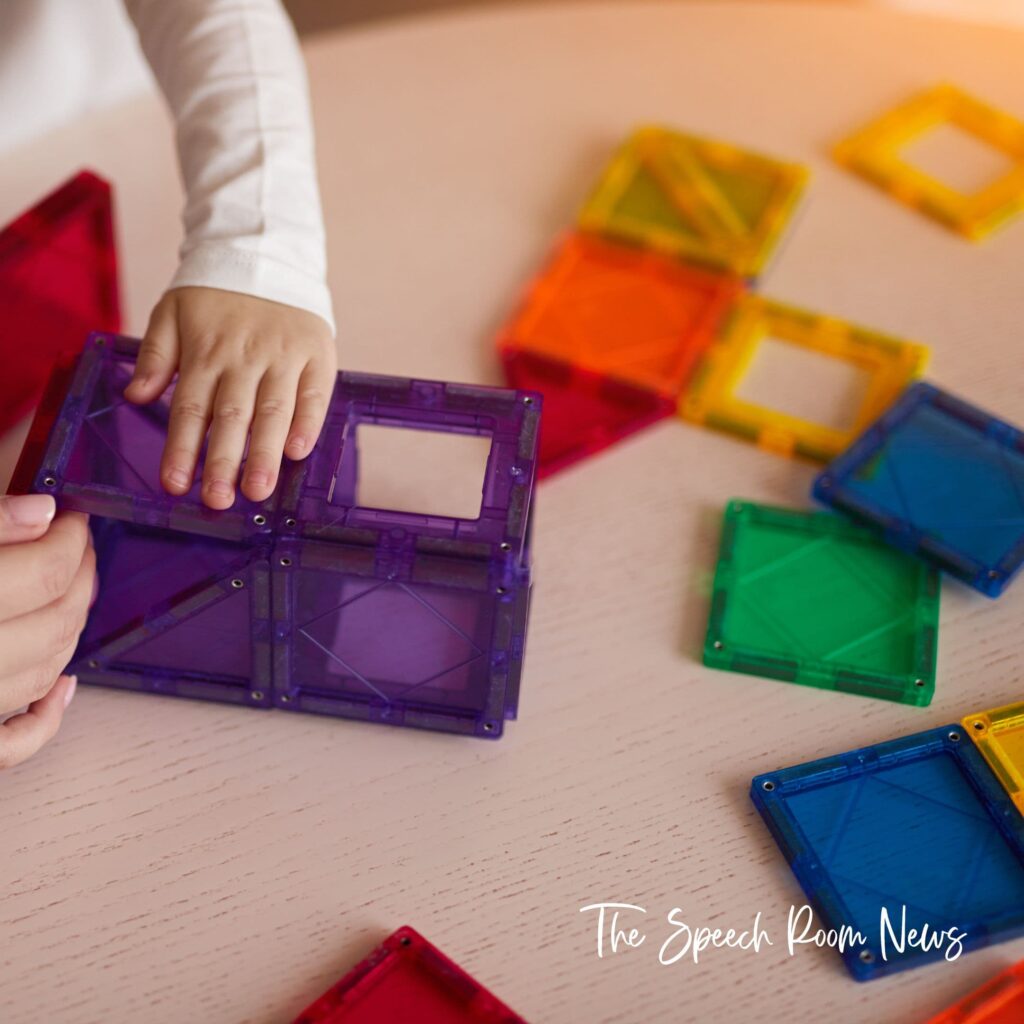
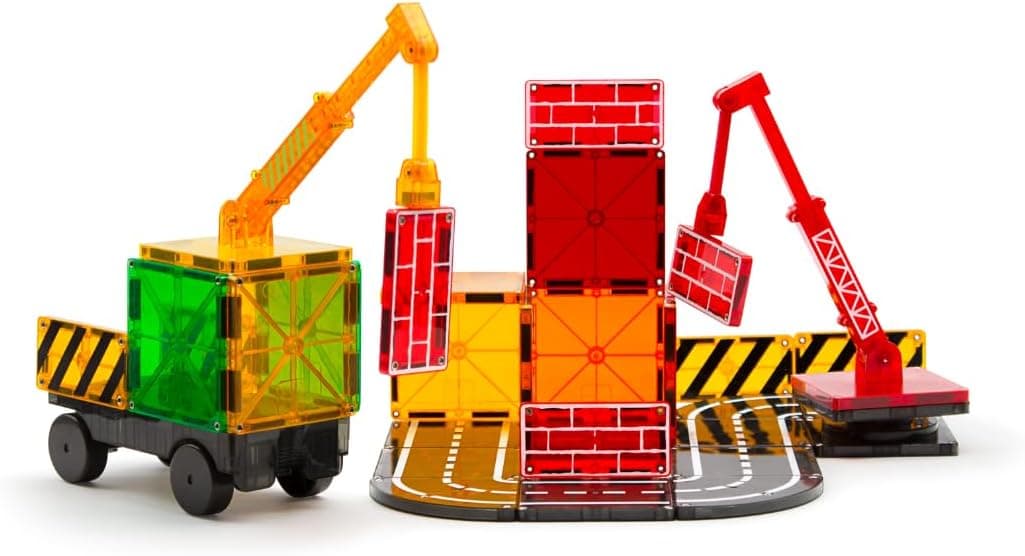
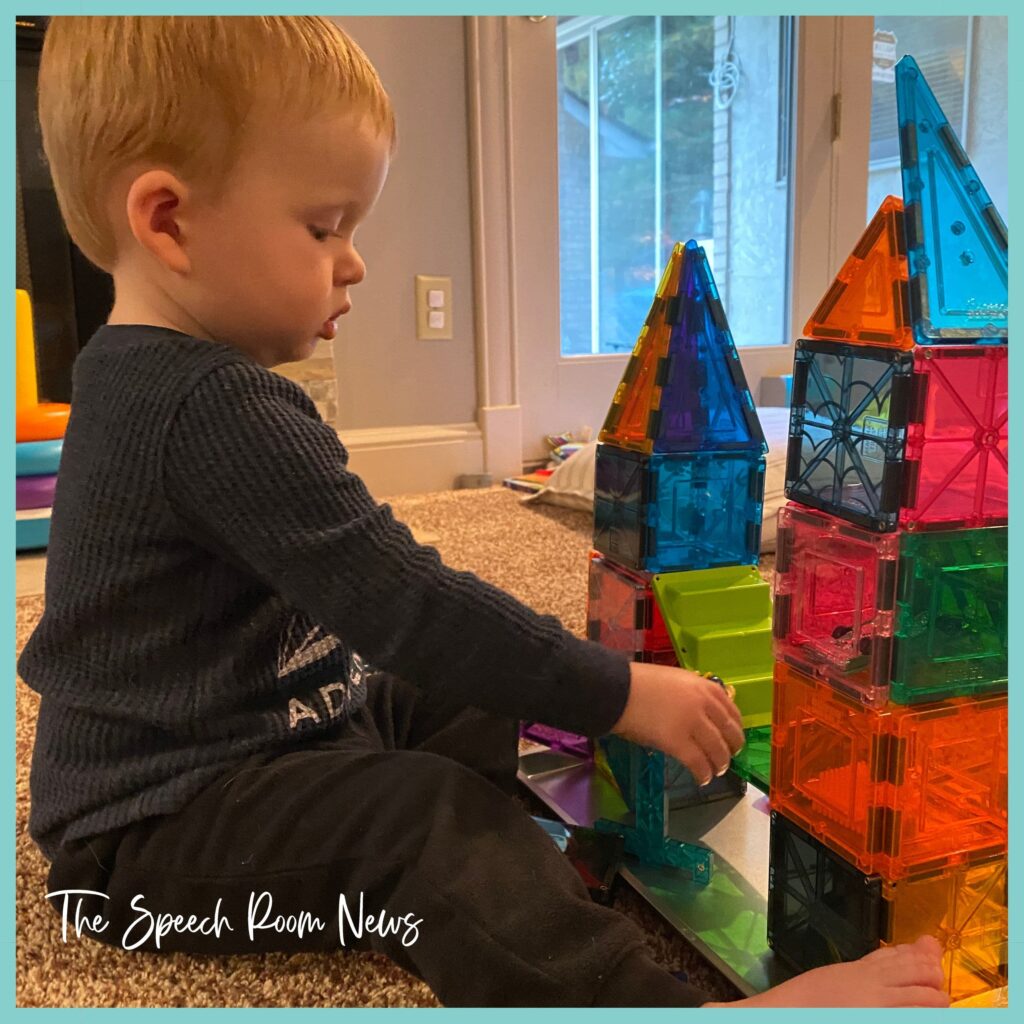
Magnetic tiles, with their tactile feedback, visual appeal, and infinite construction possibilities, align perfectly with these therapeutic principles. Composed of various shapes—squares, triangles, rectangles, and more—they adhere to each other through embedded magnets, allowing children to build both two-dimensional patterns and intricate three-dimensional structures. This open-ended nature means they can be adapted to suit a vast array of therapeutic objectives for children aged one and up, making them a cost-effective, long-term investment for both clinical settings and home use. While initial acquisition costs can be a consideration, their durability and versatility often see them included in grant applications for therapy rooms or as highly recommended items for children’s developmental play.
Comprehensive Applications in Speech Therapy
Speech-language pathologists are leveraging magnetic tiles in innovative ways across ten key areas of speech and language development:
1. Fostering Social Cooperative Work
Magnetic tiles excel as a catalyst for developing social communication skills. In group therapy settings or one-on-one interactions, children are naturally encouraged to engage in back-and-forth communication as they collaborate on building projects. This process necessitates turn-taking ("My turn to add a triangle"), negotiation ("I want the blue one, but you can have the red"), joint attention (focusing on a shared task), and problem-solving ("How can we make this tower taller without it falling?"). Such interactions are fundamental for developing pragmatic language skills, essential for successful social integration and school readiness. By assigning roles or encouraging shared decision-making, SLPs can explicitly target skills like asking for help, giving instructions, and responding appropriately to peers.
2. Mastering Prepositional Concepts
Abstract spatial concepts, such as prepositions (e.g., "on," "under," "beside," "between," "in front of"), are notoriously challenging for young children to grasp. Magnetic tiles transform these abstract ideas into concrete, manipulable experiences. A therapist can instruct a child to "put the yellow tile on the blue tile" or "place the small square under the arch." This physical manipulation provides immediate, multi-sensory feedback, solidifying understanding far more effectively than verbal explanations alone. Research in embodied cognition supports the idea that physical interaction with objects enhances comprehension of spatial relationships, making magnetic tiles an ideal tool for this objective.
3. Enhancing Sorting by Shape and Color
Classification and categorization are foundational cognitive skills that underpin language development. Magnetic tiles offer a vibrant, hands-on medium for practicing sorting by attributes like shape and color. Children can be prompted to group all red tiles together, or all square tiles, enhancing their ability to identify similarities and differences. This activity not only sharpens cognitive skills but also expands descriptive vocabulary as children articulate their choices ("I sorted the red ones," "These are all triangles"). Furthermore, therapists can encourage children to construct "sorting bins" using the tiles themselves, adding an extra layer of engagement and creativity to the task.
4. Practicing Articulation Targets
For children working on specific speech sounds, magnetic tiles provide a highly engaging context for articulation practice. An SLP might select a target sound, such as /k/, and guide the child to build structures while naming objects or actions that contain that sound. For example, building a "castle" could involve repeatedly saying "castle," "king," "cool," "colorful," or "pick." The motivational aspect of building helps to maintain engagement and facilitates the high-frequency repetition necessary for motor learning in articulation therapy, reducing the perceived "drill-and-practice" monotony often associated with these exercises.
5. Developing Irregular Verb Usage
Irregular verbs, which do not follow standard past tense formation rules (e.g., "go" -> "went," "build" -> "built," "fall" -> "fell"), pose a significant challenge for language learners. Magnetic tiles can be used to construct dynamic scenes or sequences, prompting children to narrate actions using these verbs. A child might build a tower, then describe how it "fell down," or recount how they "built" a house. This contextualized practice within a narrative framework provides meaningful opportunities to practice irregular verbs, promoting their accurate and spontaneous use in storytelling and conversational speech.
6. Cultivating Executive Functioning Skills
Executive functions – a set of cognitive processes crucial for goal-directed behavior – are vital for learning and daily life. Magnetic tiles offer an excellent platform for their development. Tasks can be structured to target planning, organization, working memory, and inhibitory control. For instance, an SLP might challenge a child to "build a garage for this toy car using only ten tiles" or "construct a bridge strong enough to hold a specific toy within a five-minute time limit." These parameters necessitate strategic thinking, sequential planning, and flexible problem-solving, all while naturally integrating language for explaining their process and choices.
7. Reinforcing Regular Plurals
Understanding and correctly using regular plurals (e.g., "cat" -> "cats," "box" -> "boxes") is a fundamental grammatical skill. Magnetic tiles visually represent quantity, making them ideal for practicing these concepts. As children build with multiple shapes, they can be prompted to describe what they see: "I have one square," followed by "Now I have three squares." This immediate visual correlation between the singular and plural forms, coupled with the auditory practice of the plural morphemes (/s/, /z/, /ɪz/), reinforces accurate grammatical production and enhances quantitative vocabulary.
8. Responding to and Formulating WH Questions
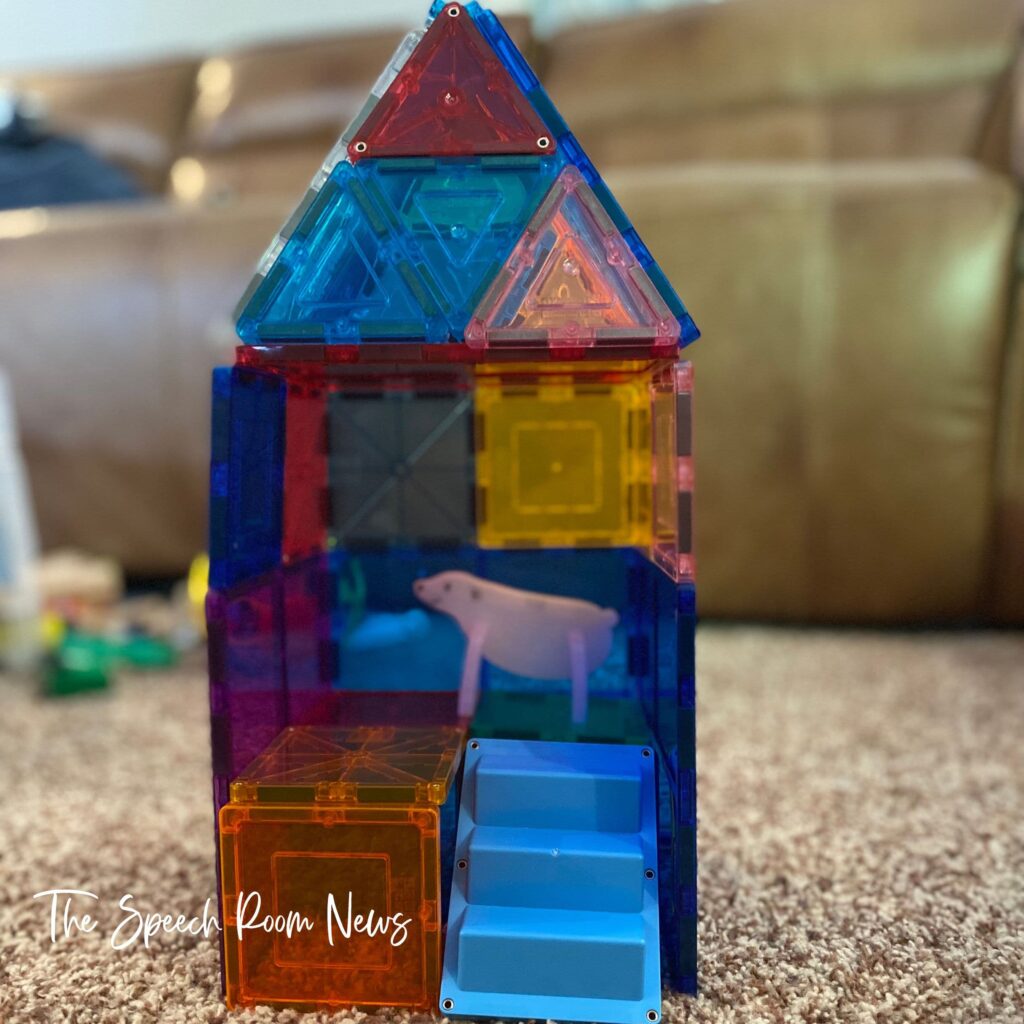
WH questions (Who, What, Where, When, Why) are essential for comprehension, information retrieval, and conversational engagement. Magnetic tiles provide a flexible context for both asking and answering these questions. A therapist can create a scenario with the tiles (e.g., a "house" with a "person" inside and a "car" outside) and ask: "Who is in the house? Where is the car? What is the person doing?" Conversely, children can be encouraged to formulate their own WH questions about their creations or the actions they depict, thereby enhancing both their receptive and expressive language skills.
9. Practicing the Pronoun "I"
For children who struggle with self-referential language, magnetic tiles offer concrete opportunities to practice using the pronoun "I." By prompting children to describe their actions and choices during construction, SLPs can elicit sentences like, "I have a red tile for the top," "I want to build a tall tower," or "I am putting this here." This direct association between the child’s action and the first-person pronoun reinforces correct usage in a meaningful and child-centered way, helping them express their own desires, intentions, and observations.
10. Supporting AAC Core Words
Augmentative and Alternative Communication (AAC) systems rely heavily on "core words"—a small set of high-frequency words that account for a significant portion of daily communication (e.g., "more," "on," "off," "help," "want," "go," "stop," "up," "down"). Magnetic tiles are an exceptional tool for modeling and eliciting these core words within functional contexts. A child using an AAC device might request "more" tiles, indicate "on" when placing a tile, or ask for "help" if a structure collapses. The dynamic nature of building with tiles creates continuous opportunities for natural, repeated exposure and practice of these vital communication words.
Expert Perspectives and Broader Implications
"Speech-language pathologists consistently seek tools that are not only effective but also highly engaging for their young clients," states Dr. Evelyn Reed, a pediatric SLP and advocate for play-based intervention. "Magnetic tiles fit this description perfectly, transforming therapeutic exercises into joyful, child-led play that often feels less like ‘work’ and more like fun."
Dr. Liam Chen, a specialist in early childhood development, adds, "The multi-sensory nature of magnetic tiles, combined with their open-ended design, makes them an invaluable asset for targeting a wide array of speech and language goals. They support cognitive flexibility, creativity, and problem-solving, which are all intricately linked to language acquisition and use."
The implications of integrating magnetic tiles extend beyond the therapy room. Their universal appeal makes them an excellent tool for parents to use at home to reinforce therapeutic goals in a familiar and comforting environment. This continuity of care is crucial for generalizing learned skills into daily life. Furthermore, their durability means they can be used across many years and with different children, providing long-term value for families and clinicians alike.
In an era where digital screens often dominate children’s play, the resurgence and thoughtful integration of tangible, hands-on resources like magnetic tiles represent a positive shift. They offer a powerful, multi-faceted approach to addressing speech and language delays, fostering essential developmental skills, and, most importantly, making the journey of communication development an enjoyable and deeply rewarding experience for young learners.
