

The introduction of these tools comes at a critical juncture for the digital marketing industry, which has faced increasing complexity due to the deprecation of third-party cookies and the transition to Google Analytics 4 (GA4). Marketers are now tasked with navigating a privacy-first landscape that requires more sophisticated modeling to understand consumer behavior. Google’s new AI-driven features are designed to mitigate these challenges by automating the heavy lifting of data synthesis, allowing human experts to focus on high-level strategy rather than the minutiae of spreadsheet management.
The Rise of Agentic Experiences in Digital Advertising
The shift toward "agentic" AI represents a significant evolution from previous iterations of automation. While traditional AI in marketing—such as automated bidding or responsive search ads—operated within fixed parameters to optimize specific metrics, agentic AI acts more like a digital consultant. It possesses the ability to understand context, navigate through different layers of data, and provide reasoned explanations for performance shifts.
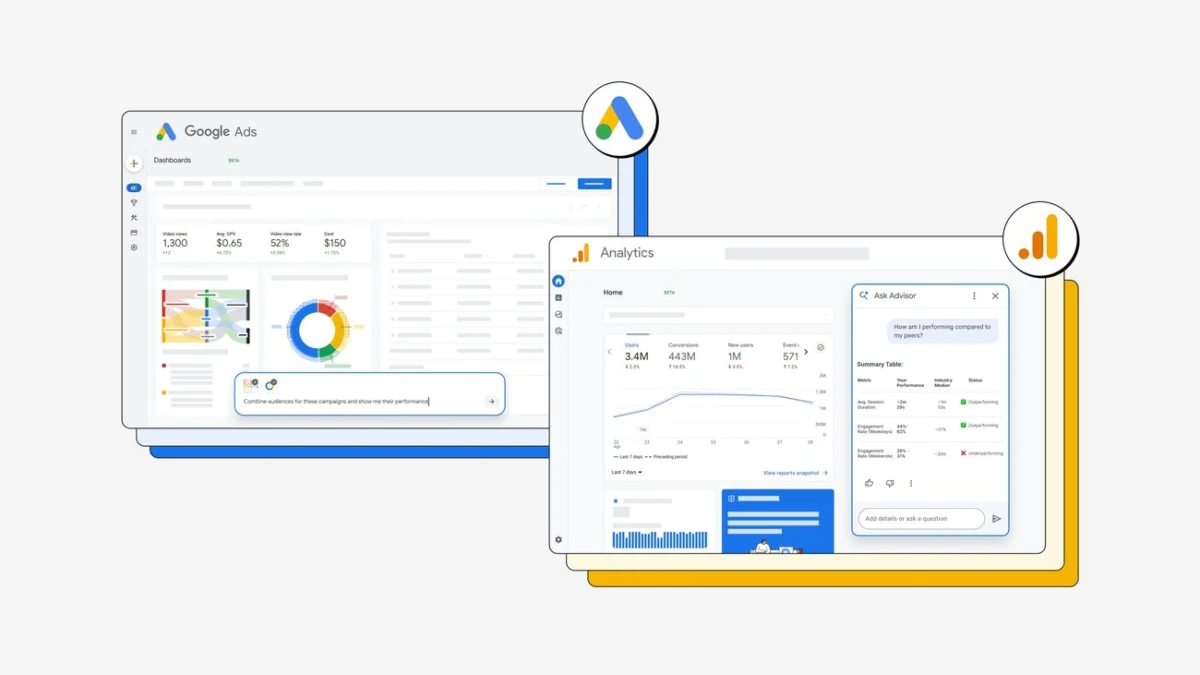
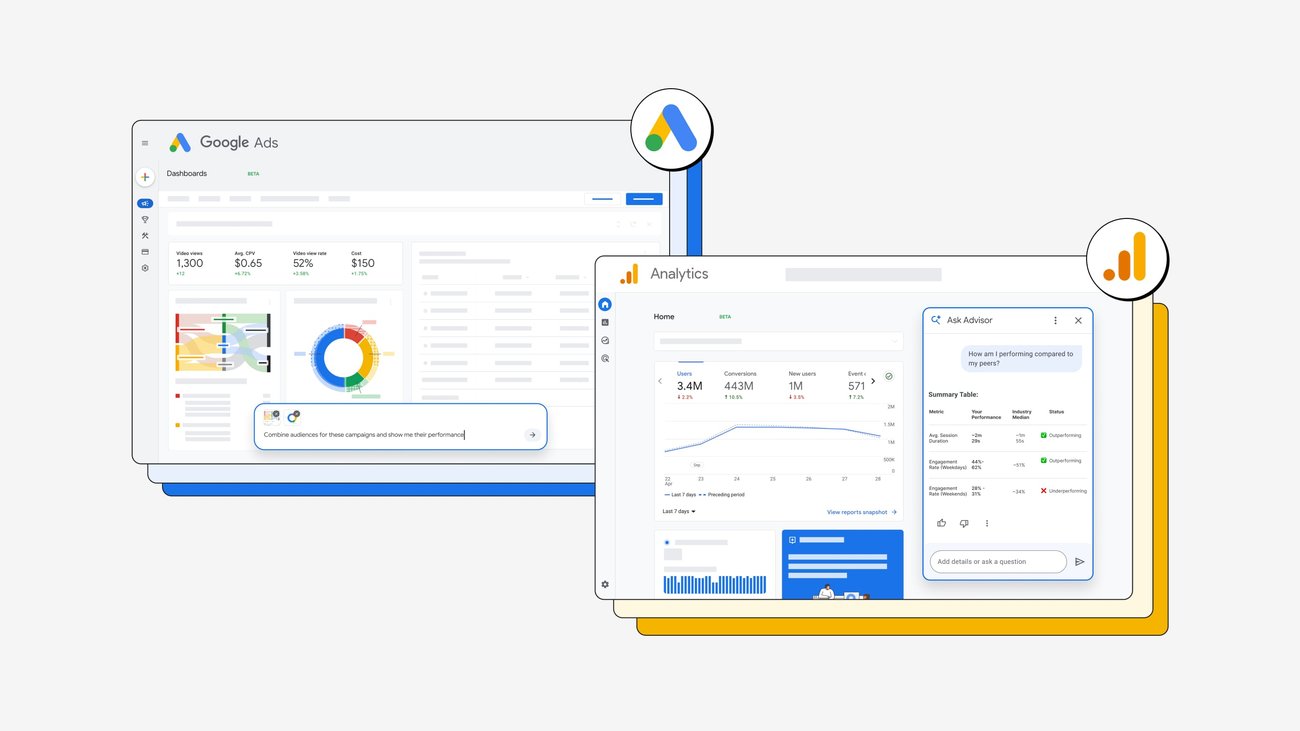
The "Ask Advisor" tool is the primary vehicle for this experience. Integrated directly into the Google Ads and Google Analytics interfaces, it allows users to engage in a dialogue with their data. Instead of navigating through multiple menus to find a specific report, a marketer can simply ask, "Why did my conversion rate drop in the Midwest last week?" The agent then scans the relevant data points, identifies correlations—such as a competitor’s increased spend or a localized seasonal trend—and presents a summarized finding. This capability addresses a long-standing pain point for small to medium-sized businesses that may lack the resources for a dedicated data science team.
Real-Time Insights and the Revamped Homepage Experience
One of the most immediate changes users will notice is the transformation of the Google Analytics and Google Ads homepages. For analyst teams, staying abreast of sudden performance fluctuations is a constant struggle. Google has addressed this by placing AI Overviews at the top of the homepage. These overviews serve as an executive summary, highlighting significant updates that have occurred since the user’s last login.
These summaries are not merely static reports; they are dynamic and actionable. If an AI Overview identifies a seasonal peak in sales, the user can click on the data card to transition the context directly into Ask Advisor for a deeper dive. Furthermore, Google has introduced a notification system that allows users to receive these smart summaries via email or phone. This ensures that stakeholders remain informed about critical shifts without needing to be constantly tethered to the platform dashboard.
In Google Ads, the homepage has been similarly updated with personalized AI-powered insight cards. These cards are tailored to the specific needs of the business, providing context on how competitor movements are affecting impression shares or suggesting emerging trends that could be leveraged to capture new demand. A new prompt box located above these insights allows for further customization, enabling marketers to generate bespoke insights based on their current strategic priorities.
Democratizing Data Expertise through Visual Reporting
Reporting has historically been one of the most time-consuming aspects of marketing management. The process of exporting raw data, cleaning it, and visualizing it in a way that is digestible for stakeholders often takes hours, if not days. Google’s new "Dashboards" feature—currently rolling out in Google Ads and slated for Google Analytics in the near future—aims to eliminate this friction.
Using simple text prompts, marketers can now transform raw datasets into clear, professional visualizations. A user might type, "Show me a comparison of mobile versus desktop performance for the last quarter as a bar chart," and the system will generate the visual instantly. More importantly, every report is accompanied by an AI-generated real-time summary that explains the "why" behind the numbers. This narrative layer is crucial for marketers who need to justify budget increases or pivot strategies to executive leadership, as it provides the evidentiary support needed for persuasive storytelling.
Benchmarking and Strategic Growth
A significant addition to the Google Analytics suite is the new benchmarking feature powered by Ask Advisor. In a competitive market, knowing how one’s performance stacks up against industry standards is vital. However, obtaining accurate competitive data is often difficult and expensive.
Google’s new tool allows businesses to compare their campaign performance against anonymized averages from similar businesses. This feature provides a reality check for marketers, helping them identify whether a dip in performance is an isolated issue or a broader industry trend. By understanding where they stand relative to their peers, businesses can refine their strategies with greater confidence, identifying untapped opportunities for growth or areas where they may be over-investing.
Industry Reaction and Practical Application
The early feedback from the marketing community has been largely positive, emphasizing the speed and efficiency gains provided by the new tools. Kevin Marshall, Paid Media Director at Gardyn, noted that Ask Advisor has become a primary tool for directional checks on media performance. According to Marshall, the speed at which the AI can process and summarize data allows his team to "dig deeper and make shifts that improve performance sooner."
This sentiment reflects a broader trend in the industry where the value of a marketer is increasingly measured by their ability to interpret and act on data rather than their ability to collect it. By automating the diagnostic phase of marketing, Google is enabling a more agile approach to campaign management.
Strategic Implications and Market Context
The deployment of these AI tools is part of a larger competitive landscape where tech giants are vying for dominance in the generative AI space. Google’s Gemini-powered updates are a direct response to similar moves by competitors like Meta and Microsoft, who have also integrated AI assistants into their advertising platforms.
However, Google’s advantage lies in its vast ecosystem. By bridging the gap between Ads (the execution side) and Analytics (the measurement side) with a unified AI agent, Google is creating a closed-loop system that simplifies the user experience. For agencies, this could lead to a shift in business models. Instead of billing for reporting hours, agencies may move toward value-based pricing, focusing on the strategic insights and creative direction that AI cannot yet replicate.
From a data privacy perspective, Google has been careful to emphasize that its benchmarking tools use anonymized averages. As the industry moves away from individual-level tracking, aggregated and modeled data—bolstered by AI—will become the new standard for measurement. Google’s investment in these tools suggests a future where "privacy-centric" and "data-rich" are no longer mutually exclusive terms.
Conclusion: The Future of the AI-Augmented Marketer
The introduction of agentic AI across Google’s marketing platforms marks a definitive end to the era of manual data analysis. As these tools become more sophisticated, the role of the marketer will continue to evolve toward that of a "pilot" or "orchestrator" of AI systems.
While the technology is still described as experimental in some contexts, the integration of Gemini into the daily workflow of millions of advertisers suggests that AI is no longer a peripheral feature but the core engine of modern marketing. For businesses, the message is clear: the path to growth in an increasingly complex digital economy lies in the ability to leverage AI to move from insight to action with unprecedented speed. As these features continue to roll out globally, the competitive gap between those who embrace AI-driven agility and those who remain tethered to manual processes is likely to widen significantly.
