

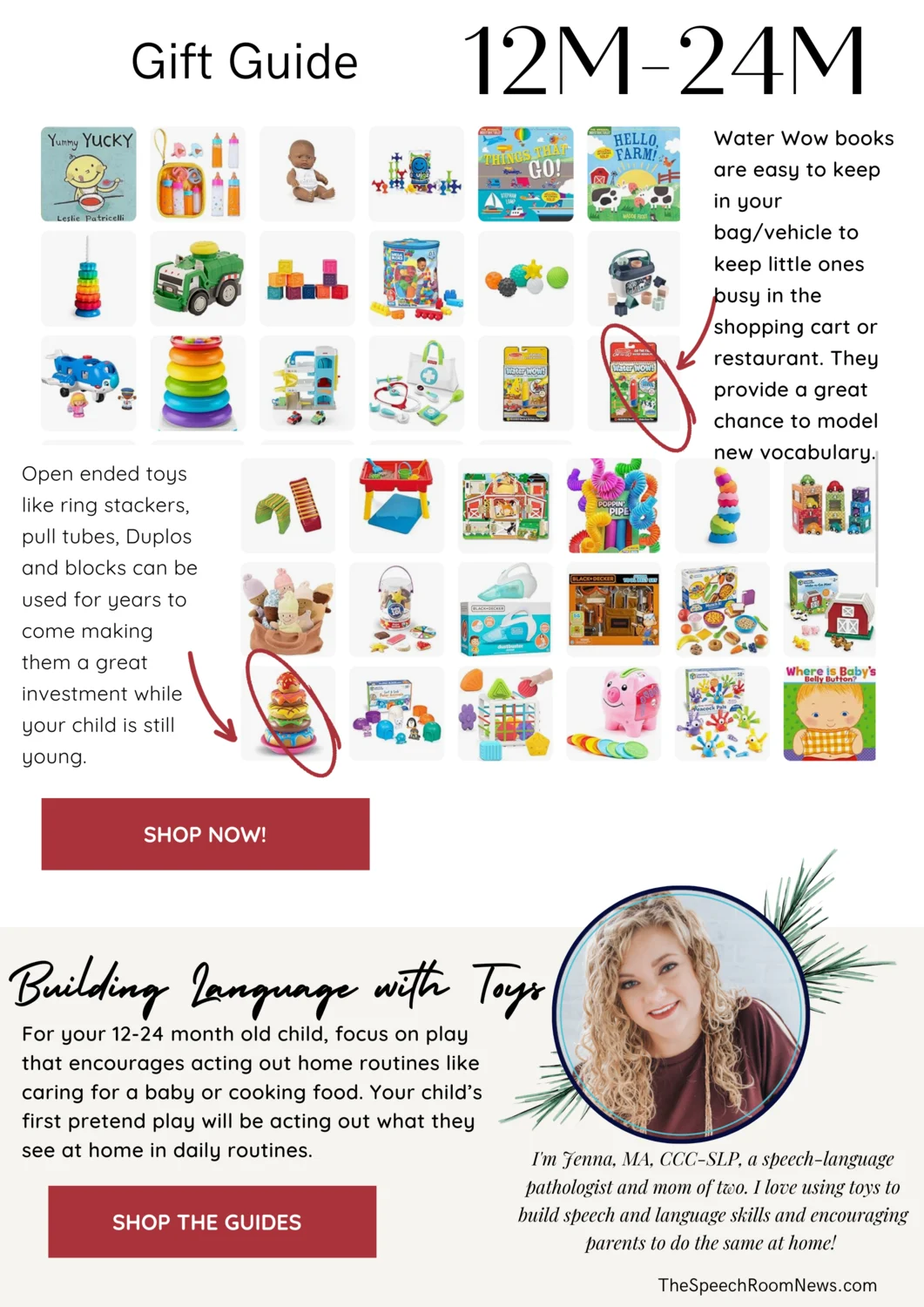
Jenna Kirk, MA, CCC-SLP, a pediatric speech-language pathologist and mother of two, including a child diagnosed with Childhood Apraxia of Speech (CAS), has unveiled a series of meticulously curated toy gift guides designed to enhance speech and language development in children. The initiative aims to provide parents, educators, and caregivers with expert-vetted recommendations for toys that not only entertain but also actively contribute to foundational communication skills. These guides, organized by age and accessible via Amazon storefronts and a downloadable PDF, address a critical need for accessible resources in promoting early intervention and developmental support. Kirk’s personal and professional experiences underscore the significance of intentional toy selection, particularly during crucial developmental windows and for children facing speech and language challenges. The release is timely, coinciding with the holiday shopping season, offering a practical solution for gift-givers seeking meaningful and beneficial presents.
The Foundational Role of Play in Speech and Language Development
The development of speech and language skills is intrinsically linked to early childhood play. Play is not merely a recreational activity for children; it is a primary mechanism through which they learn about the world, interact with others, and develop cognitive and communicative abilities. Experts in child development and speech-language pathology consistently emphasize that engaging in varied forms of play provides rich contexts for language acquisition. Through play, children naturally encounter new vocabulary, practice sentence structures, understand social cues, and develop narrative skills. For instance, dramatic play, such as pretending to cook or care for a doll, encourages children to take on roles, use imaginative language, and engage in turn-taking conversations, all of which are vital for communication development.
Moreover, play fosters problem-solving skills, builds imagination, and promotes emotional regulation, all indirectly supporting a child’s capacity to communicate effectively. Toys that encourage open-ended play, creativity, and social interaction are particularly beneficial. These include building blocks, puzzles, art supplies, and various role-playing sets. Unlike electronic devices that often provide passive entertainment, well-chosen physical toys necessitate active engagement, prompting children to describe their actions, articulate their needs, and respond to prompts, thereby creating numerous opportunities for language practice. The American Speech-Language-Hearing Association (ASHA) frequently highlights play-based interventions as a cornerstone of pediatric speech therapy, advocating for parents to integrate therapeutic play into daily routines to reinforce clinical progress.
Prevalence of Speech and Language Disorders and the Need for Support

Speech and language disorders are among the most common developmental challenges affecting children globally. According to data from the Centers for Disease Control and Prevention (CDC), approximately 1 in 12 children aged 3-17 years in the United States has had a disorder of speech, language, voice, or swallowing in the past 12 months. This statistic underscores the widespread impact of these conditions on children and their families. Childhood Apraxia of Speech (CAS), the specific disorder affecting Kirk’s own child, is a neurological speech sound disorder in which the brain has difficulty coordinating the muscle movements necessary to make sounds, syllables, and words. Children with CAS know what they want to say but their brains struggle to plan and execute the precise movements of the tongue, lips, jaw, and palate. This can lead to inconsistent speech errors, difficulty with sequencing sounds, and problems with prosody (intonation, stress, and rhythm of speech).
The challenges associated with CAS and other speech and language disorders can significantly affect a child’s academic performance, social interactions, and emotional well-being. Early identification and intervention are paramount to improving outcomes. Speech-language pathologists play a critical role in diagnosing these disorders and developing individualized treatment plans. However, the effectiveness of therapy is often amplified when parents and caregivers are equipped with tools and strategies to support language development at home. This is where resources like Kirk’s gift guides become invaluable, translating complex therapeutic principles into practical, accessible recommendations for everyday play. The guides empower parents to actively participate in their child’s developmental journey, transforming playtime into an enriching learning experience that complements formal therapy.
Expert Methodology: Criteria for Toy Selection

Jenna Kirk’s comprehensive gift guides are informed by her extensive professional experience as a pediatric speech-language pathologist and her personal insights as a mother. The selection process for the recommended toys is rooted in established principles of child development and speech therapy. While specific criteria were not explicitly detailed in the initial announcement, an informed analysis suggests that Kirk prioritizes toys that:
- Promote Interactive Communication: Toys that require or encourage interaction between the child and a caregiver or peer. This includes board games, cooperative play sets, and dramatic play items that necessitate conversation, turn-taking, and negotiation.
- Encourage Open-Ended Play: Toys that do not have a single prescribed use, allowing children to use their imagination and creativity. Examples include building blocks, play-doh, art supplies, and open-ended construction sets. These types of toys facilitate diverse language use as children describe their creations and intentions.
- Target Specific Language Domains: Toys designed to build vocabulary (e.g., matching games, picture cards), develop sentence structure (e.g., storytelling prompts, puppet shows), enhance phonological awareness (e.g., rhyming games, sound-matching activities), or improve pragmatic skills (e.g., social story scenarios, role-playing games).
- Engage Multiple Senses: Toys that offer tactile, visual, and auditory stimulation can capture a child’s attention and provide varied sensory input, which can be particularly beneficial for children with certain developmental differences.
- Are Developmentally Appropriate: The guides are meticulously sorted by age, ensuring that the recommended toys align with the cognitive and motor skills typically expected at different stages of childhood. This maximizes engagement and learning potential, preventing frustration and promoting a sense of accomplishment.
- Facilitate Imitation and Modeling: Toys that can be used to model speech sounds, words, and phrases, and encourage the child to imitate. This is particularly relevant for children with CAS or other articulation disorders.
By adhering to these principles, Kirk’s guides transcend mere entertainment, transforming playtime into a targeted therapeutic opportunity. The emphasis on age-sorting further simplifies the selection process for parents, ensuring they can easily identify appropriate items for their child’s specific developmental stage.
A Brief Chronology of Therapeutic Play and Educational Toys

The concept of using toys as educational and therapeutic tools has evolved significantly over centuries. While ancient civilizations certainly recognized the role of play in child development, the intentional design of toys for specific developmental outcomes gained prominence in the 18th and 19th centuries with educational reformers like Jean-Jacques Rousseau and Friedrich Fröbel, the founder of the kindergarten movement. Fröbel’s "gifts" (e.g., balls, blocks, cylinders) were specifically designed to teach children about form, color, and number, laying an early foundation for structured educational play.
The 20th century witnessed a rapid expansion in the understanding of child psychology and development, leading to the emergence of specialized educational toys. Pioneers like Maria Montessori advocated for hands-on, self-directed learning using specially designed materials. The mid-to-late 20th century saw the integration of play into various therapeutic modalities, including occupational therapy, physical therapy, and speech-language pathology. Researchers began to systematically study how different types of play and toys could address specific developmental delays or disorders.
In recent decades, with advancements in neuroscience and a greater public awareness of developmental disorders, the market for therapeutic and educational toys has boomed. This has led to a proliferation of products, making it challenging for parents to discern genuinely beneficial items from those that merely claim educational value. Kirk’s guides represent a contemporary response to this challenge, leveraging expert knowledge to curate a trustworthy list, thereby streamlining the process for consumers and ensuring that recommended items align with current best practices in speech and language therapy. The digital format, accessible via Amazon and downloadable PDFs, also reflects the modern evolution of resource dissemination, making expert advice more readily available than ever before.

Inferred Statements and Broader Implications
The release of these gift guides has significant implications for various stakeholders in child development.
From the Perspective of Speech-Language Pathologists: Many SLPs would likely welcome such a resource, recognizing the common challenge parents face in selecting toys that support therapeutic goals. An inferred statement might be: "These guides are an invaluable resource, bridging the gap between clinical recommendations and practical home application. Parents frequently ask for specific toy recommendations, and having a curated, expert-vetted list significantly streamlines that process and reinforces our work outside the therapy room." The convenience of an age-sorted, Amazon-linked list also addresses the practical constraints of busy parents.

From the Perspective of Parents and Caregivers: For parents navigating the complexities of child development, especially those with children diagnosed with speech or language disorders, these guides offer much-needed clarity and confidence. An inferred parental reaction could be: "It’s often overwhelming to choose toys from the vast market; having an expert guide from an SLP, especially one who understands challenges like Apraxia, provides immense peace of mind. It feels good to know that the gifts we choose are not just fun, but also genuinely beneficial for our child’s development." The personal touch of Jenna Kirk, as a mother herself, adds an element of relatability and trust.
From the Perspective of Educators: Early childhood educators and special education teachers also stand to benefit. They often seek ways to integrate therapeutic play into classroom settings. An inferred statement from an educator might be: "Play-based learning is a cornerstone of early education. Resources like these guides support our efforts to create rich, language-stimulating environments in the classroom and can be shared with parents to extend learning into the home, fostering a consistent approach to developmental support."
The broader implications of these guides extend to several areas:

- Empowering Parents: By democratizing access to specialized knowledge, the guides empower parents to make informed choices, transforming them from passive consumers into active participants in their child’s developmental progress.
- Shifting Consumer Behavior: The initiative encourages a more conscious approach to toy purchasing, moving beyond superficial appeal towards products with demonstrable developmental benefits. This could influence market demand for educational and therapeutic toys.
- Reinforcing Early Intervention: The guides subtly reinforce the critical message that intervention for speech and language disorders is not confined to clinical settings but can be integrated into everyday activities, making it less intimidating and more accessible.
- Support for Neurodiverse Children: By highlighting the importance of specific toys for conditions like CAS, the guides contribute to a broader understanding and support for neurodiverse children, promoting inclusive play environments.
- Digital Accessibility and Convenience: The use of Amazon Gift Guides and downloadable PDFs makes the expert advice readily available to a wide audience, overcoming geographical barriers and providing instant access to resources.
Accessing the Guides and Future Engagement
Jenna Kirk’s comprehensive gift guides are readily available to the public. The main resources include a series of Amazon Gift Guides, conveniently sorted by age group, which can be accessed directly through her Amazon storefront at amazon.com/shop/speechroomnews. For those who prefer a consolidated, printable format, a detailed PDF document, titled "Christmas Toy Guide," is also available for direct download via the provided link: thespeechroomnews.com/wp-content/uploads/2023/11/Christmas-Toy-Guide.pdf. These resources encompass recommendations for various age ranges, ensuring suitability for infants through school-aged children, and even include a dedicated section for "stocking stuffers" designed to promote language and interaction for the entire family.
This initiative by Jenna Kirk, MA, CCC-SLP, exemplifies a proactive and informed approach to supporting children’s speech and language development. By offering expert-curated recommendations in an easily accessible format, she equips parents and caregivers with practical tools to foster essential communication skills through purposeful play. Her commitment, informed by both professional expertise and personal experience with Childhood Apraxia of Speech, underscores the profound impact that thoughtful toy selection can have on a child’s developmental trajectory. As the holiday season approaches, these guides stand as a valuable resource for gifting with a purpose, promising both joy and significant developmental enrichment for countless children.
