

The digital landscape has undergone a profound transformation since the turn of the millennium, evolving from a repository of text-based data into a vibrant, multi-sensory environment. This week, Google officially marks the 25th anniversary of Google Images, a milestone that celebrates the transition of search from a purely linguistic exercise to a sophisticated visual exploration of the world. To commemorate a quarter-century of progress, the technology giant is introducing significant updates to its visual search infrastructure, including a reimagined homepage for Google Images and the integration of advanced generative artificial intelligence directly into Search results. These developments represent the latest chapter in a history that began with a single green dress and has culminated in a world where users can search for anything they see, or even imagine, in real time.
The Next Frontier: Immersive Exploration and Generative Creation
As part of the anniversary celebrations, Google is rolling out two primary features designed to deepen the user’s connection with visual content. The first is a comprehensive redesign of the Google Images homepage. Moving away from the static grid that has defined the service for years, the new interface features a dynamic, immersive gallery. This feed is intelligently tailored to individual user interests and updated in real time, functioning similarly to a personalized discovery engine.
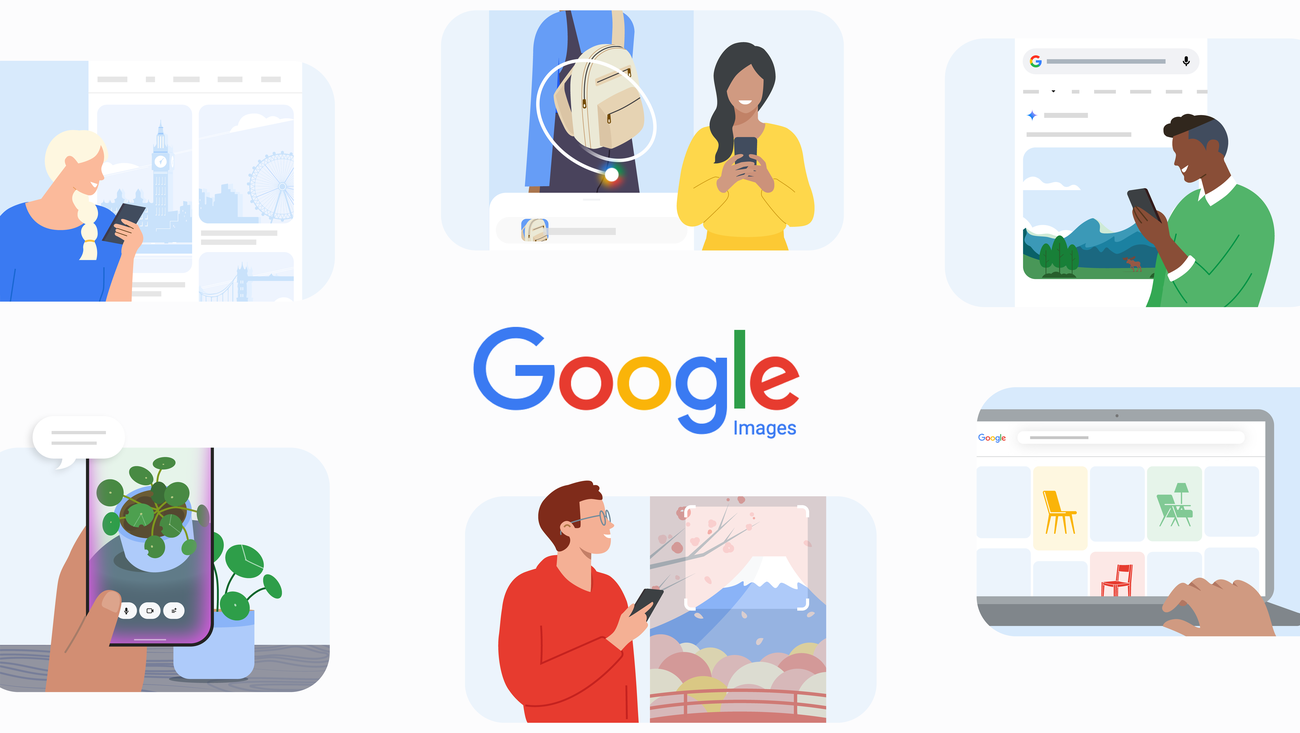
A key component of this update is the integration of "Collections." As users browse and save images, these ideas appear as accessible tabs above the main gallery, allowing for seamless continuity in research or creative projects. This feature is scheduled for a phased rollout on desktop for English-language users in the United States, requiring a signed-in Google Account to access the personalized experience.
The second major update is the introduction of on-the-fly image generation within AI Overviews. Leveraging Google’s latest "Nano Banana" model—a high-efficiency, multi-modal AI architecture—users can now transform text prompts into custom, high-quality visuals without leaving the search interface. This tool is designed for scenarios where the specific image a user envisions does not yet exist on the open web. By bridging the gap between imagination and digital reality, Google aims to position Search not just as a tool for retrieval, but as a platform for creation. This capability is set to expand globally across regions that currently support Google’s AI Mode.
A Historical Retrospective: From Versace to Computer Vision
The genesis of Google Images is often cited as one of the most famous examples of user-driven innovation in tech history. In 2000, following the Grammy Awards, the internet experienced an unprecedented surge in queries related to the green Versace silk chiffon dress worn by Jennifer Lopez. At the time, Google Search returned only a list of blue text links. Engineers quickly realized that users were not looking for articles about the dress; they wanted to see the dress itself.
In July 2001, Google Images launched with an initial index of 250 million images. This was the first step in a long-term strategy to index the world’s visual information. By 2009, the introduction of "Similar Images" marked the beginning of algorithmic visual association. This feature allowed users to refine their searches based on visual characteristics rather than just keywords—for instance, distinguishing between a "bow" used in archery and a "bow" used in hair styling through visual context alone.
The year 2011 saw the debut of "Search by Image," a breakthrough in reverse-image search technology. By allowing users to upload a file or paste a URL into the search bar, Google enabled the identification of original sources and the discovery of higher-resolution versions of existing photos. This tool became an essential asset for journalists, researchers, and consumers alike, providing a method to verify the authenticity of visual content across the web.
The Rise of the Camera as a Search Box
The mid-2010s signaled a shift toward mobile-first visual search. In 2018, the launch of Google Lens integrated search capabilities directly into the smartphone camera. This allowed for real-time interaction with the physical world, enabling users to translate menus, identify plant species, or shop for furniture simply by pointing their lenses at an object.

Building on this, the 2022 introduction of "Multisearch" allowed for multimodal queries—the ability to search using an image and text simultaneously. This addressed the complexity of human curiosity, such as taking a photo of a pattern and adding the text "wallpaper" to find specific interior design products.
By 2024, "Circle to Search" further reduced the friction of digital discovery. By allowing users to highlight any part of their Android screen with a simple gesture, Google eliminated the need to switch between applications to find information. As of 2026, this feature is available on over 580 million devices globally, reflecting the massive scale and adoption of gesture-based search.
Recent Innovations and the 2025-2026 Roadmap
In the last two years, the pace of innovation has accelerated through the integration of Large Language Models (LLMs) and advanced computer vision. In 2025, Google introduced "Search Live," a feature that facilitates an interactive voice conversation with AI Mode while sharing a live camera feed. This effectively turned search into a real-time assistant, capable of helping users troubleshoot mechanical issues or provide culinary guidance through video input.

The introduction of "Visual Results in AI Mode" also transformed the e-commerce landscape. Users can now use conversational language to find highly specific items—such as "barrel jeans that aren’t too baggy"—and receive a curated grid of shoppable products. This move highlights Google’s intent to compete more directly with visual-heavy social platforms and dedicated e-commerce engines.
Most recently, in early 2026, Google debuted "Circle to Search Multi-Object Recognition." Utilizing a "visual image fan-out" technique, the AI can now deconstruct a complex image into its constituent parts. For example, a user can circle a photo of a fully furnished room and simultaneously search for the lamp, the rug, and the coffee table. This is complemented by the "Intelligent Search Box," which allows for the bulk upload of images paired with complex, multi-part questions, providing a comprehensive AI-driven response that synthesizes information from all provided visuals.
Data and Market Analysis: The Scale of Visual Search
The evolution of Google Images is supported by staggering data. While Google does not frequently release specific query counts for image search, industry analysts estimate that billions of visual searches are conducted daily. The shift toward visual search is particularly pronounced among younger demographics; reports suggest that Gen Z users increasingly rely on visual and social platforms for discovery, a trend Google has countered by making its traditional Search engine more "vibey" and visually intuitive.

The technical "visual image fan-out" technique mentioned by Google’s engineering team is a critical component of their current AI strategy. By breaking a single image into dozens of sub-queries, the system can understand context in a way that mimics human perception. This requires immense computational power, often handled by Google’s custom-designed Tensor Processing Units (TPUs) in the cloud, as well as on-device processing for mobile-specific features like Circle to Search.
Statements and Industry Implications
Brad Kellett, Senior Engineering Director at Google Search, emphasized that the goal of these innovations is to make the world’s visual information "instantly accessible and useful." From a journalistic perspective, these advancements suggest a future where the barrier between "seeing" and "knowing" is virtually eliminated.
However, this rapid progression also raises significant questions regarding digital copyright and the provenance of information. As Google moves toward generating images "from scratch" using its Nano Banana model, the industry will likely face new debates over the training data used for these models and the potential impact on human creators. Furthermore, the ability to reverse-search or identify objects in real time continues to spark discussions regarding privacy in public spaces and the ethical use of augmented reality.

Broader Impact and the Future of Discovery
The 25-year journey of Google Images reflects a broader societal shift toward visual literacy. Visual search is no longer a niche tool for finding a celebrity’s dress; it is an essential component of modern education, commerce, and daily problem-solving. By integrating generative AI, Google is transitioning from a librarian of existing images to an architect of new ones.
Looking ahead, the implications for e-commerce are particularly significant. The "Visual Results in AI Mode" and "Multi-Object Recognition" features suggest a future where every image on the internet becomes a storefront. For businesses, this means that visual optimization—ensuring products are high-quality and easily "readable" by AI—is becoming as important as traditional keyword SEO.
As Google Images enters its next quarter-century, the focus appears to be on creating a "frictionless" search experience. Whether through a live camera feed, a circled image on a social media post, or a generative AI prompt, the company is betting on a future where search is an ambient, constant presence, integrated into the very way we perceive the world around us. The transition from a simple tab of pictures to a multi-modal, generative engine is complete, setting the stage for a new era of visual intelligence.
