

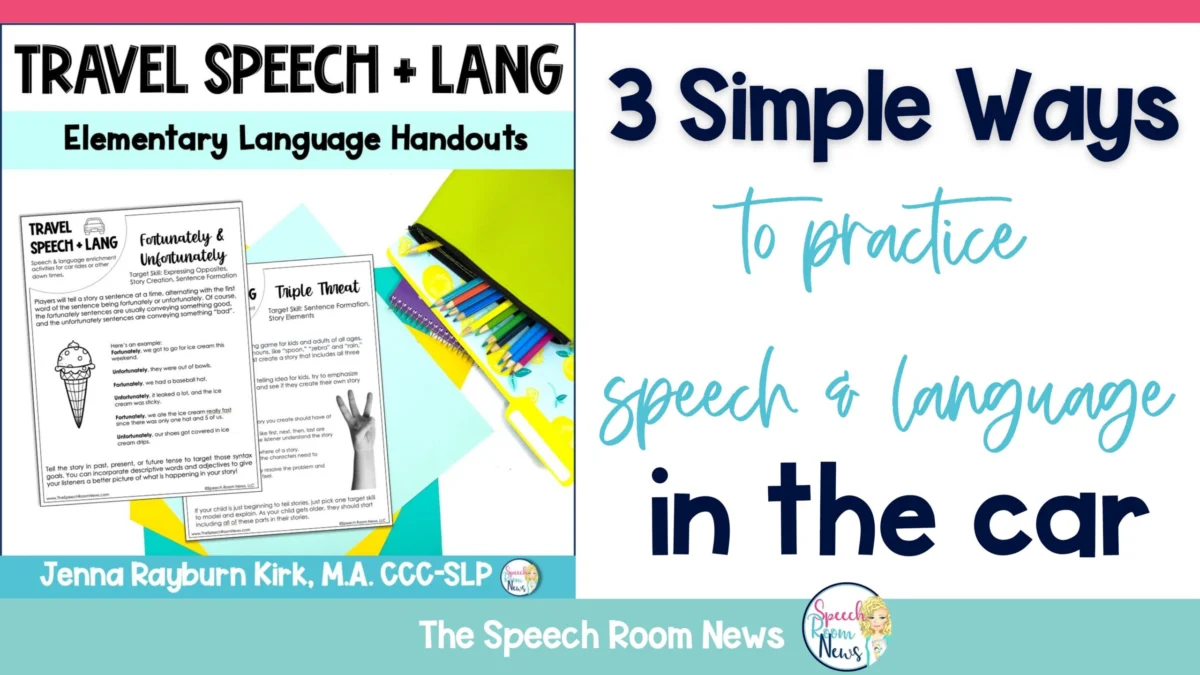
Finding dedicated time to practice crucial speech and language skills can often feel like an insurmountable challenge for busy parents. In a world increasingly saturated with digital distractions, the daily commute, whether to school, errands, or extracurricular activities, presents a unique and often overlooked opportunity for intentional engagement. Far from being merely transit time, the confines of a car can be transformed into a focused, interactive learning environment, significantly contributing to a child’s communication development. This article delves into the profound benefits of utilizing car rides for speech and language practice and outlines practical, engaging strategies for parents to implement, fostering linguistic growth in an organic and enjoyable manner.
The Critical Role of Early Language Development and the Need for Consistent Practice
Speech and language development are foundational pillars for a child’s overall cognitive, social, and academic success. According to the National Institute on Deafness and Other Communication Disorders (NIDCD), approximately 8 to 9 percent of young children in the U.S. have a speech sound disorder, and many more experience broader language delays. Early intervention is paramount, with research consistently demonstrating that timely and consistent support can significantly improve outcomes. However, the efficacy of formal therapy sessions, typically conducted by Speech-Language Pathologists (SLPs), often hinges on the "carryover" of learned skills into everyday contexts. This is where parents become indispensable partners, extending the therapeutic environment beyond clinic walls.
Parents of children with speech or language delays often juggle demanding schedules, making it challenging to carve out specific times for structured home practice. This common predicament underscores the value of integrating therapeutic activities into existing routines. The car, with its captive audience and relatively distraction-free setting, emerges as an ideal, often underutilized, space for such integration.
Transforming Commutes into Learning Labs: The Unsung Benefits
The car ride, frequently associated with boredom or screen time for children, possesses inherent advantages for speech and language practice:
- Distraction-Free Environment: Unlike a busy home environment filled with toys, television, or other siblings, the car offers a contained space where external stimuli are minimized. This allows for greater focus on auditory input and verbal interaction, crucial for language acquisition and articulation practice. Children are less likely to be visually overstimulated, promoting deeper engagement in conversation.
- Naturalistic Communication: Car conversations inherently foster a natural back-and-forth rhythm of communication. This organic exchange is vital for developing pragmatic language skills, such as turn-taking, maintaining topics, and responding appropriately. The shared experience of the journey itself provides a wealth of natural conversational prompts.
- Vocabulary Expansion in Context: As children observe the passing scenery, road signs, and familiar landmarks, they are exposed to a rich tapestry of new words and concepts. Discussing what they see, hear, and anticipate provides a natural context for vocabulary expansion, aiding comprehension and expression. For instance, explaining why a car "accelerates" or "decelerates" or describing the "architecture" of buildings observed.
- Combatting Boredom Productively: For many children, car rides can be monotonous. Engaging in interactive speech and language games offers a stimulating alternative to passive entertainment like tablets or smartphones, transforming potential frustration into productive learning. This shift also helps reduce reliance on screen time, which some studies link to potential delays in speech and language development in very young children.
- Maximizing Valuable Time: For time-strapped parents, integrating learning into an unavoidable daily activity like commuting is an efficient way to reinforce therapy goals without adding another item to an already packed schedule. It transforms otherwise idle minutes into meaningful developmental opportunities.
Dr. Eleanor Vance, a leading pediatric Speech-Language Pathologist specializing in early intervention, emphasizes this approach: "The car is a golden opportunity. It’s a contained space where parents and children are physically close, and distractions are naturally limited. This creates an ideal setting for authentic conversational exchanges and targeted practice, bridging the gap between clinical therapy and real-world application."
Structured Engagement: Three Core Strategies for In-Car Practice
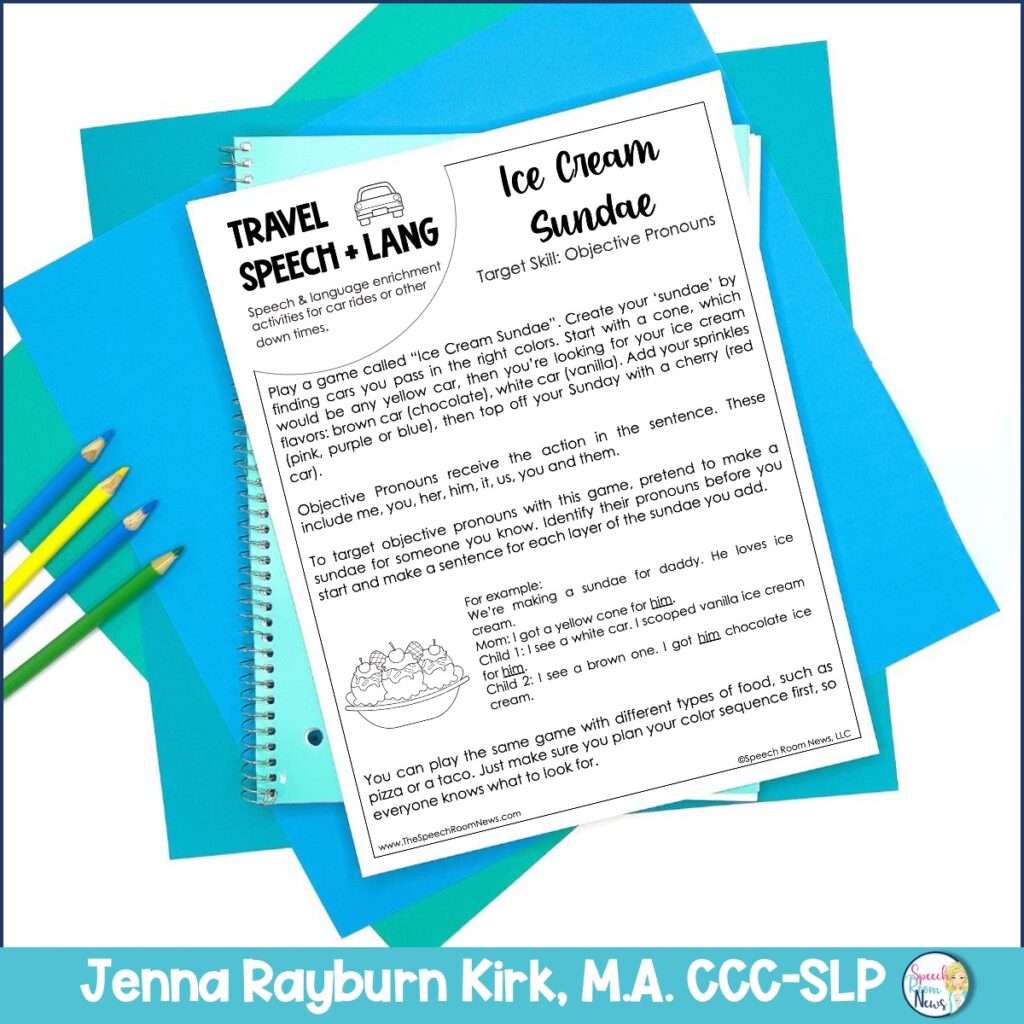
Here are three simple yet powerful activities, adaptable for various ages and skill levels, that parents can integrate into their car commutes:
1. The Grocery Game: Cultivating Question Formation and Semantic Skills
This engaging game targets crucial grammatical structures and expands a child’s understanding of word relationships.
- How to Play: One player (often the parent first, to model) secretly thinks of an item found in a grocery store. The other players take turns asking yes/no or "wh-" questions to guess the item.
- Grammar Target Skill: Primarily, question formation. This game encourages children to correctly structure interrogative sentences (e.g., "Is it in the freezer aisle?" rather than "Freezer aisle it?").
- Broader Language Skills Targeted:
- Functions: (e.g., "Does it melt?", "Do you eat it for breakfast?")
- Actions: (e.g., "Do you bite it?", "Do you pour it?")
- Categories: (e.g., "Is it a fruit?", "Is it a type of dairy product?")
- Associates: (e.g., "Is it something that goes on bread?", "Is it found near eggs?")
- Descriptive Language: Encouraging questions that involve adjectives (e.g., "Is it crunchy?").
- Inferencing and Deductive Reasoning: Children learn to use previous answers to narrow down possibilities.
- Adaptation for Different Ages:
- Younger Children (2-4 years): Focus on basic yes/no questions and simple categories. The parent can provide two choices (e.g., "Is it a fruit or a vegetable?").
- Preschoolers (4-6 years): Introduce "wh-" questions (What, Where, Who, When, Why). Encourage them to formulate complete sentences.
- Elementary Schoolers (6+ years): Challenge them to ask more complex questions, use descriptive adjectives, and think strategically about categories.
- Example Dialogue:
- Parent (thinking of "apple"): "I’m thinking of something from the grocery store."
- Child 1: "Is it big?"
- Parent: "It can be big or small."
- Child 2: "Is it a fruit?"
- Parent: "Yes, it is!"
- Child 1: "Is it red?"
- Parent: "Sometimes, yes. It can also be green or yellow."
- Child 2: "Do you eat it with peanut butter?"
- Parent: "You certainly can! Good question!"
- Child 1: "Is it an apple?"
- Parent: "You got it!"
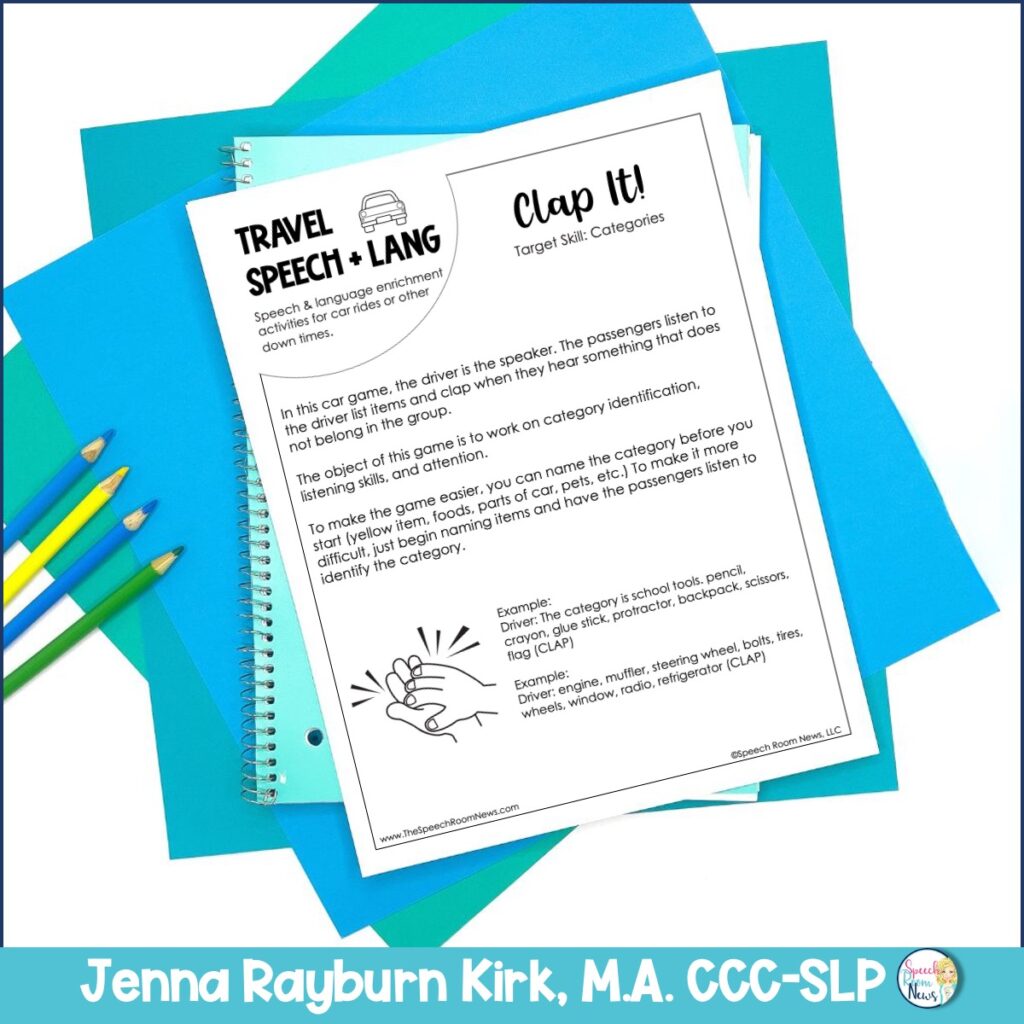
2. Red Light Race: Articulation Practice and Auditory Bombardment
This dynamic game turns traffic stops into opportunities for focused sound practice, employing the effective technique of auditory bombardment.
- How to Play: When the car stops at a red light, players take turns naming as many items as they can within a chosen category, all of which must include a specific target sound. One person names, the other counts.
- Target Skill: Primarily, articulation of specific speech sounds (phonemes) and phonological awareness.
- Key Technique: Auditory Bombardment: This involves repeated exposure to the target sound. The adult’s modeling of words with the target sound helps the child’s brain register the sound’s correct production and placement within words, enhancing their ability to produce it themselves.
- Choosing Target Sounds: This should ideally align with the child’s individual speech therapy goals (e.g., ‘s’, ‘r’, ‘th’, ‘k’).
- Categories to Get Started:
- ‘S’ sound: Animals (snake, seal, squirrel), Foods (soup, sausage, strawberries, salad), Things you wear (socks, shirt, shoes, shorts), Things at school (scissors, desk, eraser).
- ‘R’ sound: Colors (red, green, brown), Animals (rabbit, bear, squirrel), Things you drive (car, truck, train, motorcycle), Things in a house (room, rug, mirror).
- ‘K’ sound: Animals (cat, dog, duck), Foods (cake, cookie, cracker), Things in a kitchen (cup, kettle, fork), Clothes (coat, jacket, socks).
- ‘L’ sound: Animals (lion, lamb, owl), Foods (lemon, apple, banana), Things in the living room (lamp, television, table).
- ‘F’ sound: Animals (fish, frog, giraffe), Foods (fruit, coffee, waffle), Things you find outside (flower, leaf, fence).
- ‘Sh’ sound: Things you wash (shampoo, soap, shower), Animals (sheep, fish), Clothes (shirt, shoes).
- Parental Modeling: The adult’s role in modeling the correct sound is crucial. Exaggerate the target sound slightly to draw attention to it. For instance, if the target is ‘s’, pronounce "s-s-snake" clearly.
- Benefits: This game not only improves articulation but also enhances a child’s ability to identify sounds in words, a critical pre-reading skill. Sarah M., a parent whose child has been working on the ‘r’ sound, shared, "The Red Light Race has been a game-changer. My son now actively listens for ‘r’ words everywhere, and his pronunciation has significantly improved because he’s getting so much practice without even realizing it’s ‘work’."
3. Triple Threat: Fostering Sentence Formation, Narrative Skills, and Creativity
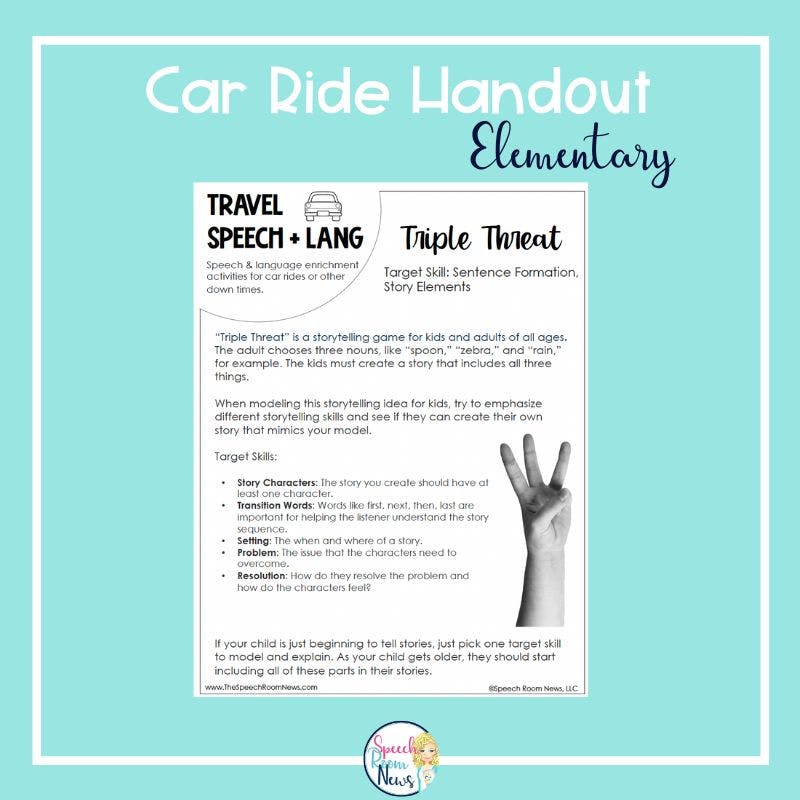
This imaginative game encourages complex sentence construction and the development of storytelling abilities.
- How to Play: The adult provides any three unrelated nouns (e.g., "dog," "milk," "bike"). The child then has to create a short story that incorporates all three items. The sillier the story, the better!
- Target Skills:
- Sentence Formation (Syntax): Encourages the child to build grammatically correct and increasingly complex sentences.
- Narrative Skills/Story Retell: Develops the ability to sequence events, create a plot (even a simple one), introduce characters, and use descriptive language. These are vital for reading comprehension and written expression.
- Vocabulary: Using the given nouns and adding other words to build the story.
- Imagination and Creativity: Promotes divergent thinking and imaginative play.
- Temporal Concepts: Encouraging the use of words like "first," "then," "next," "after that," "finally."
- Scaffolding and Prompts:
- Start Simple: For younger children, begin with two nouns and focus on just one or two sentences.
- Prompt for Details: "What kind of dog?", "Where was the bike?", "What happened after the milk spilled?"
- Encourage Emotion: "How did the dog feel?", "Was the bike happy or sad?"
- Model: The parent can create a story first to demonstrate.
- Example Noun Triplets:
- Cloud, shoe, sandwich
- Robot, tree, music
- Key, ocean, dinosaur
- Pillow, rocket, chocolate
- Benefits: This activity is excellent for building the foundational skills needed for academic writing and effective verbal communication. It teaches children to connect disparate ideas logically and express them coherently.
Beyond the Games: General Strategies for Language-Rich Car Rides
Beyond these structured games, parents can adopt broader strategies to enrich car-based language learning:
- "I Spy" with a Twist: Instead of just naming the object, describe it using multiple adjectives (e.g., "I spy something tall, green, and leafy" for a tree). This builds descriptive language and attribute identification.
- Sing-Alongs and Rhymes: Engaging with children’s songs and nursery rhymes enhances phonological awareness (the ability to recognize and manipulate sounds in spoken language), rhythm, and vocabulary.
- Describing the Scenery: Encourage children to narrate what they see outside the window, using full sentences and descriptive words. "I see a big, red truck carrying a long, wooden ladder."
- "What If" Scenarios: Pose hypothetical questions to spark imaginative thinking and complex sentence structures: "What if cars could fly?", "What if animals could talk?"
- Audiobooks and Podcasts: For slightly older children, listening to age-appropriate audiobooks or educational podcasts can passively expand vocabulary, improve listening comprehension, and expose them to various narrative structures.
- Predicting Outcomes: When approaching a familiar destination, ask, "What do you think we’ll do first when we get to Grandma’s house?" This encourages sequencing and planning.
The Collaborative Ecosystem: Parents, SLPs, and Home Practice
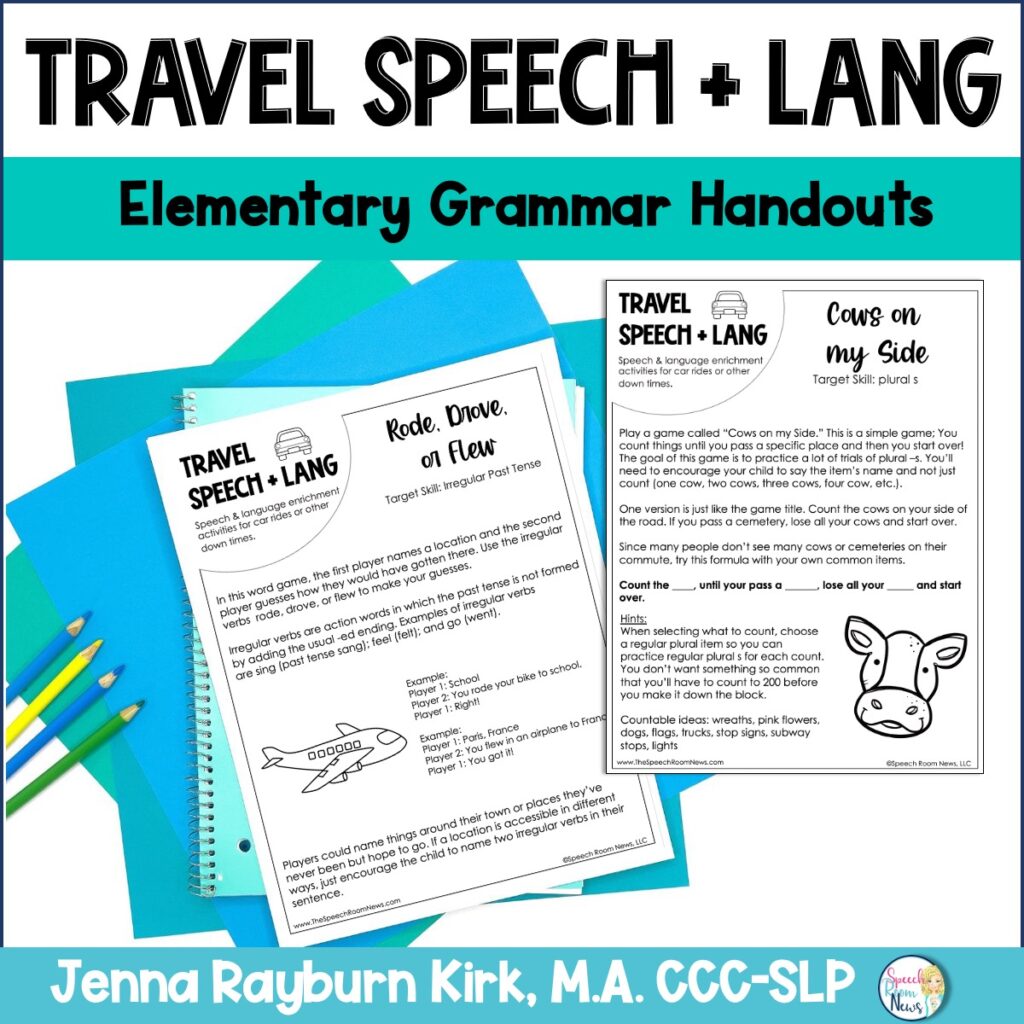
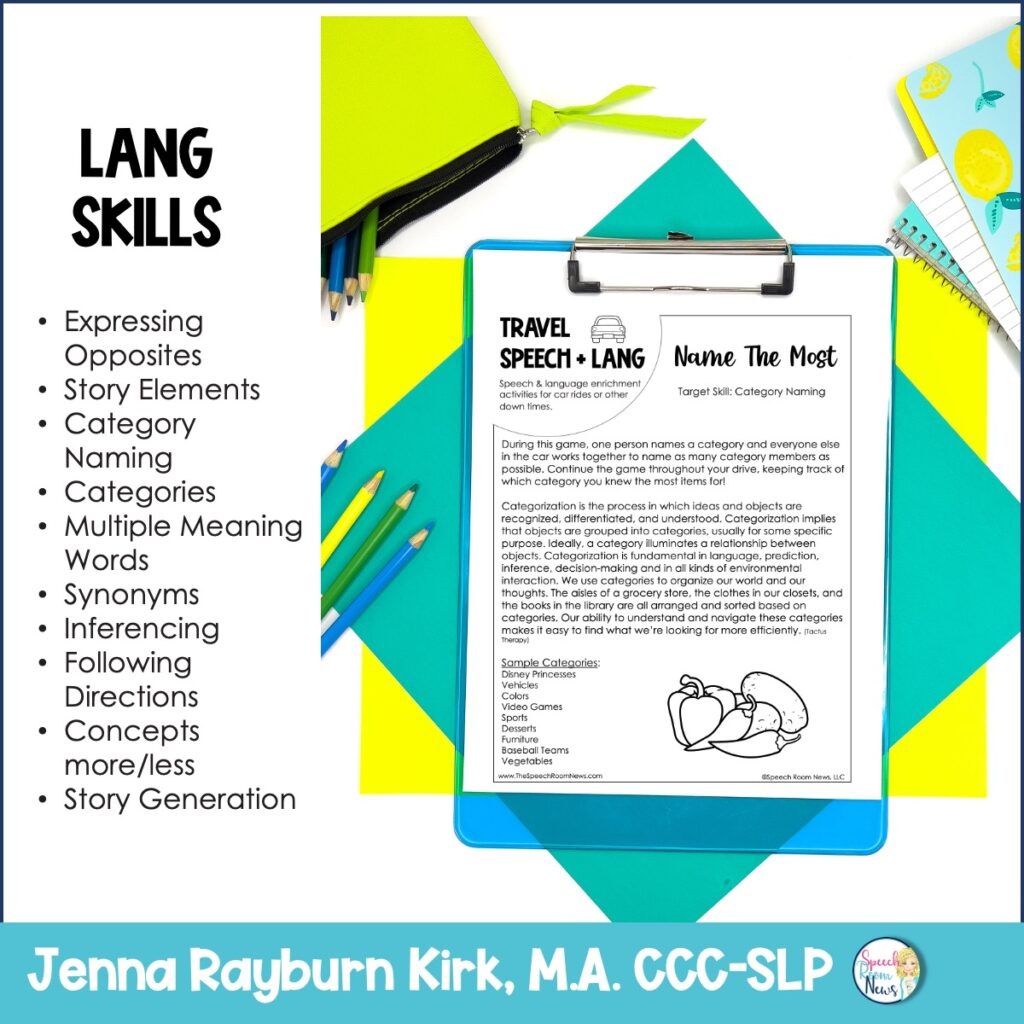
The effectiveness of speech and language intervention is significantly amplified when parents actively participate in the process. SLPs often provide parents with specific strategies and activities to practice at home, and resources like comprehensive parent handouts can be invaluable. These materials help bridge the gap between therapy sessions and daily life, ensuring that therapeutic gains are generalized and maintained. Studies consistently show that high parental involvement correlates with faster progress and better long-term outcomes for children with communication disorders. Providing parents with practical, easy-to-understand tools, like the "Travel Speech and Language Bundle" mentioned in the original context, empowers them to be effective communication partners and reinforces the critical role they play in their child’s development. Such resources typically include detailed explanations and examples for each activity, making it simple for parents to implement without needing extensive prior knowledge.
Implications for Holistic Child Development
Consistent and engaging speech and language practice, even during seemingly mundane car rides, yields far-reaching benefits:
- Improved Academic Performance: Strong language skills are directly linked to reading comprehension, writing proficiency, and overall academic success across all subjects.
- Enhanced Social Interactions: Clear communication fosters better peer relationships, reduces frustration, and builds confidence in social settings. Children who can express themselves effectively are more likely to participate in group activities and form meaningful connections.
- Increased Self-Confidence: The ability to communicate effectively reduces anxiety and boosts a child’s self-esteem, empowering them to express thoughts, needs, and feelings.
- Better Emotional Regulation: Language provides a means to articulate emotions, helping children to understand and manage their feelings more effectively.
Accessing Support and Resources
Recognizing the need for accessible and practical tools, many SLPs and educational platforms offer curated resources. The "Travel Bundle for Speech and Language," for instance, provides 30 parent handouts detailing various activities with explanations and examples, designed specifically for on-the-go practice. These resources are invaluable for SLPs to distribute to families on their caseloads, empowering parents to support their child’s communication journey actively and practically within the rhythm of daily life. The availability of free samples further allows parents and professionals to explore these resources before committing. Testimonials from fellow SLPs underscore the utility of such bundles:
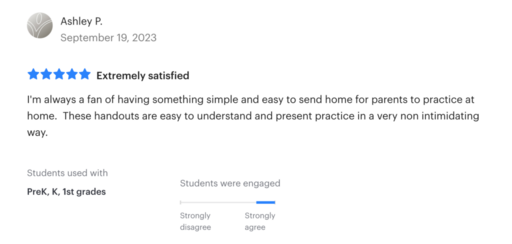
- "Fantastic resource! My parents have found this very helpful. I plan to send one home each week." – This highlights the practical, week-by-week application.
- "So helpful to give parents simple ideas to work on at home/in the car." – Emphasizes the simplicity and ease of integration into busy schedules.
- "This is going to be a huge time saver for me! I always have a hard time giving parents ideas that don’t involve a lot of extra materials. I am so excited to be able to share these with my parents! Thank you!" – Points to the material-free nature of the activities and the relief for SLPs in finding effective home practice tools.
In conclusion, the daily car commute, often viewed as merely transit, holds immense potential as a dynamic learning environment for speech and language development. By intentionally integrating simple, engaging activities like The Grocery Game, Red Light Race, and Triple Threat, parents can transform these routine journeys into powerful opportunities for linguistic growth. This approach not only maximizes valuable time but also fosters a fun, interactive learning experience that supports a child’s holistic development, paving the way for improved communication, academic achievement, and social confidence. Embracing these "miles of learning" can significantly contribute to nurturing articulate, confident communicators, making every journey a step forward in their developmental journey.
