

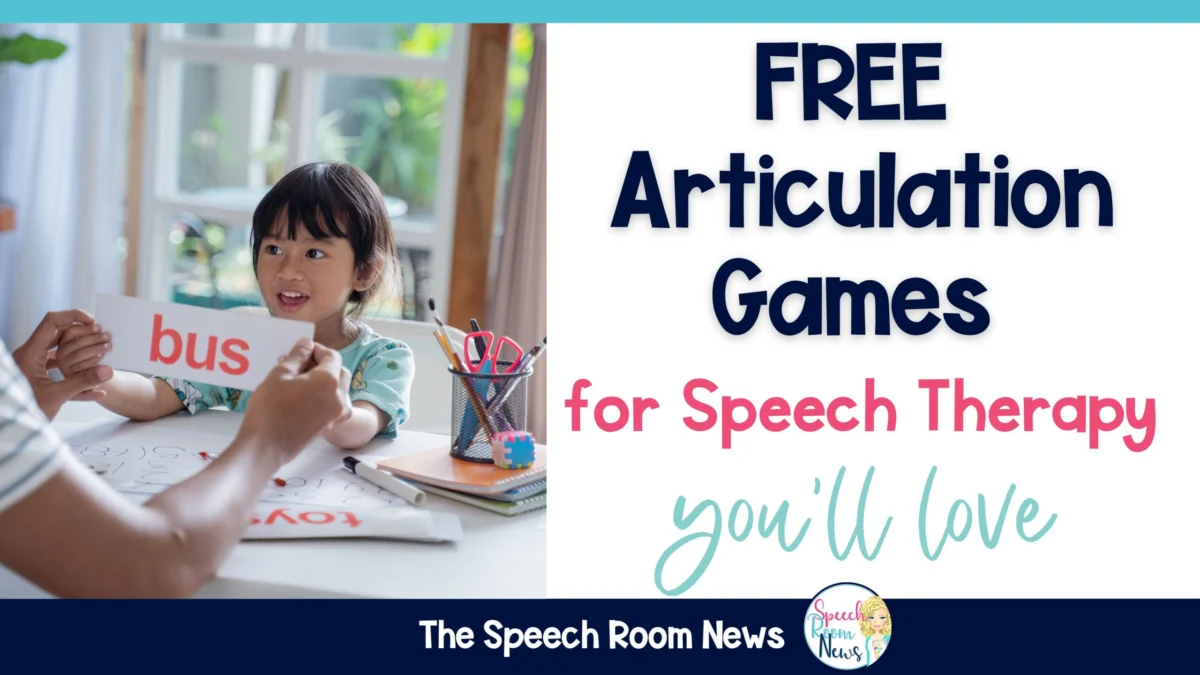
The integration of play into therapeutic interventions has demonstrably revolutionized speech therapy, significantly boosting student engagement and making the often-challenging process of mastering speech sounds more memorable and enjoyable. This paradigm shift also creates myriad opportunities for children to generalize newly acquired language skills into their daily lives, fostering lasting progress beyond the clinical setting. Recognizing the profound impact of gamified learning, speech-language pathologists (SLPs) and educators are increasingly leveraging a wealth of free resources, ranging from interactive online platforms to printable activities and spontaneous, material-free games, to deliver effective therapy across virtual, in-person, and hybrid environments. This widespread adoption underscores a commitment to making quality articulation practice accessible to all, irrespective of budget constraints or geographical limitations.
The Foundational Role of Articulation Therapy in Child Development
Articulation therapy is a specialized branch of speech-language pathology focused on helping individuals produce speech sounds correctly. Speech sound disorders (SSDs), which include articulation disorders and phonological disorders, affect a significant portion of the pediatric population. According to the American Speech-Language-Hearing Association (ASHA), approximately 8-9% of young children have a speech sound disorder. Untreated SSDs can have far-reaching implications, impacting a child’s ability to communicate effectively, succeed academically, and integrate socially. Children struggling with articulation may face difficulties in reading and writing, experience frustration, and even withdraw from social interactions due to communication challenges. Therefore, timely and effective intervention is paramount.

Historically, articulation therapy relied heavily on repetitive drills and flashcards, which, while structured, often struggled to maintain the attention and motivation of young learners. The inherent nature of these disorders—requiring consistent, high-frequency practice of specific sounds in various word positions and contexts—demands strategies that can sustain engagement over extended periods. This fundamental need for sustained practice, combined with the often-abstract nature of phonological rules for children, paved the way for the embrace of play-based learning as a cornerstone of modern speech therapy. Play provides a natural, low-pressure environment where children can experiment with sounds, receive immediate feedback, and experience success, all while feeling like they are simply having fun rather than undergoing rigorous therapy.
Evolution of Therapeutic Practices: From Clinic to Digital Ecosystem
The journey of speech therapy materials has seen a remarkable evolution, mirroring broader technological advancements and shifts in educational pedagogy. Early iterations of play-based therapy involved physical board games, manipulatives, and custom-made flashcards, which therapists meticulously crafted or purchased. While effective, these resources often came with significant financial costs and required considerable preparation time, limiting their widespread availability and customization. The turn of the 21st century marked a significant turning point with the proliferation of personal computers and, subsequently, the internet. This era saw the emergence of rudimentary educational software and websites, offering new avenues for interactive learning. However, it was the explosion of mobile technology—smartphones and tablets—coupled with the advent of dedicated educational app stores, that truly democratized access to digital therapeutic tools. Suddenly, sophisticated, interactive applications could be downloaded instantly, transforming a device into a portable speech therapy clinic.
The COVID-19 pandemic acted as an unprecedented catalyst, forcing an abrupt and widespread transition to teletherapy. This period underscored the critical importance of adaptable, engaging, and readily accessible digital resources. SLPs worldwide scrambled to find effective online tools that could replicate the interactive experience of in-person sessions. This urgent demand further fueled the creation and sharing of free and affordable digital articulation games, leading to a vibrant online ecosystem of therapeutic materials. Platforms like Teachers Pay Teachers (TpT) and Boom Learning, initially niche resources for educators, became indispensable hubs for SLPs to share, discover, and even commercialize their self-created digital activities, significantly enriching the collective pool of resources available to the profession. This accelerated adoption solidified the role of free and low-cost digital resources as integral components of contemporary speech therapy.

The Power of Gamification: Why Free Games Are a Game-Changer
Gamification in speech therapy is not merely about making learning "fun"; it is a strategically informed approach that leverages inherent human motivations for achievement, competition, and social interaction to drive therapeutic outcomes. When children perceive therapy as play, their intrinsic motivation increases, leading to higher levels of participation, persistence, and ultimately, greater progress. Research consistently indicates that engagement is a primary predictor of therapeutic success, and gamified approaches excel at fostering this crucial element. The benefits of integrating free articulation games are multifaceted:
- Enhanced Engagement and Motivation: Games inherently capture children’s attention. The thrill of winning, the challenge of a task, and the interactive nature keeps them focused on the target sounds for longer durations than traditional drill-based methods. This increased engagement translates directly into more repetitions and higher rates of correct production, which are vital for motor learning associated with articulation.
- Cost-Effectiveness: For both therapists and families, the "free" aspect is invaluable. SLPs, often operating within tight school or private practice budgets, can expand their resource library without financial strain. For parents, free resources enable consistent home practice without needing to purchase expensive apps or materials, thereby reducing the economic burden of ongoing therapy and ensuring continuity of care.
- Accessibility and Equity: Free online and printable resources significantly enhance accessibility, particularly for families in underserved areas, those with limited disposable income, or individuals with mobility challenges. A basic smartphone or an internet connection can unlock a world of therapeutic support, bridging gaps in access to specialized care and promoting a more equitable distribution of educational tools.
- Generalization of Skills: Many games are designed to mimic real-life communication scenarios, providing natural contexts for practicing speech sounds. Material-free games, playable anywhere, encourage children to apply their skills in spontaneous, unstructured environments, which is crucial for generalizing learned sounds into everyday conversational speech—the ultimate goal of articulation therapy.
- Flexibility Across Settings: The diverse range of free games supports various therapy models. Online games are perfect for teletherapy or in-person sessions using a tablet. Printable activities offer hands-on engagement for clinic or home use. No-material games are ideal for on-the-go practice, transforming mundane moments like car rides or waiting in line into therapeutic opportunities. This adaptability makes therapy more integrated into a child’s natural environment.
- Customization and Differentiation: The vast array of free resources allows SLPs to easily find games tailored to specific target sounds, word positions (initial, medial, or final), and age groups. This enables highly individualized therapy plans, catering to each child’s unique needs, developmental stage, and learning preferences, ensuring that practice is always relevant and appropriately challenging.
A Curated Selection of Free Articulation Resources for Diverse Needs
The digital landscape offers a rich tapestry of free articulation games, catering to different learning styles and technological access levels. These resources exemplify the innovative spirit and collaborative nature of the speech therapy community:

Interactive Online Platforms: These resources transform screen time into productive learning opportunities, often featuring immediate auditory and visual feedback, which is crucial for self-correction.
- ABCya’s "Alphabet BINGO": This platform provides a vibrant, interactive BINGO game specifically designed for younger students. While ostensibly focused on letter sounds, a skilled SLP can adapt it to target specific phonemes, prompting children to articulate the sound as they identify letters or words containing their target sound. The visual and auditory cues reinforce correct production and identification.
- Articulation Station App (Lite Version): A highly regarded application in the SLP community, the free "Lite" version offers a robust introduction to articulation practice. It typically includes a few sound options and interactive games that keep students engaged through repetition and varied presentation formats. Its availability on app stores makes it easily downloadable to any compatible device, providing a portable therapy tool that is always at hand.
- Language Playroom: This dedicated website stands out with its collection of over 20 free online games specifically focused on articulation. The site’s commitment to continually expanding its offerings to include fluency, language, and social communication activities demonstrates a comprehensive approach to speech and language development. The games often employ engaging visuals and simple mechanics that are easy for children to grasp, making them ideal for independent practice or guided sessions.
- Phoneme Pop: Available on educational sites like Topmarks, "Phoneme Pop" is an interactive game where children pop bubbles containing words that feature their target sounds. This provides a fun, low-pressure environment for auditory discrimination and production practice, reinforcing the link between visual word representation and spoken sound in a dynamic way.
- Boom Cards: These interactive, self-checking digital task cards have become a cornerstone for many SLPs. Available through platforms like Teachers Pay Teachers and Boom Learning, countless free decks exist for various articulation sounds. Boom Cards offer immediate feedback, often incorporate drag-and-drop or multiple-choice elements, and can be easily assigned for homework or used during teletherapy sessions. Their versatility and engaging nature make them highly popular for targeting specific phonemes in various contexts.
Printable Games for Hands-On Practice: For those who prefer tactile engagement or face limited internet access, printable resources remain invaluable. They are easily reproducible and can be sent home for continued practice, bridging the gap between clinical sessions and home environments.
- "Whack-a-Sound /S/ Self-Checking Articulation Freebie": This game is particularly effective for preschool through second grade, helping children identify the position (initial, medial, or final) of a target sound within a word. The "whack-a-mole" concept, adapted for articulation, adds an element of playful competition and reinforces phonological awareness, making the task less monotonous.
- Articulation Worksheets from Super Duper Publications: A long-standing name in speech therapy materials, Super Duper offers a selection of free printable worksheets. These often include various activities like coloring, matching, or tracing, all designed around specific articulation targets, providing structured yet engaging practice that can be easily integrated into a therapy session or homework packet.
- "Hot Chocolate Articulation Board Game": Ideal for cooler months, this themed board game is a versatile tool. Therapists can prepare flashcards with target words; children articulate the word, then roll a die and move spaces. This integrates articulation practice with turn-taking and basic game rules, making therapy feel like a leisure activity rather than a chore.
- "100 Trial Challenges" by Peachie Speechie: These printable sheets are designed to facilitate high-frequency practice, aiming for 100 repetitions of target sounds within a session. The sheets often feature engaging themes and holiday designs, which helps maintain interest and allows therapists to tie activities into seasonal events. The clear goal of 100 trials provides a concrete measure of progress and encourages sustained effort.
- "Color & Play Ocean Articulation Bingo": This resource combines coloring with articulation practice. Children color elements on a Bingo card as they correctly articulate target words. It’s suitable for both individual and group settings, fostering a sense of shared activity while reinforcing individual speech goals, and adding a creative element to therapy.
Free Articulation Games for On-the-Go (No Materials Needed!): The most accessible forms of therapy are those requiring no preparation or physical materials, making them perfect for integrating practice into everyday routines like car rides or waiting rooms, ensuring that learning never stops.
- "I Spy" (Articulation Twist): This classic game can be easily modified. Instead of "I spy with my little eye something green," the therapist or parent might say, "I spy with my little eye something that starts with the /s/ sound," prompting the child to identify objects and articulate the target sound in a natural conversational context.
- "20 Questions" (Articulation Focus): This game encourages descriptive language and question formation. Children must articulate clearly as they ask questions to narrow down a hidden object, indirectly practicing their target sounds within meaningful sentences, thereby promoting generalization of skills into functional communication.
- "Rhyme Time": Taking turns saying words that rhyme with a target word focuses on phonological awareness and requires careful articulation. For example, if the target is "cat," responses like "hat," "mat," and "sat" provide ample opportunities for /t/ sound practice, emphasizing the phonetic structure of words.
- "The Alphabet Game": Moving through the alphabet, children say a word that starts with each letter. This can be adapted to focus on specific articulation targets; for instance, if the child is working on /r/, they might be encouraged to find words for "R" like "rabbit" or "red," focusing on correct production at the word initial level.
Broader Implications: Democratizing Access and Fostering Innovation

The proliferation of free articulation games carries significant implications for the future of speech therapy. It represents a powerful movement towards democratizing access to essential therapeutic resources. By removing financial barriers, these tools enable more consistent practice at home, support therapists in underfunded schools, and provide viable options for families who might otherwise struggle to afford supplementary materials. This enhanced accessibility directly contributes to better outcomes for children with speech sound disorders, helping them achieve clearer communication and improved life prospects, fostering greater inclusion and participation in all aspects of life.
Furthermore, the availability of such a diverse array of resources encourages innovation within the SLP community. Therapists are empowered to experiment with different modalities, tailor their approaches, and continuously refine their techniques based on student responses. The platforms that host these free resources, particularly those that allow user-generated content, foster a collaborative professional environment where best practices are shared and continuously evolved. The feedback loops inherent in digital platforms also allow creators to refine their games, leading to increasingly effective and engaging tools that are evidence-based and user-friendly.
Looking ahead, the trend suggests a continued expansion of digital and easily accessible resources. Future developments might include more sophisticated adaptive learning algorithms within games, personalized AI-driven feedback systems, and even greater integration with augmented and virtual reality to create immersive therapeutic environments that mimic real-world scenarios. The foundation laid by the current generation of free articulation games ensures that speech therapy will remain dynamic, engaging, and, crucially, within reach for every child who needs it. The collective effort to provide these invaluable tools underscores a dedication to fostering effective communication skills, one playful sound at a time. The ongoing commitment to sharing and creating these resources reflects a vibrant and adaptive professional landscape dedicated to student success.
