

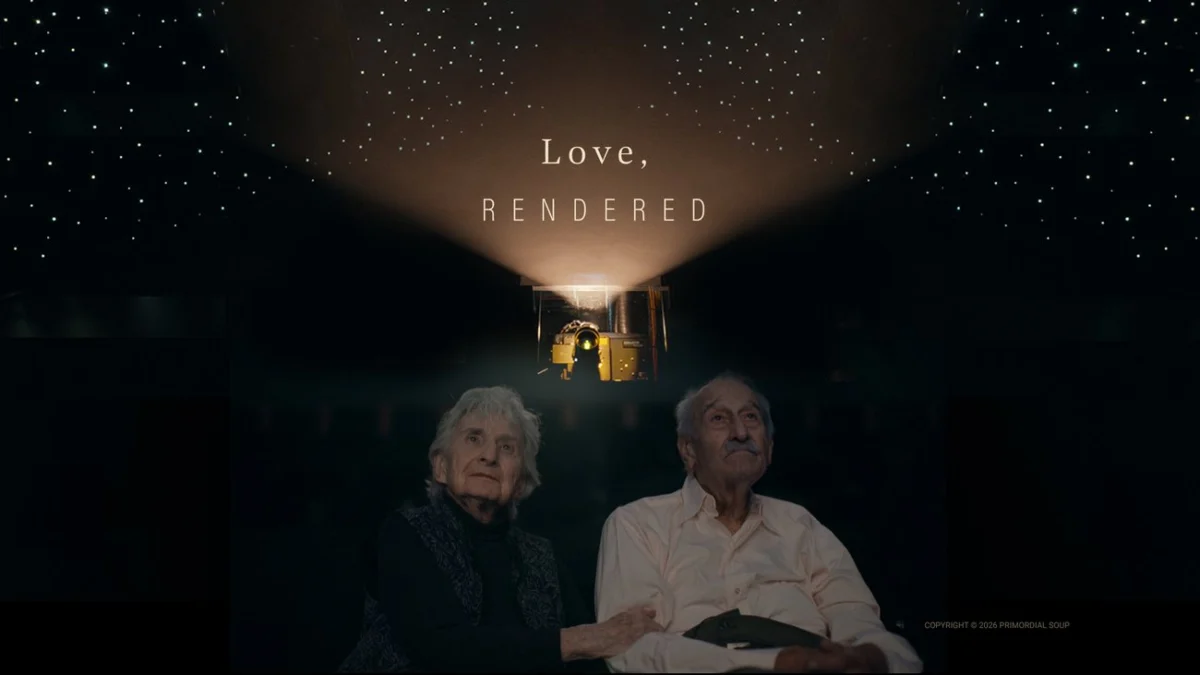
The release of the documentary short Love, Rendered marks a significant milestone in the intersection of generative artificial intelligence and cinematic storytelling, demonstrating how advanced technology can be leveraged to preserve the fragile architecture of human memory. Directed by Academy Award-nominated filmmaker Liz Garbus and produced in collaboration with Google DeepMind and Darren Aronofsky’s creative venture, Primordial Soup, the film explores the life of Burt and Ethelle Shatz. Married for more than seven decades, the couple faces the progressive challenges of Burt’s cognitive decline, a condition that has begun to erase the foundational moments of their shared history. By utilizing cutting-edge AI models to reconstruct unrecorded events from the 1950s, the production team has provided a blueprint for how digital restoration might serve as a bridge between the present and a fading past.
The Narrative Core: A Seventy-Year Bond Under Threat
At the heart of the film is a singular, unrecorded event: the day Burt and Ethelle first met at a student co-op in Cleveland. In an era before the ubiquity of smartphones and digital archives, this pivotal moment existed solely within the couple’s minds. As Burt’s memory began to fail due to dementia, the risk of losing this foundational narrative became a driving force for the project. The filmmakers sought to determine if AI could do more than merely generate images—if it could, in fact, "render" the emotional truth of a memory that no longer has a physical record.
The project was led technically by Michael Chang, a Google DeepMind engineer for whom the mission was deeply personal. Having witnessed his own grandfather’s struggle with memory loss following a stroke, Chang recognized the emotional weight of the Shatz family’s predicament. This personal connection informed the technical direction of the film, ensuring that the AI was not used as a replacement for human experience, but as a tool for its reclamation.
The Science of Reminiscence and Cognitive Stimulation
The methodology of Love, Rendered is grounded in the principles of reminiscence therapy, a clinical practice used primarily for older adults living with Alzheimer’s or other forms of dementia. This therapeutic approach involves the use of sensory cues—such as old photographs, music, or familiar objects—to stimulate mental activity and improve well-being. Research has shown that even when short-term memory is severely compromised, long-term "autobiographical" memories can often be accessed through the right external stimuli.

During the production of the documentary Coma, Liz Garbus observed fMRI scans of patients in minimally conscious states. She noted that brain activity would "light up" when subjects were exposed to the voices of loved ones or familiar imagery. Similarly, Darren Aronofsky was inspired by a viral video of a former ballerina with Alzheimer’s who, upon hearing the score of Tchaikovsky’s Swan Lake, began to perform the choreography from her wheelchair. These observations led the creative team to wonder if AI could provide a "visual cue" for a memory that had never been photographed, thereby acting as a high-tech form of reminiscence therapy for Burt Shatz.
Technical Framework: Bridging Gaps with Generative AI
The technical execution of the film required a sophisticated two-part approach to ensure the generated visuals felt authentic to the subjects. The team at Google DeepMind utilized emerging AI models as an "art medium," guiding the software through iterative human feedback.
1. Image Restoration and Synthesis
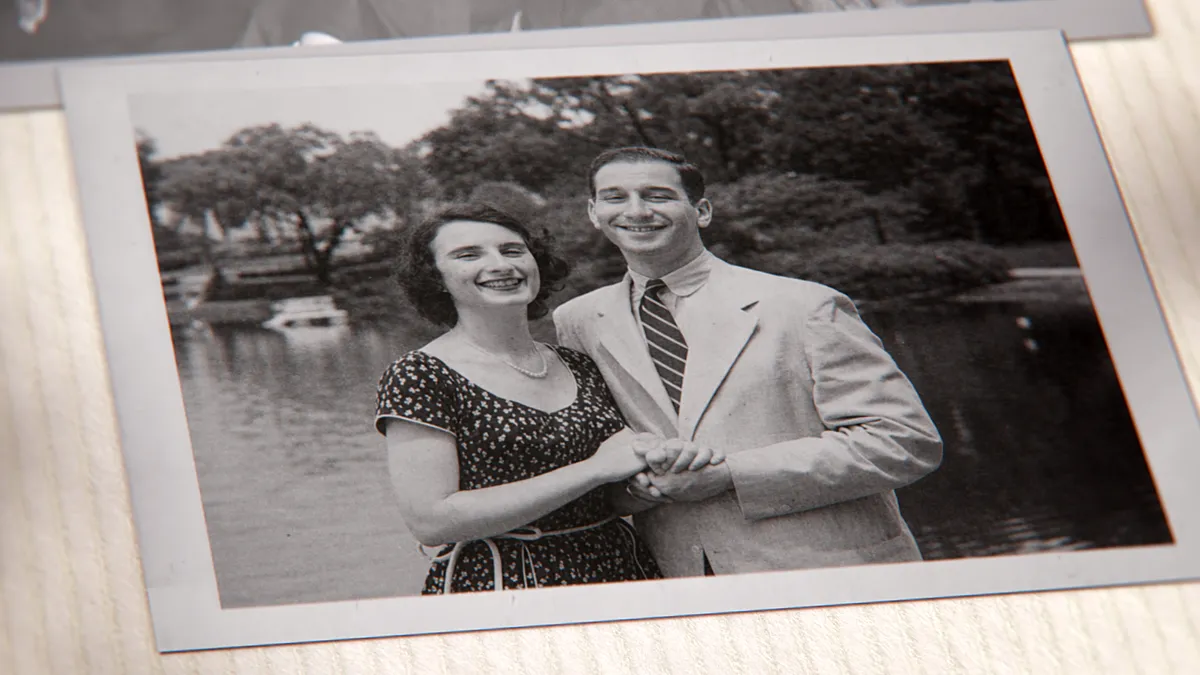
The first step involved the restoration of existing family photographs. By using DeepMind’s image-to-image models, the team was able to take graining, damaged, or low-resolution photos of Burt and Ethelle from their youth and "upscale" them while preserving their essential likenesses. This process was not merely about sharpening pixels; it required the AI to understand the geometry of their faces, their characteristic expressions, and the specific fashion of the 1950s.
2. Temporal Animation and Mannerism Mapping
To recreate the day they met, the team went beyond static images. Using video generation models, they animated the restored figures to move through a digital recreation of the Cleveland co-op. A critical component of this was "mannerism mapping," a process explained by DeepMind’s Jess Gallegos. This involved analyzing contemporary footage of Burt and Ethelle to identify their unique micro-expressions and physical "tells"—the specific way Ethelle might tilt her head or the way Burt might gesture while speaking. These traits were then mapped onto their younger, AI-generated avatars to ensure the resulting film felt like a true representation of the couple rather than a generic digital recreation.
The Role of the Human Co-Creator
A distinguishing feature of Love, Rendered was the active participation of Ethelle Shatz in the creative process. In what the developers described as a "human-in-the-loop" system, Ethelle served as the ultimate authority on historical accuracy. She sat with the technical team, providing corrections on minute details that the AI—and even the human researchers—could not have known.

Ethelle’s input included correcting the specific curve of a staircase in the co-op, the exact shade of a dress, and even the height of a shoe heel. This collaborative effort ensured that the final output was not just a hallucination of an AI model, but a reconstructed "memory" validated by the person who lived it. This level of detail was essential for the film’s success as a piece of documentary art, moving it away from the "uncanny valley" and into the realm of emotional resonance.
Broader Context: The Global Challenge of Dementia
The themes explored in Love, Rendered arrive at a time of increasing global concern regarding cognitive health. According to the World Health Organization (WHO), more than 55 million people worldwide are currently living with dementia, a number expected to rise to 78 million by 2030 and 139 million by 2050 as the global population ages.
The economic and social burden of memory-related illnesses is vast, with global costs estimated at over $1.3 trillion annually. While Love, Rendered is a work of film, its implications for the medical and caregiving communities are significant. The project suggests a future where AI-generated content could be used in personalized care plans for dementia patients, helping to maintain their sense of identity and connection to their families through the visual reconstruction of their life stories.
Collaborative Philosophy: AI as a Tool, Not an Author
The partnership between Google DeepMind and Primordial Soup highlights a specific philosophy regarding the future of AI in the arts. Darren Aronofsky has frequently compared AI to traditional artistic tools, such as a paintbrush or a hammer. In his view, the technology remains inert until guided by human intent.
In the case of Love, Rendered, the "intent" was to serve the narrative of the Shatz family. The film avoids the pitfalls of clickbait "deepfakes" by focusing on the ethical preservation of personal history. The production team emphasized that the goal was never to replace reality, but to provide a visual language for a reality that was slipping away. This objective, factual approach to AI integration demonstrates a responsible path forward for the use of synthetic media in journalism and documentary filmmaking.
Chronology of Development and Public Reception
The journey of Love, Rendered from a technical experiment to a celebrated short film followed a rigorous development timeline:
- Initial Concept (Early 2023): The project began as a discussion between Google DeepMind and Liz Garbus regarding the potential for AI to visualize the abstract nature of memory.
- Technical Prototyping: Michael Chang and his team began testing image restoration models on their own family archives before applying the technology to the Shatz family’s records.
- Production and Interviews: Filming took place throughout 2023, capturing the present-day lives of Burt and Ethelle while the AI team worked concurrently on the historical reconstructions.
- Premiere: The film was officially showcased at the Telluride Film Festival, where it received praise for its sensitive handling of a complex subject and its innovative use of technology.
- Public Release (September 2024): The film was made available to a global audience via digital platforms, accompanied by tools in the Gemini app that allow the general public to attempt similar photo restorations.
Implications for Historical and Personal Preservation
The success of Love, Rendered opens new avenues for how society handles historical archives. Beyond individual family stories, the technologies used in the film have the potential to restore damaged historical footage from significant world events, providing a clearer window into the past.
Furthermore, the film challenges the traditional definition of a "documentary." If a documentary is a record of truth, does a generated image of a real event count as documentary evidence? The consensus among the filmmakers is that as long as the reconstruction is guided by the testimony of witnesses—in this case, Ethelle—it serves as a legitimate extension of the documentary form.
Conclusion: A New Medium for Human Connection
Love, Rendered serves as a powerful testament to the idea that technology, often criticized for its potential to alienate, can also be used to deepen human connection. By helping Burt and Ethelle Shatz hold onto the moment they met, Google DeepMind and the filmmaking team have demonstrated that AI can be a custodian of the human spirit.
The film concludes not with a celebration of the machine, but with a celebration of the couple’s enduring love. As Burt’s cognitive faculties continue to change, the "rendered" memory remains a permanent fixture, a digital gift to a family determined not to forget. For the broader public, the film offers a glimpse into a future where our most precious, unrecorded moments might one day be seen again, frame by frame.
