

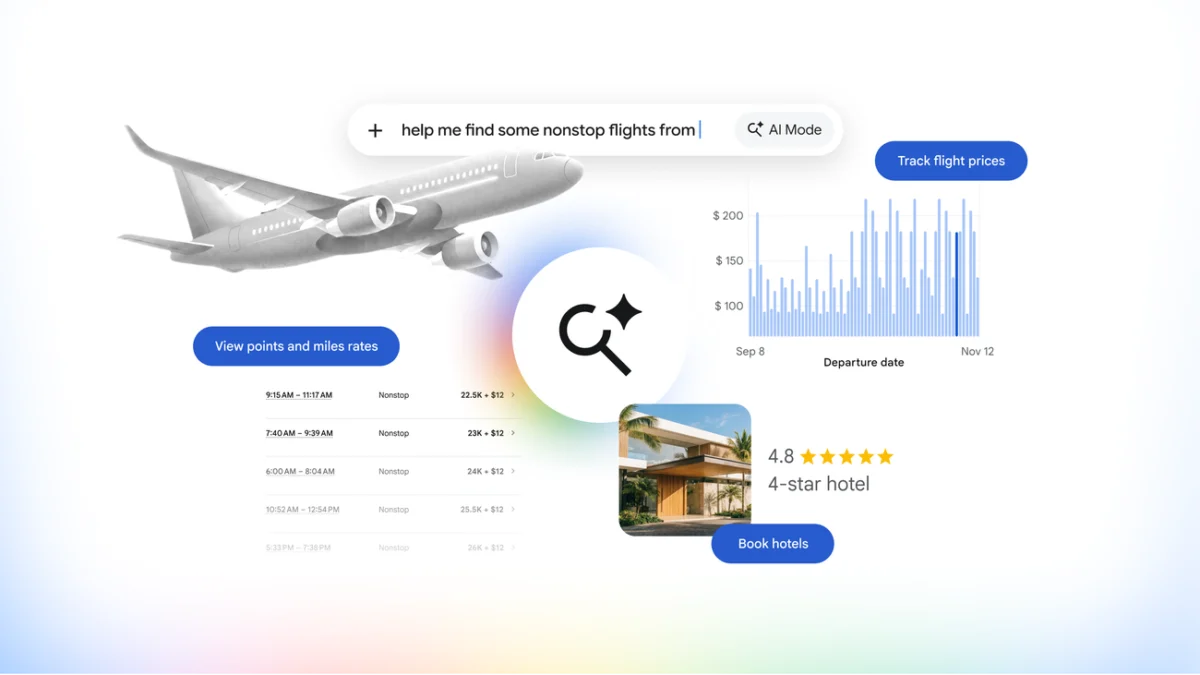
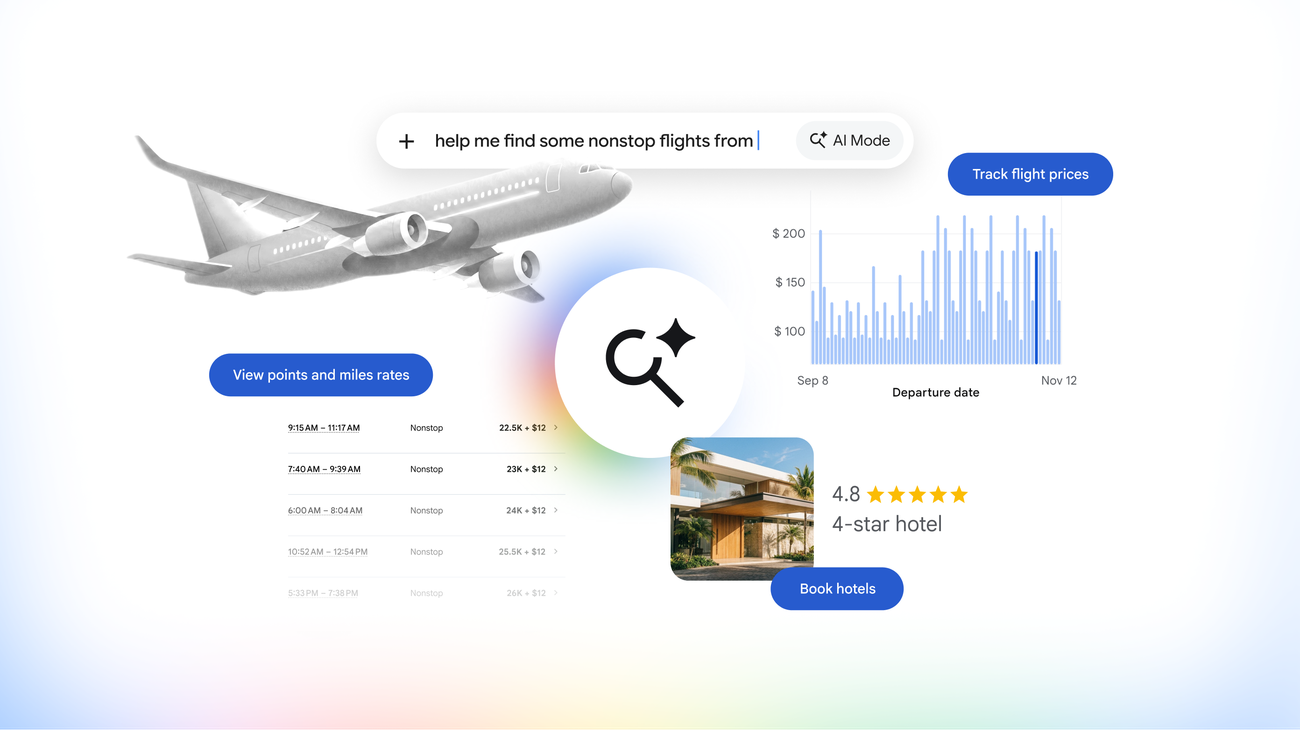
Google has officially announced a significant expansion of its artificial intelligence capabilities within Search, introducing a suite of features designed to streamline the complex process of travel planning and reservation. James Byers, Group Product Manager for Search, detailed the updates which integrate Google Flights’ price tracking, loyalty program redemption data, and direct hotel booking capabilities into the company’s "AI Mode." This strategic shift represents a move toward an "agentic" search experience, where the search engine does not merely provide links to information but actively assists in executing tasks like monitoring market fluctuations and facilitating financial transactions.
The update focuses on three primary pillars: automated price monitoring for airfare, the transparency of rewards points and miles for both flights and hotels, and a seamless checkout process for lodging. These features are being rolled out globally, with specific functionalities like direct hotel booking starting in the United States. By leveraging its vast database of over 300 partner airlines and travel sites, Google aims to reduce the friction inherent in modern travel planning, which often requires consumers to navigate dozens of tabs and disparate loyalty platforms.
The Evolution of Google Travel: From Information to Action
The integration of these features into AI Mode is the latest step in a decade-long evolution of Google’s travel ecosystem. This journey began in earnest with the 2011 acquisition of ITA Software, the technology that powers much of the airline industry’s pricing and availability data. Since then, Google Flights and Google Hotels have become dominant tools in the pre-booking phase of travel. However, the current transition into AI-driven assistance marks a fundamental change in the user interface.
Previously, users would search for flights and then manually set up alerts or navigate to third-party sites to check rewards balances. The new AI Mode creates a conversational "travel canvas" where these actions are centralized. This shift reflects a broader trend in the tech industry toward "agentic AI"—software that can perform multi-step tasks on behalf of a user. For Google, this means transforming Search from a discovery engine into a concierge service that can remember preferences, track variables over time, and handle the final stages of a transaction.
Real-Time Flight Price Tracking via Conversational AI
One of the most impactful additions is the integration of Google Flights’ price tracking directly into the AI chat interface. Travel remains one of the most price-sensitive consumer categories, with airfares often fluctuating multiple times per day based on demand, fuel costs, and algorithmic pricing models. According to industry data, travelers often visit up to 38 different websites before booking a trip, largely driven by the fear of missing a lower price.
With the new update, users can describe their desired itinerary to the AI—such as a round-trip from London to New York in mid-December—and then simply command the system to "track these flight prices." The AI then monitors the data from its 300+ partners and sends automated email alerts when significant price drops occur. This feature is now available in more than 180 countries and territories, providing a global solution to the problem of dynamic pricing. By automating the "waiting game," Google is positioning its AI as a tool for financial optimization, not just information retrieval.
Integrating Loyalty Programs: Points and Miles Transparency
In a move that targets the high-value frequent flyer and rewards enthusiast market, Google Search can now display the cost of travel in points or miles. The "points economy" is a massive sector of the travel industry, with billions of dollars worth of value locked in loyalty programs. However, calculating the "cents per point" value or finding availability across different airline alliances has traditionally been a manual and tedious process.
The new capability allows users to ask specific questions, such as, "How many American Airlines miles do I need for a flight from Atlanta to Miami in October?" The AI retrieves real-time data from partner programs to provide an immediate answer. This feature is launching with support for several major players, including:
- Alaska Airlines / Hawaiian Airlines
- American Airlines
- Choice Hotels International
- Hilton
- Wyndham Hotels & Resorts
Google has also confirmed that support for Accor, Flying Blue (Air France-KLM), Hyatt, LATAM Airlines, and Lufthansa Group will be added in the coming weeks. By bringing this data into the primary search flow, Google is addressing a major pain point for travelers who want to maximize their rewards but find the redemption process opaque.
Direct Hotel Booking and the "Continue on Google" Ecosystem
Perhaps the most significant structural change is the introduction of direct hotel booking within AI Mode. When a user identifies a hotel through the AI’s recommendations—which include synthesized guest reviews and key comparison factors—they can now complete the reservation without leaving the Google ecosystem.
The process utilizes a "Continue on Google" button that appears alongside integrated partners. This feature leverages Google Pay for secure transactions, allowing for a "few-tap" booking experience. It is important to note that Google is not acting as the merchant of record; instead, the hotel or the online travel agency (OTA) handles the fulfillment and customer service. This distinction is crucial for maintaining Google’s relationship with the broader travel industry, as it acts as a high-intent lead generator rather than a direct competitor to booking platforms.
The initial rollout in the U.S. includes a heavy-hitting list of partners:
- OTAs: Booking.com, Expedia, Hotels.com, Priceline, and Trip.com.
- Hotel Chains: Choice Hotels, Hilton, IHG Hotels & Resorts, Marriott International, and Wyndham.
Supporting Data and Market Context
The travel industry is currently experiencing a "gold rush" toward AI integration. A recent report by McKinsey & Company suggests that generative AI could generate between $200 billion and $400 billion in value for the travel and hospitality industry by increasing operational efficiency and personalizing the customer journey.
Google’s move to centralize these features is a response to the growing fragmentation of the travel market. While specialized apps for "travel hacking" and price tracking exist, Google’s advantage lies in its massive user base. By placing these tools at the top of the search funnel, Google captures users before they even decide which airline or hotel brand to use. Data suggests that approximately 60% of leisure travelers and 55% of business travelers begin their journey with a search engine. By narrowing the gap between "search" and "book," Google is reclaiming a portion of the user journey that previously migrated to dedicated travel apps.
Implications for the Competitive Landscape
The expansion of AI Mode in Search has significant implications for Online Travel Agencies (OTAs) like Expedia and Booking Holdings. For years, these companies have spent billions of dollars on Google Ads to ensure they appear at the top of search results. With Google now offering a "seamless conversation" that leads directly to a booking, the role of the OTA may shift.
If Google can provide a superior user interface for comparing and booking, OTAs may find themselves becoming "back-end" providers, supplying the inventory while Google owns the customer relationship. However, the inclusion of major OTAs in the initial rollout suggests a symbiotic relationship. These platforms benefit from Google’s AI-driven lead generation, while Google benefits from the inventory and booking infrastructure that OTAs have spent decades building.
Furthermore, the focus on loyalty points is a direct challenge to specialized search engines like Point.me or AwardLogic. By integrating this data for free within Search, Google is democratizing access to "pro" travel tools, which could lead to higher engagement rates within its AI ecosystem.
Industry Reactions and Future Outlook
While official statements from airlines and hotel chains have been measured, industry analysts suggest that the move is generally welcomed by suppliers who are eager to reduce their reliance on traditional OTAs and move closer to direct-to-consumer models. By allowing users to see points rates and book via "Continue on Google," the search engine is facilitating a path that often leads back to the supplier’s own ecosystem.
From a consumer perspective, the primary concern remains data privacy and the accuracy of AI-generated advice. Google has addressed these concerns by ensuring that "AI Mode" relies on real-time data from its partners rather than static training data, which reduces the risk of "hallucinations" regarding prices or availability.
As the rollout continues, the industry will be watching closely to see how these features affect conversion rates. If the U.S. launch of hotel booking proves successful, a global expansion is expected to follow, potentially including other sectors of the travel economy such as car rentals, tours, and local experiences.
In conclusion, the upgrades to AI Mode in Search represent a pivot from passive information delivery to active travel management. By combining the analytical power of AI with the deep data pools of Google Flights and Hotels, Google is attempting to create the definitive digital travel assistant. For the traveler, this promises a future where the "moving parts" of a trip are managed not by a dozen different apps, but by a single, intelligent interface.
