

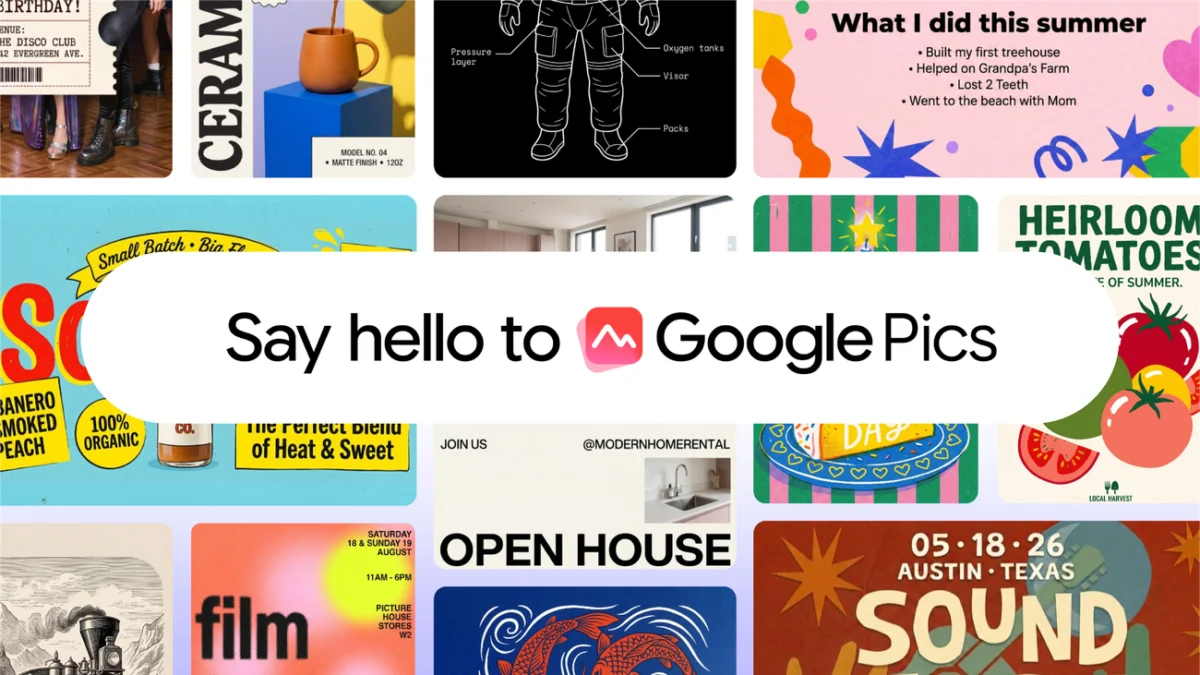
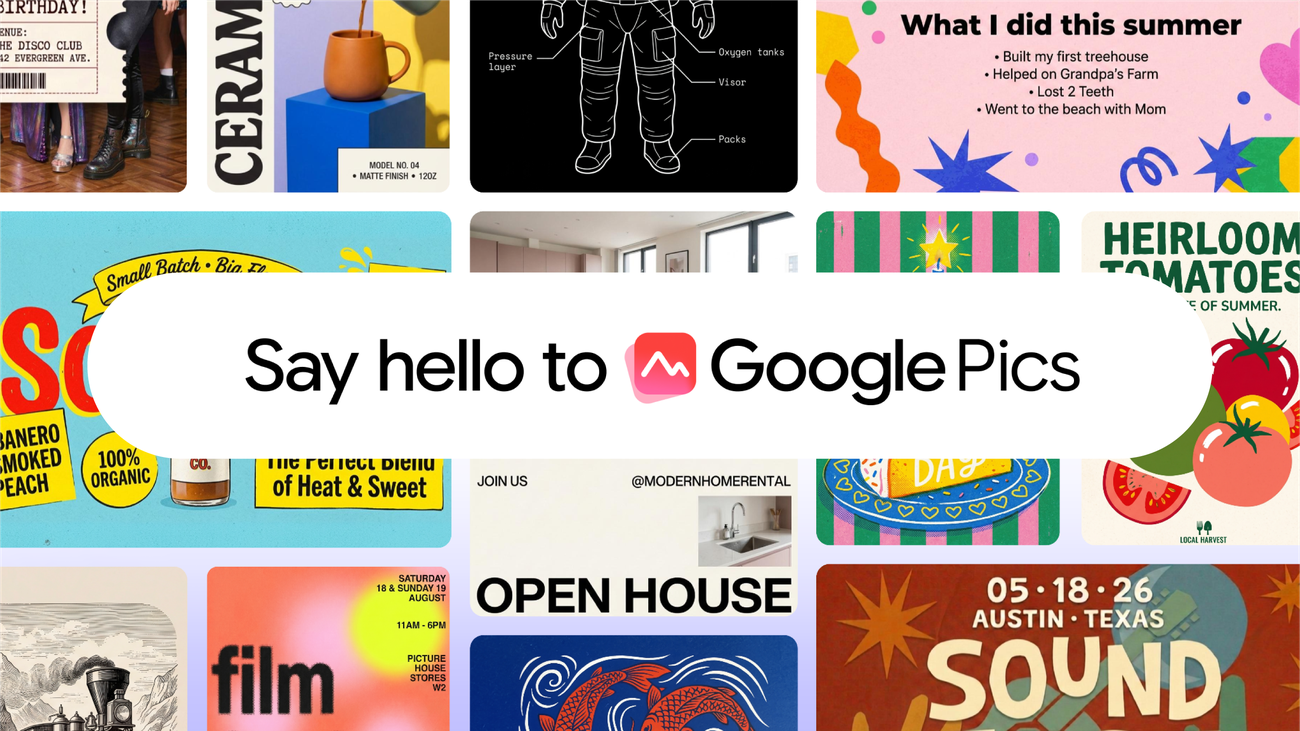
Google has officially announced the launch of Google Pics, a sophisticated image generation and editing suite designed to integrate seamlessly within the Google Workspace ecosystem. This rollout, which is scheduled to take place over the coming weeks, marks a significant milestone in the company’s ongoing effort to democratize professional-grade graphic design tools for enterprise and personal productivity. Built on the proprietary Nano Banana image generation and editing model, Google Pics is positioned as a direct competitor to established creative suites, offering users the ability to generate, refine, and co-create visual content with a level of precision previously reserved for specialized software.
The tool will be available to all Google AI Pro and Ultra subscribers, as well as the majority of Google Workspace business customers. By positioning Google Pics as both a standalone web application and a native integration within Google Docs, Slides, and Drive, Google aims to eliminate the "frictional loss" associated with switching between different creative platforms and productivity tools.
Technical Foundation and the Nano Banana Model
At the heart of Google Pics lies the Nano Banana model, a fine-tuned generative AI architecture specifically optimized for the nuances of professional and corporate imagery. Unlike earlier iterations of generative models that often struggled with specific anatomical details or text rendering, Nano Banana is engineered for "unparalleled precision." This model allows users to exert granular control over the output, moving beyond simple text-to-image generation into a realm of iterative refinement.
The model supports a variety of advanced editing capabilities, including in-painting (modifying specific parts of an image), out-painting (expanding the canvas of an existing graphic), and style consistency. This ensures that users designing a multi-page presentation or a social media campaign can maintain a unified visual language across different assets. The emphasis on "precise edits" rather than "starting from scratch" suggests that Google is targeting a user base that requires more than just novelty; it is targeting professionals who need to meet specific brand guidelines and aesthetic standards.
Seamless Integration Across the Workspace Ecosystem
The strategic integration of Google Pics into the existing Workspace infrastructure is perhaps its most disruptive feature. Historically, the creation of visual assets for a business document or a presentation involved a fragmented workflow: generating or finding an image in one application, editing it in another, and finally importing it into the final document. Google’s data indicates that millions of users interact with billions of images across Workspace products every month. By embedding Google Pics directly into Docs and Slides, Google is effectively collapsing the creative pipeline.
Starting today, users will see the Google Pics interface within Docs and Slides, with a rollout to Google Drive expected in the near future. This integration allows for real-time editing within the document sidebar. For instance, a user drafting a marketing proposal in Google Docs can generate a product mockup or a conceptual illustration without ever leaving the tab. Furthermore, the integration with Google Drive will allow users to drop existing files directly into Google Pics to serve as a reference for new designs, facilitating a more fluid transition between asset management and asset creation.
A Chronology of Google’s Generative AI Evolution
The release of Google Pics is the culmination of a multi-year trajectory in which Google has sought to transition from an AI-first company to an AI-integrated company.
- Early 2023: Google introduced "Help me write" and other text-based generative features in Workspace, powered by early iterations of the PaLM model.
- Late 2023: The announcement of the Gemini era signaled a shift toward multimodal capabilities, allowing AI to process and generate text, code, and images simultaneously.
- Mid-2024: Google began testing specialized image models within its experimental "Labs" environments, gathering feedback from creative professionals.
- September 2024: The official unveiling of Google Pics and the Nano Banana model, marking the transition from experimental feature to a core pillar of the Workspace subscription model.
Meg Whittenberger, Product Manager for Google Pics, emphasized that the tool was developed in response to user demand for more intuitive creative controls. "Generate, refine, and co-create images with unparalleled precision," Whittenberger stated, highlighting the shift toward collaborative AI that assists rather than replaces the human creator.
Supporting Data and Market Context
The launch comes at a time when the generative AI market is seeing explosive growth. According to recent industry reports, the global generative AI market is projected to reach over $1.3 trillion by 2032. Within this sector, enterprise-grade creative tools are seeing the highest adoption rates as companies look to reduce the costs associated with stock photography and external design agencies.
Google’s internal metrics show that visual content is becoming the primary driver of engagement within the Workspace environment. Presentations (Slides) that include high-quality, custom imagery have a 40% higher retention rate among viewers compared to text-heavy decks. However, the barrier to creating such imagery has historically been high. By providing a tool that is "easy" but "pro-level," Google is targeting the vast "middle ground" of users: those who are not professional designers but whose work requires professional-quality visuals.
Industry Reactions and Competitive Landscape
Industry analysts view the launch of Google Pics as a direct challenge to Adobe’s Firefly and Microsoft’s Designer (integrated into Microsoft 365). While Adobe has long held the crown for professional design, Google’s massive existing user base—over 3 billion users worldwide—gives it a significant advantage in terms of distribution.
"The battle is no longer about who has the best standalone AI model, but who can make that model most useful within the user’s existing workflow," says tech analyst Aris Thorne. "By making Google Pics a native part of Drive and Docs, Google is making it the path of least resistance for the average office worker. You don’t need to learn a new interface; it’s just another button in the tool you’ve used for a decade."
Early feedback from Workspace business customers suggests that the "co-creation" aspect of the tool is particularly valuable. The ability for multiple users to iterate on an AI-generated image within a shared Slides deck mirrors the collaborative editing that made Google Docs a market leader.
Implications for Digital Content and Security
As with all generative AI tools, the launch of Google Pics raises questions regarding digital provenance and ethical AI use. Google has confirmed that images generated via Google Pics will adhere to its established AI principles. This includes the implementation of digital watermarking—likely through Google’s SynthID technology—to ensure that AI-generated content can be identified as such.
Furthermore, for business customers, Google has reinforced its commitment to data privacy. Images generated within a corporate Workspace account are typically protected under enterprise-grade security protocols, ensuring that sensitive company data or brand concepts are not used to train public models. This "walled garden" approach is a critical selling point for legal and compliance departments within large organizations.
Looking Ahead: The Future of Visual Work
The immediate focus for the Google Pics team is the completion of the rollout to Google Drive, which will enable more robust file-to-image workflows. Following this, industry observers expect Google to expand the tool’s capabilities to Google Meet (for real-time background generation) and Google Sheets (for data visualization and infographic creation).
The introduction of the "pics.new" shortcut—following the successful "docs.new" and "sheets.new" conventions—suggests that Google intends for this tool to become a habitual part of the modern professional’s toolkit. By lowering the barrier to entry for image creation, Google is not only changing how documents look but how they are conceived. In the near future, the standard for a "written" report may very well include a requirement for custom, AI-assisted visual storytelling.
As the rollout continues, the impact of Google Pics will likely be felt most strongly in the sectors of marketing, education, and small business management, where the ability to produce high-quality visual content quickly and affordably is a competitive necessity. With Google Pics, the company is betting that the future of work is not just collaborative and cloud-based, but inherently visual.
