


The discourse surrounding Artificial Intelligence (AI) and its role in content creation, particularly within influential circles, has reignited a critical debate about authenticity and intellectual ownership. A recent LinkedIn post, which began with the assertive declaration, "I don’t use AI to write my content," has brought this topic to the forefront once again, echoing concerns previously raised in an article titled "Is AI Making Us Lazy Influencers?" This sentiment, while initially appearing as a badge of honor, quickly evolved to highlight a more nuanced perspective: the true value of content lies not in its origin, but in its inherent utility and the genuine insight it provides.
This perspective, while holding a degree of truth, warrants a deeper examination of the underlying principles that govern trust and influence in the digital age. While the efficacy of AI in refining and organizing thoughts, challenging assumptions, and enhancing clarity is undeniable and widely adopted by many professionals, a crucial distinction is often overlooked. The operative difference lies between leveraging AI as an augmentative tool to enhance human intellect and employing it as a substitute for original thought and experience. This distinction is not merely semantic; it carries profound implications for how expertise is perceived, trust is built, and genuine influence is cultivated.
The hypothetical scenario of meeting a thought leader whose published works have profoundly impacted an individual, only to discover a stark dissonance between the persona presented in their content and their actual presence, serves as a potent illustration of this concern. If extensive engagement with an author’s books, courses, videos, and social media posts leads to a realization that the ideas, language, and knowledge conveyed were not organically generated by the individual, but rather by AI or another party, the inevitable outcome is disappointment. This disillusionment stems from a perceived breach of authenticity, akin to consumers discovering that their admiration was directed towards a carefully constructed illusion rather than genuine individual creation.
Historical Precedents: The Milli Vanilli Parable
This phenomenon finds a stark parallel in the late 1980s with the meteoric rise and precipitous fall of the music duo Milli Vanilli. Achieving global stardom with millions of album sales and numerous awards, their success was built on a foundation that ultimately proved to be fraudulent. The revelation that the duo did not, in fact, sing the songs for which they were celebrated led to an immediate collapse of their careers. The music itself did not diminish in quality, but the public’s perception of authenticity was irrevocably shattered. This incident serves as a cautionary tale, underscoring the inherent human need for genuine connection and the severe repercussions of deceptive practices, even when the underlying product is superficially appealing.
The potential for a modern iteration of the Milli Vanilli saga in the realm of AI-generated content raises significant questions for creators and consumers alike. If individuals discover that their favored authors, whose writings have shaped their understanding and perspectives, did not pen those works themselves, the intellectual value of the books might remain, but the respect for the individuals behind them would likely evaporate. This is because the engagement with such content is not solely transactional; it involves an investment of trust in the author’s lived experiences, their unique cognitive processes, and their developed convictions. This is where the science of influence, particularly the principle of Authority, becomes paramount.
The Principle of Authority and the AI Dilemma
Dr. Robert Cialdini, a preeminent figure in social psychology and a leading authority on the science of influence, identifies "Authority" as a fundamental principle that guides human decision-making. Individuals are predisposed to defer to and trust those who possess genuine expertise. However, this trust is predicated on the assumption that the demonstrated expertise is indeed authentic. When AI is responsible for generating an individual’s ideas, examples, narratives, and conclusions, the expertise being showcased shifts from the individual’s accumulated knowledge and experience to their proficiency in crafting effective prompts for AI. These are fundamentally different skill sets. The former reflects a deep understanding cultivated over time through lived experience, critical thinking, and personal growth; the latter demonstrates a technical aptitude for directing an external intelligence.
The proliferation of AI tools, while offering undeniable benefits, necessitates a careful calibration of their application. For instance, AI can serve as an invaluable collaborative partner, facilitating the processing of complex thoughts, much like a dialogue with a trusted confidant. It can also play a significant role in refining written material, improving narrative flow, and identifying potential logical gaps. However, its utility as a substitute for an individual’s unique lived experiences—the stories they have personally navigated, the errors they have learned from, the hard-won lessons, and the deeply ingrained convictions—is severely limited. These are the very elements that imbue a voice with its distinctiveness and resonance.
The Future Landscape of Expertise and AI
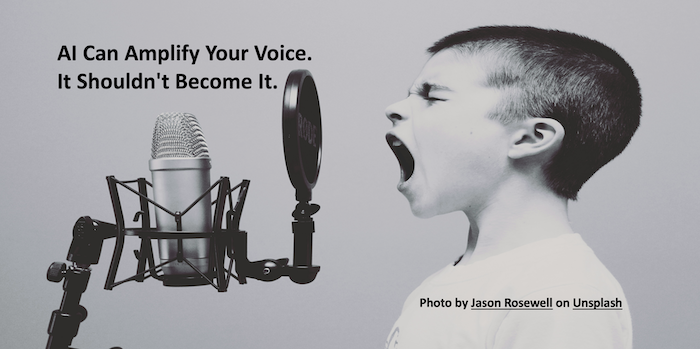
Paradoxically, the individuals who are poised to derive the most significant advantage from AI in the coming decade may not be those who rely on it most heavily. Instead, it is likely to be those who have dedicated years to cultivating genuine expertise and then strategically employ AI as a powerful amplifier for communicating that expertise more effectively. AI has the capacity to broaden the reach of a person’s voice, enabling it to connect with a wider audience. However, it should never be permitted to supplant that voice entirely.
The critical question for professionals, creators, and thought leaders remains: where does one draw the line? At what point does the utilization of AI transition from being a supportive tool to becoming the de facto author of one’s perceived expertise? Navigating this boundary requires a conscious commitment to maintaining the integrity of one’s personal brand and ensuring that the influence exerted is rooted in authentic individual experience and intellect.
Broader Implications for Industries
The implications of this debate extend far beyond individual content creators. Industries that rely heavily on intellectual capital and personal connection, such as consulting, education, and journalism, face similar challenges. The ability of AI to generate sophisticated reports, curriculum materials, and news articles raises questions about the future roles of human experts. While AI can process vast amounts of data and identify patterns with unprecedented speed, it lacks the capacity for genuine empathy, nuanced ethical judgment, and the lived experience that often informs groundbreaking insights.
In the field of consulting, for example, clients often seek not just data-driven solutions but also the wisdom and experience of seasoned professionals who can navigate complex organizational dynamics and anticipate unforeseen challenges. If AI becomes the primary source of strategic recommendations, the perceived value of human consultants could diminish, unless they can clearly articulate how they are leveraging AI to enhance, rather than replace, their own judgment and experience.
Similarly, in education, while AI can personalize learning paths and provide instant feedback, the role of the educator as a mentor, facilitator of critical thinking, and inspirer of curiosity remains irreplaceable. The human connection in education fosters emotional intelligence and the development of interpersonal skills, aspects that AI, in its current form, cannot replicate.
The journalistic landscape is also undergoing a transformation. AI can assist in data analysis, drafting initial reports, and identifying trending topics. However, the core tenets of journalism—investigative rigor, ethical reporting, the ability to discern truth from misinformation, and the skill to craft compelling narratives that resonate with human experience—remain fundamentally human endeavors. The risk lies in an over-reliance on AI-generated content, which could lead to a homogenization of news, a decline in critical depth, and a loss of public trust if authenticity is compromised.
Data and Trends in AI Adoption
Recent reports highlight the accelerating adoption of AI across various sectors. A 2023 survey by Statista indicated that a significant percentage of businesses have already integrated AI into their operations, with content generation being one of the key areas of application. Furthermore, research from McKinsey & Company suggests that AI has the potential to add trillions of dollars to the global economy, driven by increased productivity and innovation. This widespread adoption underscores the urgency of establishing clear ethical guidelines and best practices for AI use, particularly in fields where human expertise and trust are foundational.
The challenge, therefore, is not to resist the integration of AI but to approach it with a discerning and strategic mindset. The goal should be to harness AI’s capabilities to augment human intelligence and creativity, rather than allowing it to become a crutch that undermines the very foundations of expertise and influence. As the conversation evolves, the focus must remain on preserving and promoting authentic human contribution, ensuring that the digital landscape remains a space where genuine insight and lived experience continue to hold their rightful place of value and authority.
A question to ponder: Where do you draw the line between using AI as a tool and allowing it to become the author of your expertise?
