

The integration of versatile, engaging tools into speech and language therapy has long been a cornerstone of effective intervention, particularly for young children. Among the array of educational manipulatives gaining traction, magnetic tiles have emerged as a remarkably adaptable resource, offering a dynamic platform for addressing a wide spectrum of speech and language goals. Far beyond their common use as recreational toys in homes and classrooms, these brightly colored, geometrically shaped tiles provide a multi-sensory, hands-on approach that can significantly enhance therapeutic outcomes, fostering engagement and facilitating deeper understanding of complex linguistic concepts.
The Evolution of Play-Based Therapy and the Rise of Manipulatives
Modern speech-language pathology increasingly emphasizes play-based and child-led therapeutic approaches, recognizing that learning is most effective when it is intrinsically motivated and embedded within meaningful contexts. This paradigm shift, supported by decades of research in child development and educational psychology, highlights the importance of active engagement over passive reception of information. Concrete manipulatives, like magnetic tiles, fit seamlessly into this framework. Their tactile nature, visual appeal, and open-ended design encourage exploration, problem-solving, and imaginative play—all critical elements for cognitive and linguistic growth.
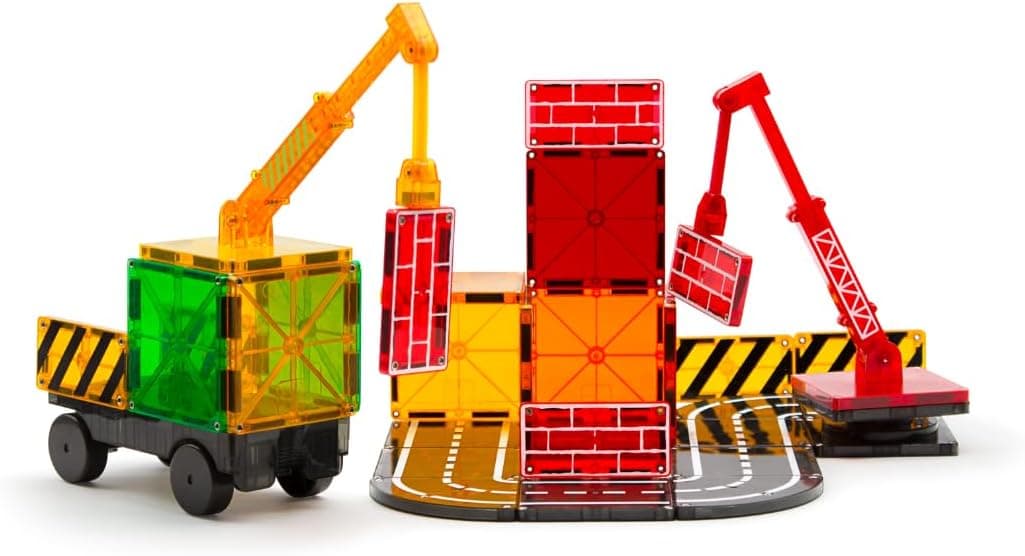
The popularity of magnetic tiles surged in the early 21st century, quickly moving from niche educational products to mainstream household toys. Brands such as Magna-Tiles and PicassoTiles capitalized on the inherent appeal of magnetic construction, offering sets that allowed children to build intricate structures with ease. This accessibility and universal appeal made them prime candidates for adaptation within therapeutic settings. Speech-language pathologists (SLPs) began to recognize their potential not just for fine motor skill development, but as a rich environment for eliciting specific speech sounds, practicing grammatical structures, and enhancing pragmatic language skills.
Core Therapeutic Advantages of Magnetic Tiles
Before delving into specific applications, it is crucial to understand the overarching benefits that magnetic tiles bring to a therapy session. Firstly, their high engagement factor is paramount. Children are naturally drawn to their vibrant colors, the satisfying click of magnets connecting, and the endless possibilities for creation. This inherent motivation reduces resistance to therapy tasks and prolongs attention spans, allowing for more intensive practice. Secondly, magnetic tiles offer multi-sensory input. Visual learners benefit from observing shapes and colors, tactile learners from manipulating the pieces, and auditory learners from the verbal instructions and descriptive language used during play. This multi-modal engagement reinforces learning through various sensory pathways. Thirdly, they are inherently open-ended. Unlike toys with a single prescribed function, magnetic tiles can be transformed into anything a child imagines, facilitating creative expression and providing diverse contexts for language use. This versatility allows SLPs to adapt activities to individual therapy goals and developmental levels, from early language learners to those working on more complex narrative skills.
Ten Innovative Applications in Speech Therapy
The adaptability of magnetic tiles allows for their integration into a wide array of speech and language goals. Here, we explore ten specific ways clinicians can leverage these dynamic tools to achieve meaningful therapeutic progress.
1. Fostering Social Cooperative Work and Pragmatic Skills
Magnetic tiles serve as an exceptional medium for cultivating social interaction and pragmatic language skills. When students collaborate on a shared building project, they are naturally prompted into back-and-forth communication. This collaboration necessitates negotiation, turn-taking, sharing ideas, and joint problem-solving. For instance, an SLP might introduce a challenge like "build the tallest tower together" or "create a house for a tiny animal." These tasks encourage children to plan designs, assign roles ("You build the base, I’ll add the roof"), request materials ("Can I have a blue square?"), and offer assistance ("Do you need help with that?"). This not only enhances verbal communication but also nurtures vital social skills such as compromise, active listening, and conflict resolution, all within a playful and low-pressure environment. Studies on collaborative play consistently demonstrate its positive impact on social cognition and communication development in young children.
2. Mastering Prepositions and Spatial Concepts
Magnetic tiles are a goldmine for teaching prepositions and spatial concepts in an interactive and concrete manner. Abstract concepts like "on," "under," "beside," "between," "in front of," and "behind" become tangible as students physically arrange tiles in various positions relative to each other. An SLP can provide directives ("Put the yellow triangle on the blue square," "Place the red tile under the arch") or encourage students to describe their own constructions using target prepositions. This hands-on manipulation provides immediate visual and kinesthetic feedback, helping to solidify understanding of spatial relationships far more effectively than rote memorization. This direct experience aligns with cognitive theories emphasizing the role of embodied cognition in learning spatial language.
3. Enhancing Sorting, Categorization, and Attribute Identification
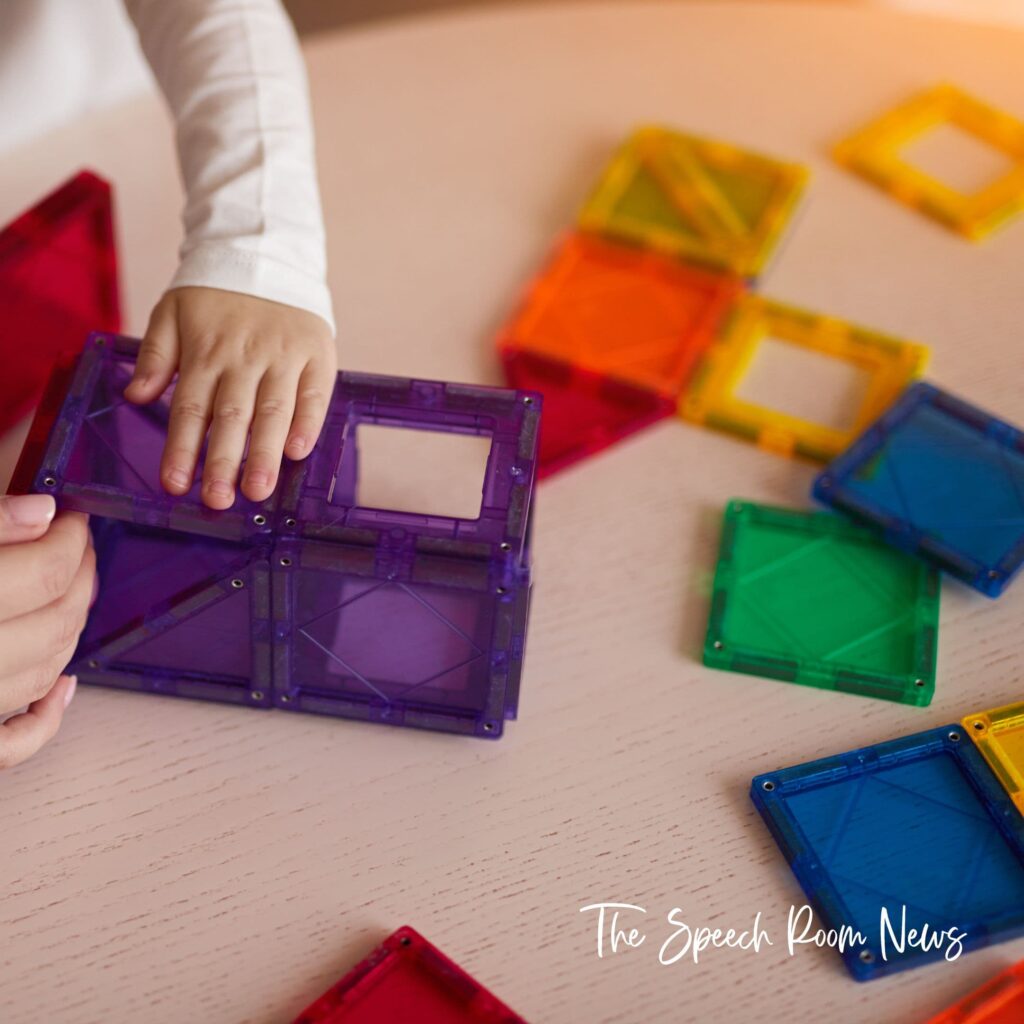
Utilizing magnetic tiles for sorting by shape, color, or size provides an engaging way for students to categorize and differentiate between various attributes. By prompting them to group specific shapes (all triangles together), colors (all red tiles), or even sizes (large squares vs. small squares), this activity not only enhances their descriptive speech as they verbalize their categorization ("These are all squares," "I have all the blue ones") but also sharpens their cognitive skills by identifying similarities and differences. Clinicians can introduce empty "bins" or "rooms" built from tiles themselves, instructing children to sort new tiles into these designated spaces, thereby adding another layer of engagement and practical application. This activity also builds foundational skills crucial for later academic success in mathematics and literacy.
4. Targeting Articulation and Phonological Awareness
Incorporating targeted speech sounds into magnetic tile activities makes articulation therapy both fun and productive. For instance, if the target sound is /k/, the SLP might have students create structures and then name the objects or actions associated with their creation that contain the /k/ sound, such as a "castle," a "cage," a "car," or a "park." Each time a tile is added or a new section is built, the child can practice the target word or phrase. The repetitive, yet varied, practice within a functional context helps automate sound production. For phonological awareness, SLPs can ask students to build a structure for words that rhyme or start with the same sound, visually reinforcing sound patterns. This multisensory approach (visual, tactile, auditory) is known to be highly effective in phonological remediation.
5. Practicing Irregular Verbs in Context
Magnetic tiles present an excellent opportunity to work on irregular verbs, which often pose significant challenges for language learners due to their unpredictable conjugations. Students can narrate stories or sequences of actions using tiles, incorporating verbs like "built," "fell," "ran," "saw," or "hit." For example, a child might build a tower and then say, "I built a tall tower. Then it fell down." Or they might create a scene of a character and describe what that character "did" or "saw." Building scenes or scenarios with the tiles and verbalizing the associated actions allows for meaningful, contextualized practice, aiding in the acquisition of these complex grammatical forms through repeated exposure and active use.
6. Developing Executive Functioning Skills
Tasks involving magnetic tiles allow students to hone crucial executive functioning skills, including planning, organization, working memory, and inhibition. Setting parameters like time limits ("You have five minutes to build a bridge") or specific design constraints ("Your bridge must have three arches and be blue") challenges their planning abilities, requiring them to strategize efficiently within the given constraints. They must visualize the end product, select appropriate tiles, sequence their actions, and adapt their plan if challenges arise. This helps foster organization, time management, and problem-solving skills, while simultaneously enhancing their speech during the planning, execution, and reflective phases of the activity. Discussing their process, "First I chose the base, then I thought about how to make it strong," further develops metacognitive awareness.
7. Reinforcing Regular Plurals and Grammatical Morphology
Engaging students in creating patterns or structures using various magnetic tile shapes (squares, triangles, blocks) facilitates practice with regular plurals. As children build, the SLP can prompt them to describe the quantity and type of tiles they are using: "I have two squares," "Look, many triangles!" Encouraging them to discuss what they are building and the quantity of each shape used promotes speech development as they articulate their ideas and observations, reinforcing the correct use of plural markers (-s, -es). This structured yet playful learning environment makes the often-abstract concept of grammatical morphology concrete and visually evident.
8. Eliciting and Answering WH Questions
Magnetic tiles also serve as a powerful catalyst for practicing WH questions such as "who," "what," "where," "when," "why," and "how." During construction, an SLP can ask targeted questions: "Where does that tile go?" "Who built the tallest part?" "What are you making now?" "When will your castle be finished?" "Why did you choose that color?" "How can we make this stronger?" Encouraging students to discuss the placement of tiles, the individuals involved in building, or predicting outcomes prompts both receptive and expressive language skills. This interactive questioning framework enhances their comprehension and ability to formulate informative responses, moving beyond simple one-word answers to more complex sentence structures.
9. Practicing the Pronoun "I" and Self-Reference
Integrating the pronoun "I" into magnetic tile activities helps students practice using it within sentences, a common goal for children developing early self-referential language. The highly engaging nature of building provides a natural context for children to describe their own actions and choices. Asking students to name the shape and location for each tile they add, using "I" statements, reinforces correct pronoun usage: "I have a red tile for the top," "I am building a wall," "I put the square here." This direct association of "I" with their personal actions and creations aids in their speech development and self-awareness, making learning enjoyable and personally relevant.
10. Supporting AAC Core Words and Functional Communication
Magnetic tiles can significantly support the reinforcement of AAC (Augmentative and Alternative Communication) core words, which are high-frequency words crucial for functional communication. By intentionally incorporating words like "more," "on," "off," "that," "this," "help," "up," "down," "go," "stop," and "big/little" during these activities, students get practical exposure to these core words in actual, meaningful contexts. For example, a child might use their AAC device to request "more" tiles, indicate "up" for building a tower, or ask for "help" if a structure falls. The hands-on nature of the activity provides clear visual referents for these abstract concepts, making them easier to learn and apply. This integration helps bridge the gap between abstract symbol use and concrete action.
Broader Implications and Considerations for Clinicians and Families
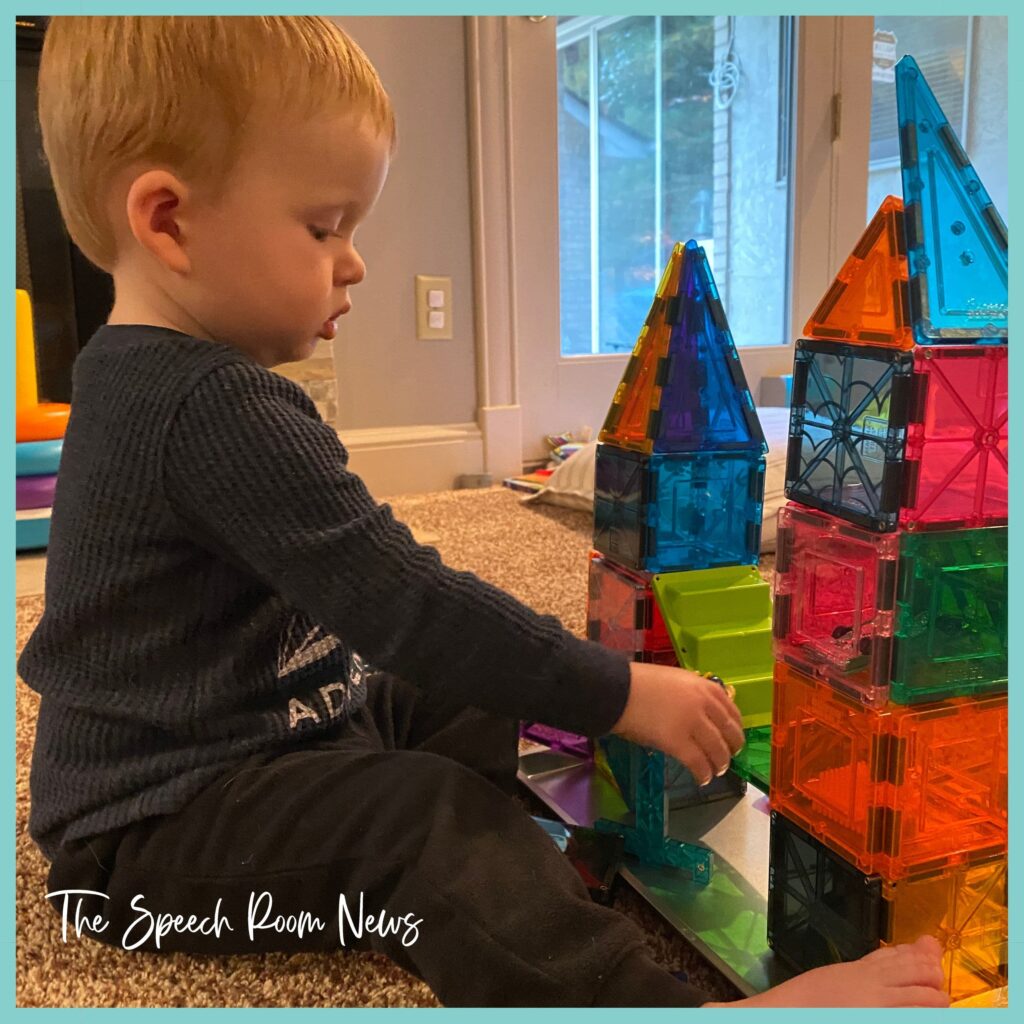
The utility of magnetic tiles extends beyond the direct application in therapy sessions. Their versatility makes them ideal for promoting carryover of learned skills into the home environment. Clinicians can recommend magnetic tile sets to parents, providing specific activity ideas that reinforce current therapy goals. This promotes a consistent language-rich environment, crucial for sustained progress.
From an accessibility standpoint, while the initial investment in magnetic tiles can be significant, their durability and longevity make them a cost-effective resource in the long run. Many clinicians seek funding through grants, school budgets, or parent-teacher associations to acquire these valuable tools. The ability to mix and match sets from different brands also allows for gradual expansion of a collection.
The enduring appeal of magnetic tiles underscores a broader trend in education and therapy: the recognition of open-ended, child-led play as a powerful catalyst for development. As technology continues to advance, the fundamental value of tangible manipulatives in fostering foundational cognitive and linguistic skills remains undiminished. Magnetic tiles represent a harmonious blend of simple mechanics and boundless potential, making them an invaluable asset for speech-language pathologists seeking to unlock the full communication potential of their students. Their continued adoption signifies a commitment to dynamic, engaging, and evidence-informed therapeutic practices that prioritize child engagement and meaningful learning.
