

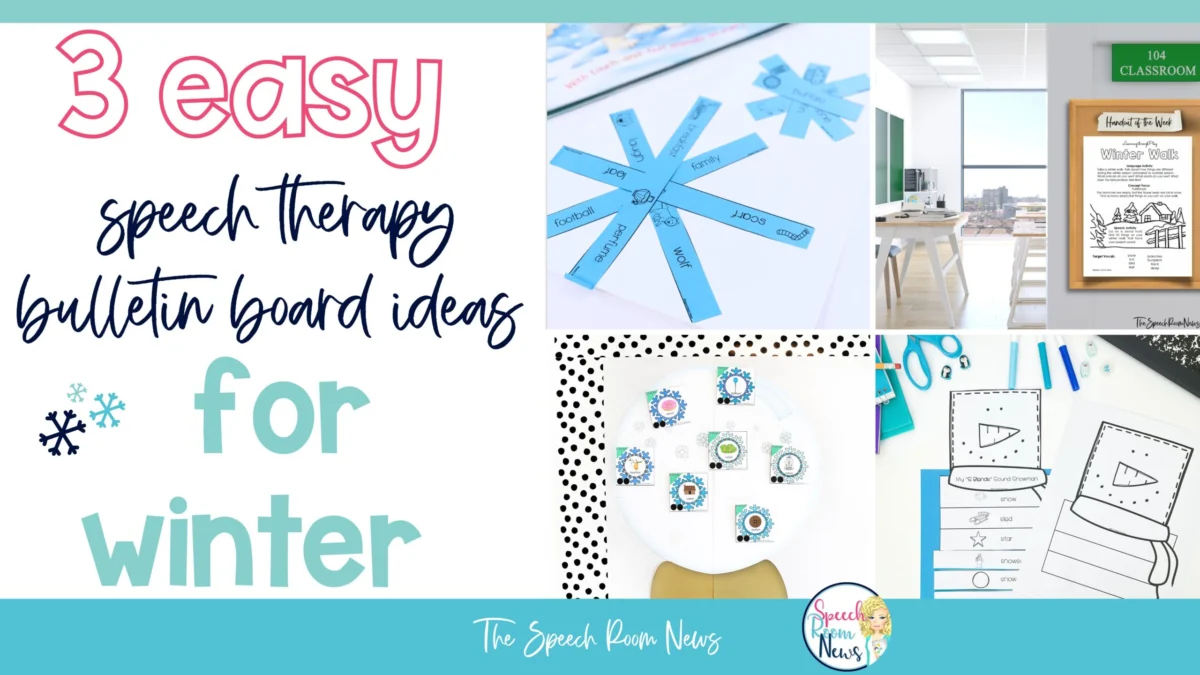
In educational and clinical settings, Speech-Language Pathologists (SLPs) are increasingly recognized for their multifaceted role in supporting student communication development. Beyond direct intervention, the physical environment of a therapy room or clinic hallway serves as a critical, often underestimated, tool in the therapeutic process. Strategic utilization of bulletin boards, for instance, transcends mere aesthetic appeal, becoming integral components of a comprehensive therapy strategy. SLPs meticulously plan these visual aids across three core categories: demonstrative, interactive, and functional, each designed to optimize learning outcomes, foster student engagement, and facilitate crucial home-school connections. This systematic approach ensures that bulletin boards are not static decorations but dynamic educational resources that reinforce learning objectives and communicate vital information to students, families, and the wider school community.
The Foundational Role of the Speech-Language Pathologist in Educational Environments
Speech-Language Pathologists operate at the nexus of education and healthcare, addressing a broad spectrum of communication disorders including articulation, phonology, language processing, fluency, voice, and social communication. Their daily work involves individualized and group therapy sessions, assessments, consultations with teachers and parents, and the ongoing development of therapeutic materials. Given demanding caseloads and the diverse needs of their students, SLPs must maximize every available resource to support learning and generalization of skills. The therapy room, often a dedicated space within a school or clinic, becomes a microcosm of the learning environment, and its visual components play a significant role in setting the tone, reinforcing concepts, and inspiring participation.
Creating an engaging and informative environment is particularly crucial during transitional periods, such as the beginning of a school year or when new students join therapy programs. At such times, bulletin boards can serve as initial touchpoints, helping to demystify speech therapy, introduce key concepts, and make the therapy space feel welcoming and purposeful. By carefully categorizing their bulletin board designs—demonstrative, interactive, and functional—SLPs can ensure a consistent and effective rotation of resources throughout the academic year, adapting to seasonal themes, evolving therapy goals, and the specific needs of their student population.

Strategic Planning: An Annual Cycle of Engagement
The effective deployment of bulletin boards by SLPs is often part of a larger annual planning cycle. This proactive approach allows for the integration of these visual tools into broader therapy goals and school-wide initiatives. For instance, at the start of the academic year, when many new families and students are introduced to the speech therapy program, an SLP might prioritize an interactive or functional bulletin board. An interactive board could feature simple activities that explain what speech therapy entails, while a functional board could offer readily accessible information for parents. This initial engagement helps to build rapport, educate stakeholders, and generate excitement about the learning journey ahead.
As the year progresses, and particularly during specific seasons like winter, the focus might shift to more specific therapeutic applications. This cyclical planning ensures that bulletin boards remain fresh, relevant, and aligned with current therapy themes, preventing visual fatigue and maintaining high levels of interest from students and their families. This forethought is a testament to the SLP’s commitment to creating a dynamic and supportive learning atmosphere that extends beyond the direct therapy session.
Category 1: Demonstrative Bulletin Boards – Visualizing Progress and Practice
Demonstrative bulletin boards serve as powerful visual records of student achievement and ongoing practice. These displays are typically adorned with crafts or projects created by students during therapy sessions, transforming individual learning efforts into a collective exhibition of progress. The pedagogical rationale behind demonstrative boards is multi-layered: they celebrate student accomplishments, provide tangible evidence of skill application, and reinforce learned concepts through creative expression.
One prominent example within a winter theme is the Snowflake Paper Strip Craft. This activity exemplifies what some SLPs affectionately term "fake crafting," implying minimal preparation for maximal therapeutic benefit. Students engage in fine motor skills by cutting paper strips—an activity that can be adapted for various skill levels, from basic snipping for younger children to more intricate designs for older students. The strips are then used to create snowflake patterns. Crucially, before assembly, each strip can be associated with target words or phrases related to a student’s articulation or language goals. For instance, a student working on the /s/ sound might repeat "snow," "sled," or "sparkle" for each strip they cut or glue.
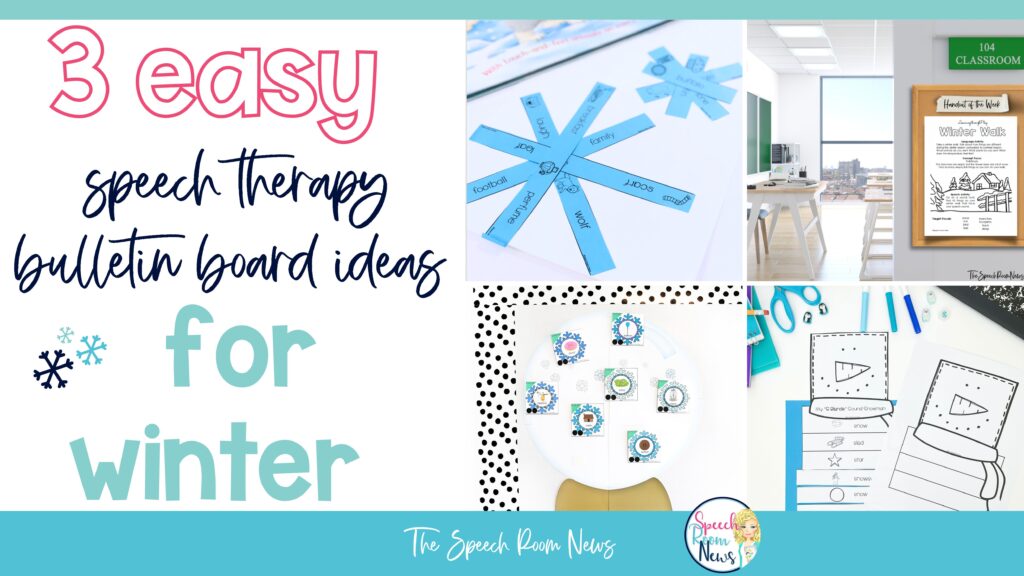
This simple craft offers several therapeutic advantages. It provides a multisensory experience, combining tactile engagement (cutting, gluing) with auditory input (repeating target words) and visual reinforcement (seeing the word or image). For students struggling with cutting, printing on cardstock increases paper resistance, subtly supporting fine motor development. Once completed, these personalized snowflakes become individual contributions to a larger winter-themed display, offering students a sense of ownership and pride in their work. The bulletin board then becomes a vibrant gallery, showcasing the diverse efforts and progress of the therapy group.
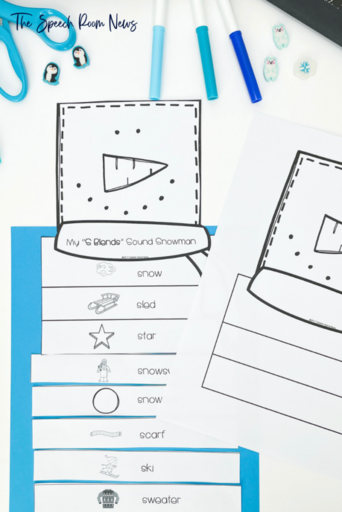
Another effective demonstrative craft is the Snowman Articulation Chop. This activity involves students printing and then "chopping" (cutting) strips of paper, each containing target words relevant to their speech goals. These strips are then assembled to form a snowman. The "chop" action itself can be a playful way to refer to cutting, adding an element of fun to a potentially mundane task. For example, a student targeting multisyllabic words might chop a strip for "snowman," "winter wonderland," or "arctic fox," practicing the words as they cut.
Beyond articulation, this craft can be adapted for language goals, such as sequencing (arranging strips in a specific order to tell a story about building a snowman), vocabulary (naming winter items), or concept development (discussing size and shape as they assemble the snowman). The addition of simple elements like a colored carrot nose or a construction paper hat further enhances creativity and allows for more opportunities for descriptive language. These completed snowmen, each representing focused therapeutic effort, collectively create a cheerful and purposeful display, making the abstract concept of "speech practice" concrete and visually accessible. The visible display of these crafts also subtly communicates to other students and staff the nature of the work happening in the speech room, potentially destigmatizing therapy and fostering a more inclusive environment.
Category 2: Interactive Bulletin Boards – Fostering Active Participation and Multisensory Learning
Interactive bulletin boards transform passive observation into active participation, engaging students directly with therapeutic content even outside of structured sessions. These boards are designed to be dynamic, allowing students to manipulate elements, respond to prompts, or engage in quick practice drills as they pass by or wait for their therapy turn. The core pedagogical principle here is active recall and repeated exposure, which are critical for skill acquisition and generalization.

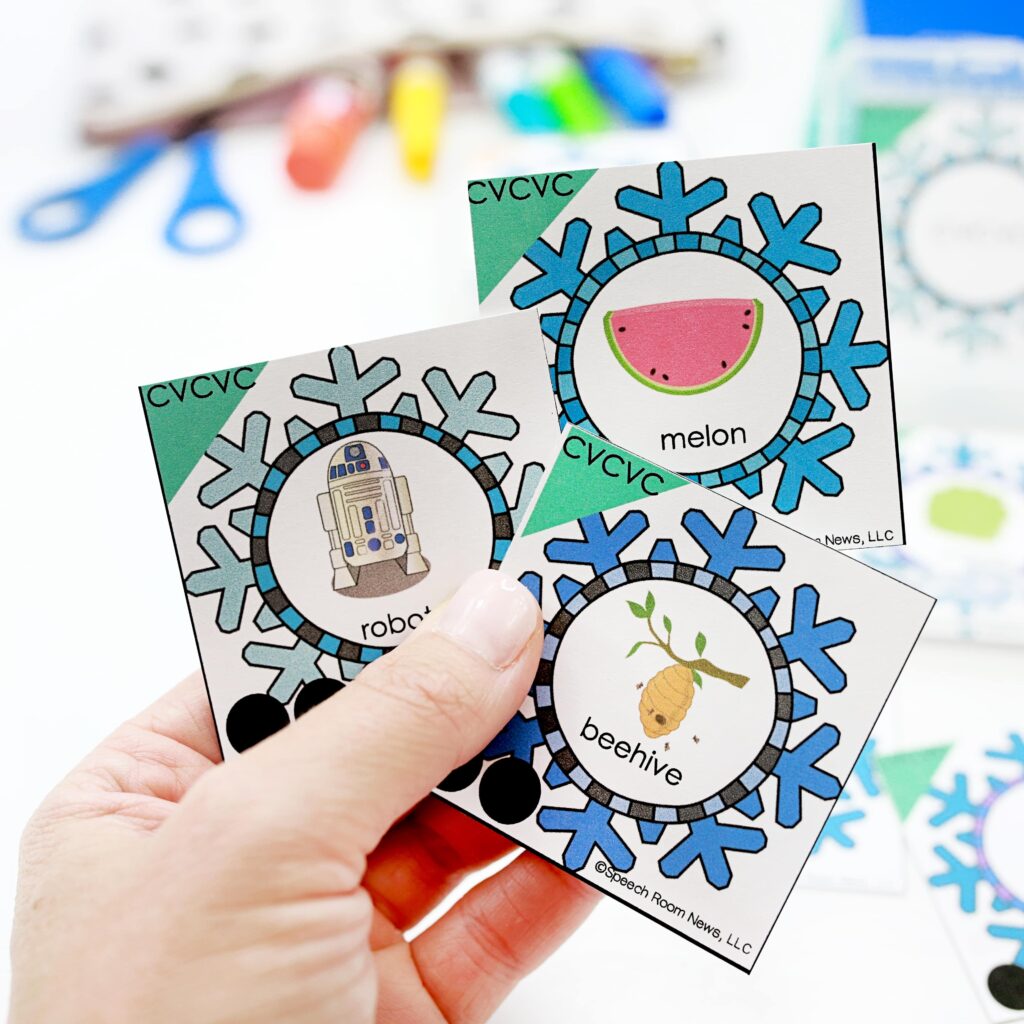
A compelling interactive winter-themed example is Falling Flakes: Apraxia Snowflakes. Childhood Apraxia of Speech (CAS) is a motor speech disorder that makes it difficult for children to plan and produce the precise movements needed for speech. Therapy for CAS often involves multisensory approaches and repetitive practice to strengthen motor planning. This interactive set utilizes snowflake cards, each featuring an image and a target word. A unique feature is the inclusion of black dots in the bottom left corner, representing the number of syllables in the word. Students are encouraged to touch these dots as they produce the sound, providing a tactile and visual cue to support syllable segmentation and production. The cards are also color-coded and patterned by syllable structure in the top left corner, aiding organization and targeted practice.
To make this interactive, a large snow globe poster is affixed to the bulletin board, equipped with velcro dots. Corresponding velcro is placed on the back of the snowflake cards. Students can then attach or remove snowflakes from the globe, practicing the target words as they do so. This simple act of manipulation, combined with the multisensory prompts, reinforces motor planning and sound production. For instance, a student working on CVCV (consonant-vowel-consonant-vowel) patterns might pick a snowflake with "mama" and tap two dots, repeating the word. This makes practice fun, engaging, and self-directed, extending therapy beyond the scheduled session.
Similarly, Falling Flakes: Phonology Activities addresses phonological disorders, which involve patterns of sound errors. This set utilizes minimal pairs—words that differ by only one sound (e.g., "fan" vs. "pan")—to help students differentiate and produce target sounds. Like the apraxia set, each snowflake card features an image and word, with color and pattern coding for organization. A poster-sized globe with velcro dots allows students to attach and detach snowflake minimal pairs, prompting them to identify the difference in sound and meaning.
For example, a student working on fronting (replacing back sounds like /k/ with front sounds like /t/) might interact with snowflakes for "key" and "tea." The act of physically manipulating these cards while vocally practicing the minimal pairs helps solidify the phonological contrast. This interactive approach capitalizes on incidental learning opportunities. As students wait for therapy or walk down the hallway, they can engage with the board, reinforcing concepts learned in sessions. This constant, low-stakes exposure is invaluable for generalizing new speech patterns into spontaneous communication, a critical goal in SLP.
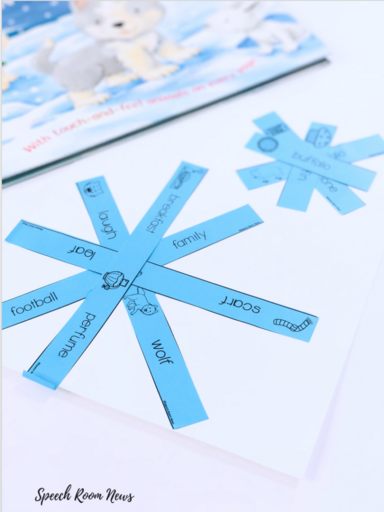
Category 3: Functional Bulletin Boards – Bridging the Therapy Room and Home Environment
Functional bulletin boards are designed not just for students, but significantly for parents and caregivers. Their primary purpose is to disseminate practical information, offer strategies for home practice, and bridge the gap between clinical intervention and everyday life. Research consistently highlights the profound impact of parent involvement on the success of speech and language therapy outcomes. Functional boards empower parents by providing them with accessible, actionable tools to support their child’s communication development in natural, everyday contexts.
A prime example for the winter season is the Winter Speech and Language Packet: Learning Through Play. This resource, when displayed on a functional bulletin board, provides parents with handouts detailing how to leverage common winter activities to enhance communication skills. The concepts are simple, yet powerful, illustrating that therapy doesn’t need to be confined to structured drills. Instead, it can be seamlessly integrated into family routines and play.
The handouts might offer ideas for activities such as:
- Snowball Fight: Encouraging descriptive language ("big," "soft," "fast"), turn-taking, and following directions.
- Building a Snowman: Practicing sequencing ("first, then, next"), body parts, and prepositions ("on top," "under").
- Sledding: Expanding vocabulary ("fast," "cold," "slide"), emotional expression ("excited," "scared"), and action verbs.
- Making Hot Chocolate: Focusing on requesting ("more," "marshmallows"), sequencing steps, and sensory vocabulary ("warm," "sweet").
- Winter Clothing: Naming items, discussing functions, and categorizing.
These readily available suggestions provide parents with concrete strategies, reducing the perceived burden of "homework" and reframing it as "playful learning." The bulletin board becomes a direct conduit for parental education, allowing them to pick up relevant handouts as needed. The availability of such resources, especially in a prominent location, underscores the SLP’s commitment to a collaborative, family-centered approach to therapy.
Crucially, the recognition that diverse communities require diverse resources leads to the offering of a Spanish Version of such packets. This inclusivity is vital, as language barriers can significantly impede parent engagement and understanding of therapeutic strategies. Providing materials in a family’s native language ensures equitable access to information, strengthens the home-school connection for multilingual families, and respects cultural and linguistic diversity. This deliberate effort to provide accessible, practical, and culturally relevant information elevates the functional bulletin board from a simple display to a powerful tool for community engagement and equitable service delivery.
The Broader Impact: Creating an Inclusive and Informed Educational Community
The strategic deployment of demonstrative, interactive, and functional bulletin boards by Speech-Language Pathologists extends far beyond the immediate therapy room, contributing significantly to the broader educational community.
Firstly, these boards help to destigmatize speech and language therapy. By making the work visible, engaging, and often fun, they normalize the process of receiving support for communication challenges. Students see their peers’ achievements, interact with therapeutic concepts, and parents gain a clearer understanding of the valuable services provided, reducing any apprehension or misunderstanding about "special services."
Secondly, they promote efficient use of an SLP’s time and resources. By providing self-directed interactive practice opportunities and readily available parent handouts, SLPs can maximize learning moments without requiring constant direct supervision. This frees up valuable time for direct intervention, assessment, and individualized planning, which is critical given the often-high caseloads faced by SLPs in schools and clinics. The ability to reuse and adapt materials seasonally also speaks to a practical and sustainable approach to resource management.
Thirdly, these boards embody best practices advocated by professional organizations like the American Speech-Language-Hearing Association (ASHA). ASHA consistently emphasizes the importance of multisensory learning, parent involvement, and generalization of skills in real-world contexts. Demonstrative boards offer visual reinforcement, interactive boards provide multisensory engagement, and functional boards directly facilitate parent education and carryover. This holistic approach aligns with evidence-based practices that prioritize comprehensive support for individuals with communication disorders.
Finally, the visual environment curated by SLPs contributes to a positive and informed school culture. When teachers, administrators, and even other students see the engaging and informative displays, it fosters a greater appreciation for the role of speech therapy in overall student success. It communicates that communication development is a shared responsibility and that the speech room is a vibrant hub of learning and growth.
In conclusion, the humble bulletin board, when approached with strategic intent, transforms into an indispensable tool for Speech-Language Pathologists. By thoughtfully designing demonstrative, interactive, and functional displays, SLPs not only enhance the immediate therapeutic environment but also significantly contribute to student engagement, parent empowerment, and the broader understanding and appreciation of communication development within educational and clinical settings. These dynamic visual aids are not just decorative elements; they are integral components of effective, inclusive, and impactful speech and language therapy.
