

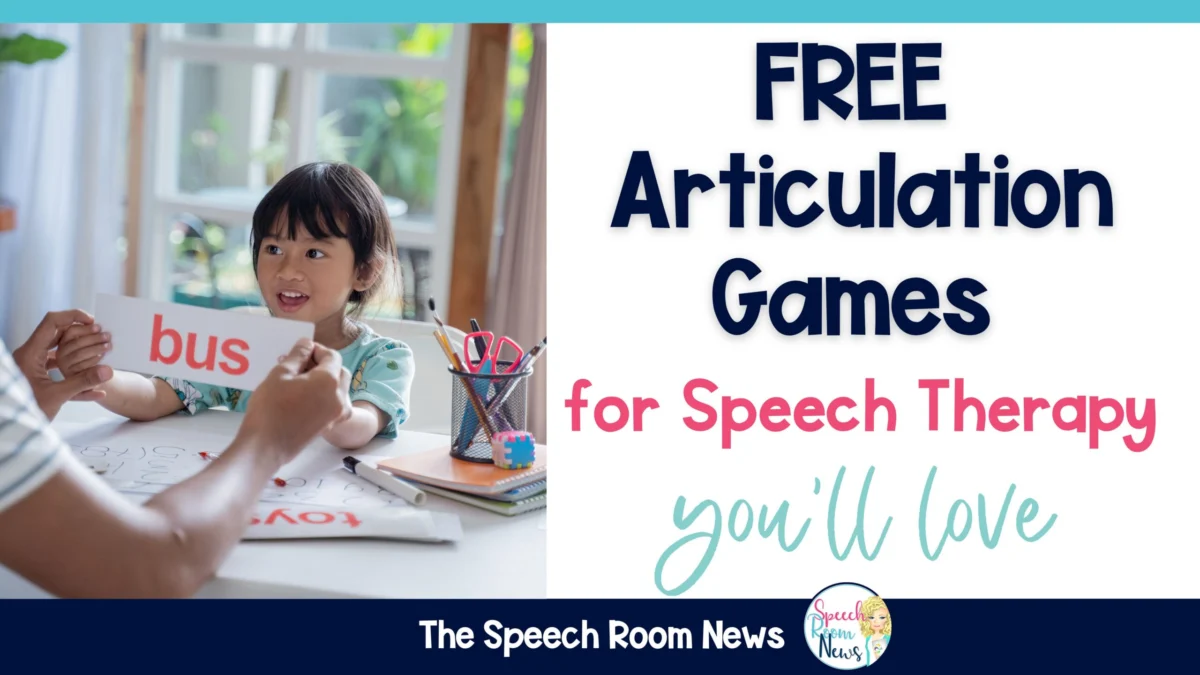
The integration of play into therapeutic interventions has emerged as a cornerstone of effective speech-language pathology, significantly enhancing patient engagement and fostering more memorable learning experiences. This pedagogical approach not only captivates young learners but also provides invaluable opportunities to generalize newly acquired language skills into diverse, real-world contexts. In an era marked by increasing demand for accessible and engaging educational resources, a burgeoning collection of free articulation games is revolutionizing speech therapy, offering versatile tools for virtual, in-person, and hybrid sessions without imposing additional financial burdens on practitioners or families.
Understanding Articulation Disorders and the Imperative of Early Intervention
Articulation disorders, a type of speech sound disorder, involve difficulties producing specific sounds or sound patterns. These challenges can manifest as substitutions (e.g., saying "wabbit" for "rabbit"), omissions (e.g., "nana" for "banana"), distortions, or additions of sounds. According to the National Institute on Deafness and Other Communication Disorders (NIDCD), approximately 5% of U.S. children aged 3-17 have a speech disorder that lasted for 3 months or longer in the past 12 months. Early identification and intervention are paramount, as untreated articulation difficulties can impact literacy development, academic performance, social interaction, and emotional well-being. Speech-language pathologists (SLPs) play a critical role in diagnosing these disorders and implementing targeted therapy plans.
Historically, speech therapy relied heavily on repetitive drills and structured exercises, which, while effective, often struggled to maintain the attention and motivation of younger clients. The shift towards play-based therapy acknowledges that children learn best through active engagement and enjoyable activities. This approach not only makes therapy more palatable but also inherently encourages higher rates of practice, which is crucial for the motor learning involved in speech sound production. The recent proliferation of free, high-quality articulation games represents a significant advancement in democratizing access to these critical therapeutic tools.

The Evolution of Therapeutic Tools: From Traditional Drills to Digital Engagement
For decades, speech therapy often involved flashcards, mirrors, and repetitive verbal exercises. While these methods formed the foundation of articulation practice, the landscape began to shift with technological advancements and a deeper understanding of child development psychology. The late 20th and early 21st centuries saw the gradual introduction of computer-based programs and early educational games, which offered novel ways to engage students. However, these often came with significant licensing costs or required specialized equipment, limiting widespread adoption.
The digital revolution, particularly with the advent of smartphones, tablets, and widespread internet access, catalyzed a transformative period for speech therapy resources. Apps, interactive websites, and digital learning platforms began to emerge, offering dynamic and often customizable exercises. The COVID-19 pandemic further accelerated this trend, forcing a rapid pivot to teletherapy and highlighting the urgent need for accessible, remote-friendly resources. This period underscored the critical value of online and printable games that could bridge the gap between clinical settings and home practice, ensuring continuity of care. The current ecosystem of free articulation games is a direct result of this evolution, blending traditional therapeutic principles with modern technological capabilities to create a more engaging and effective learning environment.
The Pedagogical Power of Play in Articulation Therapy
Research consistently supports the efficacy of play-based learning in various educational and therapeutic contexts. For articulation therapy, play offers several distinct advantages:

- Enhanced Engagement and Motivation: Children are naturally drawn to play. Incorporating games transforms therapy from a chore into an enjoyable activity, boosting intrinsic motivation and willingness to participate. This increased engagement directly translates to higher rates of practice, which is essential for motor learning and habit formation in speech production.
- Improved Memory and Retention: Learning through play often involves multi-sensory experiences and emotional connection, leading to stronger memory encoding and better retention of target sounds and concepts.
- Natural Generalization of Skills: Games often simulate real-life scenarios or provide contexts where target sounds are used functionally. This helps children transfer their newly acquired articulation skills from isolated word practice to spontaneous speech in everyday conversations, a critical goal of therapy.
- Reduced Anxiety and Pressure: The playful environment can alleviate performance anxiety often associated with corrective feedback, allowing children to experiment with sounds in a low-stress setting.
- Customization and Adaptability: Many games, especially digital ones, can be easily adapted to target specific sounds, positions (initial, medial, final), and levels of complexity, catering to individual student needs.
Experts in the field, such as Dr. Emily R. Smith, a renowned speech-language pathologist and author of "Playful Pathways to Pronunciation," emphasize that "play is not just a distraction; it is the child’s primary mode of learning. When we embed articulation goals within engaging games, we tap into their natural curiosity and drive, making the therapeutic process more efficient and sustainable."
A Comprehensive Look at Free Articulation Game Resources
The landscape of free articulation resources is diverse, encompassing interactive online platforms, readily printable materials, and even material-free games for on-the-go practice.
Interactive Online Games and Digital Platforms:
These resources leverage technology to provide dynamic and often individualized articulation practice. They are particularly valuable for teletherapy sessions and for children who are digitally native learners.
- ABCya’s "Alphabet BINGO": This game, ideal for younger students, focuses on letter sounds in a classic BINGO format. By visually associating letters with their corresponding sounds, it builds foundational phonological awareness crucial for articulation development. The interactive nature keeps preschoolers and early elementary students captivated.
- Articulation Station App (Lite Version): Developed by Little Bee Speech, this popular app offers a free, albeit limited, version that provides access to several target sounds and engaging interactive games. Its intuitive interface and clear auditory models make it a favorite among SLPs and parents. The ability to download it directly to a device offers offline accessibility, a significant advantage.
- Language Playroom: This dedicated website boasts over 20 free online games specifically designed for articulation practice. Its continually expanding collection demonstrates a commitment to providing comprehensive speech and language resources, including upcoming activities for fluency, language, and social communication. The variety ensures that therapists can find suitable games for a broad range of articulation targets.
- Phoneme Pop: Available on platforms like Topmarks, "Phoneme Pop" is an engaging online game where children identify and "pop" bubbles containing words with their target sounds. This visual and auditory feedback mechanism helps reinforce correct sound production in a fun, arcade-like environment.
- Boom Cards: These interactive, self-grading digital task cards are a staple in modern speech therapy. While many decks are premium, a vast array of free Boom Card decks for various articulation sounds can be found on platforms like Teachers Pay Teachers and Boom Learning. These digital decks often feature drag-and-drop activities, multiple-choice questions, and auditory prompts, providing immediate feedback and detailed data tracking for therapists. The user mentioned having "many cheap Boom Cards available," indicating the broader ecosystem of accessible resources.
Printable Games for Hands-On Practice:
For those who prefer tangible materials or need resources for home practice without screen time, printable games remain an invaluable asset. They offer a hands-on, low-tech alternative that can be easily customized and reused.

- "Whack-a-Sound /S/ Self-Checking Articulation Freebie": Designed for preschool through second grade, this printable game helps children identify the position (initial, medial, or final) of the /s/ sound within words. Its self-checking nature promotes independent learning and immediate feedback, reinforcing phonological awareness alongside articulation practice.
- Articulation Worksheets from Super Duper Publications: A well-known name in educational resources, Super Duper Publications offers a selection of free printable worksheets. These often include various activities like coloring pages, word searches, and sentence completion tasks, all designed to target specific articulation sounds in a structured yet engaging format.
- "Hot Chocolate Articulation Board Game": This themed board game is particularly popular during colder months but can be adapted year-round. Therapists prepare flashcards with target words. Students practice a word, and if successful, they roll a die and advance on the board. This combines articulation drills with game mechanics, fostering motivation and friendly competition.
- 100 Trial Challenges by Peachie Speechie: These printable sheets are a creative way to achieve high numbers of articulation trials. Covering various themes and holidays, they make it easy for therapists to integrate seasonal fun into their sessions while ensuring students get ample practice repetitions, which are crucial for establishing new motor patterns for speech sounds.
- "Color & Play Ocean Articulation Bingo": This resource provides printable bingo cards featuring target words, allowing for both individual and group therapy. The act of coloring the squares after correct production adds an extra layer of engagement and fine motor practice, making it a multi-faceted activity. The concept of "Articulation Roads" for vehicle lovers and "Color and Play Articulation Bingo" also represent similar printable, engaging tools.
Free Articulation Games for On-the-Go (No Materials Needed!):
Articulation practice doesn’t have to be confined to a therapy room or digital screen. Integrating practice into daily routines, especially during transitional times like car rides, significantly enhances the generalization of skills.
- "I Spy": This classic game can be easily modified to target specific sounds. Instead of simply "I spy with my little eye something green," the game becomes "I spy with my little eye something that starts with the /s/ sound." This encourages auditory discrimination and spontaneous production.
- "20 Questions": This game promotes descriptive language and question-asking, allowing the SLP to guide the child toward using words containing their target sounds. For instance, if the target is /k/, the child might be prompted to ask, "Is it a kitchen item?" or "Does it climb?"
- "Rhyme Time": Taking turns saying words that rhyme with a target word naturally encourages the correct articulation of phonological patterns. For a child working on /t/, they might rhyme "cat," "hat," "mat," reinforcing the final /t/ sound.
- "The Alphabet Game": This game involves going through the alphabet and having the child say a word that starts with each letter. It can be adapted to focus on specific articulation targets, for example, requiring words that start with ‘s’ or ‘r’, ensuring the child practices their problematic sounds in a structured yet playful manner.
Implications and Broader Impact
The widespread availability of these free articulation games carries significant implications for the field of speech-language pathology and for public health.
- Enhanced Accessibility and Equity: For families in underserved communities or those facing economic hardship, free resources eliminate a significant barrier to accessing quality therapeutic tools. This helps bridge the gap in educational equity, ensuring more children receive the practice they need regardless of their socio-economic background.
- Cost-Effectiveness for Practitioners and Institutions: SLPs in schools or private practices often operate within limited budgets. Free resources reduce the financial strain of acquiring materials, allowing them to allocate funds to other critical areas or serve more students.
- Empowerment of Parents and Caregivers: These resources empower parents to actively participate in their child’s therapy journey, providing opportunities for consistent home practice. This continuity between clinic and home environments is crucial for reinforcing learned skills and accelerating progress.
- Increased Engagement Leading to Improved Outcomes: As highlighted, engaging therapy leads to more consistent practice and better retention. The fun factor inherent in these games directly contributes to more effective therapy and ultimately, improved articulation skills for children.
- Flexibility in Service Delivery: The blend of online, printable, and material-free options provides unprecedented flexibility for SLPs to tailor therapy to individual student preferences, learning styles, and environmental constraints, supporting both traditional and modern service delivery models like teletherapy.
The Future of Articulation Therapy
The trend toward integrating playful, accessible, and often digital resources into speech therapy is set to continue. As technology advances, we can anticipate even more sophisticated and personalized free tools, potentially incorporating artificial intelligence for real-time feedback or augmented reality for immersive learning experiences. However, the core principle will remain: to make the challenging journey of correcting speech sounds as engaging, motivating, and effective as possible for every child.

By thoughtfully incorporating this diverse array of free articulation games into their practice, speech-language pathologists and parents can create dynamic, enjoyable, and highly effective learning environments, paving the way for clearer communication and brighter futures for countless children.
